Stories that teach courage to kids
Help your child learn courage through the power of storytelling. Tips, story ideas, and discussion questions for parents and teachers.
✦ Key Takeaways
- •Stories are powerful because they let children practice brave thinking before they face a real-life challenge.
- •For children, courage usually means doing something important even when they feel worried, shy, unsure, or afraid.
- •The most helpful stories show ordinary, repeatable acts of courage.
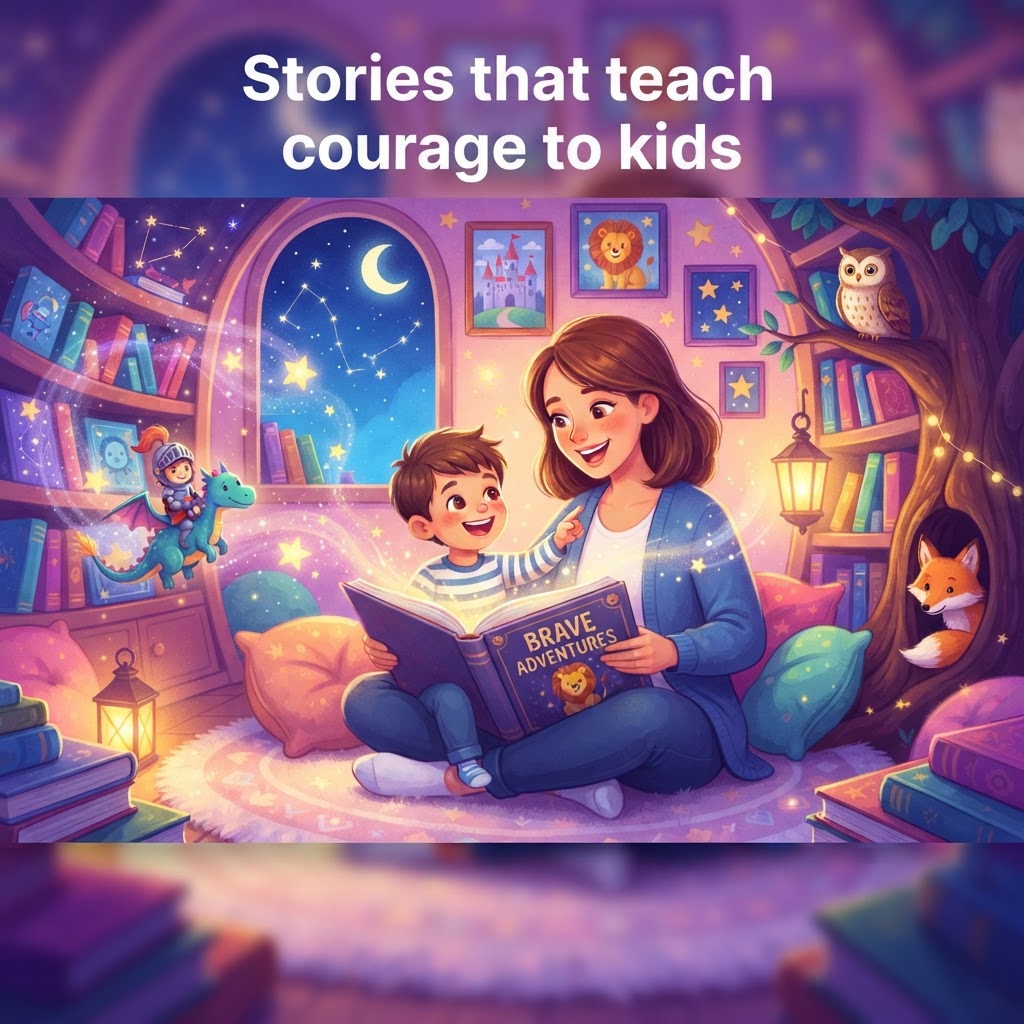
Courage in childhood rarely looks like fighting monsters. More often, it looks like joining a new group, telling the truth after a mistake, or asking for help when something feels hard.
That is why courage stories for kids matter so much. A good story gives children a safe place to see bravery in action, name their feelings, and imagine what they could do next time they feel nervous. For parents and teachers, stories are one of the simplest and most effective tools for teaching courage to children in ways that feel gentle, memorable, and real.
Why are stories one of the best ways to teach courage?
Stories are powerful because they let children practice brave thinking before they face a real-life challenge. When a child connects with a character, they mentally rehearse choices, feelings, and solutions in a safe space.
This matters for social-emotional learning. CASEL identifies skills like self-awareness, self-management, and responsible decision-making as core parts of healthy development. Courage-focused stories support all three. A child hears, “I feel scared,” “I can still try,” and “I can choose what is right,” all within one simple narrative.
Research also supports the value of warm, back-and-forth conversations around stories. The Center on the Developing Child at Harvard University explains that children build important life skills through responsive relationships and everyday interactions. In practice, that means a bedtime story becomes even more effective when an adult pauses to ask, “What do you think the character should do?”
Stories also work because they make abstract values concrete. “Be brave” can feel vague to a five-year-old. But “Lila felt scared to say sorry, took a deep breath, and told the truth” is something a child can picture and copy. That is why moral stories about courage often stay with children longer than lectures do.
What does courage look like for children?
For children, courage usually means doing something important even when they feel worried, shy, unsure, or afraid. It is not the absence of fear; it is taking a small positive step despite fear.
Many adults think of courage as physical bravery, but children need several kinds of courage:
- Emotional courage: naming feelings, trying again after failure, asking for comfort
- Social courage: joining in, speaking up, making a new friend
- Moral courage: telling the truth, standing up for someone, doing the right thing when it is hard
Courage also changes with age. Younger children may show bravery by sleeping in their own bed, going to preschool, or talking to a new adult. Older children may show it by handling peer pressure, admitting a mistake, or standing up for fairness. The CDC developmental milestones can help adults keep expectations realistic as children grow.
This is why the best courage bedtime stories match a child’s everyday world. A story about a dragon can be fun, but a story about a child who feels nervous on the first day of swim class may teach a more usable form of bravery.
Which story scenarios show children how to be brave in real life?
The most helpful stories show ordinary, repeatable acts of courage. These five scenarios help children see that bravery is something they can practice at home, at school, and with friends.
A child speaks up when someone is left out
This is a strong example of social and moral courage. The character notices that another child is being excluded and chooses to invite them in, even though it feels a little risky.
This kind of story teaches children that courage is not only about protecting themselves. It is also about helping others. If you are also working on empathy, stories about bravery pair well with kindness-themed story ideas.
Discussion questions:
- How do you think the left-out child felt?
- What made it hard for the main character to speak up?
- What is one kind thing you could do if someone was alone at school?
A child tries something new even though they feel nervous
A first soccer class, a school play, a dentist visit, or sleeping at Grandma’s house can all become great courage stories for kids. The goal is not to erase fear but to show that nervous feelings can travel alongside action.
Stories like this help children build a growth mindset. They learn that brave children do not always feel ready first. Sometimes they try, wobble, pause, and then try again.
Discussion questions:
- What clues showed the character was nervous?
- What helped them take the first step?
- When have you felt scared to try something new?
A child tells the truth after making a mistake
Honesty often requires courage. A character who breaks something, hurts someone’s feelings, or forgets an important job may feel tempted to hide it, but chooses to tell the truth instead.
This is one of the best forms of teaching courage to children, because it links bravery with integrity. If you want to build on this theme, you can explore bedtime stories that teach honesty or related posts on the InstaTales blog.
Discussion questions:
- Why was it scary for the character to tell the truth?
- What happened after they were honest?
- Is telling the truth always easy? Why or why not?
A child asks for help when something feels too hard
Children sometimes think bravery means doing everything alone. In reality, asking for help is often one of the bravest choices they can make.
A story about a child who cannot tie a shoe, solve a problem, or manage a big feeling teaches an important lesson: courage includes knowing when to reach out. This is especially helpful for children who avoid challenges because they fear getting something wrong.
Discussion questions:
- Why do you think the character did not ask for help right away?
- What changed when they finally asked?
- Who are trusted grown-ups you can go to for help?
A child does the right thing when others disagree
This scenario teaches moral courage in a clear, memorable way. The main character may refuse to tease someone, return something that is not theirs, or say “no” when friends want them to break a rule.
These are some of the strongest moral stories about courage because they show the inner conflict children really face: “What if others laugh? What if I am the only one?” Stories that combine fairness, honesty, and bravery can also connect well with stories that teach honesty to kids.
Discussion questions:
- What was the hard choice in the story?
- Why is it sometimes difficult to do the right thing in a group?
- What could you say if friends wanted you to do something unkind?
How can parents and teachers make courage bedtime stories more effective?
Stories work best when adults turn reading into a conversation, not a performance. A short pause, one thoughtful question, and a real-life connection can make the lesson stick.
Try these simple strategies:
- Name the feeling first. Say, “He felt worried,” or “She looked unsure.” This helps children connect courage with emotion.
- Praise the process, not just the result. Focus on “You tried even though it was hard,” rather than “You were fearless.”
- Link the story to real life. Ask, “Did this remind you of anything at school?”
- Re-read favorite stories. Repetition helps children absorb values over time.
- Use role-play. Act out one brave moment from the story with toys or puppets.
For classrooms, courage stories can be part of SEL circles, writing prompts, or partner discussions. Educators who want ready-made tools can explore InstaTales for teachers, and families can turn reading into a habit with weekly reading challenges.
How can you prompt InstaTales to create courage stories for kids?
The best prompts are specific, age-appropriate, and connected to your child’s real world. A personalized story feels more meaningful when it includes the child’s interests, common worries, and a gentle lesson.
A simple formula is:
- Main character: name, age, favorite animal or hobby
- Challenge: what feels scary or hard
- Type of courage: social, emotional, or moral
- Tone: cozy, funny, magical, realistic
- Lesson: one small brave step
Here are a few prompt examples you can use when you create your own personalized bedtime story:
- “Write a cozy bedtime story for a 4-year-old about Mia, who feels shy at preschool but shows courage by asking another child to play.”
- “Create a gentle story for a 7-year-old about Noah, who makes a mistake, feels nervous, and finds the courage to tell the truth.”
- “Write a magical forest story for an 8-year-old about a child who stands up for a friend when others are being unkind.”
To make stories even more useful, save favorites in your story library and re-read them before a known challenge, like a school event or doctor visit. If you want faster inspiration, browse story templates or find more plot ideas in this guide to courage story ideas for kids.
Personalized storytelling is especially helpful because it lets children see themselves as brave. That small shift, from “a brave character” to “I can be brave too,” is where learning starts.
Frequently Asked Questions
What age are courage stories best for?
Courage stories can work for children from toddlerhood through the elementary years. The key is to match the lesson to the child’s age, daily experiences, and attention span.
What makes a good courage bedtime story?
A good courage bedtime story shows a relatable fear, one manageable brave choice, and a calm, hopeful ending. It should feel reassuring, not intense or overwhelming.
How often should I read moral stories about courage?
You do not need to do it every night. Reading one or two courage-focused stories each week, then revisiting favorite ones before stressful moments, is often enough to build understanding.
How can I tell if a story is helping my child?
Look for small signs of transfer. Your child may use story language, mention the character during a hard moment, or take a tiny brave step they avoided before.
Can personalized AI stories support teaching courage to children?
Yes, when used thoughtfully. Personalized stories can reflect a child’s real worries and strengths, which often makes the lesson feel more relevant and memorable.
Should courage stories always have a perfect ending?
No. In fact, it is often better when the character still feels nervous or needs support. That teaches children that courage is about trying and learning, not being perfect.
Ready to Create a Personalized Bedtime Story?
Use our free AI bedtime story generator to create a personalized illustrated story for your child in 30 seconds — no credit card needed.
Popular story types:
Maya Rodriguez
Lead Content Editor & Early Literacy Specialist
Maya is a former early childhood educator and literacy specialist with over a decade of experience helping children develop a love of reading. She leads content at InstaTales, where she writes about the science of storytelling, child development, and how families can use personalized AI stories to build literacy and emotional resilience.
instatales.ai