Benefits of Diverse Stories for Kids
Diverse stories build empathy, cultural awareness, and self-esteem. Here's why diverse stories matter for child development.
✦ Key Takeaways
- •Diverse stories matter because they help children build a fuller, healthier understanding of themselves and the world.
- •Diverse stories build empathy by inviting children to step into another person’s feelings, challenges, and joys.
- •Diverse children’s books strengthen cultural awareness by showing children how people live, speak, celebrate, solve problems, and care for one another in different communities.
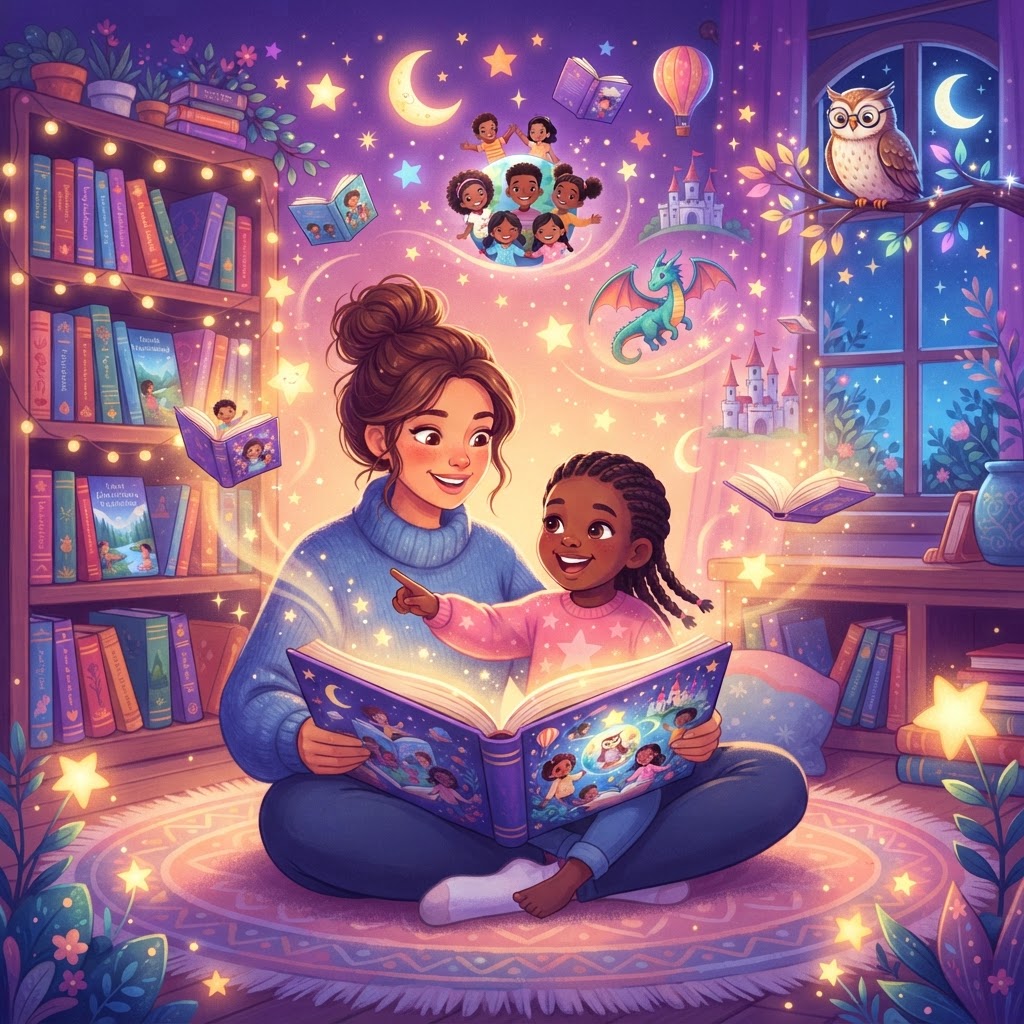
Stories do more than entertain children before bed. They help kids decide who matters, what feels “normal,” and how to understand people whose lives look different from their own.
That is why the benefits of diverse stories are so important. Research and classroom practice both show that diverse children’s books can strengthen empathy, build cultural awareness, support self-esteem, and gently reduce bias over time. For young children especially, stories can act as both a mirror of their own life and a window into someone else’s.
Why do diverse stories matter for child development?
Diverse stories matter because they help children build a fuller, healthier understanding of themselves and the world. When kids regularly meet characters from different cultures, languages, family structures, abilities, and communities, they learn that human difference is normal, interesting, and valuable.
Educator Rudine Sims Bishop famously described books as “mirrors, windows, and sliding glass doors.” Children need mirrors that reflect their own identity, and windows that show them other ways of living. A balanced reading life should include both.
This is not just a social goal. It is a developmental one. Organizations like We Need Diverse Books and Reading Rockets have long highlighted how inclusive reading supports literacy, belonging, and respectful curiosity.
In practical terms, diverse stories help children:
- see themselves represented with dignity
- understand that families and traditions can look different
- grow more flexible thinking
- become more open to others’ feelings and experiences
When inclusive stories are part of everyday reading, children learn that every child can be the hero of a story.
How do diverse stories build empathy?
Diverse stories build empathy by inviting children to step into another person’s feelings, challenges, and joys. Even very young children practice perspective-taking when they ask, “Why is she sad?” or “How did he feel when that happened?”
Child development research shows that stories are a safe way to rehearse social understanding. When children follow a character through a problem, they practice reading emotions, noticing motives, and imagining what support might help. That matters whether the character is new to a school, celebrating a holiday, using a wheelchair, or speaking two languages at home.
The empathy effect grows stronger when an adult reads interactively. Try simple questions like:
- “What do you think this character is feeling?”
- “What would help them right now?”
- “Have you ever felt something similar?”
- “What is different about their life, and what feels the same?”
These conversations turn reading into relationship-building. They also work well alongside other emotionally rich story types, including calming bedtime stories for anxious kids and funny stories that help children connect.
How do diverse children's books strengthen cultural awareness?
Diverse children’s books strengthen cultural awareness by showing children how people live, speak, celebrate, solve problems, and care for one another in different communities. They move culture beyond tourist-level ideas like food and festivals and into everyday life.
That is a key point in multicultural stories research. Children learn more from repeated, accurate, human portrayals than from one-off “special days” about a culture. A strong reading diet includes ordinary moments too: getting ready for school, visiting grandparents, sharing meals, handling sibling conflict, or feeling nervous on the first day somewhere new.
High-quality multicultural stories help children notice:
- different names, languages, and accents
- varied family roles and traditions
- different homes, neighborhoods, and routines
- common emotions across many backgrounds
This balance matters. Children should see diverse characters in every kind of story, not only issue-based books. A child from any background can star in adventure stories, gentle bedtime tales, school stories, and fantasy worlds.
Over time, that repeated exposure builds cultural literacy. Kids learn to approach difference with respect instead of discomfort.
Why can diverse stories improve self-esteem and identity?
Diverse stories improve self-esteem because children feel seen when characters reflect their appearance, language, family, or lived experience. Being represented in books tells a child, “Your life belongs in stories too.”
This is especially important for children from groups that have been underrepresented or stereotyped in publishing. When books only show one kind of child as brave, smart, funny, or important, other children may quietly absorb the message that they matter less. Inclusive stories push back against that harm.
For children who do see themselves, representation supports:
- belonging
- confidence
- pride in family and culture
- language and identity development
For children who do not share that identity, the benefit is still real. They learn that leadership, kindness, creativity, and courage are not tied to one race, one religion, one family shape, or one ability level.
This is one reason personalized storytelling can be so powerful. When families create your own personalized bedtime story, children can become the main character while still meeting a wide range of people and experiences. Saving those stories in your story library also makes it easy to revisit favorite identity-affirming books again and again.
Can multicultural stories reduce bias?
Yes, multicultural stories can help reduce bias, especially when children see positive, nuanced portrayals over time. Books alone are not a magic fix, but they can interrupt stereotypes before they harden into habits.
Research in social psychology and multicultural education suggests that children form social categories early. Stories can offer a kind of safe “contact” with people outside a child’s immediate experience. When those portrayals are warm, realistic, and discussed with a trusted adult, children are more likely to question simplistic assumptions.
Anti-bias educators and organizations such as NAEYC and Learning for Justice stress that the goal is not just exposure. The goal is thoughtful exposure.
What helps most?
- repeated access to many kinds of stories
- characters with depth, not stereotypes
- adults who name unfairness when it appears
- discussion about similarities and differences
- books that include joy, friendship, and everyday life
In other words, one “diversity book” on a shelf is not enough. Children need a reading environment where inclusion is normal.
How can parents and teachers choose and use diverse stories well?
Parents and teachers can use diverse stories well by choosing authentic books and making them part of everyday reading, not a rare lesson. The best results come from consistency, conversation, and care.
When selecting diverse children’s books, look for stories that feel specific and human. A good book shows real characters, not symbols. It avoids flattening a culture into one trait, one struggle, or one holiday.
Use this simple checklist:
- Choose books with accurate, respectful representation.
- Look for stories by authors or illustrators with lived knowledge when possible.
- Include many kinds of diversity: race, culture, disability, language, religion, neurodiversity, and family structure.
- Offer a mix of tones: joyful, cozy, adventurous, silly, thoughtful.
- Re-read favorites so children can deepen understanding over time.
In classrooms, diverse stories work best when they are woven into the year, not saved for one theme week. Teachers can extend learning through art, writing, role-play, or compare-and-contrast discussions. For schools using AI-supported literacy activities, InstaTales for teachers can help create inclusive prompts that fit classroom goals.
At home, parents do not need perfect scripts. A warm, honest response is enough: “That family does it differently,” “That word is part of their language,” or “That was unfair—what could have helped?” If you want more reading ideas by theme, explore the InstaTales blog for research-based story guidance.
Frequently Asked Questions
What age should children start reading diverse stories?
Children can start from infancy. Babies and toddlers benefit from seeing many kinds of faces, families, and daily routines in books, even before they fully understand the details.
Are diverse stories only important for children from underrepresented groups?
No. Diverse stories help all children. Some children gain mirrors that support identity, while others gain windows that build empathy and cultural understanding.
What makes a diverse children’s book high quality?
A high-quality book offers authentic characters, strong storytelling, and respectful detail. It avoids stereotypes and shows people as complex, capable, and fully human.
Can diverse stories really reduce prejudice?
They can help, especially with repeated reading and adult discussion. The strongest effect comes when children encounter many positive, realistic portrayals over time.
How many diverse books should be in a child’s reading routine?
Ideally, diversity should be part of the regular mix, not a separate category. Children benefit most when inclusive stories are woven naturally into bedtime reading, classroom shelves, and everyday library choices.
Can personalized AI stories include diversity respectfully?
Yes, if they are created thoughtfully. Use specific, respectful details, avoid stereotypes, and review stories as a parent or teacher so the child gets both inclusion and accuracy.
Ready to Create a Personalized Bedtime Story?
Use our free AI bedtime story generator to create a personalized illustrated story for your child in 30 seconds — no credit card needed.
Popular story types:
Maya Rodriguez
Lead Content Editor & Early Literacy Specialist
Maya is a former early childhood educator and literacy specialist with over a decade of experience helping children develop a love of reading. She leads content at InstaTales, where she writes about the science of storytelling, child development, and how families can use personalized AI stories to build literacy and emotional resilience.
instatales.ai