7 Benefits of Reading Aloud to Children
Reading aloud is one of the most powerful things you can do for your child. Here are the research-backed benefits of reading aloud.
✦ Key Takeaways
- •Yes—reading aloud is one of the most powerful, research-backed ways to support early development.
- •Reading aloud builds vocabulary because books expose children to richer language than everyday conversation.
- •Reading aloud improves comprehension by teaching children how stories work.
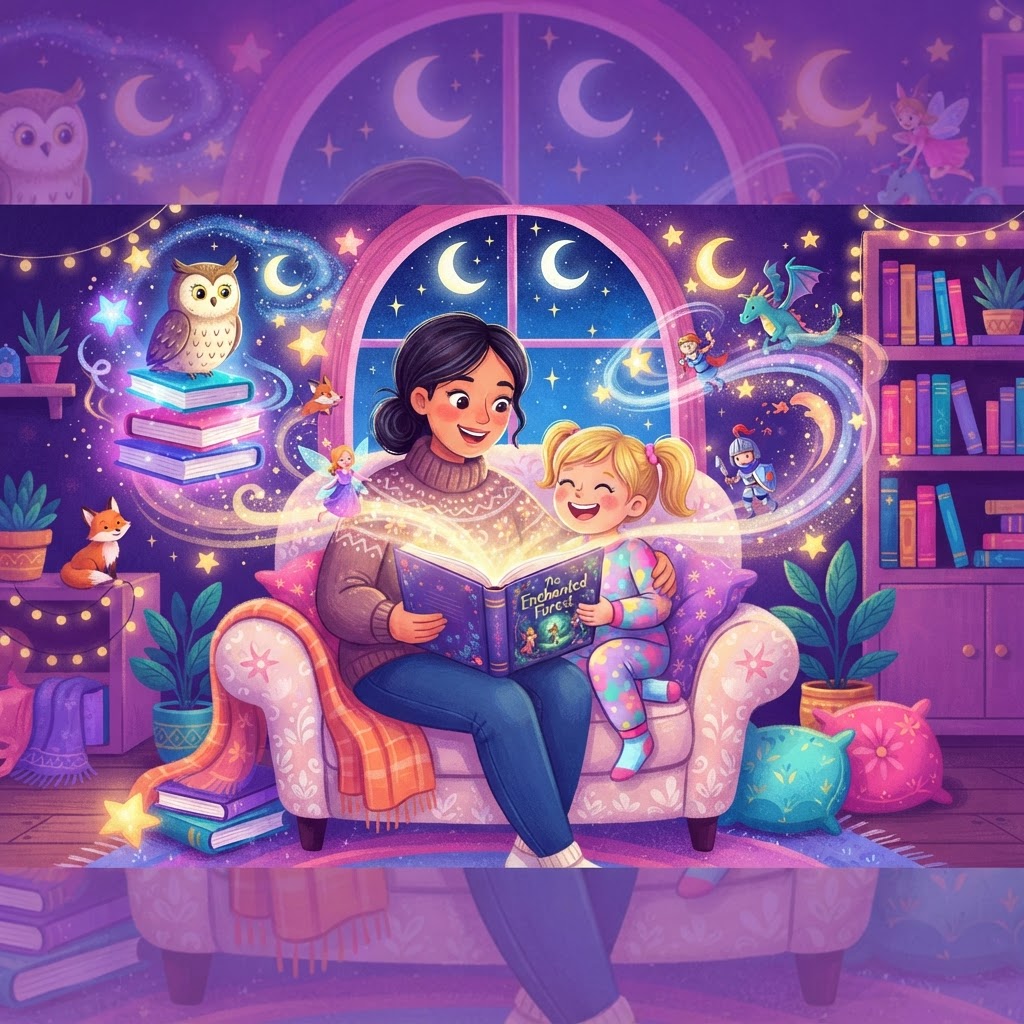
Reading aloud is one of the simplest daily habits with the biggest long-term payoff. Decades of reading aloud research show that children who are regularly read to build stronger language, listening, and early literacy skills—and they often develop warmer associations with books, learning, and family time too.
Just as importantly, reading aloud is not only for children who cannot read yet. It supports read aloud child development from babyhood through the elementary years by strengthening vocabulary, comprehension, attention, emotional connection, and reading motivation. Here is what the research says, and how to make the most of it at home.
Why is reading aloud one of the best things you can do for child development?
Yes—reading aloud is one of the most powerful, research-backed ways to support early development. It helps children build language, thinking skills, emotional security, and a positive relationship with reading, all at once.
The American Academy of Pediatrics recommends reading aloud from infancy because it supports healthy brain and language development and strengthens parent-child relationships. Their policy statement on early literacy promotion highlights shared reading as a core part of school readiness and responsive caregiving (AAP policy statement).
This is why the benefits of reading aloud reach far beyond learning letters. During a read-aloud, children hear new words, practice listening, connect ideas, ask questions, and enjoy focused one-to-one attention. That combination is hard to match with almost any other activity.
If you already have a bedtime reading routine, you may also enjoy our guide to bedtime story benefits for child development.
How does reading aloud build vocabulary and language skills?
Reading aloud builds vocabulary because books expose children to richer language than everyday conversation. Children hear unusual words, more complex sentences, and new ways of describing feelings, actions, and ideas.
Researchers have long found that the language used in children’s books is often more varied than the language children hear in casual speech. That matters because repeated exposure helps words “stick.” A child who hears gigantic, whispered, or curious in context begins to understand those words before they can use them independently.
Read-alouds also support language growth because children can:
- hear words pronounced clearly
- connect words to pictures and actions
- ask what unfamiliar words mean
- hear favorite words repeated across multiple readings
Studies on dialogic reading, led by researcher Grover Whitehurst and colleagues, found that children make stronger language gains when adults actively involve them in the story. That means pausing, asking simple questions, and inviting children to finish phrases or point to pictures.
For babies and toddlers, this can be as simple as naming what you see: “That’s a puppy. The puppy is splashing.” For preschoolers, you can expand: “Why do you think the puppy jumped in the puddle?” These small exchanges turn reading into a language lesson without making it feel like one.
How does reading aloud improve comprehension and thinking?
Reading aloud improves comprehension by teaching children how stories work. As they listen, they learn to follow a sequence, remember details, predict what happens next, and connect events to meaning.
Even before children can decode print on their own, they can develop strong comprehension skills. When you read aloud, you model fluent reading and help children make sense of plot, character, cause and effect, and problem-solving. Those are the foundations of later reading success.
This is one reason reading aloud research matters so much: comprehension does not begin when children start reading independently. It begins when they start making meaning from spoken stories.
A growing body of research also links shared reading to healthy brain development. For example, studies by pediatrician and researcher John Hutton have found associations between richer home reading environments and stronger activation in brain areas related to narrative understanding and mental imagery. In simple terms, being read to helps children build the mental tools needed to understand stories and ideas.
You can strengthen comprehension during read-aloud time by asking:
- “What do you think will happen next?”
- “Why is the character upset?”
- “Can you remember how the story started?”
- “What would you do in that situation?”
These questions do not need to feel like a quiz. A short, natural conversation is enough.
Why does reading aloud strengthen bonding and emotional security?
Reading aloud strengthens bonding because it creates warm, focused, back-and-forth interaction. Children feel safe, seen, and connected when an adult shares a story with them.
This emotional side of reading is not a small bonus—it is part of why read-aloud time works so well. Snuggling on the sofa, hearing a familiar voice, laughing at a silly page, or talking about a character’s feelings all build trust and closeness.
Development experts at Harvard’s Center on the Developing Child describe these responsive interactions as serve-and-return experiences, which are essential for healthy development (Harvard Center on the Developing Child). Reading aloud naturally creates this kind of interaction because children point, react, ask, and respond while the adult follows their lead.
This is especially helpful at the end of a busy day. A calm story routine can help children regulate emotions and transition to sleep. If you are looking for more ideas, our article on personalized stories for kids explains why familiar names, interests, and themes can make story time feel even more engaging and comforting.
Can reading aloud improve attention span and listening skills?
Yes—reading aloud helps children practice sustained attention, listening, and self-regulation. It gently teaches them to focus on one activity, hold details in mind, and stay with a story from beginning to end.
Young children are not born with long attention spans. They build them through repeated experiences that are engaging, structured, and interactive. A read-aloud offers exactly that. Children listen for cues, wait for page turns, track characters, and often resist the urge to interrupt until a natural pause.
This does not mean every child will sit still for 20 minutes right away. Attention grows gradually. For many toddlers, three to five minutes is a strong start. Over time, the routine itself helps them stay with longer and more complex books.
If your child struggles to focus, try:
- choosing shorter books
- using expressive voices
- letting your child turn the pages
- asking simple prediction questions
- reading at the same time each day
Consistency matters more than length. Ten enjoyable minutes daily is more effective than an occasional long session.
Does reading aloud make children more motivated to read?
Yes—reading aloud builds reading motivation because it helps children associate books with pleasure, curiosity, and connection. Children are more likely to want to read when reading feels enjoyable, not forced.
Motivation grows when children hear great stories before they can read them alone. They begin to see books as exciting, funny, comforting, or interesting. That emotional connection often carries into independent reading later.
This is one of the most overlooked benefits of reading aloud. It is not only about academic skill. It is about identity. Children start to think, “Books are for me” and “I like stories.”
Choice also matters. When children can help pick what they hear—dinosaurs, trucks, fairies, space, pets, feelings—they participate more fully. Personalized stories can be especially useful for reluctant readers because the content feels immediately relevant. If you want to create your own personalized bedtime story, a custom story can be a simple way to match your child’s interests while keeping read-aloud time fresh.
Re-reading favorites is helpful too. Saving beloved stories in your story library makes it easier to revisit the books your child asks for again and again—and repetition is a real learning tool, not a reading mistake.
What does reading aloud research suggest parents should do at home?
The research is clear: daily, interactive reading works best. You do not need a perfect voice, a big bookshelf, or long reading sessions—just consistency, warmth, and a little conversation.
Here are practical, evidence-based ways to get the most from read-aloud time:
- Start early. Babies benefit from hearing language, rhythm, and tone even before they understand the story.
- Read most days. A short daily routine is better than reading only once in a while.
- Talk during the story. Ask questions, label pictures, and invite your child to predict or retell.
- Follow your child’s interests. Engagement rises when the topic already matters to them.
- Re-read favorite books. Repetition builds vocabulary, comprehension, and confidence.
- Keep it joyful. The goal is connection and meaning, not performance.
- Use variety. Mix print books with fresh story ideas, poems, and simple informational texts.
- Make it visible. Reading charts, stickers, or weekly reading challenges can help some children stay excited and consistent.
The nonprofit Reach Out and Read also highlights that shared reading supports both early relational health and literacy. In other words, read-aloud time helps children learn while also helping them feel secure and connected.
The best routine is the one you can sustain. A few calm minutes after lunch, before bed, or during school pickup wait time can make a real difference over months and years.
Reading aloud does not need to be elaborate to be powerful. When you share stories regularly, you are building language, attention, understanding, and closeness—page by page.
Frequently Asked Questions
At what age should I start reading aloud to my child?
You can start from birth. Babies benefit from hearing your voice, the rhythm of language, and the closeness that comes with shared reading.
How long should a read-aloud session be?
There is no perfect length. For young children, even 5 to 10 minutes a day can be meaningful if the experience is warm, consistent, and enjoyable.
Does reading aloud still help children who can already read on their own?
Yes. Reading aloud exposes older children to richer vocabulary, more complex plots, and ideas they may not yet be able to read independently.
What kinds of books are best for reading aloud?
The best books are the ones your child enjoys and will listen to. Picture books, rhyming books, simple nonfiction, and personalized stories can all work well.
Is it okay to read the same book over and over again?
Absolutely. Re-reading helps children notice new details, remember vocabulary, and participate more confidently in the story.
Can audiobooks replace reading aloud?
Audiobooks can be a helpful addition, but they do not fully replace live read-aloud time. A parent or caregiver adds conversation, emotional connection, and responsive interaction that recordings cannot match.
Ready to Create a Personalized Bedtime Story?
Use our free AI bedtime story generator to create a personalized illustrated story for your child in 30 seconds — no credit card needed.
Popular story types:
Maya Rodriguez
Lead Content Editor & Early Literacy Specialist
Maya is a former early childhood educator and literacy specialist with over a decade of experience helping children develop a love of reading. She leads content at InstaTales, where she writes about the science of storytelling, child development, and how families can use personalized AI stories to build literacy and emotional resilience.
instatales.ai