Storytelling and Family Connection: Why It Matters
Storytelling brings families together. Here's how shared stories strengthen family bonds and create lasting memories.
✦ Key Takeaways
- •Storytelling strengthens family connection because it creates focused, emotionally warm time together.
- •Family stories help children build identity by showing them where they come from, who their people are, and how their family handles life’s ups and downs.
- •Family bonding through reading supports child development by combining emotional closeness with language-rich interaction.
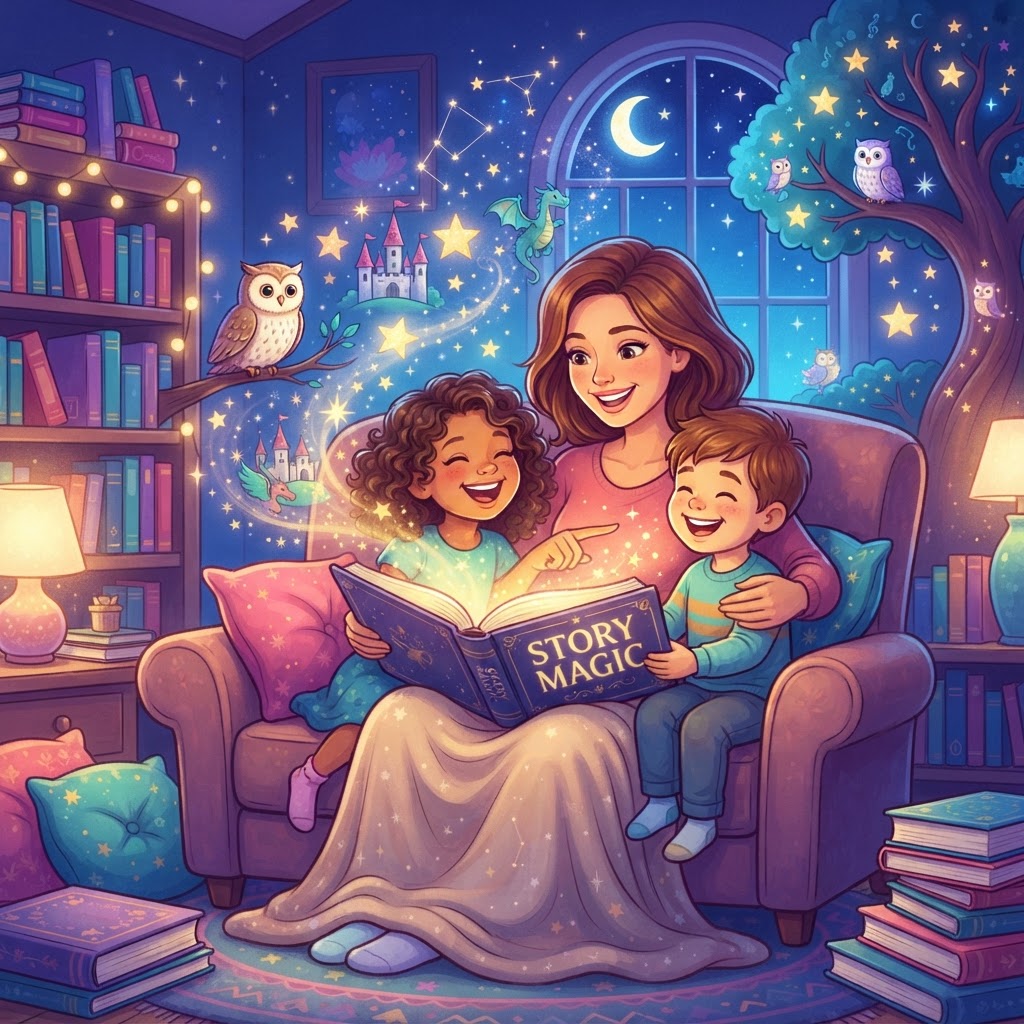
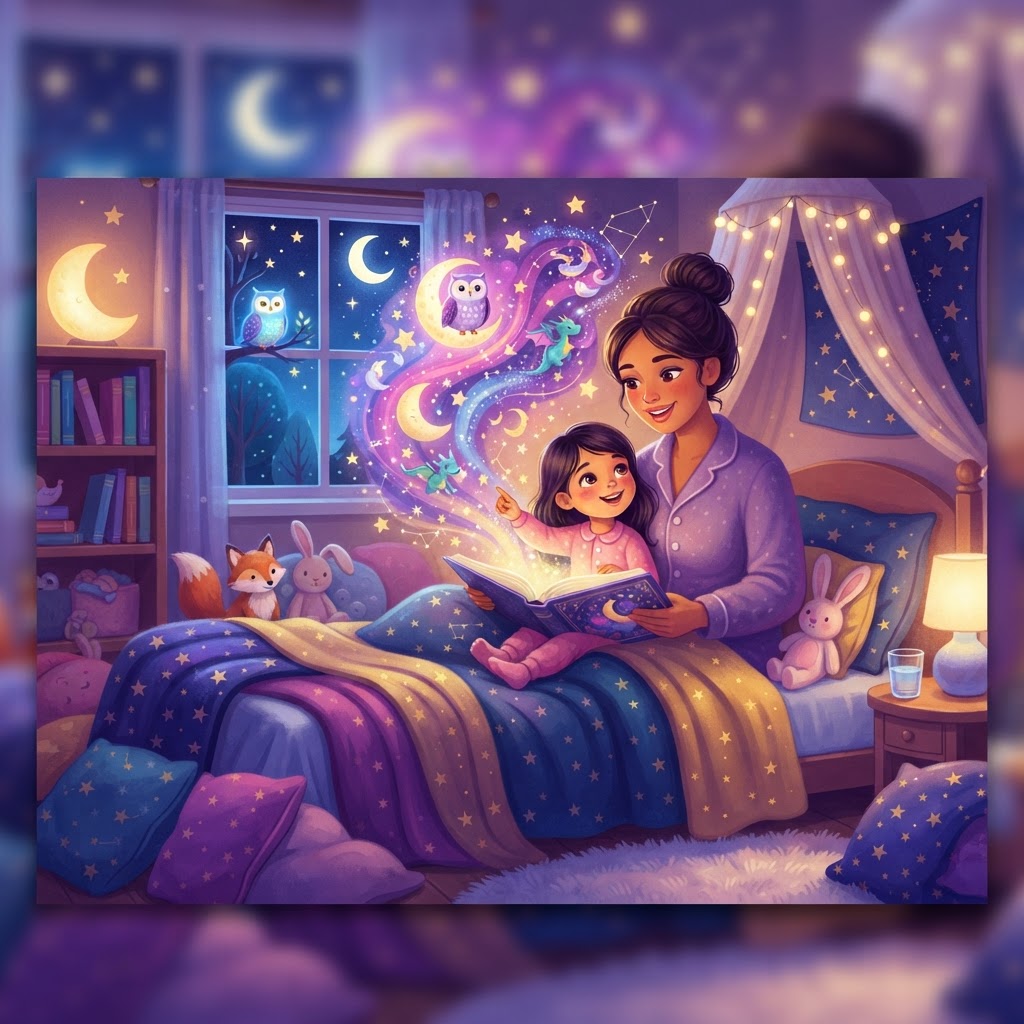
Storytelling does more than entertain children before bed. It helps families slow down, share attention, and build the kind of warm, repeated moments that children remember for years. When parents, grandparents, and caregivers tell family stories or read aloud together, they are not just filling time. They are building trust, identity, language, and a sense of belonging.
Research on storytelling and family connection supports what many families feel in daily life: shared stories create closeness. They give children a safe place to laugh, ask questions, name feelings, and hear what matters most in their family. Over time, that simple habit becomes one of the strongest forms of family bonding through reading and conversation.
Why does storytelling strengthen family connection?
Storytelling strengthens family connection because it creates focused, emotionally warm time together. In just a few minutes, a story invites eye contact, shared attention, touch, laughter, and conversation.
Child development experts often point to these back-and-forth moments as the foundation of healthy relationships. The Harvard Center on the Developing Child describes this kind of responsive interaction as “serve and return,” and it helps build both connection and brain development. When a child points to a picture, finishes a familiar line, or asks, “What happens next?”, the adult’s response deepens the bond.
This matters because children do not only connect through big events. They connect through repeated small rituals. A bedtime story, a silly made-up tale at dinner, or a grandparent’s memory from childhood can become a dependable signal: we belong to each other, and our time together matters.
Storytelling also helps adults tune in. When you tell or read a story, you notice what makes your child laugh, what worries them, and what questions keep returning. That insight helps parents respond with more empathy in everyday life.
How do family stories help children build identity and belonging?
Family stories help children build identity by showing them where they come from, who their people are, and how their family handles life’s ups and downs. Children who hear meaningful family narratives often develop a stronger sense of stability and belonging.
Researchers Robyn Fivush and Marshall Duke, known for work connected to Emory University’s “Do You Know?” scale, found that children who know more about their family history often show stronger emotional well-being. The key is not perfect family history. It is hearing stories that place a child inside a larger family narrative.
These stories can be simple:
- “This is how you got your nickname.”
- “Grandma moved to a new town when she was eight.”
- “Your brother used to hide under the table during storms.”
- “In our family, we help each other when things feel hard.”
Stories like these teach children that family life includes joy, mistakes, growth, and resilience. They also help children make sense of change. If a child hears, “Dad was nervous on his first day at school too,” they learn that difficult feelings are normal and manageable.
That is one reason storytelling supports emotional strength. Shared narratives can also help kids cope with hard moments and build resilience, especially when adults tell honest but hopeful stories.
What does family bonding through reading do for child development?
Family bonding through reading supports child development by combining emotional closeness with language-rich interaction. Children gain vocabulary, attention, listening skills, and social understanding while feeling safe and connected.
The American Academy of Pediatrics recommends reading aloud from infancy because it supports both early literacy and strong parent-child relationships. The NICHD also notes that talking and reading with children are important for early learning.
Here is what shared reading often builds at the same time:
- Language growth through hearing new words in context
- Attention and memory through repeated story patterns
- Emotional literacy through naming feelings and motives
- Social understanding through discussing characters and choices
- Security and routine through a predictable shared activity
In other words, storytelling is efficient in the best way. One habit supports many areas of development at once. It can also build vocabulary over time, strengthen critical thinking, and nurture empathy through stories.
For younger children, the biggest benefit may be interaction rather than finishing the book. Pointing, naming, repeating, and wondering aloud are all part of the learning. For older children, stories open the door to deeper conversations about fairness, courage, friendship, and family values.
How do shared stories become lasting family traditions?
Shared stories become family traditions when they happen often enough to feel expected, comforting, and meaningful. The power comes less from perfection and more from repetition.
Research on family routines and rituals, including work by psychologist Barbara Fiese, shows that predictable family practices support children’s emotional health and family cohesion. A story ritual is especially powerful because it combines routine with closeness. Unlike many daily tasks, it invites imagination and emotional presence.
A storytelling tradition does not have to be elaborate. It can look like:
- one bedtime story every night
- a “rose, thorn, and story” at dinner
- grandparents sharing a childhood memory on video calls
- a made-up story in the car every Friday
- retelling a favorite family moment on birthdays
Traditions also grow stronger when children participate. Let them choose the book, change the ending, supply a character name, or retell part of the story themselves. If they love revisiting favorites, saving them in your story library can make rereading feel easy and special.
Over time, the story itself matters less than the message underneath it: this is what our family does together.
Which types of stories create the deepest connection?
The stories that create the deepest connection are the ones that feel personal, interactive, and emotionally true. They do not need to be dramatic. They need to feel shared.
In my experience as an education specialist, children connect most strongly with stories that reflect their own world while giving them a little room to imagine. That often includes:
Family memory stories
These are stories about real family moments: first pets, funny vacations, lost teeth, new siblings, or moving house. They help children see family life as a shared adventure.
“When I was little” stories
Children love hearing that adults were once children too. These stories reduce distance and build trust.
Personalized bedtime stories
Stories that use a child’s name, interests, or familiar routines often increase engagement. If your child lights up when they hear themselves in a story, you can create your own personalized bedtime story and make it part of your evening routine.
Stories about feelings and challenges
These stories help children process fears, disappointment, jealousy, or change. They are especially useful when a child is going through a difficult phase.
Repeated favorite stories
Repetition is not boring for children. It is reassuring. Hearing the same story again and again helps them predict, participate, and feel mastery.
How can busy parents make storytelling part of everyday life?
Busy parents can make storytelling work by keeping it simple, flexible, and consistent. Five to ten minutes of warm, focused storytelling can do more for connection than a longer activity that rarely happens.
The easiest approach is to attach storytelling to something you already do. Bedtime is the classic choice, but it can also work at breakfast, bath time, school pickup, or after dinner.
A few practical ways to make it stick:
- Keep two or three favorite books within easy reach.
- Use short stories on busy nights.
- Let children retell familiar stories in their own words.
- Ask one easy follow-up question: “Which part felt like you?”
- Invite extended family to record audio stories for your child.
- Rotate between books, oral family stories, and made-up tales.
If you want variety without extra planning, story templates can help you start quickly. Families who enjoy playful routines may also like weekly reading challenges to keep story time fresh without making it feel like homework.
The goal is not to perform. It is to connect. A calm voice, a little curiosity, and a shared few minutes are enough to make storytelling meaningful.
Storytelling does not need a perfect setup to be powerful. It just needs presence. When families read, remember, and imagine together, they create more than happy memories. They create a shared language of love, identity, and belonging.
Frequently Asked Questions
How often should families read or tell stories together?
A short daily habit is ideal, but consistency matters more than length. Even 5 to 10 minutes a few times a week can support strong family connection.
Do made-up stories count as family storytelling?
Yes. Made-up stories still build closeness, language, and imagination, especially when children help shape the plot or characters.
What if my child will not sit still for a story?
That is normal, especially for young children. Try shorter books, interactive storytelling, movement, or telling stories during play, meals, or car rides.
Are family stories really good for children’s emotional health?
Yes. Research on family narratives suggests that children who know more about their family story often show stronger resilience, identity, and emotional security.
Can digital or AI-generated stories still support family bonding?
Yes, if they are used interactively. The connection comes from sharing the story together, talking about it, and making it part of a warm family routine.
What is the best age to start family storytelling?
Start as early as possible. Babies benefit from hearing voices and rhythm, and older children continue to gain language, comfort, and connection from shared stories.
Ready to Create a Personalized Bedtime Story?
Use our free AI bedtime story generator to create a personalized illustrated story for your child in 30 seconds — no credit card needed.
Popular story types:
Maya Rodriguez
Lead Content Editor & Early Literacy Specialist
Maya is a former early childhood educator and literacy specialist with over a decade of experience helping children develop a love of reading. She leads content at InstaTales, where she writes about the science of storytelling, child development, and how families can use personalized AI stories to build literacy and emotional resilience.
instatales.ai