Turtles Stories for Kids: 7 Tales & Fun Facts
Delightful turtles stories for kids — plus real fun facts woven into each tale. Perfect for young animal lovers who love a good story.
✦ Key Takeaways
- •Turtle stories are a great bedtime choice because they are soothing, repetitive, and easy for young children to follow.
- •Real facts make turtle tales more memorable because children enjoy learning when information is wrapped inside a story.
- •The best turtle story ideas mix one clear adventure, one emotional theme, and one or two true facts.
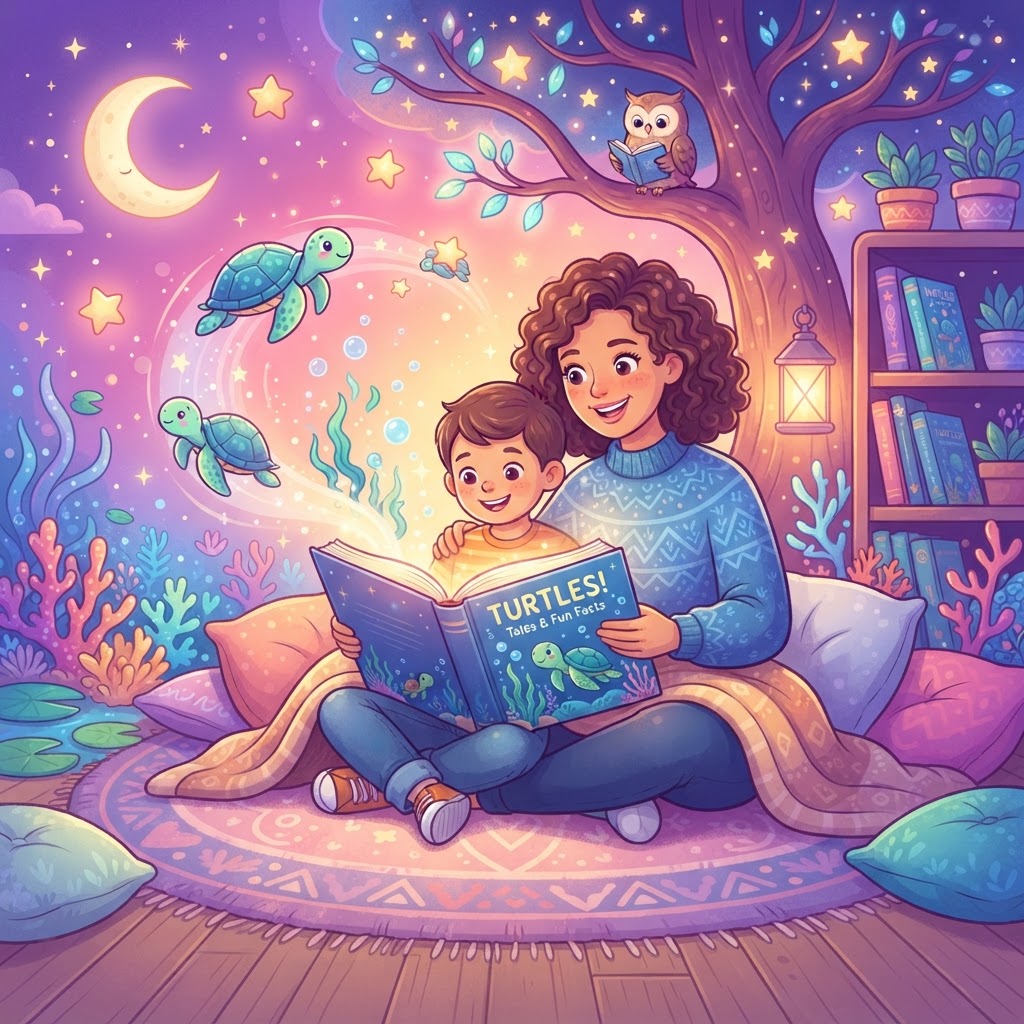
Turtles make wonderful story characters because they feel both gentle and adventurous. If your child loves the ocean, ponds, or animal heroes, these turtles stories for kids blend cozy imagination with real science facts children can remember.
A good animal story does more than entertain. It builds vocabulary, empathy, and curiosity. That is why stories about turtles work so well at bedtime: they are calm, visual, and full of natural wonder. If your family enjoys marine animal stories, you might also like these dolphin bedtime tales and whale story ideas.
Why are turtles stories for kids such a strong bedtime choice?
Turtle stories are a great bedtime choice because they are soothing, repetitive, and easy for young children to follow. Their slow movement, safe shell, and peaceful habitats naturally create calm story rhythms that help children settle down.
From a child development perspective, this matters. Research on dialogic reading by Grover Whitehurst and colleagues found that talking about stories boosts language and comprehension, and the American Academy of Pediatrics recommends reading aloud daily from infancy to support bonding and early literacy. Turtle characters also invite rich questions children love: Where is the turtle going? Why does it carry its home? What is under the sea?
For parents, that means turtles bedtime stories can do two jobs at once: help children relax and gently teach them about the real world.
How do real turtle facts make stories more engaging for children?
Real facts make turtle tales more memorable because children enjoy learning when information is wrapped inside a story. A child may forget a list of facts, but they often remember that a baby turtle hurried to the moonlit sea or that a leatherback searched for jellyfish in deep water.
This approach supports curiosity without making bedtime feel like a lesson. When you weave in one or two accurate details, turtles tales for children become both magical and trustworthy. For animal facts in this article, I’ve drawn from sources such as NOAA Fisheries, San Diego Zoo Wildlife Alliance, and the Animal Diversity Web at the University of Michigan.
Which turtles stories for kids can you create tonight?
The best turtle story ideas mix one clear adventure, one emotional theme, and one or two true facts. Below are seven easy story starters you can tell aloud or turn into personalized AI stories.
1. The Moonlight Hatchling Dash
- Story concept: A newly hatched sea turtle named Mina pops out of the sand at night and races toward the shimmering ocean, helped by a friendly crab who teaches her courage.
- Real turtle facts: Sea turtles hatch from eggs laid on beaches, and hatchlings usually head toward the brighter horizon over the water. Many face a long, risky journey to the sea, according to NOAA Fisheries.
- AI prompt: Write a gentle bedtime story for a 4-year-old about a baby sea turtle named Mina who hatches on a moonlit beach and bravely reaches the ocean. Include one true fact about hatchlings moving toward the water and end with a calm, happy feeling.
2. The Green Turtle’s Seagrass Picnic
- Story concept: A young green turtle invites her reef friends to a picnic and learns that sharing the seagrass meadow keeps everyone happy.
- Real turtle facts: Adult green sea turtles often eat seagrasses and algae. They are important to ocean habitats because grazing helps keep seagrass beds healthy, as noted by NOAA Fisheries.
- AI prompt: Create a cozy story about a green sea turtle planning a seagrass picnic for her friends. Include a real fact about what green turtles eat and make the tone peaceful and funny.
3. The Box Turtle and the Rainy-Day Shell
- Story concept: A little box turtle walks through a rainy garden, helping tiny creatures find shelter before curling up safely inside her shell.
- Real turtle facts: Box turtles live on land, and many can close their shells tightly for protection because of a hinged lower shell. This is explained in the Animal Diversity Web.
- AI prompt: Write a short bedtime story about a kind box turtle exploring a rainy garden. Include the real detail that box turtles can close themselves inside their shells, and keep the language simple for ages 3-6.
4. The Coral Reef Cleanup Club
- Story concept: A hawksbill turtle starts a reef club where fish, crabs, and turtles work together to protect their colorful underwater home.
- Real turtle facts: Hawksbill sea turtles help coral reef ecosystems and are known for eating sponges. Healthy reefs support many ocean animals, according to San Diego Zoo Wildlife Alliance.
- AI prompt: Tell a bright, adventurous story about a hawksbill turtle who protects a coral reef with friends. Include one true fact about hawksbills and coral reefs, and add teamwork and kindness.
5. Grandma Leatherback and the Starry Sea
- Story concept: An old leatherback turtle glides through deep, dark water under the stars, teaching her grandchild how to stay calm and follow gentle clues.
- Real turtle facts: Leatherbacks are the largest sea turtles, and unlike other sea turtles, they have a leathery shell instead of a hard one. They also dive very deep in search of food, including jellyfish, as described by San Diego Zoo Wildlife Alliance.
- AI prompt: Write a dreamy bedtime story about a grandmother leatherback turtle guiding her grandchild through the ocean at night. Include real facts about leatherbacks being very large and having a leathery shell.
6. The Painted Turtle’s Winter Nap
- Story concept: A pond turtle worries that winter will last forever, but an old frog explains how nature rests before spring returns.
- Real turtle facts: Some freshwater turtles become much less active in winter and may rest in muddy pond bottoms until the weather warms. Turtles are reptiles, so temperature affects how active they are, as noted in the Animal Diversity Web.
- AI prompt: Create a calm story for bedtime about a painted turtle waiting for spring at the bottom of a quiet pond. Include one true fact about turtles slowing down in winter.
7. The Shell That Grew With Tia
- Story concept: A child named Tia meets a wise turtle who teaches that a shell is not just a hiding place but part of who you are.
- Real turtle facts: A turtle’s shell is part of its body and connected to its skeleton. Turtles cannot simply crawl out of their shells, according to the Animal Diversity Web.
- AI prompt: Write a personalized story about a child named Tia meeting a wise turtle by a pond. Include the true fact that a turtle’s shell is part of its body, and make the message about confidence and self-acceptance.
How can you use InstaTales to generate personalized turtle adventures?
You can turn any of these ideas into a custom story in just a few steps. The key is to be specific about the child, the mood, and the turtle fact you want included.
Try this simple process:
- Start with one of the prompts above and create your own personalized bedtime story.
- Add your child’s name, age, favorite color, or favorite ocean animal.
- Ask for a bedtime tone: “gentle,” “cozy,” “funny,” or “sleepy.”
- If you want a faster start, use the built-in story templates and swap in a turtle hero.
- Save the best versions in your story library so children can re-read favorite stories about turtles again and again.
A useful educator tip: ask for one fact only in stories for toddlers, and two facts for children ages 6-10. That keeps the plot strong while still feeding curiosity.
Frequently Asked Questions
What age are turtles bedtime stories best for?
Turtle stories work well for ages 1-10 because you can adjust the length and language. Toddlers often enjoy simple repeating patterns, while older children like adventure, facts, and problem-solving.
Can stories about turtles help children learn science?
Yes. Stories are a gentle way to introduce vocabulary like habitat, shell, hatchling, reef, and migration. Children often remember science facts better when they are tied to characters and emotions.
How long should a turtle bedtime story be?
For toddlers, aim for 2-4 minutes. For preschool and early elementary ages, 5-8 minutes usually works well, especially if the story includes a calm ending.
What makes a good AI prompt for turtles stories for kids?
A strong prompt includes the child’s age, the turtle type, the setting, the tone, and one true fact. For example: “Write a 5-minute calm bedtime story for a 6-year-old about a green sea turtle exploring seagrass with one real fact about what green turtles eat.”
Should turtle stories always be realistic?
No. Imaginative stories are wonderful, especially at bedtime. The best balance is a magical plot with one or two accurate details, so children enjoy the fantasy while learning something true.
Can I use these turtle tale ideas in a classroom?
Absolutely. Teachers can use them for read-alouds, writing prompts, ocean units, or art extensions. A short turtle story followed by one discussion question is an easy way to build both literacy and science knowledge.
Ready to Create a Personalized Bedtime Story?
Use our free AI bedtime story generator to create a personalized illustrated story for your child in 30 seconds — no credit card needed.
Popular story types:
Maya Rodriguez
Lead Content Editor & Early Literacy Specialist
Maya is a former early childhood educator and literacy specialist with over a decade of experience helping children develop a love of reading. She leads content at InstaTales, where she writes about the science of storytelling, child development, and how families can use personalized AI stories to build literacy and emotional resilience.
instatales.ai