First Grade Science Stories That Build Curious Kids
Make science engaging for first grade students with stories. Practical strategies, story ideas, and classroom activities for teachers.
✦ Key Takeaways
- •Stories help first graders learn science because they turn abstract ideas into concrete experiences.
- •The best science stories for first grade are simple, accurate, and closely tied to observable phenomena.
- •The most effective story-based science lessons combine read-aloud, prediction, observation, and student talk.
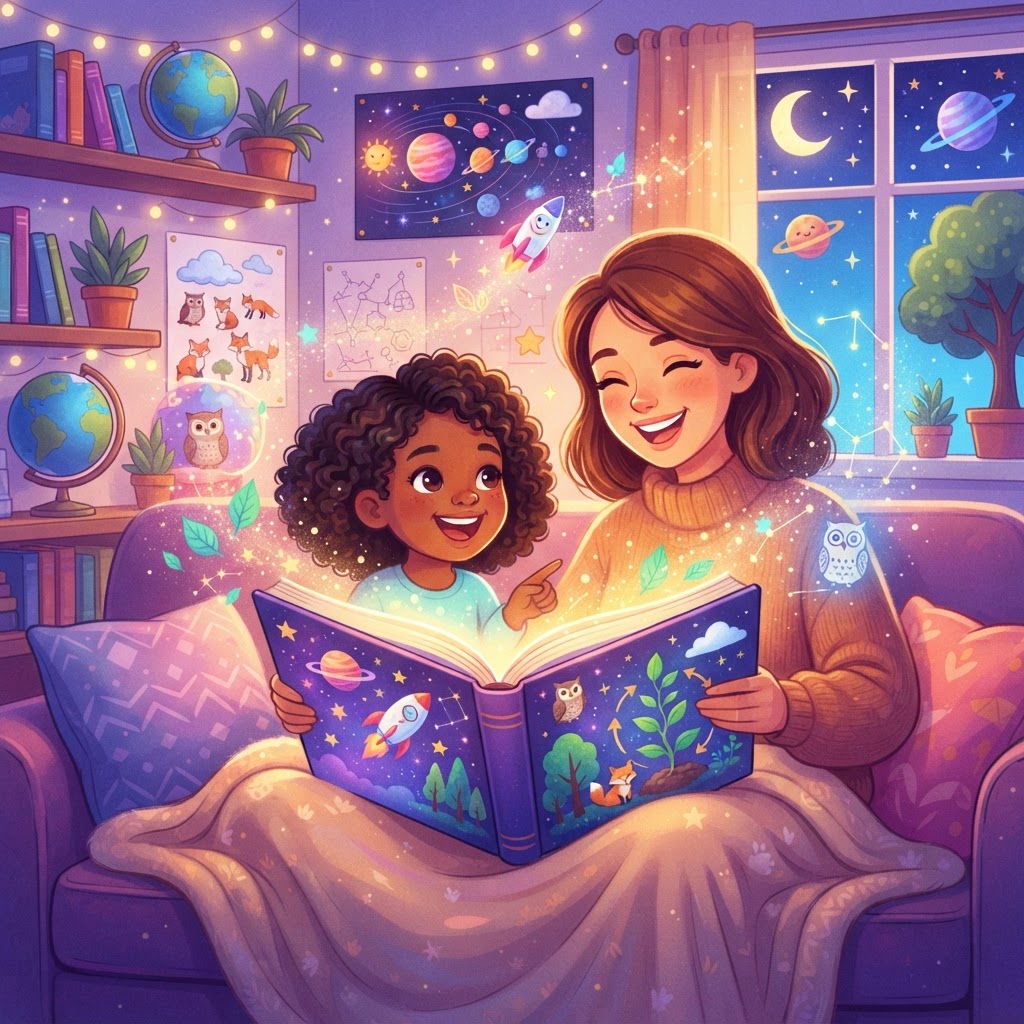
Many first graders understand science best when it comes through a character, a problem, and a simple sequence of events. That is why first grade science stories can be such a practical classroom tool: they make science feel concrete, memorable, and fun without lowering the rigor.
For teachers, teaching science with stories is not just a cute engagement strategy. It is a way to build vocabulary, improve discussion, connect science to literacy, and give children a structure for observing the world. Below, you will find why narrative supports science learning, five story-based first grade science activities, ways to differentiate for diverse learners, and simple ideas for using InstaTales in your science block.
Why do first grade science stories help children learn?
Stories help first graders learn science because they turn abstract ideas into concrete experiences. A child may not remember a definition of “habitat,” but they often remember a rabbit looking for shelter before the rain starts.
This works especially well for six- and seven-year-olds, who are still building background knowledge and academic language. A story gives them a sequence to follow: first something happens, then a character notices a change, then the class investigates why. That structure supports attention, recall, and discussion.
Research supports this approach. The Harvard Center on the Developing Child explains that young children learn best through rich language, active engagement, and meaningful back-and-forth interactions. Story-based science lessons naturally create those conditions.
Science organizations also stress that young children need hands-on, talk-rich learning. The National Science Teaching Association emphasizes inquiry, observation, and connecting science to children’s real experiences. A good science story for first grade does exactly that when teachers pause to ask, “What do you notice?” or “What do you think will happen next?”
Stories also support science vocabulary. When teachers read aloud, model words in context, and revisit key ideas in discussion, they align with evidence-based practices highlighted by the What Works Clearinghouse. In other words, science stories for first grade are most powerful when they are paired with conversation and simple investigation.
What makes a science story effective for first grade?
The best science stories for first grade are simple, accurate, and closely tied to observable phenomena. They should help children notice something they can see, hear, touch, or test.
Look for these features when choosing or creating a story:
- A clear science idea, such as weather, plant growth, sound, light, or animal needs
- One main problem or question
- Age-appropriate vocabulary used in context
- Repetition of key words and ideas
- A connection to real-world observation or an easy experiment
- A short length that leaves room for discussion
For example, a story about a class pet looking for a sunny spot can lead into light and warmth. A story about a seed traveling in the wind can introduce plant life cycles and dispersal. A story about boots, umbrellas, and puddles can open a weather lesson.
Accuracy matters. Stories can simplify, but they should not create misconceptions. If a flower “wants” water in the story, make sure your follow-up discussion explains that plants need water to grow rather than having feelings like people.
Stories also work best when they connect across subjects. If you already use narratives for literacy, you can extend that success into science. These ideas pair well with story-rich approaches to first grade reading instruction and first grade writing lessons.
What are five story-based first grade science activities that really work?
The most effective story-based science lessons combine read-aloud, prediction, observation, and student talk. These five activities are easy to run in a first grade classroom and align well with common early science standards.
1. How will the weather change today?
Read a short story about a child deciding what to wear for the day. Stop at key points and ask students to predict the weather based on clues in the sky, wind, or temperature.
Then take students outside for a two-minute weather observation. Have them compare the real sky to the story and record one sentence or sketch.
Science focus: weather patterns, observation, evidence
Literacy focus: prediction, describing words
2. What does a seed need to grow?
Use a story about a tiny seed trying to grow in different places: a dark drawer, a sunny windowsill, and dry soil. After the read-aloud, plant seeds in two or three different conditions.
Over the next week, students create a class “plant diary” with drawings and oral retells. This turns a science investigation into a narrative sequence that children can easily remember.
Science focus: plant needs, life cycles
Literacy focus: sequencing, vocabulary, oral language
3. Which objects will sink or float?
Tell a simple story about a toy boat carrying different classroom objects across a pond. Before each object goes in, students predict what will happen and explain why.
Then test the objects in a tub of water. Afterward, invite students to retell the story using evidence: “The spoon sank, but the cork floated.”
Science focus: material properties, testing ideas
Literacy focus: using evidence in speech
4. How do shadows change?
Read a story about a character whose shadow seems to “follow” them through the day. Pause for students to act out where the sun might be during morning, noon, and afternoon.
Take the class outside and trace shadows at two different times. Students can compare the story events to real observations and discuss how light changes what they see.
Science focus: light and shadow
Literacy focus: compare and contrast
5. What sounds can we find around us?
Start with a story about a child walking through school and noticing quiet and loud sounds. Then send students on a guided sound walk with a simple checklist or picture card.
Back in class, create a shared class book where each page begins, “We heard…” This is one of the easiest first grade science activities to manage, and it builds strong listening skills.
Science focus: sound, vibration, observation
Literacy focus: sentence frames, shared writing
How can you differentiate science stories for diverse first grade learners?
Differentiation works best when you adjust language support, response options, and pacing. The goal is to keep the science concept constant while giving students multiple ways to access it.
Here are teacher-friendly ways to differentiate:
- For multilingual learners: pre-teach 3-5 key words with visuals, gestures, and real objects
- For emerging readers: keep the story short and rely on repeated phrases
- For students with language delays: use sentence frames such as “I noticed…” and “I predict…”
- For advanced learners: ask them to add a new ending based on evidence from the investigation
- For students who need sensory support: include movement, drawing, and hands-on materials
It also helps to offer different response types. Some students can write a sentence, while others may sort picture cards, label a diagram, or orally retell what happened. In first grade, science understanding often appears in talk and action before it appears in formal writing.
If you teach a mixed-age group or have students who need a gentler entry point, it can help to borrow scaffolds from early-years story lessons. Simpler patterns, strong visuals, and repetition remain effective even as the science content becomes more complex.
How can InstaTales support first grade science lessons?
InstaTales can support first grade science by helping teachers create short, personalized stories tied to a specific science objective. Instead of searching for the perfect read-aloud, you can build one around your class topic, student interests, and the exact vocabulary you want to reinforce.
Teachers can use InstaTales for teachers to generate stories about weather, plants, animals, light, or sound in minutes. This is especially useful when you want a text that matches your lesson rather than adapting a book that only partly fits.
A simple workflow looks like this:
- Choose one science goal, such as “identify what plants need to grow”
- Add a relatable character, setting, and classroom-friendly problem
- Include 3-5 target words, such as seed, soil, sunlight, water, and grow
- Read the story aloud and pause for prediction
- Follow with a hands-on science task
You can also create your own personalized bedtime story for home-school connection. A child who reads about clouds in class may love hearing a related story at home featuring their own name, neighborhood, or favorite animal.
For faster planning, teachers can start with ready-made story templates and adapt them for different units. This makes it easier to create science stories for first grade that feel fresh while still keeping structure and vocabulary consistent.
How can you assess learning after a science story?
The best assessments after a science story are brief, observable, and tied to the investigation. In first grade, you do not need a long quiz to know whether students understood the concept.
Try these quick checks:
- Ask students to draw what happened first, next, and last
- Use an exit prompt such as “Plants need ___ to grow”
- Have partners retell the story using one science word correctly
- Sort picture cards into “needs sunlight” and “does not need sunlight”
- Listen for evidence-based language during discussion
A strong story lesson should end with students doing more than retelling the plot. They should be able to connect the events of the story to a science idea, observation, or test. That shift from “what happened” to “what we learned” is where real science understanding grows.
Frequently Asked Questions
Are first grade science stories enough on their own?
No. Stories are most effective when they introduce or reinforce a concept and are followed by observation, discussion, or a simple investigation. The story provides the context, but the science learning deepens through active exploration.
What science topics work best with stories in first grade?
Weather, plants, animals, sound, light, and materials all work very well. These topics connect easily to everyday experiences and simple classroom experiments.
How long should a first grade science story be?
Short is usually best. Aim for a read-aloud that takes 5-10 minutes so you still have time for prediction, hands-on learning, and discussion.
Can informational texts work alongside stories?
Yes. In fact, they work well together. A narrative can build interest and context, while an informational text adds facts, diagrams, and precise vocabulary.
How often should teachers use story-based science lessons?
Once or twice a week is a realistic starting point for many classrooms. Consistent use helps students see that science is not separate from reading, speaking, and writing.
How can InstaTales help busy teachers save planning time?
InstaTales can generate targeted stories around your exact science objective, vocabulary, and student interests. That makes it easier to plan engaging lessons without spending hours searching for the right text.
Get a new bedtime story every week
Free, personalized, and delivered to your inbox. No spam, ever.
Ready to Create a Personalized Bedtime Story?
Use our free AI bedtime story generator to create a personalized illustrated story for your child in 30 seconds — no credit card needed.
Popular story types:
Maya Rodriguez
Lead Content Editor & Early Literacy Specialist
Maya is a former early childhood educator and literacy specialist with over a decade of experience helping children develop a love of reading. She leads content at InstaTales, where she writes about the science of storytelling, child development, and how families can use personalized AI stories to build literacy and emotional resilience.
instatales.ai