Fourth Grade Music Stories That Make Lessons Stick
Make music engaging for fourth grade students with stories. Practical strategies, story ideas, and classroom activities for teachers.
✦ Key Takeaways
- •Stories work well in fourth grade music because they improve attention, memory, and emotional connection.
- •Fourth graders can learn nearly every core elementary music skill through stories, especially when the narrative is tied to listening, movement, and creation.
- •The best fourth grade music activities use a simple story structure and one clear musical goal.
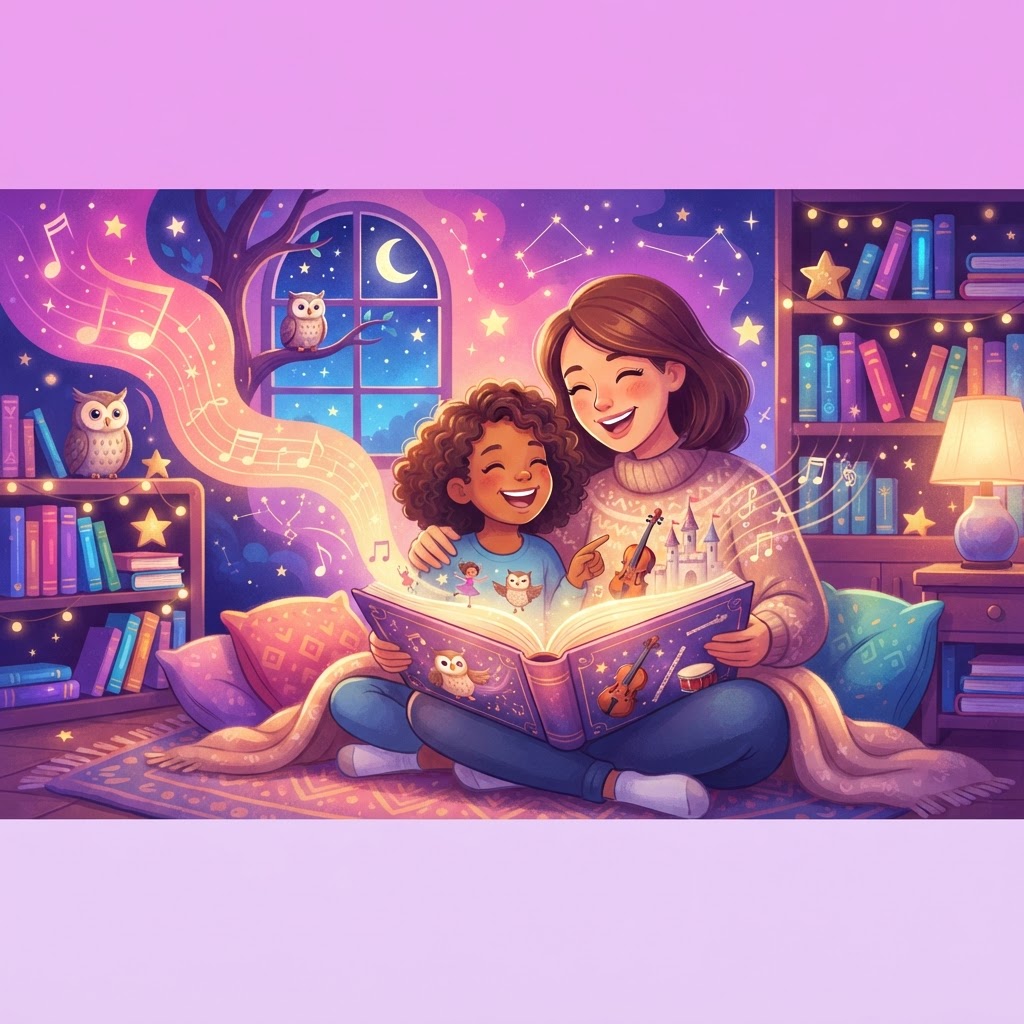
Fourth grade is a sweet spot for story-rich music learning. At ages 9 and 10, students can follow plot, notice patterns, compare characters, and connect emotion to sound—all of which makes teaching music with stories especially effective. When a rhythm becomes a marching giant, or a dynamic change becomes a storm rolling in, abstract music concepts feel concrete, memorable, and fun.
For teachers, that matters. Many fourth grade music activities ask students to hear, perform, describe, and create at the same time. Stories help organize those tasks into a meaningful sequence. Instead of teaching isolated terms, you give students a reason to listen closely and a context for making musical choices.
Why do stories work so well in fourth grade music?
Stories work well in fourth grade music because they improve attention, memory, and emotional connection. A good narrative gives students a clear structure, which helps them understand and remember musical ideas like form, tempo, rhythm, and mood.
Research supports this approach. Psychologist Jerome Bruner famously argued that people make meaning through narrative, and Allan Paivio’s dual coding theory suggests that combining words with imagery strengthens recall. In arts education, organizations such as ArtsEdSearch and the National Association for Music Education highlight how arts-integrated learning can boost engagement and understanding.
In practical classroom terms, music stories for fourth grade help because they:
- Turn abstract vocabulary into concrete images
- Support sequencing and listening comprehension
- Give reluctant learners a way into performance and discussion
- Encourage expression, not just accuracy
- Make cross-curricular links feel natural
This age group is also developmentally ready for richer interpretation. Fourth graders can explain why a melody sounds “sneaky” or how percussion builds tension in a scene. That makes story-based music instruction both joyful and academically solid.
What can fourth graders learn through music stories?
Fourth graders can learn nearly every core elementary music skill through stories, especially when the narrative is tied to listening, movement, and creation. Stories are not an “extra”—they can be the frame for teaching rhythm, melody, form, expression, and music response.
Here are some music skills that fit especially well with narrative:
- Rhythm and meter: footsteps, heartbeats, trains, dances
- Dynamics: whispering woods, roaring dragons, quiet snowfall
- Tempo: chase scenes, sleepy afternoons, fast machines
- Pitch and melody: climbing mountains, bird calls, question-and-answer dialogue
- Form: beginning-middle-end, repeated scenes, surprise endings
- Timbre and instruments: matching instruments to characters or settings
- Composition: creating leitmotifs, sound effects, or short musical scenes
This approach also supports literacy and content integration. If you already use stories in fourth grade writing lessons or story-based science learning, students will quickly understand how narrative can organize musical thinking too.
What are five story-based music activities for fourth grade?
The best fourth grade music activities use a simple story structure and one clear musical goal. Start small, and let the music do the storytelling.
1. How can a rhythm adventure build steady beat and notation?
A rhythm adventure helps students practice steady beat, note values, and rhythmic reading by attaching patterns to story events. Students remember rhythms more easily when each one “means” something in the plot.
Try this:
- Create a short story about a jungle explorer, space traveler, or treasure hunter.
- Assign one rhythm pattern to each event: walking, climbing, hiding, celebrating.
- Read the story aloud while students clap, tap, or play the matching pattern.
- Have students notate the patterns afterward.
This works especially well for quarter notes, eighth notes, rests, and simple syncopation review.
2. How can character themes teach melody and timbre?
Character themes teach melody and timbre by giving each person, animal, or creature a musical identity. Students learn that musical choices communicate personality.
Try this:
- Introduce 3-4 story characters.
- Ask students to choose instruments or melodic patterns for each one.
- Discuss why a glockenspiel might fit a fairy, or why a low drum might fit a giant.
- Play the themes as characters enter the story.
This introduces the idea of leitmotif in a child-friendly way and sharpens listening language.
3. How can a soundscape story strengthen listening and dynamics?
A soundscape story strengthens listening because students must control volume, texture, and timing to match a scene. It is one of the most accessible music stories for fourth grade because every child can contribute.
Try this:
- Read a scene such as a thunderstorm, forest at night, or busy city morning.
- Assign sound roles using voices, body percussion, or classroom instruments.
- Conduct the group with cues for louder, softer, faster, slower, start, and stop.
- Reflect on how dynamics changed the feeling of the scene.
This is a great fit for expressive performance and ensemble awareness.
4. How can story mapping make musical form easier to understand?
Story mapping makes musical form easier because students can “see” repeated and contrasting sections as events in a plot. Form becomes more than letters on a board.
Try this:
- Play a piece with clear sections such as ABA or rondo form.
- Ask students to imagine a story that fits each section.
- Map the sections as scenes: home, adventure, home again.
- Have students draw or write a brief plot outline that matches the music.
This is especially useful when students struggle to hear repetition and contrast in listening examples.
5. How can students compose a musical ending to a story?
Composing an ending helps students apply rhythm, melody, and expression in a purposeful way. Instead of creating “random notes,” they compose to solve a storytelling problem.
Try this:
- Pause a class story just before the ending.
- Ask students to compose 4-8 beats or a short melody for the final scene.
- Set clear limits: one scale, two dynamics, and one mood word.
- Let groups perform and explain their choices.
This activity shows whether students can transfer music vocabulary into real decision-making.
How can you differentiate music stories for diverse fourth grade learners?
You can differentiate story-based music lessons by adjusting language load, response mode, and creative complexity. The same story can support emerging readers, advanced musicians, multilingual learners, and students with varied processing needs.
Helpful differentiation strategies include:
- Use visual supports: picture cards, icons for dynamics, color-coded rhythms
- Offer choice: speak, draw, move, play, or write a response
- Chunk directions: one story scene at a time
- Pre-teach vocabulary: tempo, timbre, motif, repeat, contrast
- Pair students strategically: strong reader with strong performer
- Extend for advanced learners: add notation, improvisation, or student-led conducting
For multilingual learners, stories provide context clues that make academic vocabulary easier to understand. For neurodivergent students, predictable narrative structure can reduce cognitive overload and support participation. The U.S. Department of Education and arts education advocates consistently emphasize accessible, inclusive instruction—and stories are one practical way to do that.
How can teachers use InstaTales for fourth grade music lessons?
Teachers can use InstaTales to generate custom stories that match specific music objectives, themes, and student interests. That makes planning faster and helps you create highly relevant fourth grade music stories without starting from scratch every time.
Here are a few simple ways to use InstaTales for teachers:
- Generate a short story built around a target like rhythm, dynamics, or form
- Create differentiated versions of the same story for different reading levels
- Use story templates to speed up lesson planning
- Save successful lesson stories in your story library for reuse
- Build cross-curricular links with topics students already know from reading, science, or social studies
For example, if your class is studying weather, you can create a storm story for dynamics and percussion. If students are learning about biographies, you can build a composer-inspired narrative. If you want independent extension work, students can help co-create scenes and then perform the music that fits them.
This is also useful for centers, sub plans, and collaborative projects. A teacher might generate one base story, then ask small groups to add rhythm patterns, choose instruments, or compose a theme. If you want more ideas across subjects, the InstaTales blog includes related examples for upper elementary classrooms.
How can teachers assess learning in story-based music lessons?
Teachers can assess story-based music learning by listening for accurate performance, watching for musical choices, and asking students to explain their thinking. If students can connect a musical feature to a story purpose, they usually understand the concept more deeply.
Simple assessment options include:
- Exit tickets: “How did dynamics change the mood?”
- Quick checks during performance: steady beat, accurate rhythm, clear entrances
- Student reflection: “Why did your group choose that instrument?”
- Short rubrics for composition, participation, and expressive intent
- Audio or video recordings for later review
Assessment does not have to interrupt creativity. In fact, story-based tasks often make understanding more visible than worksheets do.
Frequently Asked Questions
Are music stories for fourth grade only useful for younger or struggling students?
No. Music stories for fourth grade can challenge all learners when you raise the level of analysis, composition, or performance. Strong students often thrive when asked to justify musical choices and create original themes.
How long should a story-based fourth grade music lesson be?
A story-based lesson can be as short as 10 minutes or fill a full class period. Many teachers start with a 5-minute story hook, a 15-minute music task, and a short reflection.
Can I use stories even if I am not confident as a storyteller?
Yes. You do not need to perform dramatically to make this work. A clear plot, vivid images, and purposeful musical prompts are enough.
What music standards fit well with teaching music with stories?
Stories work especially well for performing, creating, responding, and connecting standards. They are ideal for lessons on rhythm, dynamics, form, timbre, and composition.
How can InstaTales support centers or homework?
You can generate a short custom story for a listening station, small-group composition task, or take-home extension. Saving stories in your story library also makes it easier to revisit and build on previous lessons.
Ready to Create a Personalized Bedtime Story?
Use our free AI bedtime story generator to create a personalized illustrated story for your child in 30 seconds — no credit card needed.
Popular story types:
Maya Rodriguez
Lead Content Editor & Early Literacy Specialist
Maya is a former early childhood educator and literacy specialist with over a decade of experience helping children develop a love of reading. She leads content at InstaTales, where she writes about the science of storytelling, child development, and how families can use personalized AI stories to build literacy and emotional resilience.
instatales.ai