Third Grade Music Stories That Make Learning Stick
Make music engaging for third grade students with stories. Practical strategies, story ideas, and classroom activities for teachers.
✦ Key Takeaways
- •Teaching music with stories works because narrative gives children a structure for attention, memory, and meaning.
- •The best third grade music activities use a simple story to anchor one clear musical goal.
- •You can differentiate story-based music lessons by adjusting language, response mode, and complexity without changing the core musical goal.
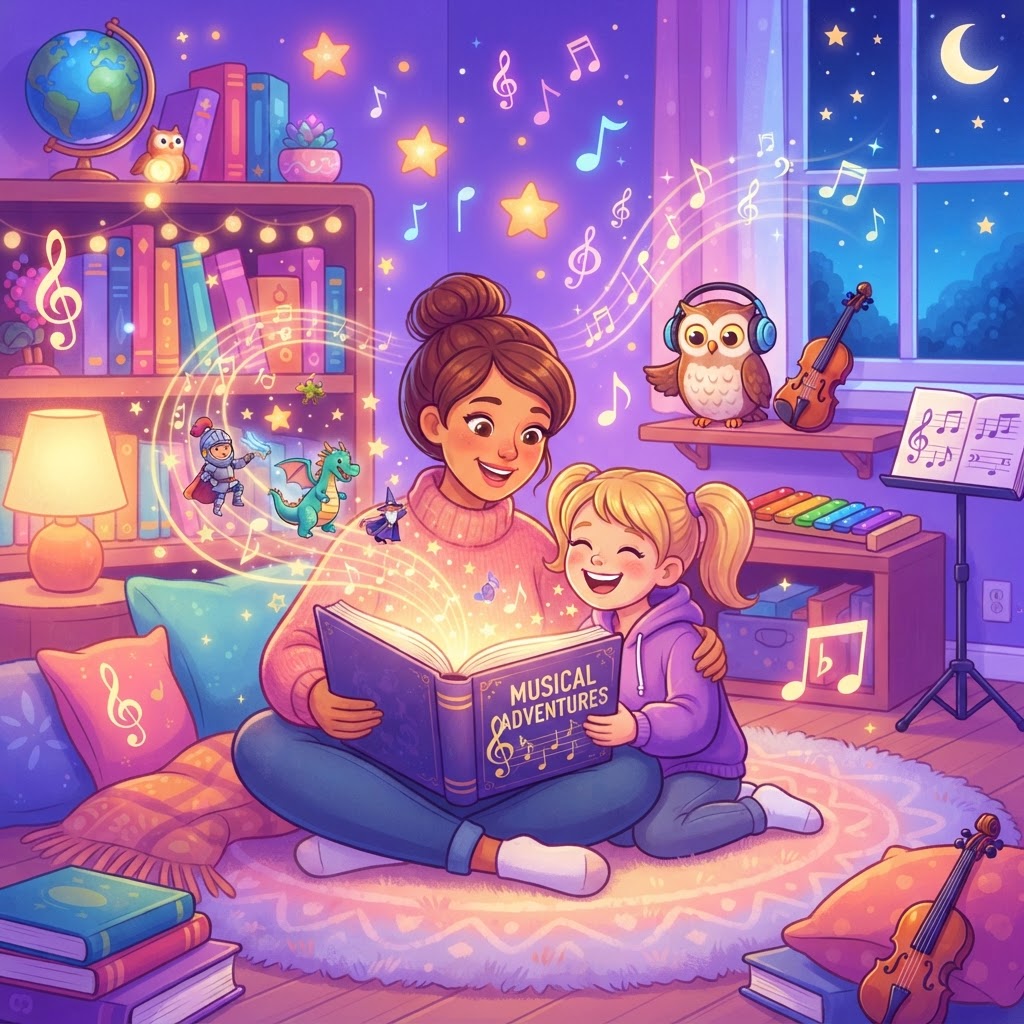
If you teach eight- and nine-year-olds, you already know this: third graders remember what they can feel, picture, and do. That is why third grade music stories work so well. A good story gives rhythm, melody, form, and expression a meaningful context, turning abstract music concepts into something children can act out, sing, discuss, and remember long after the lesson ends.
Why does teaching music with stories work so well in third grade?
Teaching music with stories works because narrative gives children a structure for attention, memory, and meaning. In third grade, students are ready to follow longer sequences, notice patterns, and connect emotion to ideas, which makes story-based learning a strong fit for music.
Stories support music learning in several ways:
- They make abstract concepts concrete. A “sneaky fox rhythm” is easier to remember than “syncopation.”
- They invite movement, voice, and imagination at the same time.
- They help students hear musical contrasts like fast/slow, loud/soft, and high/low inside a memorable context.
- They improve language development, which strengthens discussion, listening, and reflection.
This approach aligns with what child development experts know about how children learn. The CDC’s child development guidance notes that school-age children grow through social interaction, language, and increasingly complex thinking. Music educators also emphasize active music-making, listening, and responding, as highlighted by the National Association for Music Education. And literacy experts at Reading Rockets consistently point to the power of oral language, retelling, and comprehension routines that also transfer well into music lessons.
In practice, music stories for third grade are especially useful when you want students to:
- internalize steady beat and rhythm patterns
- identify instrument families or timbre
- understand musical form
- respond expressively to listening excerpts
- compose simple patterns with purpose
If you already use stories in subjects like third grade math or third grade writing, the same principle applies in music: children learn more deeply when a skill is embedded in a meaningful narrative.
What are the best story-based third grade music activities to try first?
The best third grade music activities use a simple story to anchor one clear musical goal. Start with one concept per lesson, then let students sing, move, play, and create inside the story world.
1. How can a character walk the beat?
Create a short story about two characters with different walking styles, such as a giant and a mouse. Students step the steady beat for each character, then change tempo, dynamics, or articulation to match the plot.
This works well for:
- steady beat
- tempo
- dynamics
- expressive movement
Try asking: “How would the music sound if the giant got sleepy?” That one question invites musical decision-making without needing heavy terminology at first.
2. How can a rhythm pattern become part of the plot?
Turn rhythm syllables into repeated story events. For example, “ta ta ti-ti ta” might be the sound of a train crossing bridges during an adventure story.
Have students:
- clap the rhythm when the repeated event appears
- speak it with rhythm syllables
- transfer it to unpitched percussion
- create a new pattern for a different scene
This is one of the easiest music stories for third grade because repetition helps students retain patterns quickly.
3. How can students show musical form through storytelling?
Use a story with a clear beginning, middle, and return, then connect it to ABA form. For example, a child explores a forest, enters a noisy cave, and returns home.
Students can:
- move one way for A, another for B
- choose instruments for each section
- draw story maps that match the music
- listen for when the “home” music returns
Story structure gives students an immediate reason to listen carefully. Instead of asking, “Did you hear ABA?” you can ask, “When did the character get back home?”
4. How can instrument families come alive in a story?
Assign instrument families to characters or settings. Strings might be the river, woodwinds the birds, brass the king’s announcement, and percussion the storm.
Then invite students to:
- match listening examples to characters
- justify their choices with words like bright, smooth, strong, or sharp
- create a class chart of timbre words
- build a short narrated listening map
This activity develops vocabulary and listening at the same time. It is especially helpful for students who need a strong visual or verbal anchor.
5. How can students compose music for a story ending?
Read or tell a very short story, then stop before the ending. Students compose a four-beat or eight-beat pattern to show what happens next.
You can limit the task by giving:
- two rhythms to choose from
- three barred instrument pitches
- one mood, such as peaceful or surprising
- a partner or small-group format
This is one of the strongest third grade music activities for creativity because students are composing with purpose, not just filling time. If you want a fast extension, have groups perform their ending and let classmates explain how the music matched the story.
How can you differentiate story-based music lessons for all learners?
You can differentiate story-based music lessons by adjusting language, response mode, and complexity without changing the core musical goal. Stories are naturally flexible, which makes them ideal for mixed-readiness classrooms.
Here are practical ways to adapt:
- For emerging readers: tell the story orally and use picture cards.
- For multilingual learners: preteach action words and music vocabulary with gestures.
- For students who need movement: build in stepping, frozen poses, and instrument changes.
- For advanced learners: ask them to compose a contrasting section or narrate with precise musical language.
- For students who need extra support: reduce choices and repeat the same story structure across lessons.
You can also differentiate by output. One student may show understanding by drawing the form, another by performing it, and another by explaining it aloud. That still counts as strong evidence of learning.
A simple planning question helps: “What is the one musical idea every child must show?” Once that is clear, you can vary everything else.
How can InstaTales support third grade music lessons?
InstaTales can support third grade music by helping teachers create custom stories that match a specific musical concept, class theme, or student interest. Instead of hunting for the “perfect” book, you can shape a story around the exact rhythm, mood, or listening task you want to teach.
For example, you might create your own personalized bedtime story about:
- a drummer crossing a rhythm bridge
- an orchestra solving a mystery through instrument clues
- a character whose feelings change with tempo and dynamics
- a musical journey built around ABA form
For classroom use, InstaTales for teachers is especially useful when you want to align literacy and arts instruction. You can generate a story, project it during class, and then save successful versions in your story library for future groups or centers. If you want a quicker start, browse story templates and adapt them to your current music unit.
A few practical ways teachers use AI stories well:
- generate a short narrative hook before a listening activity
- personalize names or themes for higher engagement
- create multiple versions of the same lesson for differentiation
- send a simple music-story extension home for family reading
The goal is not to replace quality children’s literature or your musicianship. The goal is to give you a flexible tool for building more engaging, better-matched third grade music stories when time is short and student needs vary.
What should a strong story-based third grade music lesson include?
A strong story-based third grade music lesson includes one clear objective, one simple narrative, active music-making, and a quick check for understanding. When those pieces are in place, the lesson stays focused and fun.
A reliable structure looks like this:
- Hook: Tell or read the opening of the story.
- Teach: Introduce the target concept, such as steady beat or ABA form.
- Practice: Sing, move, play, or listen within the story.
- Create: Let students improvise or compose a short response.
- Assess: Ask for a performance, drawing, exit ticket, or verbal explanation.
This kind of lesson works because the story carries the engagement, while the music task carries the learning. That balance is what makes teaching music with stories feel joyful without becoming fluff.
Frequently Asked Questions
What music concepts work best with stories in third grade?
Steady beat, rhythm patterns, tempo, dynamics, timbre, and form all work especially well. These concepts are easier for children to grasp when they are tied to characters, actions, and emotions.
Do third grade music stories need to be long?
No. Short, focused stories usually work better in music class than long narratives. A one-minute story opener can be enough to frame a listening, movement, or composition task.
Can I use stories even if I am not a music specialist?
Yes. Classroom teachers can use simple music stories for third grade to support beat, listening, and expressive response. Keep the musical objective small and the directions concrete.
How do I assess learning during story-based music lessons?
Use quick performance checks, partner demonstrations, drawing responses, or oral explanations. If students can show the target skill inside the story context, you have useful evidence of understanding.
Is InstaTales appropriate for classroom planning?
Yes, when used thoughtfully, it can be a practical planning tool for generating custom story prompts, differentiated versions, and themed lesson hooks. It is most effective when teachers guide the musical goal and review the story before using it with students.
Ready to Create a Personalized Bedtime Story?
Use our free AI bedtime story generator to create a personalized illustrated story for your child in 30 seconds — no credit card needed.
Popular story types:
Maya Rodriguez
Lead Content Editor & Early Literacy Specialist
Maya is a former early childhood educator and literacy specialist with over a decade of experience helping children develop a love of reading. She leads content at InstaTales, where she writes about the science of storytelling, child development, and how families can use personalized AI stories to build literacy and emotional resilience.
instatales.ai