Why Kids Love Myth Stories So Much
Ever wonder why your child loves myth stories? The psychology, benefits, and magic behind this beloved story type.
✦ Key Takeaways
- •Myth stories appeal to children because they make the world feel magical and understandable at the same time.
- •Myth psychology suggests that children are drawn to stories that organize fear, hope, and identity into meaningful patterns.
- •Myth stories give children emotional safety, excitement, and reassurance that hard things can be faced.
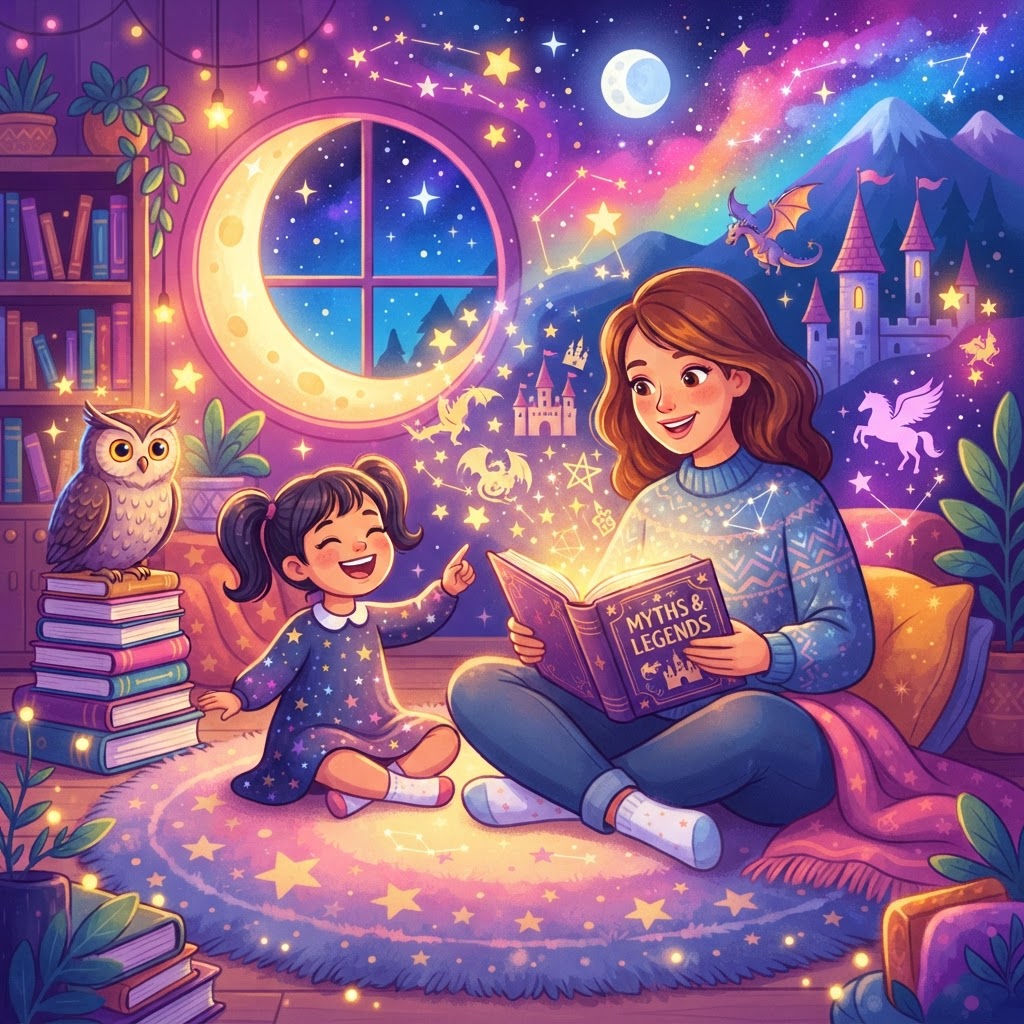
If your child asks for dragon legends, hero quests, or tales about moon goddesses night after night, you are not imagining it: myth stories children love often have a special pull. They feel bigger than everyday life, yet they speak to very real childhood needs.
That is the heart of why kids love myth stories. Myths blend wonder, danger, meaning, and clear patterns in a way that fits how young minds grow. They help children explore big feelings, make sense of right and wrong, and imagine a world where courage, kindness, and cleverness matter. For families using bedtime stories as a calming ritual, myths can offer both excitement and emotional structure.
Why do myth stories appeal to children?
Myth stories appeal to children because they make the world feel magical and understandable at the same time. They turn big ideas—bravery, fear, storms, friendship, loss—into memorable characters and simple story patterns.
Young children think in images, symbols, and strong emotions. A thunder god, a trickster fox, or a brave child facing a giant is easier to grasp than an abstract lesson about power, risk, or resilience. That is a major part of the myth stories appeal: they translate complex human experiences into vivid, concrete scenes.
Myths also tend to have clear stakes. Someone is on a quest. A problem must be solved. A choice matters. That clarity helps children stay engaged and follow cause and effect.
In many ways, myths sit between the comfort of familiar tales and the thrill of adventure. If your child also loves fantasy stories, it makes sense—both genres let children step into worlds where anything can happen, but myths often add deeper meaning and cultural roots.
How does myth psychology help explain why kids love myth stories?
Myth psychology suggests that children are drawn to stories that organize fear, hope, and identity into meaningful patterns. In simple terms, myths help children think about big feelings in a safe, story-shaped way.
Developmental research supports this idea. Children learn through narrative long before they can explain their emotions directly. The Harvard Center on the Developing Child has long emphasized that rich language experiences, including storytelling, help build the brain systems children use for memory, self-regulation, and understanding others.
Psychologist Paul L. Harris, known for his work on imagination and child development, has shown that children can skillfully move between reality and pretend worlds. That matters for myth psychology. Kids know a hero may not be “real” in a literal sense, but the feelings in the story are real enough to think with.
Myths also give children a safe distance from hard topics. A child may not want to talk directly about fear, jealousy, or unfairness. But they may eagerly discuss why a hero lied, why a monster was angry, or why a character needed help. Story creates emotional space.
What do myth stories give children emotionally?
Myth stories give children emotional safety, excitement, and reassurance that hard things can be faced. They let children feel intense emotions in a contained, predictable format.
Many myths begin with a disruption: a storm, a curse, a missing treasure, a test of courage. That tension grabs attention. But the story usually moves toward meaning, repair, or wisdom. For children, that arc is deeply comforting.
Emotionally, myths often offer:
- A safe way to explore fear
- Hope that problems can be solved
- A sense that courage can grow
- Comfort through repetition of familiar patterns
- A feeling that the world has order and meaning
This is one reason myth stories work well at bedtime when chosen carefully. Not every myth is calming, of course. But age-appropriate myth retellings can give children the thrill of adventure without overwhelming them.
If your child prefers a gentler nighttime rhythm, you might also enjoy learning why children respond so strongly to lullaby-style bedtime stories. Different story types meet different emotional needs, and many families use both.
How do myths help children learn right from wrong?
Myths help children learn right from wrong by showing choices and consequences in a vivid, memorable way. Instead of giving a lecture, they let children watch values unfold through action.
A boastful character may fail. A generous one may be rewarded. A hero may need humility, patience, or honesty before they can succeed. These patterns are easier for children to remember than abstract rules because they are tied to story and emotion.
This does not mean myths are always simple or preachy. In fact, part of their power is that they often include mixed motives and difficult choices. That complexity can support moral growth, especially for children around ages 5-10 who are learning that people can be both good and flawed.
Organizations like ZERO TO THREE note that young children build social-emotional understanding through relationships, conversation, and shared experiences. Storytime can support that process when adults pause to ask questions like:
- What do you think that character felt?
- Was that choice fair?
- What else could they have done?
- Why do you think the helper appeared then?
If your child enjoys values-based storytelling, you may also like these ideas about moral stories, which often overlap beautifully with myths.
Are myth stories good for language, learning, and memory?
Yes, myth stories can strongly support language, comprehension, and memory when they are told in an age-appropriate way. Their repeated patterns, striking imagery, and clear plot structure make them ideal for retelling and discussion.
Children remember stories better when they contain emotion, rhythm, and strong characters. Myths often have all three. They also introduce rich vocabulary—words like quest, promise, trickster, brave, storm, wisdom, and transform—within a context children can understand.
Shared reading research from Reading Rockets highlights how talking about stories builds vocabulary and comprehension. Myths are especially useful because they invite prediction and recall. A child can often tell you who the hero is, what the challenge was, and what lesson was learned.
For parents and educators, myths can support:
- Listening skills
- Sequencing and recall
- Cultural literacy
- Emotional vocabulary
- Imaginative thinking
That is one reason myths fit well alongside educational stories. They teach, but they do it through wonder rather than worksheets.
How can parents use myth stories effectively with children?
Parents can use myth stories effectively by choosing age-appropriate versions, reading interactively, and connecting the story back to the child’s world. The goal is not to “teach the myth perfectly.” It is to help your child enjoy and understand it.
A few simple practices make a big difference:
- Choose the right level. For ages 1-4, use short, gentle myth-inspired stories with one main event. For ages 5-7, simple quests and clear lessons work well. Older children can handle more layered retellings.
- Preview scary parts. If a story has a monster, loss, or conflict, soften the language or skip details.
- Pause and wonder together. Ask what your child thinks will happen next or how a character feels.
- Link the lesson to daily life. “That hero kept trying. Remember when you kept practicing your puzzle?”
- Re-read favorites. Repetition helps children process both language and emotion.
For busy families, it can help to create your own personalized bedtime story using familiar myth elements—like a brave child, a moonlit quest, or a helpful animal guide—while keeping the tone matched to your child’s age and temperament. If your child asks for the same story again and again, saving it in your story library makes rereading easy.
Myths can also be wonderful in group settings. Teachers often use them to introduce culture, symbolism, and character themes, which is why tools like InstaTales for teachers can be useful for classroom reading and discussion.
When should parents be careful with myth stories?
Parents should be careful with myth stories when the content is too intense, confusing, or culturally flattened for the child’s age. Myths are powerful, but young children need thoughtful retellings.
Some traditional versions include violence, punishment, betrayal, or themes that are developmentally too heavy for preschoolers. That does not mean myths are inappropriate. It means adults should adapt wisely.
Be especially mindful of:
- Stories that trigger bedtime fears
- Very long plots with too many characters
- Versions that stereotype cultures or beliefs
- Lessons presented as shame rather than guidance
A good rule is simple: keep the awe, reduce the overwhelm. Children do not need every original detail to benefit from myth. They need a story that sparks imagination and leaves them feeling safe, curious, and understood.
For more ideas on choosing story types by age and mood, the InstaTales blog offers helpful reading guides for families.
Frequently Asked Questions
Are myth stories good for all ages?
Yes, but the version should match the child’s age. Toddlers do best with gentle, simple myth-inspired tales, while older children can enjoy richer plots and deeper themes.
Why do myth stories feel so important to kids?
Myths make big emotions and life questions easier to understand. They turn fear, courage, unfairness, and hope into characters and events children can picture.
Can myth stories be too scary at bedtime?
They can be if the story is intense or detailed. Choose softened retellings, keep the ending reassuring, and skip any version that leaves your child unsettled.
Do myth stories teach moral lessons?
Often, yes. They show choices and consequences in a vivid way, which helps children think about honesty, bravery, kindness, and responsibility.
How are myth stories different from fairy tales?
Fairy tales usually focus on magical events and familiar story formulas, while myths often explain natural forces, human behavior, or cultural values. Both can support imagination, but myths often carry a stronger symbolic and moral structure.
Can personalized myth stories help reluctant readers?
Yes. When a child hears their own name, interests, or favorite themes in the story, engagement often rises. Personalized stories can make myths feel more accessible, memorable, and fun.
Get a new bedtime story every week
Free, personalized, and delivered to your inbox. No spam, ever.
Ready to Create a Personalized Bedtime Story?
Use our free AI bedtime story generator to create a personalized illustrated story for your child in 30 seconds — no credit card needed.
Popular story types:
Maya Rodriguez
Lead Content Editor & Early Literacy Specialist
Maya is a former early childhood educator and literacy specialist with over a decade of experience helping children develop a love of reading. She leads content at InstaTales, where she writes about the science of storytelling, child development, and how families can use personalized AI stories to build literacy and emotional resilience.
instatales.ai