Why Kids Love Fantasy Stories: The Science Behind It
Ever wonder why your child loves fantasy stories? The psychology, benefits, and magic behind this beloved story type.
✦ Key Takeaways
- •Fantasy stories feel powerful to children because they turn inner experiences into vivid, manageable images.
- •Fantasy supports child development by strengthening imagination, language, emotional insight, and problem-solving.
- •Fantasy stories meet children’s emotional needs by offering comfort, excitement, and a clear sense of meaning.
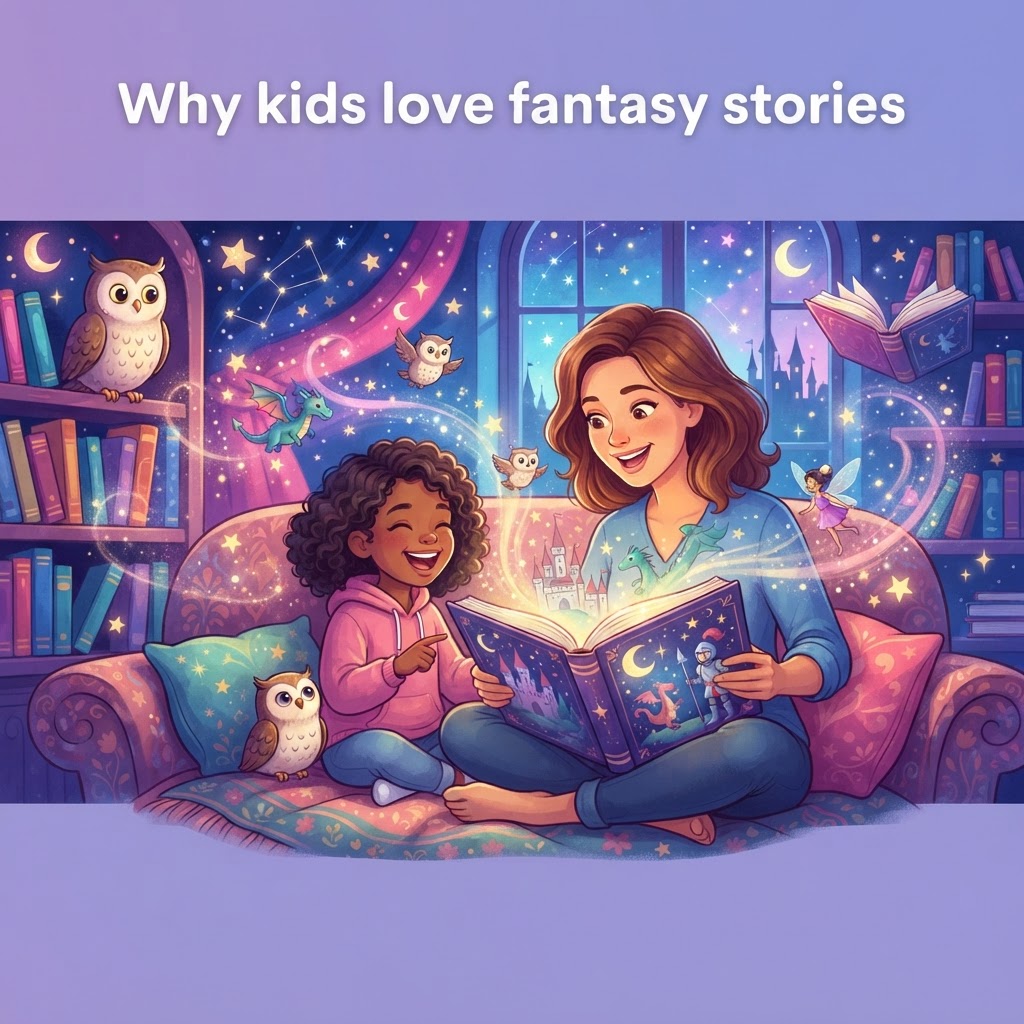
If your child asks for dragons, talking animals, secret kingdoms, or magical forests night after night, you are not imagining a pattern. Why kids love fantasy stories has a lot to do with how children think, feel, and learn. Fantasy is not “just pretend.” For many children, it is one of the safest and richest ways to explore big emotions, new ideas, and the difference between right and wrong.
From a child development point of view, the fantasy stories appeal because they match how young minds naturally work. Children often think symbolically before they think abstractly, and magical stories give shape to fears, hopes, and questions they cannot always explain in everyday language. That is one reason fantasy stories children return to again and again can become such beloved bedtime favorites.
Why do fantasy stories feel so powerful to children?
Fantasy stories feel powerful to children because they turn inner experiences into vivid, manageable images. A scary feeling can become a dragon, a brave choice can become a magic sword, and a difficult change can become a journey through an enchanted forest.
This is a key idea in fantasy psychology. Young children often understand the world through symbols and imaginative play. Developmental researchers such as Jean Piaget observed that children in the preoperational stage use pretend thinking naturally, while Lev Vygotsky emphasized that imagination supports learning, self-regulation, and social understanding.
Fantasy also gives children a rare sense of “safe distance.” A child can think about jealousy, anger, loneliness, or courage through a wizard or animal hero without feeling too exposed. In that way, magical stories let children process real feelings in a gentler form.
Research from the Harvard Center on the Developing Child also highlights how imaginative experiences support flexible thinking and emotional development. When a child enters a make-believe world, they are not escaping learning. They are practicing it.
How does fantasy support child development?
Fantasy supports child development by strengthening imagination, language, emotional insight, and problem-solving. In simple terms, fantasy helps children rehearse life before they have fully lived it.
Here are some of the biggest developmental benefits of fantasy stories:
- Symbolic thinking: Children learn that one thing can stand for another, which is a foundation for reading, writing, and abstract thought.
- Emotional processing: Magical plots help children name and explore feelings safely.
- Perspective-taking: Following heroes, sidekicks, and even villains builds empathy.
- Executive function: Tracking a quest, remembering rules of a magical world, and predicting outcomes all support attention and working memory.
- Language growth: Fantasy often introduces rich vocabulary, descriptive language, and complex story structure.
This helps explain why fantasy stories children love can be especially useful in the early and middle childhood years. According to the National Association for the Education of Young Children, imaginative play and storytelling are closely tied to healthy cognitive and social development.
Fantasy is also a powerful bridge between play and literacy. If your child enjoys make-believe, they are often more ready to engage with story patterns, character motives, and cause-and-effect. That is one reason fantasy pairs so well with bedtime stories and family reading routines.
What emotional needs do fantasy stories meet?
Fantasy stories meet children’s emotional needs by offering comfort, excitement, and a clear sense of meaning. They reassure children that scary things can be faced, confusing things can make sense, and small people can still matter.
For many children, fantasy offers comfort because magical worlds still follow rules. Even when the story begins with danger, children usually sense there is structure: helpers appear, clues matter, and courage changes outcomes. That kind of order can feel deeply soothing in a world that often seems unpredictable.
Fantasy also offers excitement in a developmentally healthy way. Children get to experience suspense, surprise, and triumph without real-world risk. A quest, spell, or hidden door raises the emotional stakes while keeping the child physically safe in a parent’s lap or bed.
Just as important, fantasy often provides moral structure. Good and evil may be simplified more than in real life, but that clarity can help children understand fairness, kindness, honesty, and responsibility. If your child also loves stories with clear lessons, you may notice overlap with moral stories and adventure stories.
The fantasy stories appeal is especially strong during times of transition, such as starting school, welcoming a sibling, or working through new fears. A magical narrative can say, in effect, “Yes, this feels big. And yes, you can handle it.”
Why do magical worlds still teach real-life lessons?
Magical worlds teach real-life lessons because the emotions inside them are real, even when the setting is imaginary. Children do not need stories to be realistic in order to learn from them; they need stories to feel meaningful.
A well-crafted fantasy story often teaches children about:
- bravery without being reckless
- kindness without being passive
- persistence when a task feels hard
- friendship, loyalty, and trust
- consequences for selfish or harmful choices
This is one reason the line between fantasy and educational value is thinner than many adults assume. In fact, some of the most memorable lessons children absorb come through magical characters and impossible situations. If you want to explore that connection further, our guide to why children enjoy educational stories shows how learning and delight often work together.
Fantasy can also help children ask better questions. What makes someone a hero? Can a person make a mistake and still change? Why do power and responsibility belong together? These are complex ideas, but fantasy makes them accessible.
The American Academy of Pediatrics has long emphasized the value of shared reading for language, relationships, and social-emotional growth. Fantasy adds another layer by making those conversations especially engaging.
How can parents use fantasy stories effectively at home?
Parents can use fantasy stories effectively by matching the story to the child’s age, temperament, and current concerns. The best fantasy experience is not simply the most magical one; it is the one that feels exciting, safe, and emotionally relevant.
A few practical strategies help:
- Choose age-appropriate stakes. A three-year-old may enjoy talking animals and gentle magic, while an eight-year-old may want quests, mysteries, and more complex villains.
- Follow your child’s cues. If they want the same story repeated, that usually means they are working on something important emotionally or cognitively.
- Talk briefly after reading. Ask simple questions like, “What part felt brave?” or “Why do you think the character needed help?”
- Use fantasy to explore real challenges. A child nervous about school might enjoy a story about entering a magical academy or meeting new forest friends.
- Keep bedtime calming. Not all fantasy is soothing. For nighttime, choose wonder over intensity.
If you want to tailor stories to your child’s interests, it can help to create your own personalized bedtime story with familiar themes, favorite creatures, and a gentle emotional message. Many families also like saving repeat favorites in your story library so children can revisit the stories that comfort them most.
For parents looking for ideas by stage, our roundup of fantasy stories by age can make choosing easier.
When should adults be mindful about fantasy content?
Adults should be mindful about fantasy content when the imagery, themes, or emotional intensity go beyond a child’s ability to process it. Fantasy is beneficial, but like any story type, it works best when it fits the child in front of you.
Watch for signs that a story may be too much:
- your child becomes clingy or upset after reading
- bedtime worries increase
- they fixate on frightening imagery without resolution
- the story’s “moral” feels confusing or harsh
This does not mean avoiding all conflict. Children often need manageable conflict to stay engaged. It means balancing wonder with security, especially for younger children or sensitive readers.
It also helps to remember that children understand fantasy differently at different ages. A preschooler may move fluidly between pretend and reality, while an older child may enjoy more layered plots and irony. Responsive storytelling matters more than strict rules.
When used thoughtfully, fantasy can be one of the most effective tools for connection. It creates space for laughter, questions, and emotional rehearsal. That is a big part of why kids love fantasy stories so deeply: fantasy helps them feel both bigger and safer at the same time.
Fantasy stories are often more than entertainment. They are practice grounds for courage, comfort, imagination, and meaning. When adults choose them well and share them warmly, fantasy becomes a powerful part of healthy childhood.
Frequently Asked Questions
Why do children prefer fantasy over realistic stories?
Many children prefer fantasy because it matches their imaginative style of thinking and makes emotions easier to understand. Magical elements can feel more exciting and more emotionally clear than everyday situations.
Are fantasy stories good for child development?
Yes, fantasy stories can support language, creativity, empathy, and emotional processing. Research in child development consistently shows that imagination and storytelling play an important role in learning.
Can fantasy stories help with anxiety or fears?
They can, especially when the story gives fear a manageable form and includes safety, support, and resolution. A gentle fantasy story can help children explore worries without feeling overwhelmed.
At what age do children start enjoying fantasy stories?
Many children begin enjoying simple fantasy elements in toddlerhood, such as talking animals or magical helpers. As they grow, they are often ready for more complex worlds, quests, and character development.
How do I choose the right fantasy story for my child?
Start with your child’s age, sensitivity, and interests. If they love animals, friendship, or adventure, choose fantasy stories that center those themes and keep the emotional intensity at a comfortable level.
Can personalized fantasy stories be useful at bedtime?
Yes, personalized fantasy stories can be especially effective because they reflect a child’s real interests and emotional needs. Familiar details often make the story feel more comforting, engaging, and memorable.
Get a new bedtime story every week
Free, personalized, and delivered to your inbox. No spam, ever.
Ready to Create a Personalized Bedtime Story?
Use our free AI bedtime story generator to create a personalized illustrated story for your child in 30 seconds — no credit card needed.
Popular story types:
Maya Rodriguez
Lead Content Editor & Early Literacy Specialist
Maya is a former early childhood educator and literacy specialist with over a decade of experience helping children develop a love of reading. She leads content at InstaTales, where she writes about the science of storytelling, child development, and how families can use personalized AI stories to build literacy and emotional resilience.
instatales.ai