Why Kids Love Bedtime Stories So Much
Ever wonder why your child loves bedtime stories? The psychology, benefits, and magic behind this beloved story type.
✦ Key Takeaways
- •Bedtime stories feel comforting because they combine routine, closeness, and predictability.
- •Children enjoy stories they already know because repetition helps them feel competent and secure.
- •Bedtime stories support development by building language, emotional understanding, attention, and imagination.
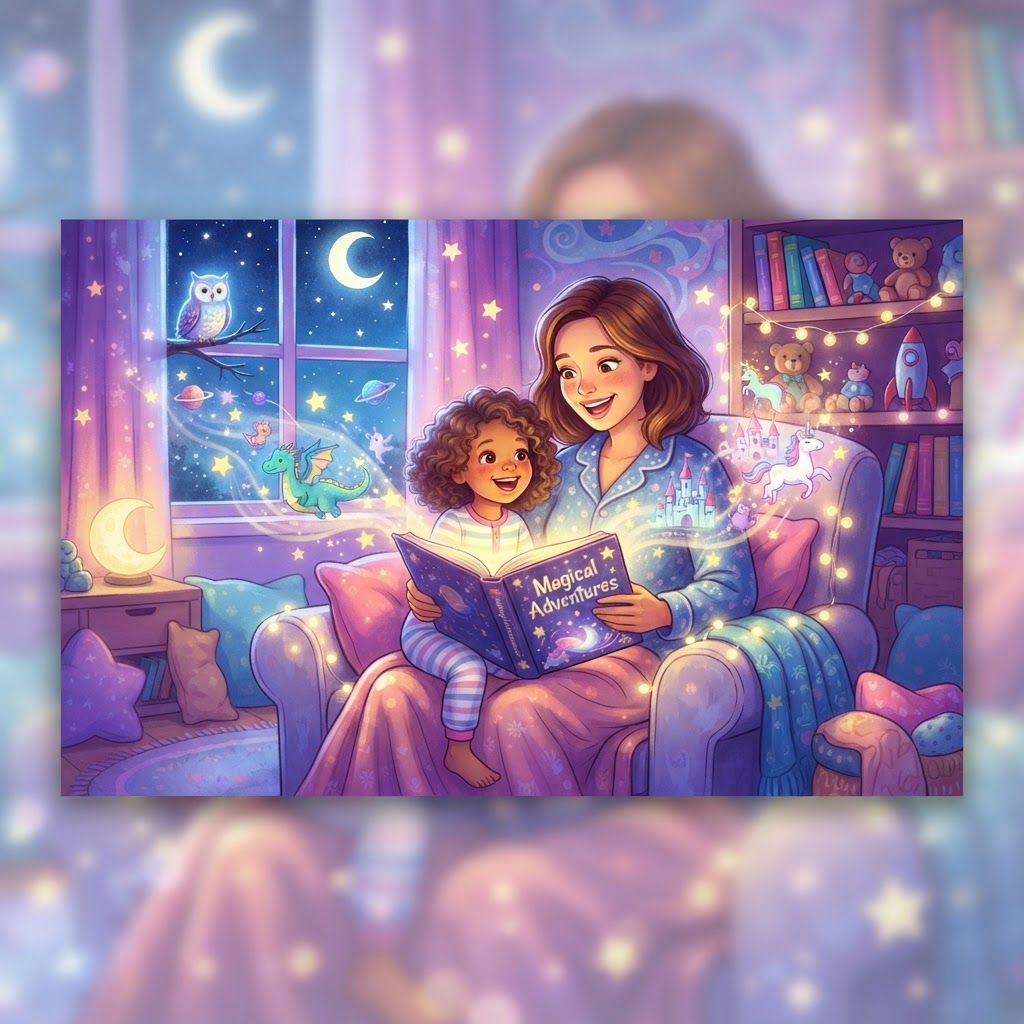
If you have ever watched a child ask for “just one more story,” you have seen the powerful bedtime stories appeal in action. Bedtime stories children return to again and again are not just cute rituals. They meet real emotional, cognitive, and developmental needs.
So, why kids love bedtime stories so deeply? The short answer is that stories help children feel safe, connected, curious, and understood all at once. They turn the transition from a busy day to sleep into something predictable and magical, which is exactly where bedtime psychology becomes so interesting.
Why do bedtime stories feel so comforting?
Bedtime stories feel comforting because they combine routine, closeness, and predictability. For young children, those three things signal safety, and safety helps the body and brain settle down for sleep.
A familiar story, a parent’s voice, and the same nightly rhythm create a strong emotional cue: “You are safe, and the day is ending well.” In child development, predictable routines are linked to emotional regulation because children know what comes next. That matters at bedtime, when separation, darkness, and tiredness can make feelings bigger.
The American Academy of Pediatrics encourages reading aloud from infancy because it supports both bonding and language growth. Reading together is also a form of responsive connection, similar to the “serve and return” interactions described by Harvard’s Center on the Developing Child. When a child points, laughs, asks a question, or cuddles in closer, that back-and-forth strengthens trust.
This is one reason bedtime stories children love often become “comfort books.” They are not only listening to the plot. They are also soaking up the feeling of being held in a calm, loving moment.
Why do children enjoy bedtime stories even when they know the ending?
Children enjoy stories they already know because repetition helps them feel competent and secure. Knowing what happens next is exciting for kids, not boring, because it gives them a sense of mastery.
Adults often chase novelty. Children often crave familiarity. When a child hears the same story many times, they begin to predict words, understand character choices, and notice details they missed before. This repeated exposure supports memory, vocabulary, and comprehension.
There is also a strong emotional benefit. A known ending removes uncertainty, which can be especially soothing before sleep. A child who already knows that the lost bunny gets home or the nervous bear finds a friend can relax into the story instead of worrying about what will happen.
That is why many parents keep returning to their best bedtime story picks. The “favorite” story is often doing more developmental work than we realize.
How do bedtime stories support child development?
Bedtime stories support development by building language, emotional understanding, attention, and imagination. They are one of the simplest and richest learning tools families can use.
When children hear stories regularly, they are exposed to new words, sentence patterns, and ideas. Research on read-alouds and dialogic reading has consistently shown benefits for vocabulary and early literacy. The CDC’s developmental guidance also reflects how language-rich interactions help children grow across stages.
Stories also support emotional development. A child listening to a character feel scared, proud, jealous, brave, or lonely is practicing emotional recognition in a safe space. That matters because children often understand feelings in stories before they can explain those same feelings in themselves.
Bedtime stories can also strengthen:
- Attention span by helping children sit with a beginning, middle, and end
- Memory through repeated language and plot sequences
- Empathy by letting children see the world through another character’s eyes
- Problem-solving by showing how challenges are resolved
- Imagination by opening space for mental pictures and creative thinking
This is part of what makes bedtime psychology so compelling. The relaxed, one-on-one setting helps children absorb language and meaning without pressure.
Why do bedtime stories make hard topics easier to talk about?
Bedtime stories make hard topics easier because they create emotional distance without emotional disconnection. A child can explore a big feeling through a character first, which feels safer than talking directly about themselves.
This is why stories are so useful for children who are shy, anxious, angry, or worried. A story can say, “Here is a child who feels scared to speak,” or “Here is a dragon who cannot stop interrupting,” and suddenly the conversation feels gentle instead of confrontational.
Stories also provide moral structure. Many bedtime stories children love follow a clear pattern: a problem appears, the character struggles, someone helps, and the situation improves. That structure gives children hope. It tells them that mistakes can be repaired, fears can be faced, and difficult emotions can pass.
Parents often find this especially helpful for specific challenges. If your child is struggling socially, stories for shy children can open up discussion. If bedtime has become tense because of fear, stories for kids who have nightmares can make nighttime feel safer again.
In practice, children often reveal more after a story than before one. They may say, “I feel like that character,” which is a powerful opening for connection.
What does bedtime psychology tell us about the best stories before sleep?
Bedtime psychology tells us that the best pre-sleep stories are engaging but not overstimulating. Children usually settle best with stories that feel warm, rhythmic, and emotionally reassuring.
That does not mean bedtime stories must be bland. Gentle suspense, humor, and adventure are all fine. What matters is the overall emotional landing. A story that ends in safety, belonging, or resolution is usually better for sleep than one that ends with intense danger or a cliffhanger.
A helpful bedtime story often includes:
- A clear, simple plot
- Reassuring emotional tone
- Familiar characters or predictable structure
- Calming language and steady pacing
- A satisfying ending
Length matters too. For toddlers, a few minutes may be enough. Older children may enjoy longer chapters, especially if the story closes on a calm note.
Personalization can increase bedtime stories appeal because children love hearing details that reflect their own world. Their name, favorite animal, or a familiar place can make a story feel instantly meaningful. If you want that kind of tailored experience, you can create your own personalized bedtime story and shape the tone to match your child’s age, interests, and bedtime needs.
How can parents use bedtime stories more effectively?
Parents can use bedtime stories more effectively by focusing on connection over performance. You do not need a perfect reading voice or a long lesson at the end. You need consistency, warmth, and a little curiosity.
A few practical habits make a big difference:
- Keep the routine predictable. Read at roughly the same point each night.
- Let your child choose sometimes. Choice increases engagement and cooperation.
- Ask simple questions. Try “How do you think she felt?” or “What would you do?”
- Match the story to the moment. Choose calming stories on busy days and emotionally relevant stories during hard phases.
- Re-read favorites without guilt. Repetition is helping, not hurting.
- Stop while it is still pleasant. Bedtime reading should feel settling, not forced.
It can also help to keep stories organized so children can revisit the ones that worked best. Saving favorites in your story library makes it easier to build comforting bedtime routines around familiar stories.
For families, the real goal is not just literacy. It is creating a nightly ritual where your child feels seen. That is the deeper answer to why kids love bedtime stories: stories meet children where they are, and they do it with warmth.
Why does the parent-child connection matter as much as the story itself?
The parent-child connection matters because the emotional relationship is part of the bedtime story experience. In many cases, children are not only asking for a story. They are asking for closeness, attention, and a peaceful ending to the day.
Reading aloud slows everything down. It invites eye contact, shared laughter, gentle touch, and small moments of conversation that busy days often crowd out. Organizations like ZERO TO THREE have long highlighted how these everyday interactions support secure attachment and early learning.
This also explains why a short story can still feel powerful. The magic is not just in the pages. It is in the shared moment. And that shared moment is often what children remember most.
Frequently Asked Questions
Why do kids ask for the same bedtime story every night?
Children often ask for the same story because repetition feels safe and satisfying. It helps them predict what happens next, build memory, and enjoy a sense of mastery.
Are bedtime stories really good for child development?
Yes, bedtime stories support language, attention, empathy, and emotional understanding. They also strengthen the parent-child bond, which is a major part of healthy development.
What kind of bedtime stories are best before sleep?
The best bedtime stories are engaging but calming, with a reassuring tone and a gentle ending. Stories that feel too intense, scary, or fast-paced can make settling down harder for some children.
Can bedtime stories help with anxiety or fears?
Yes, stories can help children process worries indirectly through characters and plots. They work especially well when the story ends with comfort, problem-solving, or emotional safety.
How long should bedtime reading be?
It depends on your child’s age, attention span, and energy level. For some children, 5-10 minutes is perfect, while older kids may enjoy a longer read-aloud if the mood stays calm.
Do personalized bedtime stories work better?
They often do, because personalization increases engagement and emotional connection. When children hear their own name, interests, or familiar settings, the story can feel more meaningful and memorable.
Ready to Create a Personalized Bedtime Story?
Use our free AI bedtime story generator to create a personalized illustrated story for your child in 30 seconds — no credit card needed.
Popular story types:
Maya Rodriguez
Lead Content Editor & Early Literacy Specialist
Maya is a former early childhood educator and literacy specialist with over a decade of experience helping children develop a love of reading. She leads content at InstaTales, where she writes about the science of storytelling, child development, and how families can use personalized AI stories to build literacy and emotional resilience.
instatales.ai