Winter Solstice Stories for Kids: 6 Activities
Celebrate the winter solstice with these story-based activities for kids — light stories, cozy tales, and solstice adventures.
✦ Key Takeaways
- •Winter solstice stories help children understand seasonal change in a safe, imaginative way.
- •A lantern shadow story lets children play with one of the main themes of the solstice: light in darkness.
- •A ribbon timeline helps children see that the shortest day has less daylight and more night.
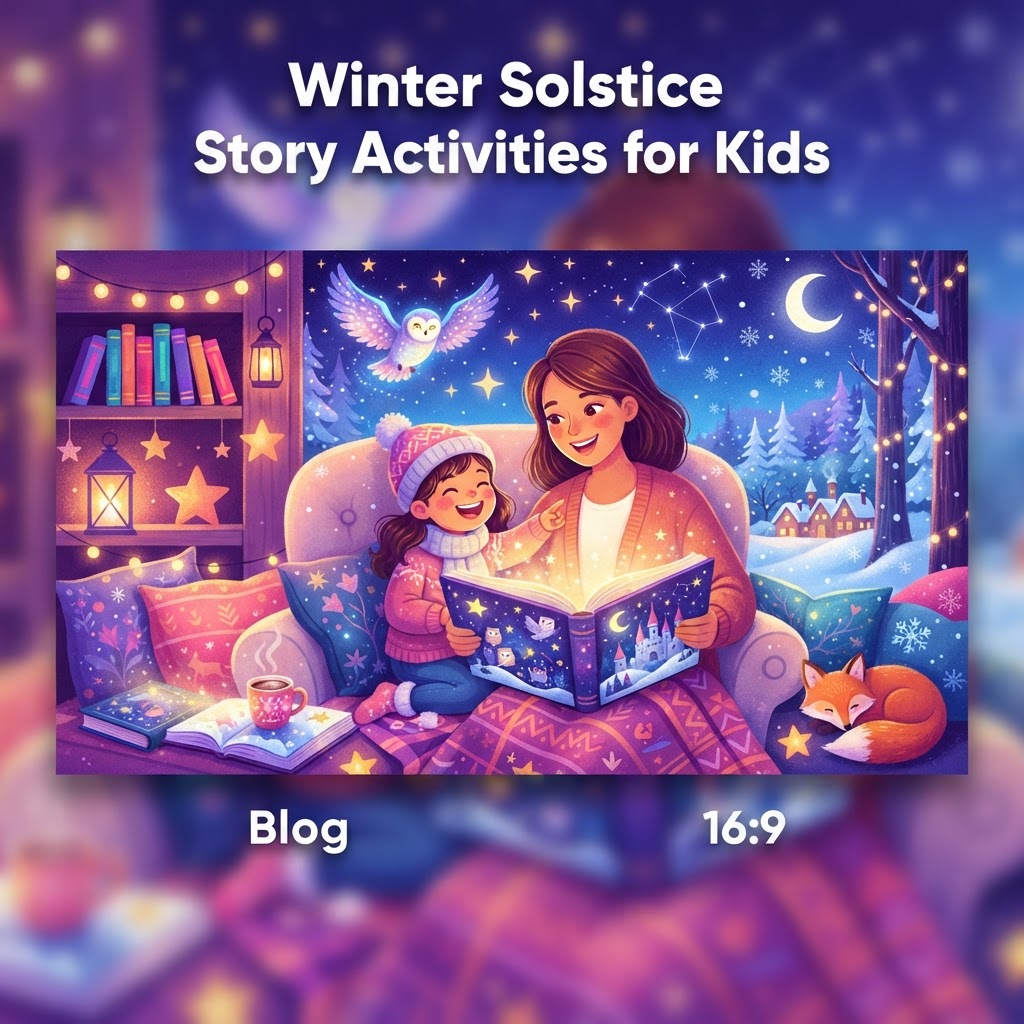
When the days grow darker, children naturally notice the change. That makes winter a lovely time for winter solstice stories for kids—gentle tales about light, rest, wonder, and the sun returning. The winter solstice, the shortest day of the year, has inspired family rituals for centuries, and story-based play is one of the easiest ways to make it meaningful for young children.
This guide shares simple solstice story activities you can use at home, in a classroom, or at bedtime. Each one includes a story prompt, materials, and step-by-step instructions, plus ideas for creating personalized shortest day stories with InstaTales.
Why do winter solstice stories matter to children?
Winter solstice stories help children understand seasonal change in a safe, imaginative way. They turn an abstract idea—the longest night and shortest day—into something children can see, feel, and talk about.
The winter solstice is the day with the fewest hours of daylight in the Northern Hemisphere, as explained by the Library of Congress. For children ages 1-10, stories make that idea concrete: a sleepy sun, a brave lantern, a family waiting for morning.
Story rituals also support development. The American Academy of Pediatrics notes that shared reading supports language, attention, and bonding. And back-and-forth story talk—“What do you think happens next?”—builds the kind of responsive interaction the Center on the Developing Child at Harvard University calls essential for learning.
How can a lantern shadow story help kids explore light and darkness?
A lantern shadow story lets children play with one of the main themes of the solstice: light in darkness. It works especially well for toddlers and preschoolers because it is visual, calming, and easy to repeat.
Story prompt:
“A tiny lantern is afraid of the longest night, but each time it shines, it helps one forest friend find the way home.”
Materials:
- Flashlight or battery tea light
- White wall or sheet
- Paper cutouts of animals, stars, or trees
- Tape or craft sticks
Instructions:
- Dim the room and shine the light onto a wall.
- Use the cutouts to make simple shadows as you tell the story.
- Pause often and ask, “Who needs the lantern’s help next?”
- Let your child choose the next animal or setting.
- End by making a large “sun” shadow or turning on a warm lamp to show morning returning.
This is one of the simplest winter solstice stories for kids because it combines sensory play and narrative without needing a long attention span.
What is a simple ribbon timeline activity for shortest day stories?
A ribbon timeline helps children see that the shortest day has less daylight and more night. It is a strong choice for ages 4-8, especially if your child likes sorting, measuring, or sequencing.
Story prompt:
“On the shortest day, a child follows a golden ribbon of daylight until it disappears, then discovers that the stars have their own stories to tell.”
Materials:
- One short yellow ribbon or paper strip
- One longer dark blue ribbon or strip
- Crayons or markers
- Tape
- Optional sun and star stickers
Instructions:
- Explain that on the winter solstice, the daylight part feels shorter and the night part feels longer.
- Lay the yellow ribbon next to the blue ribbon.
- Invite your child to draw what happens during each part: breakfast, sunset, moonrise, bedtime.
- Tell the story as you point from one part of the ribbon to the next.
- Ask your child to retell it in order using the timeline.
This activity supports early narrative skills because children practice beginning, middle, and end. It also makes excellent shortest day stories for classrooms and homeschool lessons.
How can a nature walk become a winter solstice story adventure?
A winter nature walk gives children real details to bring into a solstice story. Even a ten-minute walk can spark rich language: frosty leaves, bare branches, animal tracks, cold wind, and early dusk.
Story prompt:
“A wandering robin must find the hidden place where the sun sleeps before morning.”
Materials:
- Warm clothes
- Small paper bag or basket
- Notebook or phone for quick notes
- Optional magnifying glass
Instructions:
- Take a short walk near sunset or in the late afternoon.
- Ask your child to collect safe natural items like pinecones or fallen twigs.
- Notice sensory details together: “What do you hear? What feels cold? What looks silver?”
- When you get home, turn those details into a story setting.
- Let your child decide the hero, problem, and ending.
This is a practical way to build vocabulary and observation. If you enjoy seasonal story themes all year, you might also like these summer solstice story ideas for the brightest day of the year.
How can a star jar retelling activity build memory and imagination?
A star jar story game helps children remember story events and invent new ones. It is especially useful for ages 3-9 because it turns listening into active participation.
Story prompt:
“The stars come out one by one to remind the world that even the longest night is full of tiny lights.”
Materials:
- Jar, bowl, or box
- Paper stars
- Pencil or marker
- Optional glitter or stickers
Instructions:
- Write one story event on each star, such as “the sun sets early” or “an owl shares a secret.”
- Place the stars in the jar.
- Read or tell a simple solstice story first.
- Have your child pull out stars and retell the story in order.
- For older children, add blank stars so they can invent new scenes.
Retelling strengthens comprehension, sequencing, and oral language. It also makes repeated reading more fun, which matters because children often learn best through familiar stories they can revisit.
What makes a cozy cocoa read-aloud perfect for solstice night?
A cozy read-aloud ritual helps children connect the winter solstice with comfort, closeness, and calm. That emotional warmth makes stories easier to remember and easier to love.
Story prompt:
“A family gathers on the longest night to share a tale about a sleepy sun who needs songs, soup, and kind wishes to rise again.”
Materials:
- A favorite blanket
- Warm drink or snack
- A candle alternative or soft lamp
- One storybook or parent-made story
Instructions:
- Create a small reading corner with low light and blankets.
- Read slowly and leave room for questions and predictions.
- Invite children to add sound effects: wind, owl calls, crackling fire.
- After reading, ask one simple reflection question: “What helped the sun come back?”
- End with a short bedtime phrase, such as “Light returns, and so does morning.”
This is one of the easiest solstice story activities for busy families. You can even turn it into a recurring seasonal tradition, much like New Year reading rituals or other family milestone stories.
How can children write sun-return wishes into a family story?
A sun-return wish story helps children express hope, gratitude, and simple goals. It fits beautifully with the reflective mood of the solstice and works well for ages 5-10.
Story prompt:
“On the longest night, each child writes one wish for the returning sun, and by morning the wishes become part of a magical map.”
Materials:
- Paper slips or index cards
- Crayons, pencils, or markers
- Envelope, bowl, or small box
Instructions:
- Ask each child to write or draw one hope for the season ahead.
- Place the wishes in a bowl and read them aloud together.
- Build a family story that includes each wish as a clue, gift, or challenge.
- Save the finished story to read again later in winter.
- Revisit the wishes after a few weeks and talk about what has changed.
This activity supports social-emotional learning because it gives children a structured way to talk about feelings and hopes. For teachers, it can also become a gentle reflective writing prompt.
How can you use InstaTales to create personalized winter solstice stories for kids?
InstaTales makes it easy to turn solstice themes into personalized stories your child will actually want to hear again. You can tailor the character, age level, tone, and setting so the story feels developmentally right and emotionally familiar.
To get started, create your own personalized bedtime story using a prompt like: “Write a gentle winter solstice story for a 5-year-old about the shortest day, a brave lantern, and the sun returning.” If you want a faster start, browse story templates and adapt one with winter details, favorite animals, or a family tradition.
After you generate a story, save it in your story library so children can reread favorite shortest day stories throughout the season. In classrooms, InstaTales for teachers can support seasonal literacy centers, group storytelling, and differentiated reading practice for mixed ages.
A few educator tips:
- Keep solstice stories gentle for younger children.
- Use repetition and clear emotional arcs for ages 1-5.
- Add simple facts for ages 6-10, such as why the day is shorter.
- Invite children to co-author the story by choosing the hero, problem, or ending.
Frequently Asked Questions
What age are winter solstice stories best for?
Winter solstice stories work well for ages 1-10 when the language and activity are age-appropriate. Toddlers do best with sensory play and repetition, while older children usually enjoy myths, sequencing, and creative writing.
Do winter solstice activities have to be religious?
No. The winter solstice is a seasonal event, and these activities can stay fully secular. You can focus on nature, daylight, family traditions, reflection, and the return of the sun.
How long should a solstice story activity take?
Most solstice story activities work best in 10-25 minutes. Short sessions are often more effective for young children, especially in the evening.
Can teachers use these activities in the classroom?
Yes. These activities fit circle time, literacy centers, seasonal units, and creative writing lessons. They also adapt well for mixed-age groups with simple changes in story length and discussion depth.
What should I include in a winter solstice story prompt?
A strong prompt usually includes a main character, a winter setting, a small problem, and a hopeful ending. Themes like darkness, light, waiting, kindness, and morning returning work especially well.
How can I make shortest day stories less scary for sensitive children?
Keep the tone cozy, predictable, and reassuring. Focus on helpers, warm settings, and the idea that darkness is temporary because light always returns.
Ready to Create a Personalized Bedtime Story?
Use our free AI bedtime story generator to create a personalized illustrated story for your child in 30 seconds — no credit card needed.
Popular story types:
Maya Rodriguez
Lead Content Editor & Early Literacy Specialist
Maya is a former early childhood educator and literacy specialist with over a decade of experience helping children develop a love of reading. She leads content at InstaTales, where she writes about the science of storytelling, child development, and how families can use personalized AI stories to build literacy and emotional resilience.
instatales.ai