10 Minute Bedtime Stories Kids Love
Need a story that's not too short, not too long? These 10-minute bedtime stories are the perfect length for most kids.
✦ Key Takeaways
- •10-minute bedtime stories work well because they are long enough to feel meaningful and short enough to protect sleep.
- •The right story length depends more on your child’s regulation and attention than on age alone.
- •A calming story has gentle pacing, emotional safety, and a reassuring ending.
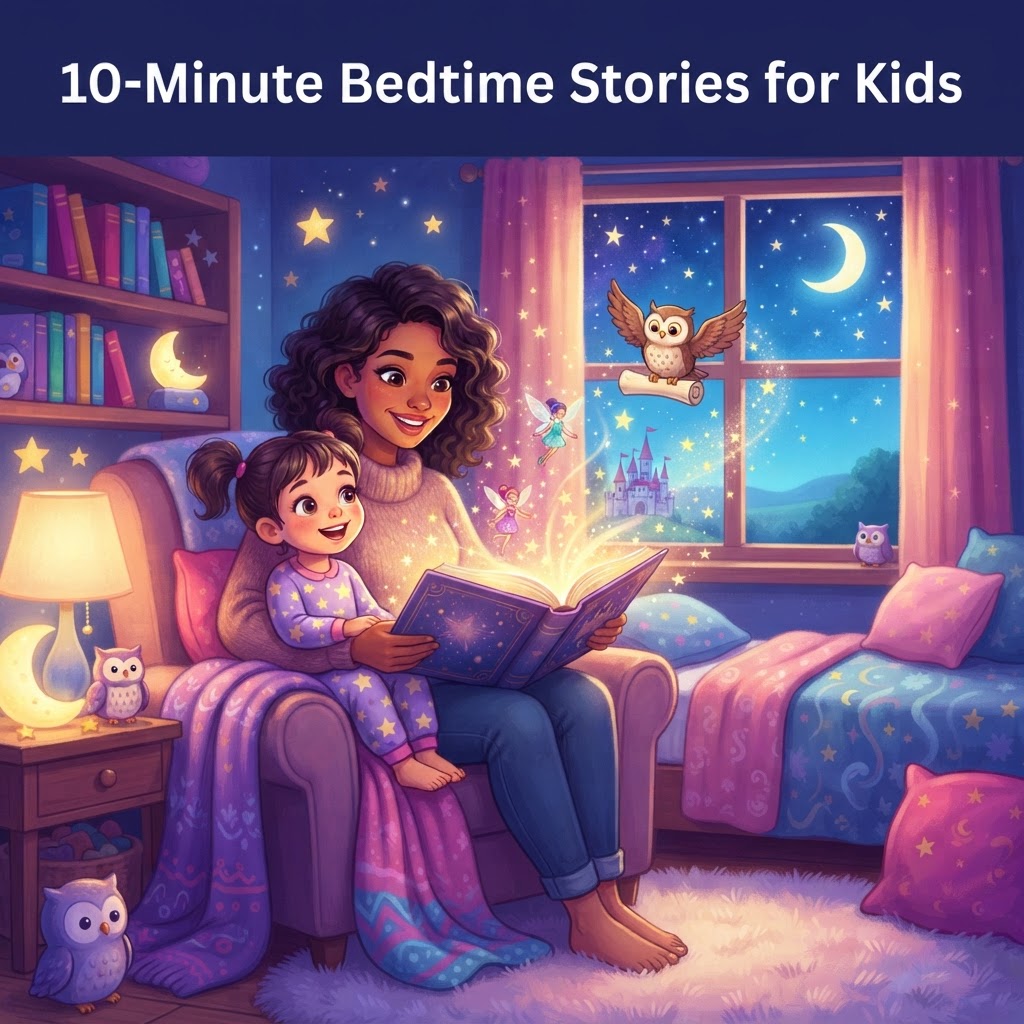
A good bedtime story should calm your child, not drag bedtime out. 10 minute bedtime stories often hit the sweet spot because they feel complete, give enough time for connection, and still fit into a realistic evening routine.
For many families, bedtime stories 10 minutes long are the easiest to repeat consistently. They are longer than a very quick tale, but shorter than a chapter that leads to “just one more page.” If you want medium length stories that work for toddlers, preschoolers, and early elementary children, this guide will help you choose the right length, pick the right plot, and use InstaTales in a simple, stress-free way.
Why are 10-minute bedtime stories such a good fit for many kids?
10-minute bedtime stories work well because they are long enough to feel meaningful and short enough to protect sleep. For many children, especially ages 3-8, ten minutes matches their evening attention span surprisingly well.
Child development research consistently shows that children do best with predictable routines. The American Academy of Pediatrics notes that calm, consistent bedtime habits support better sleep. A story that takes around ten minutes is often just enough to create that familiar wind-down without overstimulating a tired child.
There is also a practical reason parents love this length: it is sustainable. A routine only helps if you can keep doing it. Ten minutes is manageable on school nights, after baths, and during busy seasons when longer reading sessions may not be realistic.
Here is why this length works so often:
- It gives time for a full beginning, middle, and ending
- It supports bonding without making bedtime feel endless
- It helps children practice listening and comprehension
- It leaves room for one or two quiet questions afterward
- It reduces the chance that a child gets overtired before lights-out
This does not mean every child needs exactly ten minutes. It means that 10 minute bedtime stories are a strong starting point for families looking for a calm, balanced routine.
How can you choose the right story length for your child’s age and energy level?
The right story length depends more on your child’s regulation and attention than on age alone. Ten minutes is ideal for many children, but some need shorter stories and some are ready for longer ones.
The CDC sleep guidelines remind families that children need enough total sleep for healthy development. If a story regularly pushes bedtime later, it is too long for that stage of life, even if your child enjoys it.
A simple way to choose the best length is to match the story to your child’s evening state:
- Ages 1-2: Aim for 3-7 minutes most nights. Repetition, rhyme, and familiar characters matter more than plot.
- Ages 3-5: 5-10 minutes often works well. Preschoolers enjoy simple adventures, gentle suspense, and a clear happy ending.
- Ages 6-8: 8-12 minutes is often the sweet spot. Many are ready for richer plots, silly twists, and a bit more description.
- Ages 9-10: 10-15 minutes may suit strong listeners, though ten minutes still works well on school nights.
Watch your child’s cues more than the clock. A story is probably the right length if your child:
- Settles physically while listening
- Stays engaged without interrupting constantly
- Feels satisfied at the ending
- Falls asleep more easily afterward
A story is probably too long if your child starts fidgeting, negotiating, or getting wound up. If that happens, try shorter 5-minute stories on very tired nights and save medium length stories for evenings with a little more room.
What makes a 10-minute bedtime story calming instead of overstimulating?
A calming story has gentle pacing, emotional safety, and a reassuring ending. The best bedtime stories 10 minutes long are not just about length; they are also about tone.
Children’s brains are still learning how to shift from active play to rest. The Harvard Center on the Developing Child highlights how supportive routines and co-regulation help children manage stress and transitions. Bedtime stories can do exactly that when they are paced well.
Look for these features:
- A clear problem that feels small and manageable
- Cozy settings like bedrooms, forests, clouds, or moonlit gardens
- Repetition or predictable phrases
- Kind characters who help one another
- A soft landing at the end, with sleep, rest, or reunion
Try to avoid high-stakes danger, loud humor right before lights-out, or plots with too many twists. Those can be fun at other times of day, but they often work against sleep.
A reliable bedtime formula looks like this:
- A child or animal notices a small problem
- They go on a gentle adventure
- They get help, learn something, or find what they need
- Everyone returns to safety
- The ending feels warm, sleepy, and complete
This is one reason many parents like AI-generated bedtime stories. When you create your own personalized bedtime story, you can shape the tone, characters, and pacing to fit your child’s mood that night.
Which 10-minute bedtime story ideas work especially well for kids?
The best story ideas are simple, comforting, and easy to imagine. If you want 10 minute bedtime stories that feel fresh without becoming too exciting, these five ideas are strong picks.
1. The sleepy moonlight treasure hunt
A child follows glowing moonbeams to find lost bedtime treasures: a sock, a stuffed bunny, and a yawn hiding under the bed. This works well for ages 3-7 because the “search” feels active, but the mood stays gentle.
2. The little dragon who could only breathe bubbles
A tiny dragon worries because everyone else breathes fire. By the end, the bubble breath helps a whole village drift into a peaceful sleep. This is a lovely choice for children who need reassurance about being different.
3. The train to Dreamland Station
A cozy bedtime train picks up sleepy animals, one by one, each carrying something soft and comforting. Repetition makes this ideal for younger listeners, and it fits nicely into medium length stories.
4. The pajama parade in the cloud kingdom
Pajamas come alive and march through the clouds looking for the perfect sleeper to keep warm. This story suits imaginative preschoolers and early elementary children who enjoy whimsy without fear.
5. The whispering library of goodnight wishes
A child visits a magical library where every book holds one kind wish for someone they love. This is especially good for ages 6-10 because it adds emotion and reflection while still staying calm.
If you want variety without starting from scratch every night, try using story templates. Templates can help you quickly turn a favorite theme into a bedtime story that lands around the right length.
How can you use InstaTales’ story length settings to make bedtime easier?
InstaTales makes bedtime easier by letting you match the story to the moment. Instead of forcing every night into the same format, you can choose a story length that fits your child’s age, mood, and bedtime window.
A practical way to use the settings is to think in three categories:
- Short: Best for overtired toddlers, late nights, travel, or rushed evenings
- Medium: Best for most regular nights and for families looking for 10 minute bedtime stories
- Longer: Best for weekends, older children, or special reading nights
When you generate a story, keep these tips in mind:
- Choose one central idea, not three
- Use one main character for younger children
- Ask for a calm tone and a sleepy ending
- Mention your child’s favorite comfort items, pets, or interests
- Keep the setting simple and cozy
A helpful routine might look like this: generate a medium-length story, read it aloud, then save the best ones in your story library for easy re-reading. Children often love hearing the same story again, and repetition supports language growth and emotional security.
If you want more ideas for building a reading routine, browse the InstaTales blog. It can help you adapt your storytelling as your child grows.
How can parents make the most of a 10-minute bedtime story routine?
The most effective routine is simple, predictable, and emotionally warm. The story matters, but the rhythm around it matters too.
Try this easy structure:
- Dim lights before reading
- Put screens away in advance
- Read in a slower, softer voice than usual
- Pause briefly at comforting moments
- End with the same closing phrase each night
You do not need to perform perfectly. What children remember most is the feeling of safety, closeness, and attention. Over time, bedtime stories 10 minutes long can become a cue that tells the body and brain, “Now it is time to rest.”
Frequently Asked Questions
Are 10 minute bedtime stories too long for toddlers?
Sometimes, yes. Many toddlers do better with 3-7 minute stories, especially if they are very tired. A ten-minute story can still work if it uses repetition, simple language, and a calm rhythm.
What age are 10-minute bedtime stories best for?
They are often best for children ages 3-8. That said, some younger children enjoy them and some older children still prefer them on busy school nights.
How many words is a 10-minute bedtime story?
A read-aloud bedtime story is often around 800-1,500 words, depending on pacing, pauses, and how interactive the reading is. If your child asks lots of questions, a shorter text may still take ten minutes.
Should bedtime stories always end happily?
For bedtime, a reassuring ending usually works best. Children settle more easily when the story resolves gently and leaves them feeling safe.
Can personalized AI stories help with bedtime routines?
Yes, they can be very helpful when used thoughtfully. Personalized stories can match your child’s interests, fears, and attention span, which makes it easier to create a bedtime routine you can actually keep.
Is it okay to repeat the same story every night?
Absolutely. Repetition helps children feel secure, build vocabulary, and anticipate what comes next. Many children sleep better with familiar medium length stories than with new, unpredictable ones.
Ready to Create a Personalized Bedtime Story?
Use our free AI bedtime story generator to create a personalized illustrated story for your child in 30 seconds — no credit card needed.
Popular story types:
Maya Rodriguez
Lead Content Editor & Early Literacy Specialist
Maya is a former early childhood educator and literacy specialist with over a decade of experience helping children develop a love of reading. She leads content at InstaTales, where she writes about the science of storytelling, child development, and how families can use personalized AI stories to build literacy and emotional resilience.
instatales.ai