10 Story Time Routine Tips That Really Work
Want to make story time a daily habit? Here are 10 tips for building a consistent reading routine.
✦ Key Takeaways
- •The easiest way to build a story time routine is to attach it to something you already do every day.
- •The best reading time is when your child is calm enough to listen.
- •A reading space does not need to be fancy.
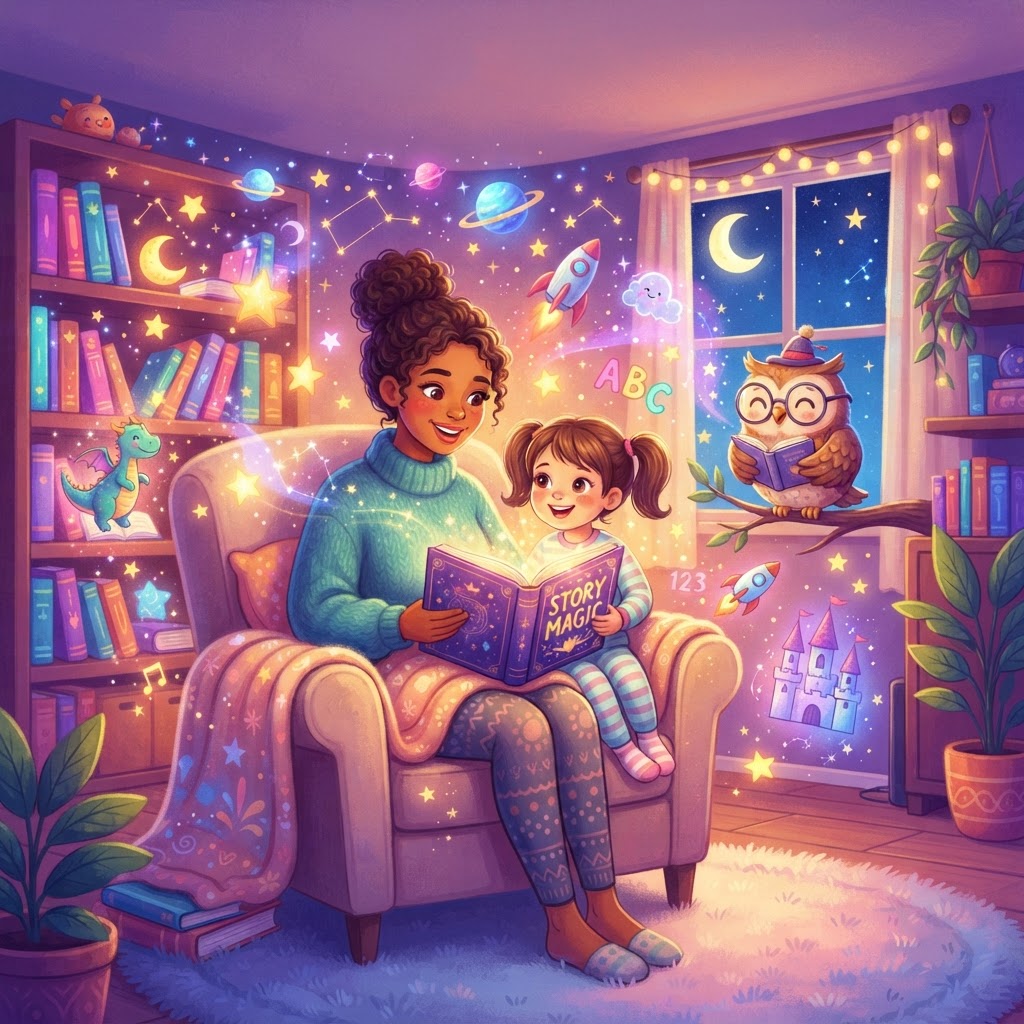
A strong story time routine does not need to be perfect to work. It just needs to be predictable, warm, and easy to repeat. If you want to build a daily reading habit at home, the best approach is to start small and make story time feel like a comforting part of the day, not another task on your list.
Research and practice both point in the same direction: children benefit when reading happens often and with connection. The American Academy of Pediatrics has long encouraged shared reading from infancy, and organizations like Reach Out and Read highlight how reading aloud supports language, bonding, and early literacy. Here are 10 practical reading routine tips to help story time become a natural part of family life.
Why does choosing one anchor time make story time easier?
The easiest way to build a story time routine is to attach it to something you already do every day. A routine sticks better when it happens after a clear cue, like bath time, dinner, or getting into bed.
This works because children thrive on predictability. When story time always follows the same event, they begin to expect it and prepare for it. That reduces resistance and helps the habit feel automatic.
Good anchor times include:
- after lunch for toddlers
- after bath for preschoolers
- before bed for most families
- right after school for children who are too tired at night
Pick one anchor and stay with it for a few weeks before changing it.
How can you match story time to your child’s natural rhythm?
The best reading time is when your child is calm enough to listen. If you want a daily reading habit to last, choose a time that fits your child’s energy, not just your ideal schedule.
Some children are cuddly and focused before bed. Others are exhausted by evening and do better in the morning or mid-afternoon. A tired, hungry, overstimulated child is much less likely to enjoy books.
In homes and classrooms, the most successful routines are realistic. Watch for when your child is naturally settled, then build your reading moment there. If bedtime stories feel like a battle, shifting story time earlier is not failing. It is smart.
What makes a reading space feel special without extra work?
A reading space does not need to be fancy. It only needs to feel comfortable, calm, and different from the rest of the day.
A small signal that says “now we read” helps children transition into the routine. That might be a favorite chair, a floor cushion, a dim lamp, or a basket of bedtime books. Making the space special helps story time feel inviting instead of rushed.
If you want ideas, a simple cozy reading space can make a big difference. Keep it easy to use, especially on busy nights. The goal is not decoration. The goal is comfort and consistency.
How long should a story time routine last?
A story time routine should be short enough to succeed every day. For most young children, 10 to 20 minutes is plenty.
Parents often think a good reading routine has to be long. It does not. In fact, shorter routines are easier to repeat, which is what builds habit. One picture book every night is more powerful than a long session that only happens once in a while.
A simple guide:
- ages 1-3: 5-10 minutes
- ages 3-6: 10-15 minutes
- ages 6-10: 15-20 minutes, or one chapter
You can always read longer when everyone is enjoying it. Just make the “minimum version” easy enough to keep.
Why is consistency more important than perfection?
Consistency matters more than doing story time the exact same way every night. Children benefit most from knowing that reading is a regular part of family life.
Missing a day will not ruin your progress. What matters is returning to the routine quickly. A healthy story time routine bends without breaking. That is especially important for real families with travel, illness, late pickups, and unpredictable evenings.
Think “most days” instead of “every day without fail.” Families who take this approach are more likely to keep a daily reading habit over time. If you are working on building a reading habit, this mindset helps the habit last.
What should you do if your child resists story time?
If your child resists story time, lower the pressure and make the routine easier. Resistance usually means the routine is too long, too late, or not matching your child’s needs.
Start by asking a few simple questions. Is your child too tired? Do they want more choice? Are the books too hard, too easy, or not interesting right now? Even children who love stories go through phases.
Try these gentle fixes:
- shorten the reading time
- let your child choose between two books
- use silly voices or ask simple questions
- reread a familiar favorite
- switch to an earlier time
If reading has become stressful, these reluctant reader tips can help you reset without turning books into a struggle.
How can you make story time active enough for young children?
Story time becomes easier when children can participate. Young children learn best through interaction, not silent listening alone.
Ask what they think will happen next. Let them point to pictures, repeat a phrase, or act out a character. This kind of back-and-forth supports language and attention. The Harvard Center on the Developing Child describes these responsive exchanges as “serve and return,” and they are important for brain development.
Shared reading is not a performance. It is a conversation. Even a wiggly child is learning when they are engaged with you, the story, and the pictures.
Why should children help choose the book sometimes?
Letting children choose sometimes increases buy-in. When kids feel ownership, they are more likely to look forward to story time.
Choice does not mean total freedom every night. Too many options can overwhelm children or lead to long delays. A better approach is to offer two or three books and let them pick one. You can choose the second book if needed.
This balance protects the routine while still honoring your child’s interests. Familiar stories, favorite characters, and repeated books are all okay. In fact, Reading Rockets notes that rereading helps children build vocabulary, comprehension, and confidence.
How can you keep a daily reading habit on busy days?
Busy days need a backup plan. The best reading routine tips always include a “small version” for nights when life gets messy.
Your backup plan might be one short board book, one poem, one page of a chapter book, or a quick personalized story on your phone. If your child loves novelty, you can create your own personalized bedtime story in minutes and still keep the same calming routine.
A good backup plan could look like this:
- 2-minute story in the car before going inside
- one short book after brushing teeth
- one saved favorite from your story library
- one parent-told story from memory
Doing a little still counts. Small moments keep the habit alive.
What helps a story time routine last for the long term?
The routines that last are the ones that feel meaningful, not forced. To keep story time going for months and years, make it warm, flexible, and worth returning to.
You can make it special with a simple phrase, a cuddle blanket, or a “one more page” tradition. You can also refresh the routine when interest dips by rotating books, adding themed weeks, or trying weekly reading challenges. These small touches help the routine feel alive without losing structure.
Story time also grows with your child. Babies may chew the book, toddlers may interrupt every page, and older children may want chapters or jokes. That is normal. A lasting story time routine changes with development while keeping the same message: reading together matters here.
A steady reading routine is one of the simplest ways to support language, attention, and connection. It does not need to look perfect online. It just needs to happen often enough that your child comes to trust it, enjoy it, and remember it.
Frequently Asked Questions
What age should story time start?
Story time can start in infancy. Even babies benefit from hearing your voice, looking at pictures, and sharing close, responsive time with a caregiver.
What if we miss a day of reading?
Missing one day is not a problem. Just return to the routine the next day so your child learns that story time is a regular rhythm, not an all-or-nothing rule.
How many books should we read each night?
There is no magic number. One short book can be enough, especially for younger children, as long as the routine feels calm and consistent.
Do audiobooks count as story time?
Audiobooks can support a daily reading habit, especially during travel or quiet time. Still, whenever possible, shared reading with a caring adult adds conversation, bonding, and back-and-forth interaction.
What if my child wants the same book every night?
That is very common and often helpful. Repetition supports comprehension, memory, vocabulary, and confidence, so rereading favorites is part of a healthy reading routine.
Can story time happen outside bedtime?
Absolutely. Story time works any time your child is calm and available to connect. For some families, after school, after lunch, or first thing in the morning works better than bedtime.
Explore More Stories
Ready for more? - free AI bedtime story generator
Get a new bedtime story every week
Free, personalized, and delivered to your inbox. No spam, ever.
Ready to Create a Personalized Bedtime Story?
Use our free AI bedtime story generator to create a personalized illustrated story for your child in 30 seconds — no credit card needed.
Popular story types:
Maya Rodriguez
Lead Content Editor & Early Literacy Specialist
Maya is a former early childhood educator and literacy specialist with over a decade of experience helping children develop a love of reading. She leads content at InstaTales, where she writes about the science of storytelling, child development, and how families can use personalized AI stories to build literacy and emotional resilience.
instatales.ai