10 Tips for Reading to a Child with ADHD
Reading to a child with ADHD requires special strategies. Here are 10 tips to make story time work.
✦ Key Takeaways
- •Timing matters because attention is easier when a child is regulated, not exhausted, hungry, or overstimulated.
- •Shorter reading sessions are usually more effective than longer ones.
- •Movement is not the enemy of reading; for many children with ADHD, it is a support.
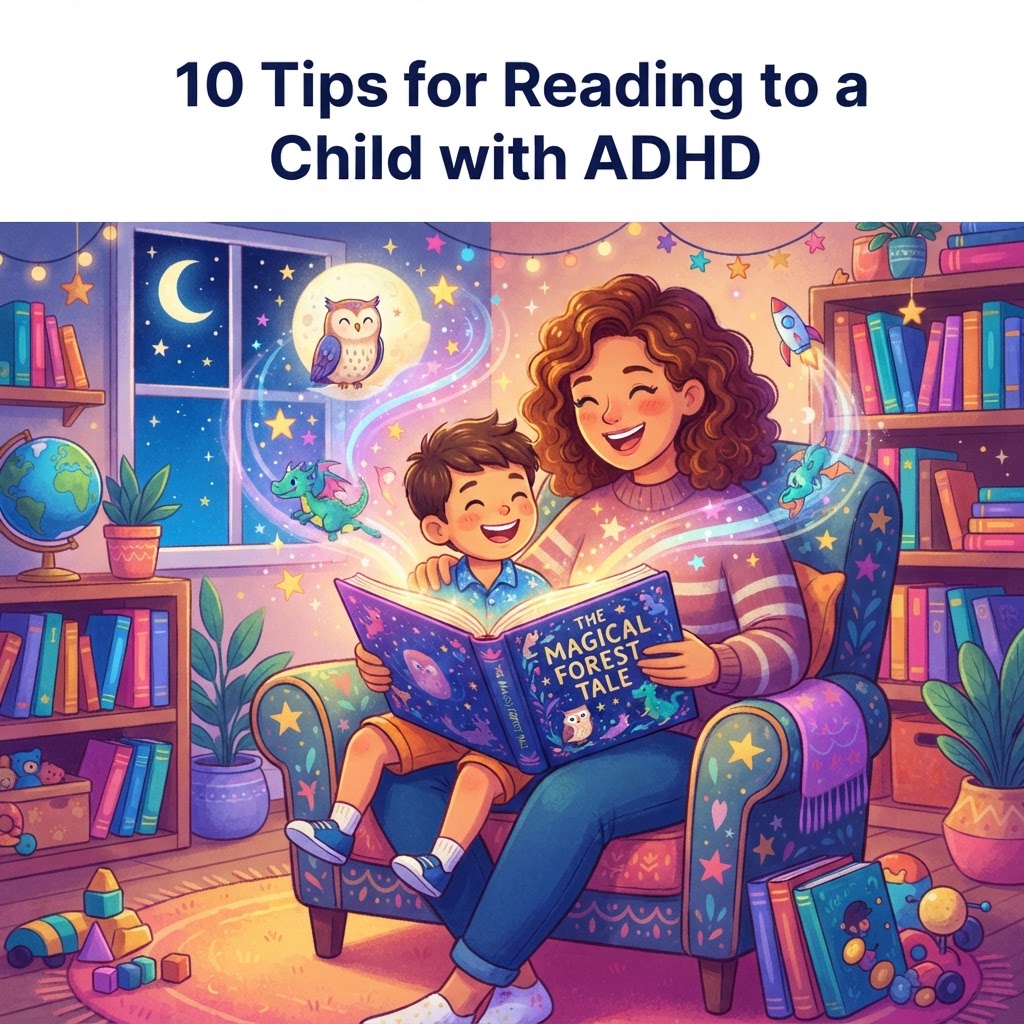
Reading to a child with ADHD can feel unpredictable, but it can also become one of the most calming and connected parts of the day. Many children with ADHD love stories; they simply need story time shaped around how their brains manage attention, movement, and novelty.
If you have been looking for help with reading to ADHD child challenges, the good news is that small changes often make a big difference. The best ADHD reading tips are practical: choose the right time, keep sessions short, allow movement, and make reading interactive. That approach fits what organizations like the CDC and NIMH explain about ADHD symptoms, including inattention, impulsivity, and high activity levels.
1. Why does timing matter when reading to a child with ADHD?
Timing matters because attention is easier when a child is regulated, not exhausted, hungry, or overstimulated. For many kids with ADHD, the best reading window is earlier than parents expect.
Bedtime reading is lovely in theory, but if your child is already past tired, listening becomes much harder. Try reading:
- after a snack
- after active play
- before the last stage of bedtime
- during a calm afternoon reset
The American Academy of Pediatrics often emphasizes the value of predictable routines for children with ADHD. If you want help building consistency, these tips to make story time a routine can help.
2. How long should reading sessions be for a child with ADHD?
Shorter reading sessions are usually more effective than longer ones. A successful 5-10 minutes often does more than a stressful 25 minutes.
One of the most useful attention deficit reading strategies is to stop while things are still going well. That helps your child associate reading with success, not pressure. You can always do:
- one short book instead of three
- one chapter instead of a whole chapter set
- two mini reading times in a day instead of one long one
This matches what ADHD research tells us about sustained attention: many children do better with brief, clearly structured tasks than open-ended demands.
3. Why should movement be part of story time?
Movement is not the enemy of reading; for many children with ADHD, it is a support. Letting a child wiggle, stretch, or hold something in their hands can actually improve listening.
Russell Barkley’s work on ADHD highlights self-regulation challenges, and many parents see this firsthand during read-aloud time. Try:
- reading while your child rocks or swings
- allowing them to stand beside you
- giving them a soft fidget
- letting them act out parts of the story
If your child listens better while moving, that is not “doing reading wrong.” It is adapting story time to the child in front of you.
4. How can interactive questions help a child stay engaged?
Interactive reading helps because it gives the child something to do with their attention. Children with ADHD often focus better when they are participating, not just passively listening.
Research on dialogic reading, developed by Grover Whitehurst and colleagues, shows that children learn more when adults ask simple questions and invite responses. During reading, try prompts like:
- “What do you think happens next?”
- “Can you find the red truck?”
- “How do you think she feels?”
- “Should we make the bear’s voice together?”
This is one of the strongest ADHD reading tips because it turns story time into a shared activity. It can also build vocabulary through stories at the same time.
5. What kinds of books work best for children with ADHD?
The best books for kids with ADHD are usually engaging, clear, and matched to the child’s interests. High-interest books beat “should read” books almost every time.
Look for books with:
- strong pictures
- short sections of text
- humor, suspense, or repetition
- topics your child already loves
- predictable structure
Book choice matters because interest boosts attention. A child who struggles to sit for a random book may focus beautifully on dinosaurs, trucks, fairies, or space adventures. Some children also connect better with stories that include their own name or favorite themes, which is why families sometimes choose to create your own personalized bedtime story when they need a fresh hook.
6. How can you reduce distractions without making reading feel rigid?
A simpler environment helps attention, but it does not need to be perfectly quiet or strict. The goal is fewer competing distractions, not a sterile reading lab.
Start with a comfortable, low-clutter spot. Turn off background TV, move loud toys aside, and keep only the book and one or two calming items nearby. Creating a cozy setup can help, and these ideas for a cozy reading space are especially useful for children who get visually overloaded.
A calm environment supports focus, but flexibility still matters. If your child reads best under a blanket fort or on the floor, that is fine.
7. Why does your voice and pacing matter so much?
Expressive reading keeps the brain interested. Children with ADHD often respond better when your voice adds novelty, emotion, and rhythm.
Read a little slower than normal, but not flat. Change your tone for characters, pause before exciting moments, and use facial expression. You do not need to perform like an actor, but a little energy helps attention stick.
This matters because ADHD brains often respond strongly to novelty and immediate feedback. A lively read-aloud gives both.
8. How can visuals and props support comprehension?
Visuals and simple props make the story easier to follow. Children with ADHD may miss details when they only hear them once, so visual support reduces the load on working memory.
Executive function research shows that working memory challenges are common in ADHD. To help, try:
- pointing to pictures as you read
- using finger tracking on the page
- drawing a quick character sketch
- using one toy or prop from the story
These supports do not need to be elaborate. A single puppet, flashlight, or picture cue can make reading feel more concrete and easier to process.
9. What should you do when your child loses attention?
Pause and reset instead of pushing through. If attention is gone, forcing the child to keep listening usually creates conflict and makes future reading harder.
When your child drifts, try:
- a quick movement break
- a recap: “The puppy is still looking for home”
- a choice: “Do you want one more page or stop here?”
- switching to a shorter book
This is one of the most realistic attention deficit reading strategies. The goal is not perfect focus from start to finish. The goal is returning to the story without shame or struggle.
10. Why are routines and re-reading so helpful for children with ADHD?
Routines and re-reading reduce mental load. When a child already knows the structure, characters, and rhythm of a story, they can spend less energy figuring out what is happening and more energy enjoying it.
Many parents worry that repeating the same book is “too easy,” but repetition often builds confidence, language, and comprehension. Familiar books are especially helpful after a hard day. You can also save favorites in your story library so your child can revisit the same comforting stories when they want predictable success.
The nonprofit CHADD frequently points parents toward structure, positive routines, and practical supports. Story time works best when it feels safe, familiar, and achievable.
Frequently Asked Questions
Can children with ADHD enjoy being read to?
Yes, absolutely. Many children with ADHD love stories, especially when reading is interactive, short, and matched to their interests.
How long should I read to a child with ADHD?
Start small. For many children, 5-10 focused minutes is more effective than a longer session that ends in frustration.
Should my child sit still during story time?
Not necessarily. Many kids with ADHD listen better when they can move, rock, squeeze a fidget, or change positions.
What are the best books for kids with ADHD?
Choose books with strong visuals, short text, clear action, humor, and topics your child already loves. Interest is one of the strongest drivers of attention.
Is it okay to read the same story again and again?
Yes. Re-reading supports comprehension, confidence, and emotional comfort, which can make story time much easier for children with ADHD.
What if my child keeps interrupting during reading?
Interruptions are often a sign of engagement, impulse control challenges, or both. Instead of shutting them down, build in pauses for comments, predictions, and questions.
Explore More Stories
Ready for more? - free AI bedtime story generator
Get a new bedtime story every week
Free, personalized, and delivered to your inbox. No spam, ever.
Ready to Create a Personalized Bedtime Story?
Use our free AI bedtime story generator to create a personalized illustrated story for your child in 30 seconds — no credit card needed.
Popular story types:
Maya Rodriguez
Lead Content Editor & Early Literacy Specialist
Maya is a former early childhood educator and literacy specialist with over a decade of experience helping children develop a love of reading. She leads content at InstaTales, where she writes about the science of storytelling, child development, and how families can use personalized AI stories to build literacy and emotional resilience.
instatales.ai