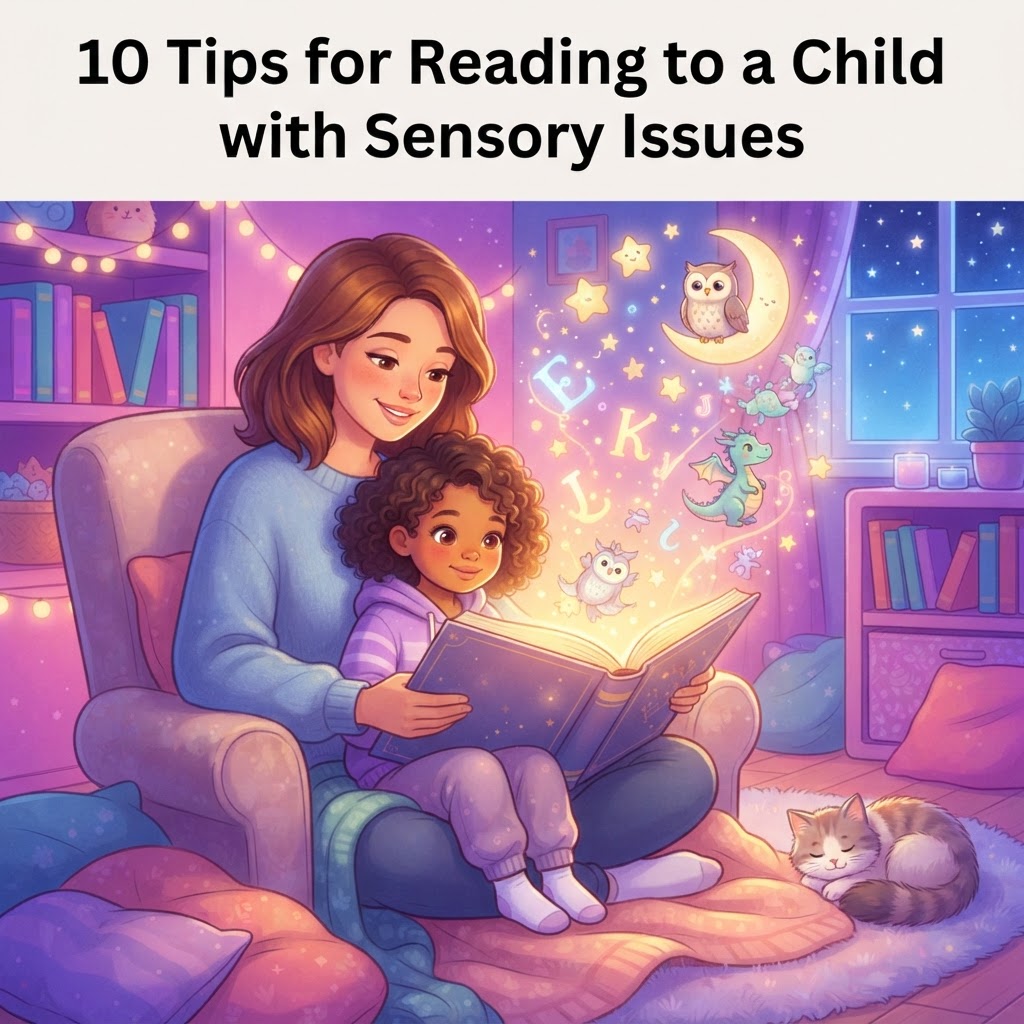
10 Tips for Reading to a Sensory-Sensitive Child
Reading to a child with sensory issues requires special considerations. Here are 10 tips for sensory-friendly story time.
✦ Key Takeaways
- •A calm, low-stimulation space is often the best place to start.
- •Timing matters because children with sensory processing differences are often more reactive when they are tired, hungry, or already overstimulated.
- •The right book can make a huge difference.
Reading to a child with sensory differences can be deeply comforting, but it often works best when you adjust the experience to fit the child rather than expecting the child to fit the routine. A sensory-friendly story time supports regulation, attention, and connection by reducing overwhelm and building predictability.
Research backs this up. The American Academy of Pediatrics has noted that sensory processing challenges can affect daily function, and the STAR Institute describes how sound, touch, movement, and visual input can change how children participate in everyday activities. If you are reading to a sensory sensitive child, small changes in environment, pacing, and book choice can make story time feel calmer and more successful.
1. How can you set up a sensory-friendly story time space?
A calm, low-stimulation space is often the best place to start. Many children with sensory issues listen better when the room feels predictable, quiet, and physically comfortable.
Try adjusting the environment before you even open the book. Dim harsh lights, lower background noise, and offer a cozy seat, blanket, or beanbag if your child enjoys deep pressure. If your child is sensitive to touch, avoid scratchy pajamas, tight seams, or crowded lap sitting.
Helpful setup ideas include:
- Soft lighting instead of bright overhead lights
- Minimal background noise from TV or devices
- One or two comfort items, not a pile of distractions
- A consistent reading spot used most nights
For some children, less sensory input helps. For others, a gentle support like a weighted lap pad or cushion improves focus.
2. Why does timing matter when reading to a sensory sensitive child?
Timing matters because children with sensory processing differences are often more reactive when they are tired, hungry, or already overstimulated. The best story time usually happens when a child is regulated enough to enjoy connection.
If bedtime is too exhausting, try reading earlier in the evening or even after bath time. Some children do better after active play because movement helps organize their bodies. Others need a quiet buffer first.
Watch for signs that the timing is off:
- Covering ears
- Restlessness or crashing into furniture
- Avoiding touch
- Sudden silliness or irritability
If story time often ends in frustration, change the time before changing the goal.
3. How do you choose books that feel calming instead of overwhelming?
The right book can make a huge difference. For sensory issues reading tips, one of the most practical is to choose stories with simple illustrations, predictable plots, and a manageable amount of language.
Children who are visually sensitive may prefer uncluttered pages and gentle colors. Children who are easily startled may do better with stories that avoid loud surprises, chaotic action, or emotionally intense scenes. Repetition, rhyme, and familiar patterns often help children feel secure.
Good options often include:
- Short books with one idea per page
- Familiar characters or routines
- Gentle humor instead of suspense
- Topics your child already loves
If you want to tailor a story to a child’s interests and sensitivity level, you can create your own personalized bedtime story and keep the language, pacing, and themes just right for them. Pre-made story templates can also be useful when you want a calm starting point.
4. Should you preview new stories before reading aloud?
Yes, previewing new stories is often helpful. A quick preview lets you spot anything that may overwhelm your child, such as loud sound words, scary images, or unexpected emotional turns.
Before reading, skim the book and think about your child’s triggers and preferences. You can shorten the story, skip a page, soften certain phrases, or prepare your child by saying, “There is one page with a big storm, but it passes quickly.”
This matters because sensory-sensitive children often do better when novelty is balanced with predictability. Familiarity lowers the cognitive and sensory load.
5. How can your voice and pace support regulation?
A slower pace and calm voice can help regulate a child’s nervous system. When reading to a sensory sensitive child, your tone is part of the sensory environment.
You do not need to perform every page. In fact, exaggerated sound effects, sudden volume changes, or dramatic character voices may be too much for some children. Pause often, keep your volume steady, and let your child process the words and pictures.
Try these simple adjustments:
- Read a little slower than usual
- Use a warm, even tone
- Pause before turning pages
- Keep dramatic changes gentle, not abrupt
If your child also struggles with worry or hypervigilance, these same strategies can help during read-aloud time. You may also like these tips for reading to an anxious child.
6. What kinds of movement or fidget supports can help during reading?
Many children listen better when their bodies are allowed to move. Sensory-friendly story time does not have to mean perfectly still story time.
A child might focus more while rocking, squeezing a soft toy, lying on their tummy, or swinging their feet. Occupational therapists often point out that some movement can support attention, especially for children who seek vestibular or proprioceptive input.
You might offer:
- A small fidget or stuffed animal
- A rocking chair
- Floor time instead of lap sitting
- A chance to stand or pace nearby
The goal is not to stop movement. The goal is to find movement that helps the child stay engaged without becoming more dysregulated.
7. How do you read interactively without creating too much sensory input?
Interactive reading can be wonderful, but it should stay gentle and predictable. The best interaction for a sensory-sensitive child is often low-pressure, with simple choices and clear turn-taking.
Instead of asking many questions on every page, try one easy prompt such as, “Do you think the bunny feels sleepy?” or “Should we turn the page now?” This keeps the child involved without overloading language or attention.
You can also let the child participate by:
- Pointing to one favorite picture
- Repeating one phrase each time it appears
- Choosing between two books
- Helping invent a calm ending
If your child enjoys making up parts of the story, these ideas connect well with teaching creativity through stories. The key is to follow the child’s pace, not push for performance.
8. When should you pause for a sensory break?
You should pause as soon as you notice early signs of overload, not after a full meltdown. Short sensory breaks can protect the positive feeling of story time and help your child return more regulated.
Look for subtle cues like wiggling that suddenly becomes frantic, turning away, vocal protests, or rubbing eyes and ears. A two-minute break may be enough: a sip of water, wall pushes, a stretch, a deep-pressure hug if welcomed, or a quick walk down the hall.
Think of breaks as part of the reading plan, not a failure. Many children do better with “read for five minutes, move for two minutes, then return.”
9. How can you build a predictable reading routine that feels safe?
Predictability helps many children with sensory differences feel secure. A steady routine reduces uncertainty and makes story time easier to tolerate and eventually enjoy.
Keep the order simple and consistent: bathroom, pajamas, lights low, two books, cuddle or quiet goodnight. If your child loves repetition, that is okay. Re-reading favorite stories supports language, emotional safety, and comprehension.
A predictable routine might include:
- The same reading place each night
- The same opening phrase
- The same number of books
- A visual cue that story time is starting
Saving favorite stories in your story library can make it easier to return to familiar books again and again. If you are building broader bedtime habits, you may also enjoy these ideas on using stories to teach healthy habits.
10. What should you do if a child refuses story time?
If a child refuses story time, reduce the demand and protect the relationship first. Refusal usually means the experience feels too hard, too stimulating, or too unpredictable in that moment.
Instead of insisting on finishing a book, try lowering the pressure. You might offer one page, a wordless picture walk, or simply sitting together with the book closed. Sometimes success looks like 90 seconds of calm connection.
When refusal happens often, ask:
- Is the room too bright, loud, or busy?
- Is the book too long or intense?
- Does my child need movement first?
- Am I asking for more interaction than they can handle today?
This flexible mindset matters. As the Child Mind Institute notes, sensory challenges can affect attention, behavior, and emotional regulation. The goal is not a perfect read-aloud. The goal is a safe, enjoyable shared experience that grows over time.
A final reminder: sensory needs vary widely. One child may crave firm cuddles and silly voices, while another needs space, softness, and very quiet reading. Follow the child in front of you, adjust often, and keep story time kind.
Frequently Asked Questions
How long should sensory-friendly story time last?
Start shorter than you think. For some children, 5 to 10 minutes of calm reading is far more successful than pushing through a longer session.
Is it okay if my child only wants the same book every night?
Yes. Repetition can feel regulating and safe, and it also supports language learning, memory, and comprehension. Familiar books often lower sensory and emotional demand.
Should I avoid all exciting or emotional books?
Not necessarily. Many children can enjoy emotional or suspenseful stories when they are prepared, the pacing is gentle, and the content matches their tolerance level.
Can audiobooks work for children with sensory issues?
Sometimes. Audiobooks can be helpful for children who like predictable sound, but they may be difficult for children who are sensitive to voice changes or who need visual support from pictures.
What if my child needs to move the whole time I read?
That is often okay. If the movement is helping attention and regulation, let it be part of the routine instead of treating it as a problem.
When should I ask for professional help?
If sensory challenges regularly interfere with reading, sleep, transitions, or daily family routines, talk with your pediatrician or an occupational therapist. A professional can help you identify patterns and build more personalized supports.
Ready to Create a Personalized Bedtime Story?
Use our free AI bedtime story generator to create a personalized illustrated story for your child in 30 seconds — no credit card needed.
Popular story types:
Maya Rodriguez
Lead Content Editor & Early Literacy Specialist
Maya is a former early childhood educator and literacy specialist with over a decade of experience helping children develop a love of reading. She leads content at InstaTales, where she writes about the science of storytelling, child development, and how families can use personalized AI stories to build literacy and emotional resilience.
instatales.ai