10 Easy Tips for Reading to Multiple Kids
Reading to multiple kids of different ages? Here are 10 tips to make it work for everyone.
✦ Key Takeaways
- •Pick a book with a simple plot, strong pictures, and at least one layer older children can enjoy.
- •A simple routine helps children settle faster and know what to expect.
- •Seat children so every child can see the pictures without climbing over one another.
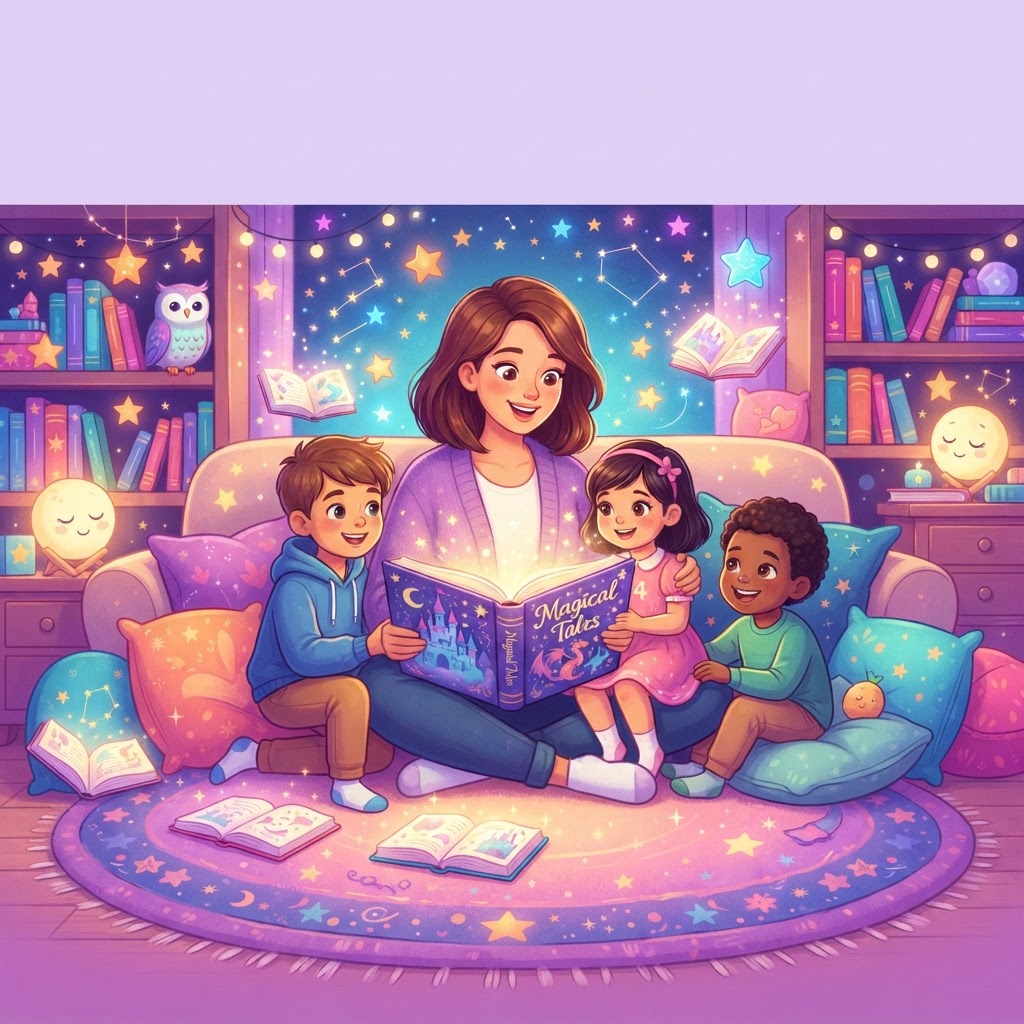
Reading to more than one child at a time can feel surprisingly tricky. One child wants silly voices, another asks nonstop questions, and the youngest may be done before the second page. The good news is that reading to multiple kids can still feel calm, connected, and fun with a few simple adjustments.
Shared read-alouds support language, attention, and family bonding. The American Academy of Pediatrics recommends reading aloud from infancy because it strengthens both early literacy and parent-child relationships. When you make sibling story time work for different ages, you are not just getting through a book—you are building a family reading culture.
How do you choose one book for different ages?
Pick a book with a simple plot, strong pictures, and at least one layer older children can enjoy. The best choice for reading to siblings is usually not a “perfect fit” for every age, but a book that offers something for everyone.
Look for:
- Repetition or rhythm for younger children
- Rich illustrations for pointing and predicting
- Humor, emotion, or interesting facts for older children
Classic picture books, folktales, and short illustrated chapter excerpts often work well. If your children are very far apart in age, try alternating: one “all-play” book for everyone, then a short extra book for the oldest or youngest.
Why should you start sibling story time with the same routine?
A simple routine helps children settle faster and know what to expect. Predictability reduces squirming, power struggles, and “it’s not fair” complaints.
Keep the routine short:
- Choose a reading spot
- Let each child grab a pillow or blanket
- Sing one short song or say one story-time phrase
- Review one listening expectation
This works because young children respond well to repeated patterns. According to the Harvard Center on the Developing Child, warm back-and-forth interactions help build attention and connection. A familiar opening creates exactly that.
If your evenings feel chaotic, a dedicated reading corner can help. These cozy reading space ideas make shared reading more inviting.
How can you seat kids so everyone can see and settle?
Seat children so every child can see the pictures without climbing over one another. Good positioning prevents many behavior problems before they start.
Try this setup:
- Younger children closest to the book
- Older children slightly behind or beside you
- Wigglier children holding a soft toy, blanket, or cushion
- Siblings who distract each other separated by one spot
When children can see clearly, they stay engaged longer. You do not need a perfect Pinterest setup—just enough comfort and space that no one feels blocked out.
What is the best way to read for mixed attention spans?
Read a little more slowly than usual, but keep the story moving. For mixed ages, the sweet spot is usually a lively pace with brief pauses, not a long stop on every page.
A good rule is to “zoom in, then move on.” Pause for one quick comment, question, or prediction, then continue. Toddlers often need momentum, while older children enjoy brief discussion. If you notice attention dropping, shorten the book or skip a few lines rather than pushing through every word.
How can you keep every child actively involved?
Give each child a job during the story. Active roles make sibling story time more cooperative and less passive.
You might assign:
- One child to turn pages
- One to find hidden details in pictures
- One to make a sound effect
- One to answer the “big kid” question
This approach reflects dialogic reading research, which shows children learn more language when adults invite participation instead of only reading straight through. Even a toddler can point, repeat a refrain, or make an animal noise. Older children can predict, summarize, or explain a new word.
When should you pause to explain and when should you keep going?
Pause only when it adds meaning. Too many explanations can drain the energy from the story, especially when reading to multiple kids with different developmental stages.
A helpful pattern is:
- Explain unfamiliar words if they matter to the plot
- Ask one or two strong questions, not ten
- Save longer discussion for the end
The National Institute of Child Health and Human Development notes that rich language experiences support early learning. That does not mean turning every page into a lesson. A quick explanation and a natural tone often work best.
How do you make reading to siblings feel fair?
Fair does not mean identical. It means each child feels seen over time.
Try rotating small choices:
- Tonight’s book chooser
- Who sits closest
- Who turns pages
- Who picks the follow-up song or bedtime question
Say this out loud if needed: “Tonight your sister chose the book. Tomorrow you choose.” Clear language helps children understand the system. If one child is a more advanced reader, fairness may also mean giving that child a harder question while the younger one gets more picture-based participation.
If one child resists read-aloud time, these tips for a reluctant reader can help you keep things positive.
What can you do if one child interrupts or dominates?
Set a simple participation rule before you begin. Children do better when expectations are concrete, calm, and brief.
For example:
- “You may ask one question per page.”
- “Raise a finger if you have something to say.”
- “Everyone gets one turn before someone gets a second turn.”
Older children often dominate because they process faster, not because they are trying to ruin the moment. Younger children may interrupt because they are excited or impulsive. Gentle structure protects everyone’s chance to engage without shaming anyone.
How can you adapt the same story for toddlers and older kids?
Use layered questions and responses. The same story can work for a three-year-old and a seven-year-old if you invite different kinds of thinking.
For younger children:
- “Where is the dog?”
- “What sound does the train make?”
For older children:
- “Why do you think the character did that?”
- “What do you think will happen next?”
This is one of the most practical tricks for reading to siblings. One child is naming and noticing, while the other is predicting and reasoning. Both are learning from the same book at their own level.
When is it smarter to split the group or personalize the story?
If no one is enjoying the session, split it. Reading together is wonderful, but forcing one shared story every night is not the goal.
You might do:
- One short group book, then separate 5-minute reads
- A shared story most nights and one solo night each week
- A personalized story that includes both children but meets different interests
This is where flexible tools can help. You can create your own personalized bedtime story around both children’s interests, then save favorites in your story library for easy re-reading. If you are also trying to make reading more consistent, these ideas for building a reading habit fit nicely into a family routine.
How can you end sibling story time on a calm, positive note?
End before children are completely done, not after they are melting down. A short, satisfying finish leaves kids looking forward to the next read-aloud.
Try a consistent closing:
- One final cuddle or high-five
- “What was your favorite part?”
- A quick preview of tomorrow’s book
This ending matters. Children are more likely to return happily to routines that feel warm and successful. If you want variety without extra prep, you can also borrow ideas from these tips for making up stories on the spot.
Frequently Asked Questions
What if my kids are too far apart in age for one book?
Choose one short shared book first, then add a brief second read for the older or younger child. This keeps the family connection while still meeting individual needs.
How long should sibling story time last?
For most families, 10 to 20 minutes is enough. Stop while children are still engaged rather than stretching the session until everyone is tired.
Should I ask questions on every page?
No. A few thoughtful questions are more effective than constant interruptions. Keep the story flowing and pause only when a question adds to understanding or enjoyment.
What if one child always wants the same book?
Repetition is normal and helpful, especially for younger children. You can set a limit such as “two nights in a row,” then offer two new choices after that.
Is reading to multiple kids still useful if one child seems distracted?
Yes. Children often absorb more than they appear to. Keep the atmosphere warm, invite small participation, and remember that listening stamina grows over time.
Can personalized stories help with sibling story time?
Yes, especially when siblings have different interests or ages. A story that includes both children can increase buy-in and help everyone feel included.
Ready to Create a Personalized Bedtime Story?
Use our free AI bedtime story generator to create a personalized illustrated story for your child in 30 seconds — no credit card needed.
Popular story types:
Maya Rodriguez
Lead Content Editor & Early Literacy Specialist
Maya is a former early childhood educator and literacy specialist with over a decade of experience helping children develop a love of reading. She leads content at InstaTales, where she writes about the science of storytelling, child development, and how families can use personalized AI stories to build literacy and emotional resilience.
instatales.ai