10 Patience Stories Tips to Help Kids Wait
Want to help your child learn patience? Here are 10 tips for using stories to teach waiting and self-regulation.
✦ Key Takeaways
- •Start with familiar, short waits.
- •A good patience story should include real feelings, not just a perfect child who waits quietly.
- •Model patient language out loud while you read.
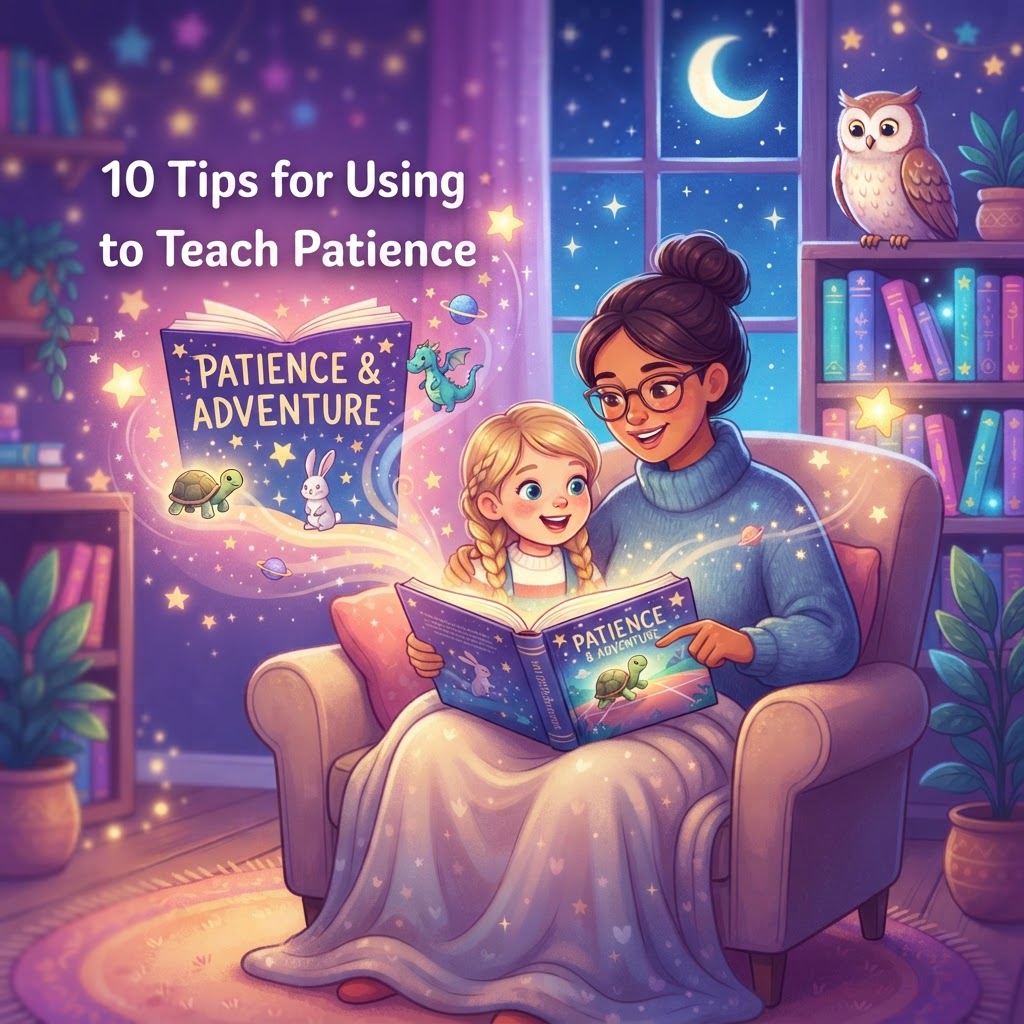
Patience is not a skill children simply “have” or “don’t have.” It grows slowly through practice, support, and lots of chances to wait, try again, and manage big feelings. That is why teaching patience through stories works so well: stories let children rehearse waiting in a safe, calm setting before they face it in real life.
Research backs this up. The Center on the Developing Child at Harvard University explains that executive function and self-regulation skills develop over time through relationships and repeated practice. In simple terms, children learn patience when adults help them name feelings, model coping tools, and connect those tools to everyday routines. If you are looking for practical patience stories tips, these 10 ideas can help.
How can you start with waiting situations your child already knows?
Start with familiar, short waits. Children learn patience best when a story mirrors a real challenge they already face, like waiting for a snack, a turn, or a parent to finish helping someone else.
For toddlers, keep the problem simple: a character waits for bubbles, toast, or a favorite song. For older children, the story can include bigger waits, like waiting for a birthday, a game result, or a trip. When the situation feels recognizable, children are more likely to transfer the lesson.
If you want a quick starting point, pre-made story templates can make it easier to build a story around the exact kind of waiting your child struggles with most.
What makes a patience-themed story feel believable to a child?
A good patience story should include real feelings, not just a perfect child who waits quietly. Kids connect better when the character feels frustrated, excited, disappointed, or bored before finding a way to cope.
This matters because patience is really a mix of emotional awareness and self-control. The CDC’s developmental guidance reminds parents that self-regulation develops gradually, and young children still need support with impulses and emotions. In patience storytelling, believable emotions make the lesson feel human rather than preachy.
Look for stories where the character:
- Wants something right away
- Feels the wait in their body or mood
- Uses a simple strategy
- Sees that waiting can lead to something worthwhile
How can you show your child what patience sounds like?
Model patient language out loud while you read. Children learn a lot from hearing calm, steady words paired with a frustrating moment.
Try short phrases like:
- “Waiting is hard, but I can do hard things.”
- “I feel excited, so I will take a breath.”
- “My turn is coming.”
- “I can do something while I wait.”
This kind of co-regulation is strongly supported by child development research. Organizations like the American Academy of Pediatrics emphasize that self-control grows through warm guidance, not pressure. When you use calm words during story time, you give your child a script they can borrow later.
Why should you pause and predict during the story?
Pausing to predict helps children practice self-regulation before the story solves the problem for them. It turns reading into active thinking instead of passive listening.
Ask simple questions such as, “What could she do while she waits?” or “What might help him feel calmer right now?” These questions build executive function because children must stop, think, and consider options.
Keep the tone light. The goal is not to test comprehension; it is to help your child notice that waiting is a problem with tools, not just a feeling to endure.
What questions help children notice self-regulation strategies?
Ask questions about the process, not only the ending. When children focus on how the character waited, they are more likely to use the same skill themselves.
Helpful prompts include:
- “What was the hardest part of waiting?”
- “How did the character know they were getting upset?”
- “What helped the waiting feel easier?”
- “Who helped them stay calm?”
- “What could you try like that?”
These discussions are a core part of teaching patience through stories. They help children name body cues, feelings, and actions. Over time, that language supports better self-regulation in real moments.
Why is rereading one good patience story so effective?
Rereading works because repetition turns a lesson into a mental routine. Children often need to hear the same coping idea many times before they can use it on their own.
When you revisit a patience story, your child already knows the plot. That frees up attention to notice the strategy: counting, deep breathing, asking for help, or finding something useful to do while waiting. Repetition also feels reassuring, especially for younger children.
If you find a story that clicks, save it in your story library so you can come back to it before common stress points like school mornings, mealtimes, or long car rides.
How can you connect a story to real-life waiting routines?
Link the story to one everyday routine at a time. Children learn faster when you say, “This is just like the story,” during the actual wait.
Good practice moments include:
- Waiting for food at a restaurant
- Waiting for a turn with a toy
- Waiting in a checkout line
- Waiting for a sibling to finish
- Waiting for screen time or dessert
Keep the connection brief: “Remember how the bunny took three breaths while waiting? Let’s try that now.” This is where patience storytelling becomes practical life learning rather than just a bedtime theme.
What simple follow-up activities turn patience storytelling into practice?
Short, playful practice works best. Children build patience through tiny successful waits, not long lectures.
Try activities like:
- A 10-second snack wait before eating
- Freeze games and turn-taking games
- A visual timer during transitions
- “Waiting jobs,” like holding napkins or choosing a song
- Drawing what the character did while waiting
For group settings, teachers can use these same ideas during line-ups, centers, and classroom transitions. If you are using stories at school, InstaTales for teachers can help organize age-appropriate reading and follow-up activities.
When is a personalized story the best teaching tool?
A personalized story is especially helpful when your child gets stuck on the same waiting challenge again and again. Custom stories feel more relevant because they match the child’s age, interests, and real trigger.
For example, if your child struggles with waiting for a parent at pick-up, a generic story may help a little. But a story about them waiting with a teacher, holding their backpack, and using a calming strategy can be much more powerful. You can create your own personalized bedtime story to target a specific routine, fear, or frustration.
This is one of the most effective patience stories tips because it makes the lesson concrete, memorable, and emotionally safe.
How should you respond when your child is still impatient?
Respond with coaching, not shame. Patience is a developing skill, and setbacks are part of learning.
If your child melts down after waiting, revisit the story later when everyone is calm. Say something like, “Waiting felt really hard today. What could we try next time, like the character did?” That approach teaches reflection instead of embarrassment.
Also remember that some children struggle more with waiting because of temperament, stress, or sensory overload. If that sounds familiar, these tips for reading to a sensory-sensitive child may help you adjust the environment and expectations.
Used consistently, stories can become a gentle training ground for patience. Children do not need perfect behavior; they need repeated chances to see waiting, talk about waiting, and practice what to do during the wait.
Frequently Asked Questions
At what age can children start learning patience through stories?
Children can start learning early, even as toddlers. For ages 1-3, keep stories short and focus on very small waits, simple feelings, and one clear coping strategy.
How long should a patience story be?
Shorter is usually better, especially for younger children. Aim for 3-5 minutes for toddlers and preschoolers, and a bit longer for early elementary children if the story stays relatable.
What if my child interrupts or gets restless during the story?
That is normal and does not mean the story is failing. Keep reading interactive, use short pauses, and choose a story that matches your child’s attention span and current frustration level.
Are patience stories better at bedtime or during the day?
Both can work, but timing matters. Bedtime is great for calm reflection, while daytime stories can be easier to connect to real situations like waiting for turns, snacks, or transitions.
Can stories really improve self-regulation?
Stories help when they are paired with discussion, modeling, and real-life practice. They give children emotional language and coping scripts, which supports the larger self-regulation skills researchers describe.
What if my child needs help with other character skills too?
That is very common. Patience often grows alongside empathy, gratitude, and resilience, so it can help to teach those themes together through stories and daily routines.
Ready to Create a Personalized Bedtime Story?
Use our free AI bedtime story generator to create a personalized illustrated story for your child in 30 seconds — no credit card needed.
Popular story types:
Maya Rodriguez
Lead Content Editor & Early Literacy Specialist
Maya is a former early childhood educator and literacy specialist with over a decade of experience helping children develop a love of reading. She leads content at InstaTales, where she writes about the science of storytelling, child development, and how families can use personalized AI stories to build literacy and emotional resilience.
instatales.ai