10 Science Storytelling Tips for Kids
Want to make science fun with stories? Here are 10 tips for using storytelling to teach science concepts.
✦ Key Takeaways
- •Start with a science topic your child can notice in real life.
- •The easiest way to do science storytelling is to focus on one main concept per story.
- •Science in stories should be easy to understand, but it should not be misleading.
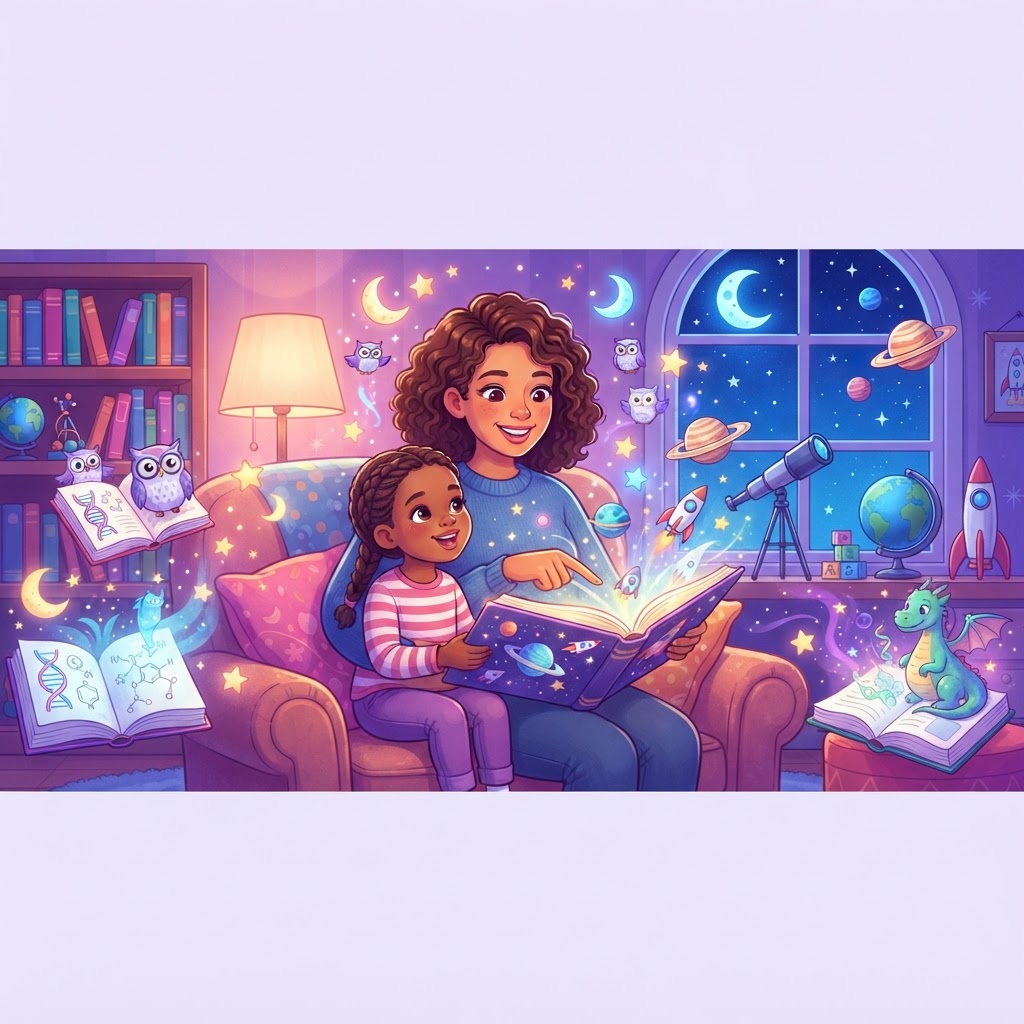
Stories can turn abstract science ideas into something children can see, feel, and remember. When a seed becomes a brave traveler or a raindrop goes on a sky-high adventure, teaching science through stories feels less like a lesson and more like discovery.
That matters because young children learn best through language, play, and relationships. Organizations such as the Center on the Developing Child at Harvard University have long highlighted the value of back-and-forth conversation for building thinking skills, and science storytelling creates exactly that kind of rich interaction. If you want practical science stories tips you can use at home, in class, or at bedtime, these 10 ideas will help.
How do you choose the best science topic for a story?
Start with a science topic your child can notice in real life. Familiar subjects like weather, plants, shadows, bugs, magnets, or the five senses are easier to understand because children can connect the story to what they already see.
For ages 1-10, the best topics are concrete and observable. Instead of starting with “the water cycle” as a big system, start with one raindrop. Instead of “ecosystems,” start with one squirrel finding food.
Good starter topics include:
- Day and night
- Floating and sinking
- Animal habitats
- Life cycles
- Seasons
- Light and shadow
- Simple machines
- How plants grow
If you are building a home reading habit, pairing science stories with story time routines that really work can make learning feel natural and consistent.
How can you build one clear science idea into the plot?
The easiest way to do science storytelling is to focus on one main concept per story. Children remember more when the plot carries a single idea clearly, instead of trying to teach five facts at once.
A simple structure works well:
- A character has a question or problem
- The character observes or experiments
- The character learns a science idea
- The ending shows that idea in action
For example, a story about floating and sinking might follow a duck who wants to help a pebble cross a pond. Along the way, the duck notices that leaves float, stones sink, and shape changes what happens in water.
This approach keeps the story engaging while making the science easy to retell later.
Why should science facts stay simple but accurate?
Science in stories should be easy to understand, but it should not be misleading. Children can handle accurate science when it is explained in child-friendly language.
That means avoiding explanations that are cute but wrong. For example, saying “the sun goes to sleep” may sound sweet, but it can confuse children who are ready to learn about Earth’s rotation. A better version is, “It looks like the sun moves across the sky because Earth is turning.”
Accuracy builds trust. When parents and teachers model careful language, children learn that science is about noticing what is real. The National Association for the Education of Young Children also emphasizes that early science learning grows through meaningful, hands-on, language-rich experiences.
How can characters model curiosity like a young scientist?
Characters should act the way scientists do: asking questions, making predictions, observing closely, and changing their minds when they learn something new. This helps children see science as a process, not just a list of facts.
Try giving your main character habits such as:
- “I wonder why…”
- “What do you notice?”
- “Let’s test it.”
- “Was my guess right?”
A child who hears these patterns again and again begins to use them too. That is one reason teaching science through stories works so well: it teaches both content and thinking skills.
If you are creating custom stories, you can create your own personalized bedtime story around your child’s favorite animals, vehicles, or outdoor adventures to make curiosity feel even more personal.
What kinds of questions should you ask during the story?
Ask simple, open-ended questions before, during, and after reading. Good questions turn a child from a listener into an active thinker.
Before reading, ask:
- “What do you already know about rain?”
- “What do you think will happen to the seed?”
During reading, ask:
- “Why do you think the shadow changed?”
- “What is the character noticing?”
After reading, ask:
- “What was the big science idea?”
- “Can we find something like that in our house or outside?”
This kind of discussion supports both comprehension and language development. It also strengthens the conversational turn-taking that child development researchers consistently connect with learning.
How can repetition help children remember science words?
Repetition is one of the most effective science stories tips because children often need to hear a word many times before they truly own it. Repeating key terms in a meaningful context helps vocabulary stick.
Choose two or three science words for each story, such as:
- absorb
- melt
- habitat
- predict
- observe
Then repeat them naturally across the story: “Lena observed the snail. She observed its trail. She observed where it liked to hide.” This keeps the language rich without sounding like a quiz.
If you want more ideas for supporting word learning, these tips for using stories to build vocabulary pair beautifully with science reading.
Why do sensory details make science stories stronger?
Sensory details help children picture the science idea clearly. When a story describes the cold, slippery ice or the warm sunlight on a leaf, the science becomes easier to understand and easier to remember.
Try to include what the character can:
- See
- Hear
- Touch
- Smell
- Sometimes taste, when appropriate and safe
This is especially helpful in early childhood because young learners think through their bodies as much as their words. Strong sensory language also supports children with different learning styles and attention needs.
How can you connect a story to a real-world experiment?
A short hands-on activity after the story is one of the best ways to lock in learning. It shows children that the science in the story connects to the world around them.
Keep the activity simple and safe. For example:
- After a story about shadows, use a flashlight and toys
- After a story about plants, sprout beans in a jar
- After a story about sinking and floating, test household objects in a bowl
- After a weather story, make a rain gauge
This story-to-experiment pattern reflects what science educators recommend: children learn deeply when they can observe, test, and talk. For accurate kid-friendly science ideas, resources from NASA’s climate and space education pages can be helpful.
How do you adapt science stories for different learners?
The best science story is one the child can follow, enjoy, and revisit. That means adjusting length, pacing, and sensory load to fit individual needs.
For younger children or children who need more support:
- Use shorter sentences
- Keep the plot predictable
- Repeat the main idea often
- Add pictures, gestures, or props
For children who need help with focus, movement breaks and shorter reading bursts can help. These strategies overlap with advice in our guide to reading to a child with ADHD. If a child benefits from clearer routines, visual supports, or gentler pacing, these tips for reading to an autistic child can also be useful.
How can you revisit the same science story without it getting boring?
Re-reading is a strength, not a weakness. Children learn through repetition, and each revisit gives them a new chance to notice vocabulary, patterns, and facts.
To keep repeat readings fresh, change the focus each time:
- First read: enjoy the plot
- Second read: notice the science words
- Third read: look for cause and effect
- Fourth read: try the related activity
Saving favorite stories for later comparison also helps children track growth in understanding. Teachers and parents who want to organize themed reads may find tools like your story library or classroom-friendly resources from InstaTales for teachers helpful for planning.
How can you turn science storytelling into a lasting learning habit?
The most effective science storytelling happens regularly, not perfectly. A short story once or twice a week, followed by one question or one tiny activity, is enough to build curiosity over time.
You do not need a full science unit. You need a pattern: read, wonder, talk, try. That rhythm helps children see science as part of everyday life, whether they are watching steam rise from soup or noticing ants on the sidewalk.
Done well, science storytelling builds far more than facts. It supports vocabulary, attention, memory, and confidence. Most of all, it teaches children that asking questions about the world is exciting.
Frequently Asked Questions
What age is best for teaching science through stories?
Science stories work well for children from toddlerhood through the primary school years. The key is matching the topic, language, and story length to the child’s developmental stage.
Can fiction really teach accurate science?
Yes, if the core science idea is correct. Fiction can make concepts memorable, but the facts inside the story should still reflect real scientific understanding.
How long should a science story be for young children?
For toddlers and preschoolers, 3-7 minutes is often enough. Older children can enjoy longer stories, especially if the plot includes a mystery, problem, or experiment.
What science topics are easiest to teach with stories?
The easiest topics are the ones children can observe directly, such as weather, animals, plants, light, sound, and water. Concrete topics make it easier to connect the story to daily life.
Should I do an activity after every science story?
No. Activities help, but even a short conversation can deepen learning. If you do add an activity, keep it simple so the story remains the main experience.
Can personalized or AI-generated stories support science learning?
Yes, personalized stories can boost engagement because they use a child’s interests, name, or favorite themes. The most important thing is to keep the science accurate, age-appropriate, and open to discussion.
Ready to Create a Personalized Bedtime Story?
Use our free AI bedtime story generator to create a personalized illustrated story for your child in 30 seconds — no credit card needed.
Popular story types:
Maya Rodriguez
Lead Content Editor & Early Literacy Specialist
Maya is a former early childhood educator and literacy specialist with over a decade of experience helping children develop a love of reading. She leads content at InstaTales, where she writes about the science of storytelling, child development, and how families can use personalized AI stories to build literacy and emotional resilience.
instatales.ai