15 ocean story ideas for kids
15 creative ocean story ideas for kids — each with a free AI prompt to generate the full illustrated story instantly.
✦ Key Takeaways
- •Ocean stories for kids are engaging because they blend wonder with safety.
- •The best ocean story ideas for toddlers are short, repetitive, and soothing.
- •Preschoolers love ocean stories with a clear goal, colorful characters, and a little problem to solve.
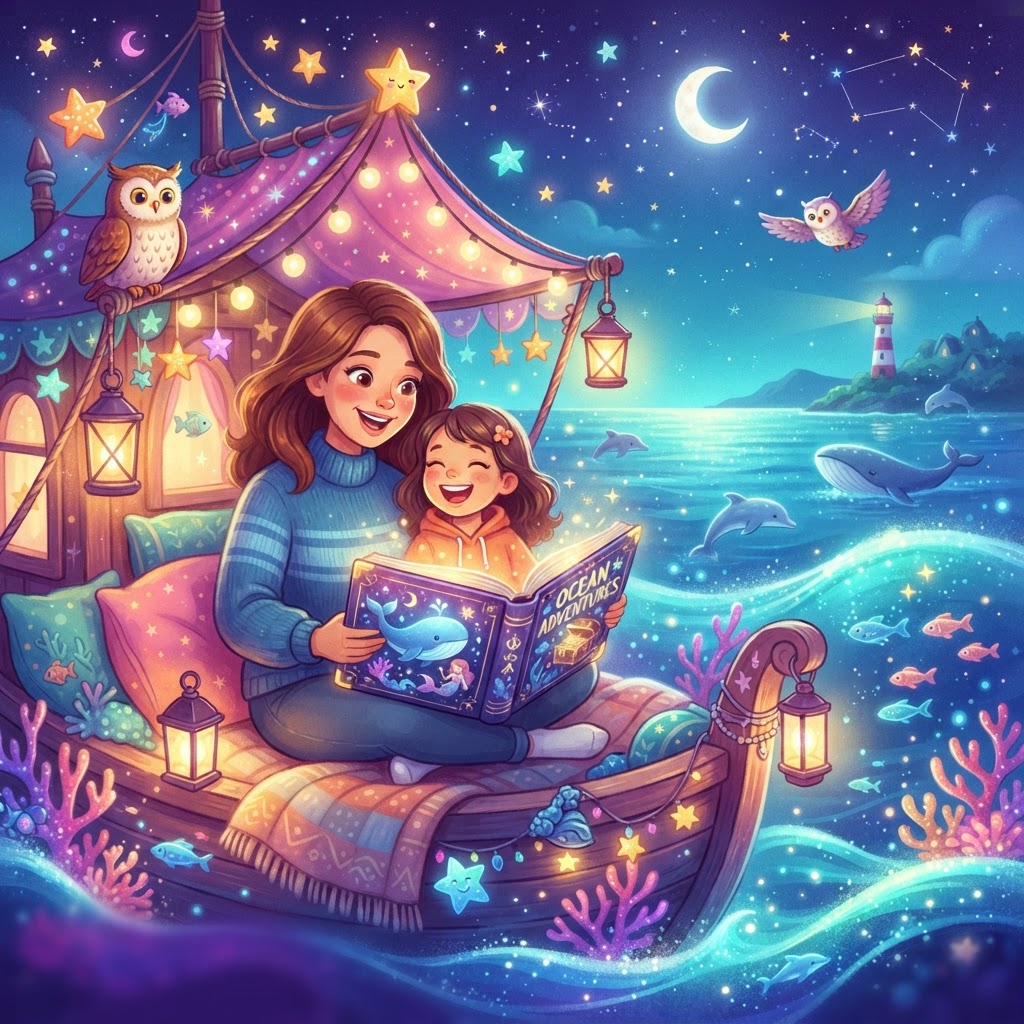
Ocean stories are a wonderful fit for bedtime because they feel calm, magical, and full of discovery. If you are looking for ocean story ideas, this list gives you 15 age-friendly concepts plus ready-to-use ocean story prompts you can paste into InstaTales to create a personalized story in seconds.
Shared reading supports language growth, emotional connection, and early literacy, especially when stories match a child’s age and interests. The American Academy of Pediatrics recommends reading aloud from infancy, and the Center on the Developing Child at Harvard University highlights how back-and-forth storytelling strengthens development. Ocean themes work especially well because they combine soothing rhythm with animals, colors, and gentle adventure.
Why are ocean stories so engaging for children?
Ocean stories for kids are engaging because they blend wonder with safety. The sea offers friendly animals, repeating wave sounds, and endless chances for imaginative play without needing complicated plots.
For younger children, simple kids ocean stories build vocabulary through repeated words like splash, bubble, shell, and tide. For older children, the ocean adds mystery, problem-solving, and real-world curiosity about sea life; the NOAA Ocean Service is a great place to explore ocean facts alongside fiction. Matching story complexity to age is also smart practice, and the CDC’s developmental guidance can help parents choose the right level of language and plot.
Which ocean story ideas work best for toddlers ages 1-3?
The best ocean story ideas for toddlers are short, repetitive, and soothing. At this age, children enjoy gentle action, familiar feelings, and comforting endings.
1. The Sleepy Sea Turtle
A little sea turtle cannot fall asleep until she finds the coziest patch of moonlit sand. Along the way, she says goodnight to fish, waves, and stars.
- AI prompt: "Write a short, gentle bedtime story for a 2-3 year-old about a sleepy sea turtle who says goodnight to the ocean before bed. Include repetition, calm language, and a soothing happy ending."
2. The Lost Little Starfish
A tiny starfish drifts away from his family and meets kind sea creatures who help him get home. The story focuses on reassurance, not danger.
- AI prompt: "Create a warm illustrated bedtime story for a toddler about a little starfish who gets separated and is kindly helped home by ocean friends. Use simple sentences, soft emotions, and a comforting ending."
3. Bubbles the Friendly Whale
A baby whale loves making bubble rings and learns that sharing games is more fun with friends. This makes a sweet early social-emotional story.
- AI prompt: "Write a simple ocean bedtime story for ages 1-3 about a friendly baby whale who makes bubble rings and invites shy sea animals to play. Keep it playful, repetitive, and calm."
4. The Shell That Sang Goodnight
A child finds a magical shell that softly sings bedtime songs from the sea. Each sound helps one ocean animal drift to sleep.
- AI prompt: "Generate a peaceful bedtime story for a toddler about a magical seashell that sings goodnight to ocean animals one by one. Use rhythmic language and a dreamy tone."
5. The Crab Who Counted Waves
A tiny crab counts waves, pebbles, and shells as the sun sets. This idea works well for children who love numbers and routine.
- AI prompt: "Write a short bedtime counting story for ages 2-4 about a little crab who counts waves and shells at sunset. Include gentle repetition and a sleepy ending."
Which ocean stories for kids are ideal for preschoolers ages 4-6?
Preschoolers love ocean stories with a clear goal, colorful characters, and a little problem to solve. At this age, imaginative twists and simple humor keep attention strong.
6. The Mermaid’s Lantern Rescue
A young mermaid loses her glowing lantern and must follow clues across the reef to find it before dark. The adventure stays light and reassuring.
- AI prompt: "Create a bedtime adventure for a 4-6 year-old about a young mermaid searching the coral reef for her lost lantern. Make it magical, gentle, and full of friendly sea creatures."
7. Octopus Chef’s Underwater Picnic
An octopus chef plans a picnic for all his ocean friends, but each guest likes a different snack. He solves the problem with creativity and teamwork.
- AI prompt: "Write a funny, heartwarming ocean story for preschoolers about an octopus chef preparing an underwater picnic for many sea animals. Emphasize problem-solving, friendship, and a happy ending."
8. The Coral Reef Color Hunt
A curious child explores the reef to find something red, blue, yellow, and green before the tide changes. This story blends learning with adventure.
- AI prompt: "Generate an interactive ocean story for ages 4-6 about a child on a coral reef color hunt. Include vivid descriptions, gentle discoveries, and a bedtime-safe ending."
9. The Tiny Submarine Adventure
A small homemade submarine explores hidden caves, glowing fish, and sea gardens. The child hero learns bravery by asking questions and staying curious.
- AI prompt: "Write an imaginative bedtime story for a 5-year-old about a tiny submarine exploring the ocean with wonder, not fear. Include glowing sea life, simple discoveries, and a calm return home."
10. Dolphin Mail Delivery
A cheerful dolphin delivers messages across the sea and helps friends reconnect. It is a lovely prompt for stories about kindness and community.
- AI prompt: "Create a sweet ocean story for children ages 4-6 about a dolphin who delivers messages and small gifts to sea creatures across the ocean. Focus on kindness, connection, and joy."
Which kids ocean stories work well for ages 7-10?
Older children often enjoy richer plots, stronger world-building, and a touch of mystery. The best ocean stories for kids in this age group still feel hopeful, but they can handle higher stakes and more detail.
11. The Map of the Moonlit Tide
A child discovers a map that only appears when moonlight touches seawater. The map leads to a hidden cove where every shell tells a story.
- AI prompt: "Write an illustrated chapter-style ocean story for ages 7-10 about a child who finds a moonlit map leading to a secret cove of story-filled shells. Add mystery, wonder, and a satisfying ending."
12. The Plastic-Free Pirate Crew
A young pirate captain and crew clean the sea while searching for treasure hidden in floating trash. This is a strong choice for eco-minded readers.
- AI prompt: "Create an adventurous but age-appropriate ocean story for ages 7-10 about a pirate crew that protects sea animals by cleaning the ocean and uncovering a hidden treasure. Include teamwork and environmental care."
13. The Secret Library Beneath the Sea
Far below the waves is a library where octopuses guard books written on glowing kelp. A curious child is invited to read one story that can change the ocean.
- AI prompt: "Write a magical ocean fantasy for ages 7-10 about a secret underwater library run by wise octopuses. Include vivid world-building, one important choice, and a hopeful ending."
14. Storm-Singer and the Kelp Forest
A child hears music inside a storm and learns it is coming from a mysterious guardian of the kelp forest. Together, they protect a habitat from harm.
- AI prompt: "Generate an ocean adventure for older kids about a child who meets a guardian called the Storm-Singer in a giant kelp forest. Blend mystery, nature, and courage without making the story too scary."
15. The Sea Dragon’s Missing Pearl
A gentle sea dragon loses the pearl that keeps the tides balanced, and a brave sibling duo helps recover it. This idea works well for children who love fantasy quests.
- AI prompt: "Write an exciting bedtime-friendly ocean fantasy for ages 7-10 about siblings helping a kind sea dragon recover a magical pearl that controls the tides. Include clues, teamwork, and a peaceful ending."
How can you turn these ocean story prompts into personalized InstaTales?
The easiest way to use these ocean story prompts is to paste one into InstaTales, then personalize it with your child’s name, age, favorite sea animal, and preferred bedtime tone. That creates a story that feels made just for them.
A simple process works best:
- Choose one idea from the list above.
- Go to create your own personalized bedtime story and paste in the prompt.
- Add details like your child’s age, favorite colors, siblings, or bedtime goal.
- If you want a faster start, browse story templates for structure and inspiration.
- Save favorites in your story library so you can re-read them later.
For classroom use, these prompts also work well as creative writing starters, vocabulary builders, or themed reading stations. Educators can explore InstaTales for teachers, and families who want even more inspiration can browse more ocean bedtime ideas on the InstaTales blog.
Frequently Asked Questions
What age are ocean stories best for?
Ocean stories can work for ages 1-10 when the language and plot match the child’s development. Younger children usually prefer repetition and comfort, while older children enjoy mystery, humor, and problem-solving.
How long should an ocean bedtime story be?
For toddlers, 2-5 minutes is often enough. Preschoolers and early readers may enjoy 5-10 minutes, especially if the story includes a clear adventure and a calming ending.
Can ocean stories help reluctant readers?
Yes, especially when the story includes a child’s favorite animals or a personalized main character. Interest-based reading is a well-known way to build engagement and make reading feel easier.
How can I make ocean stories less scary?
Ask for gentle language, friendly sea creatures, and a reassuring ending in your prompt. You can also avoid storms, deep darkness, or getting lost if your child is sensitive.
Are these ocean story ideas good for classrooms?
Yes. Teachers can use them for read-alouds, writing prompts, ocean units, or art extension activities, especially when paired with nonfiction facts about sea life.
Can I reuse the same ocean story prompt more than once?
Absolutely. Small changes like the child’s name, age, favorite animal, setting, or story goal can create a completely fresh version of the same idea.
Ready to Create a Personalized Bedtime Story?
Use our free AI bedtime story generator to create a personalized illustrated story for your child in 30 seconds — no credit card needed.
Popular story types:
Maya Rodriguez
Lead Content Editor & Early Literacy Specialist
Maya is a former early childhood educator and literacy specialist with over a decade of experience helping children develop a love of reading. She leads content at InstaTales, where she writes about the science of storytelling, child development, and how families can use personalized AI stories to build literacy and emotional resilience.
instatales.ai