Best 3-Minute Stories for Toddlers
Toddlers have short attention spans. These 3-minute stories are perfect for the youngest story lovers.
✦ Key Takeaways
- •Three minutes is often ideal because toddlers process stories best in small, simple chunks.
- •The best toddler stories are engaging because they are simple, repetitive, and emotionally clear.
- •A calm 3-minute story time works best when it is predictable, cozy, and low-pressure.
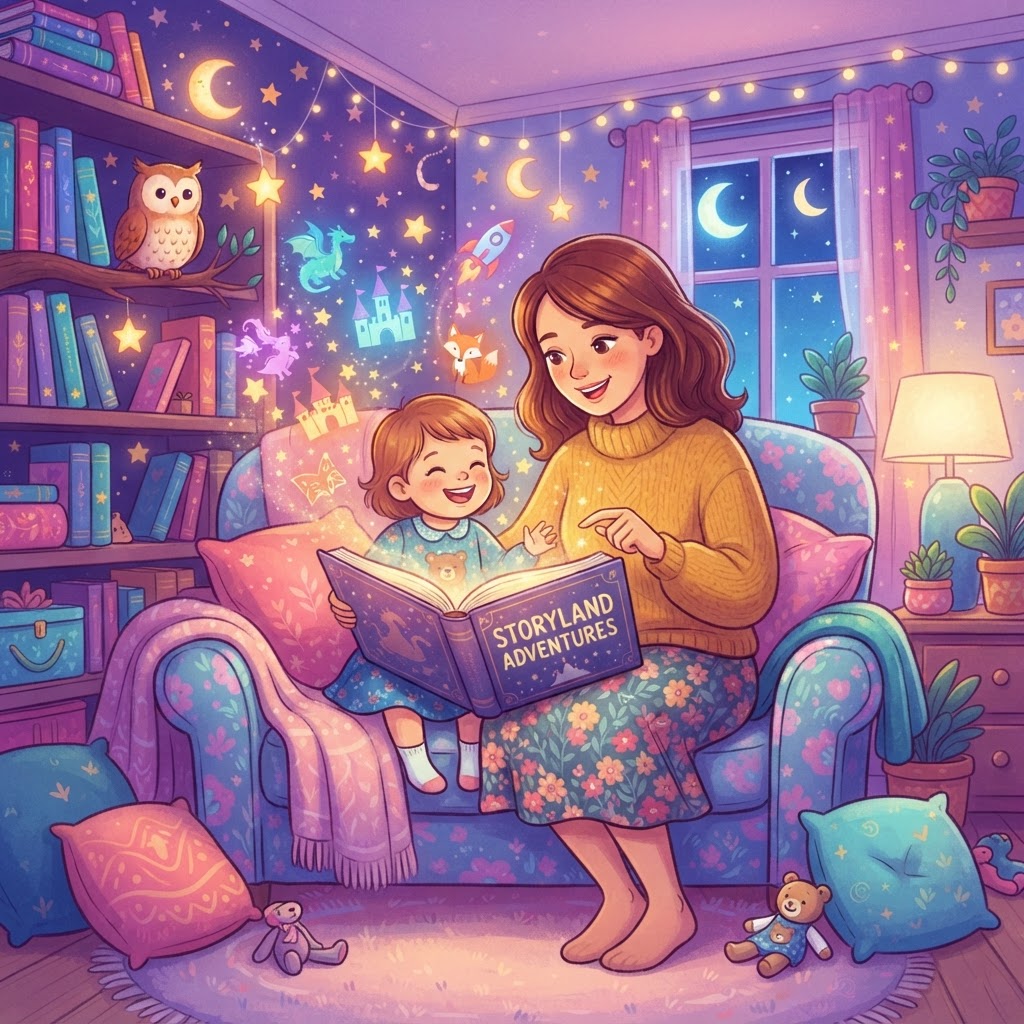
Toddlers do not need long plots to love story time. In fact, 3 minute stories for toddlers often work better than longer tales because they match young children’s short attention spans, support bedtime routines, and leave little listeners feeling calm instead of overwhelmed.
For parents of 1-, 2-, and 3-year-olds, the sweet spot is often a story that feels complete but finishes before wiggles take over. If you are looking for very short toddler stories or a quick toddler bedtime routine that still feels warm and meaningful, this guide will help you choose the right length, keep your child engaged, and make the most of InstaTales’ toddler-friendly settings.
Why are 3-minute stories ideal for toddlers?
Three minutes is often ideal because toddlers process stories best in small, simple chunks. At this age, attention, language, and self-regulation are still developing, so short stories are easier to follow and enjoy.
Most toddlers can focus for brief periods when content is predictable, rhythmic, and emotionally safe. According to the CDC’s developmental milestone guidance, early language growth in the toddler years includes learning new words, following simple directions, and naming familiar objects. Short stories support those skills without asking too much at once.
There is also a bedtime benefit. A quick story can help toddlers wind down without becoming overstimulated. That matters because overtired children often struggle more with transitions, even when they love books.
A 3-minute format works especially well because it:
- Fits naturally into a bedtime routine
- Matches a toddler’s need for repetition and simplicity
- Reduces pressure on tired parents
- Makes it easier to reread favorite stories
- Gives children a sense of completion before sleep
If your child enjoys longer reads some nights, you can always build up gradually. But for many families, very short toddler stories are the easiest way to make reading consistent.
What makes a toddler story engaging enough to hold attention?
The best toddler stories are engaging because they are simple, repetitive, and emotionally clear. Toddlers do not need twists or complex characters. They need familiar patterns, concrete images, and a gentle problem that resolves quickly.
Research and practice in early childhood education both point to the same idea: young children learn through repetition, rhythm, and interaction. Organizations like Zero to Three have long emphasized responsive back-and-forth language as a key part of early development. In story time, that means a short story becomes more powerful when a parent pauses, points, and invites a tiny response.
Look for these qualities in 3 minute stories for toddlers:
- One main character: a bunny, truck, puppy, or child
- One simple goal: find a toy, say goodnight, help a friend
- Repetition: repeated phrases like “night-night, little star”
- Sensory language: soft blanket, warm milk, sleepy moon
- A calm ending: home, cuddles, rest, or bedtime
You can also make any story more engaging by changing your voice slightly, pointing to pictures, or asking tiny prompts such as:
- “Where is the bear?”
- “What sound does the train make?”
- “Is the bunny sleepy?”
The American Academy of Pediatrics has highlighted the value of shared reading and responsive interaction in early childhood, noting that simple, warm language exchanges support development alongside bonding and routine.
How can parents keep a 3-minute story time calm and successful?
A calm 3-minute story time works best when it is predictable, cozy, and low-pressure. Toddlers thrive when they know what comes next, especially before bed.
Think of story time as part of a sequence rather than a separate event. Pajamas, cuddles, one short story, and lights out is easier for a toddler to understand than an open-ended reading session.
Here are practical ways to make a quick toddler bedtime routine more successful:
- Read in the same spot each night
- Choose one or two stories, not a big stack
- Use a soft, steady voice
- Keep the plot gentle near bedtime
- Let your toddler hold a blanket or stuffed animal
- End with the same closing phrase each night
It also helps to accept that some nights will be shorter than others. If your child is extra tired, even a 90-second story can still count as a meaningful reading moment.
For families who want slightly longer options as children grow, these guides on 5-minute bedtime stories and 10-minute bedtime stories can help you stretch story time gradually without losing the calm bedtime feel.
What are five ultra-short story ideas toddlers usually love?
Toddlers usually love story ideas that feel familiar, comforting, and easy to picture. The goal is not originality for its own sake. The goal is a simple, satisfying mini-adventure.
Here are five easy ideas for very short toddler stories you can tell, read, or generate:
1. The bunny who could not find its blanket
A sleepy bunny looks under the bed, behind the chair, and beside the moonlit window. In the end, the blanket is tucked around bunny’s shoulders the whole time.
Why it works: toddlers love gentle surprises and familiar bedtime objects.
2. The little truck saying goodnight
A small truck drives slowly around the farm saying goodnight to the barn, the sheep, and the stars. Then it parks, yawns, and falls asleep.
Why it works: vehicles are popular with many toddlers, and the repeated “goodnight” pattern is soothing.
3. The duckling jumping in puddles
A duckling finds three puddles after the rain. Splash, splash, splash—and then home for a warm towel and cuddles.
Why it works: motion plus a cozy ending keeps the story lively but not overstimulating.
4. The teddy bear’s missing kiss
A teddy bear thinks it has lost its bedtime kiss. It checks the pillow, the bookshelf, and the nightlight before discovering the kiss waiting with Mama or Daddy.
Why it works: this story supports separation comfort and emotional security.
5. The moon helping everyone sleep
The moon shines on a kitten, a baby bird, a little boat, and finally a toddler tucked into bed. Each one grows quieter as the moon glows softly above.
Why it works: the repeating pattern and sleepy imagery are perfect for a quick toddler bedtime read.
If you want fast inspiration, InstaTales also offers story templates that make it easier to start with toddler-friendly structures instead of a blank page.
How can you use InstaTales for toddler-friendly short stories?
InstaTales can be especially helpful for toddlers when you keep the age group young and the story length short. That combination makes it easier to create age-appropriate language, simple plots, and a calming tone.
When using InstaTales for a toddler, choose the toddler age range first. Then set the story to a short length so the result feels like one of the best 3 minute stories for toddlers rather than a longer read meant for older children.
Here is a simple approach that works well:
- Select the toddler age group
- Choose a short story length
- Pick one familiar theme: bedtime, animals, vehicles, family
- Use one main character
- Add a calm emotional tone: gentle, cozy, sleepy, cheerful
- Avoid scary conflict or too many scene changes
A prompt like this usually works well:
“Create a short bedtime story for a 2-year-old about a sleepy bunny looking for its blanket. Use simple words, repetition, and a calm ending.”
If you want to personalize it further, include your child’s name, favorite animal, or bedtime object. That can make the story feel special without making it harder to follow. You can create your own personalized bedtime story in just a few taps, then save favorites in your story library for easy rereading on busy nights.
How short should a bedtime story be for a 1-, 2-, or 3-year-old?
For many toddlers, 2 to 5 minutes is a very workable range, with 3 minutes being a strong starting point. The right length depends on age, temperament, and time of day.
Here is a practical guide:
- Age 1: 1-3 minutes, mostly rhythm, naming, and repetition
- Age 2: 2-4 minutes, with one simple action or goal
- Age 3: 3-5 minutes, with a clearer beginning, middle, and ending
Some toddlers will sit happily for more. Others are done after one page. Both are normal. The measure of success is not how long your child sits still. It is whether story time feels positive, connected, and repeatable.
If you are unsure, start shorter than you think you need. You can always read a second tiny story if your child asks for more.
How can parents build a lasting reading habit with very short stories?
Very short stories build lasting reading habits because they make success easy and repeatable. When a toddler expects one cozy story every night, books become part of comfort, connection, and routine.
This matters more than finishing long books. Consistency teaches children that reading is a normal part of family life. Shared reading has also been linked in multiple studies to stronger language exposure, vocabulary growth, and parent-child bonding.
To build the habit:
- Keep story time at the same time each evening
- Reread favorites without worrying about variety
- Let your toddler choose between two short options
- Follow the story with a simple goodnight phrase
- Use digital tools thoughtfully and keep the experience interactive
If you want more age-based reading ideas, the InstaTales blog is a helpful place to explore story routines for different stages.
Frequently Asked Questions
Are 3-minute stories long enough for toddlers?
Yes. For many toddlers, 3 minutes is the perfect length because it matches their attention span and keeps bedtime calm. A short story can still support language, bonding, and routine.
What kinds of stories are best for toddlers before bed?
Gentle, repetitive stories with familiar themes work best. Think animals, bedtime routines, soft adventures, and calm endings rather than fast-paced or scary plots.
Can personalized AI stories work for 2-year-olds?
Yes, if they are kept simple and short. Use toddler settings, familiar vocabulary, one main character, and a soothing tone so the story feels age-appropriate.
How many bedtime stories should I read to a toddler?
One or two short stories is often enough. The best number is whatever keeps the routine peaceful and predictable without pushing your child past their tired limit.
What if my toddler wants the same story every night?
That is completely normal and developmentally helpful. Repetition supports comprehension, memory, and comfort, which is why many toddlers ask for the same favorite again and again.
Ready to Create a Personalized Bedtime Story?
Use our free AI bedtime story generator to create a personalized illustrated story for your child in 30 seconds — no credit card needed.
Popular story types:
Maya Rodriguez
Lead Content Editor & Early Literacy Specialist
Maya is a former early childhood educator and literacy specialist with over a decade of experience helping children develop a love of reading. She leads content at InstaTales, where she writes about the science of storytelling, child development, and how families can use personalized AI stories to build literacy and emotional resilience.
instatales.ai