Best bedtime bedtime stories for 3-year-olds
Discover the best bedtime bedtime stories for 3-year-olds — themes, tips, and story ideas that will delight your child at bedtime.
✦ Key Takeaways
- •At age 3, children are growing quickly in language, pretend play, and emotional understanding.
- •Bedtime stories appeal to 3-year-olds because they combine connection, rhythm, and imagination in a way that feels safe.
- •For most 3-year-olds, the ideal bedtime story is short: about 3 to 7 minutes, or roughly 300 to 700 words.
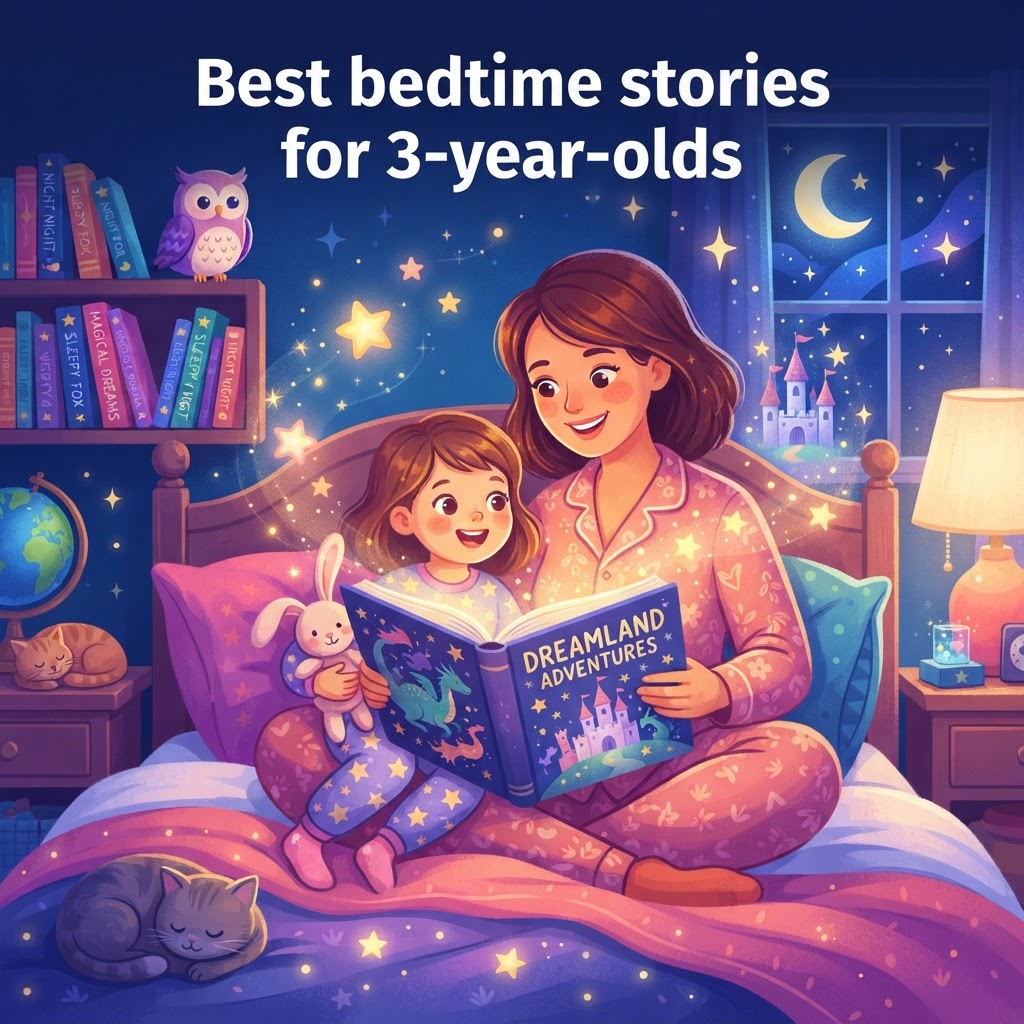
Three-year-olds are at a sweet spot for shared reading: they are talkative, imaginative, and eager for comforting routines. If you are looking for the best bedtime stories for 3 year olds, the goal is not just to find a “cute” story. The best kids bedtime stories for this age match a 3-year-old’s language, attention span, emotions, and love of repetition—while helping bedtime feel calm, connected, and predictable.
What developmental milestones matter most at age 3?
At age 3, children are growing quickly in language, pretend play, and emotional understanding. The best bedtime stories for this age work because they meet children where they are developmentally, not where adults think they “should” be.
According to the CDC’s developmental milestones for 3-year-olds, many children at this age can speak in back-and-forth conversations, ask simple questions, and engage in make-believe play. That is why bedtime stories for 3 year olds often work best when they include familiar routines, simple feelings, and playful fantasy.
A few milestones that matter most at bedtime are:
- Expanding vocabulary: 3-year-olds understand much more than they can explain.
- Growing imagination: They love talking animals, magical helpers, and pretend adventures.
- Big emotions: They may be learning how to handle fear, frustration, and separation.
- Need for predictability: Repeated phrases and familiar story patterns help them feel safe.
In practice, this means a great bedtime story for a 3-year-old should feel simple, warm, and easy to follow. It should invite participation, not demand deep comprehension.
Why do bedtime stories appeal so strongly to 3-year-olds?
Bedtime stories appeal to 3-year-olds because they combine connection, rhythm, and imagination in a way that feels safe. For many children, story time becomes the emotional bridge between a busy day and a restful night.
The American Academy of Pediatrics recommends reading together regularly because shared reading supports language development and parent-child bonding (HealthyChildren.org). For 3-year-olds, that bonding matters as much as the story itself. They are not just listening to words—they are borrowing your calm.
Stories are especially soothing at this age because they offer:
- Predictable structure: Beginning, middle, end.
- Repetition: Repeated lines help children anticipate what comes next.
- Emotional rehearsal: Stories let children explore small worries safely.
- Focused attention: A short story helps the body slow down.
Research on dialogic reading by Grover Whitehurst and colleagues also showed that interactive reading supports preschoolers’ language growth. In simple terms, when your child points, repeats, answers, or fills in a phrase, story time becomes even more valuable.
How long should bedtime stories for 3-year-olds be?
For most 3-year-olds, the ideal bedtime story is short: about 3 to 7 minutes, or roughly 300 to 700 words. That is usually long enough to feel satisfying without becoming overstimulating.
Some children can happily listen to longer kids bedtime stories, especially if the language is rhythmic and the plot is simple. But in general, bedtime is not the time for a complicated chapter, too many characters, or a long emotional buildup.
A useful rule is to choose stories with:
- One main problem
- One or two main characters
- A soothing ending
- Clear, concrete language
If your child asks for “one more,” it is often better to read two short stories than one very long one. This keeps the routine flexible while protecting sleep.
What themes work best in bedtime stories for 3-year-olds?
The best themes for 3-year-olds are familiar, gentle, and emotionally reassuring. Children this age love stories that reflect their world while adding just enough imagination to make bedtime feel special.
Strong themes for bedtime stories for 3 year olds include:
- Daily routines: bath time, pajamas, brushing teeth, getting cozy
- Animals and nature: sleepy bears, moonlit rabbits, quiet forests
- Friendship and family: helping, sharing, missing someone, feeling loved
- Gentle adventure: a short journey with a safe return home
- Feelings: nervousness, excitement, jealousy, pride, and comfort
- Curiosity and discovery: finding a star, hearing an owl, noticing the rain
If your child loves a specific topic, theme-based stories can make bedtime smoother. For example, some children settle beautifully with animal bedtime stories for 3-year-olds, while others prefer adventure bedtime stories for 3-year-olds that stay gentle and age-appropriate.
The most successful “bedtime bedtime stories” often mix the familiar with the magical: a teddy bear who whispers goodnight to the stars, or a child who rides a cloud and is back home by morning.
What should parents avoid in bedtime stories at this age?
At bedtime, avoid stories that are too intense, confusing, or overstimulating. A 3-year-old can enjoy excitement during the day, but bedtime stories should help the nervous system slow down.
Try to skip:
- Scary villains or threatening danger
- Fast-paced action with no calm resolution
- Overly long plots
- Sarcasm or humor that depends on irony
- Heavy moral lessons
- Conflict that is not clearly resolved
Also be mindful of stories that accidentally trigger bedtime resistance. For example, a story about a child escaping bedtime may sound funny, but it can invite copycat behavior.
If your child is working through social skills, stories about kindness and cooperation can be more helpful than stories built around defiance. Families with younger siblings may also find value in related topics like sharing stories for younger children or early curiosity-building tales such as curious stories for toddlers, especially if you read across ages in the same household.
What are five great bedtime story ideas for 3-year-olds?
The best story ideas for 3-year-olds are simple, visual, and comforting. Each idea below gives your child something to imagine without making bedtime feel busy.
-
The Bunny Who Couldn’t Find the Sleepy Moon
A little bunny looks for the moon, asking gentle nighttime animals for help. In the end, the moon is right above the bunny’s cozy burrow. -
The Pajama Parade to Dreamland
A child, teddy, and slippers march quietly through the house, saying goodnight to toys, books, and the lamp. The repetition makes this especially calming. -
The Little Bear’s First Campout in the Living Room
A small bear feels excited and a tiny bit nervous about sleeping somewhere new. With Mama Bear nearby, the campout becomes safe and fun. -
The Whispering Garden
Flowers, fireflies, and sleepy birds softly tell a child what happens in the garden at night. This works well for children who love sensory details and nature. -
The Train That Collected Goodnights
A slow, glowing train rolls from room to room collecting “goodnight” wishes from everyone in the house. It ends by carrying those wishes into the child’s dreams.
If you want more variety, the InstaTales blog has age-based ideas, and story templates can help you start from a structure that already fits young listeners.
How can parents use personalized AI stories thoughtfully?
Personalized AI stories can be wonderful for 3-year-olds when they stay simple, warm, and age-appropriate. The best use of AI is not to replace connection, but to make story time more personal and easier to sustain.
With InstaTales, parents can create your own personalized bedtime story using a child’s name, favorite animal, beloved blanket, or everyday challenge. That personal touch often increases attention and delight because 3-year-olds love hearing themselves reflected in the story.
A thoughtful approach is to:
- Keep the plot short and calm
- Include familiar bedtime routines
- Use one emotional theme, such as bravery, missing a parent, or trying something new
- Re-read favorites from your story library, since repetition is genuinely helpful at this age
This also aligns with what early childhood experts emphasize: young children benefit from predictable routines and secure relationships. Organizations like Zero to Three highlight that calm, consistent bedtime habits support emotional regulation and sleep.
In other words, personalized stories work best when they feel like an extension of loving bedtime care—not extra screen-time chaos.
Frequently Asked Questions
What makes a good bedtime story for a 3-year-old?
A good bedtime story for a 3-year-old is short, soothing, and easy to follow. It usually has one simple problem, familiar emotions, and a calm ending.
How many bedtime stories should I read each night?
One or two short stories is enough for most children this age. The best number is the one that feels predictable and does not push bedtime too late.
Are repetitive stories good for 3-year-olds?
Yes, repetition is excellent for 3-year-olds. It supports language learning, memory, and emotional security, especially at the end of the day.
Can personalized AI stories help at bedtime?
Yes, if they are age-appropriate and simple. Personalized stories can increase engagement because children love hearing their own name, favorite toy, or favorite animal in the story.
What if my child wants the same story every night?
That is very normal and often beneficial. Re-reading helps 3-year-olds feel competent, safe, and relaxed, even if adults are ready for more variety.
Should bedtime stories teach a lesson?
They can, but the lesson should be light and woven naturally into the story. At bedtime, comfort and connection matter more than delivering a strong moral.
Ready to Create a Personalized Bedtime Story?
Use our free AI bedtime story generator to create a personalized illustrated story for your child in 30 seconds — no credit card needed.
Popular story types:
Maya Rodriguez
Lead Content Editor & Early Literacy Specialist
Maya is a former early childhood educator and literacy specialist with over a decade of experience helping children develop a love of reading. She leads content at InstaTales, where she writes about the science of storytelling, child development, and how families can use personalized AI stories to build literacy and emotional resilience.
instatales.ai