Best courage bedtime stories for 4-year-olds
Discover the best courage bedtime stories for 4-year-olds — themes, tips, and story ideas that will delight your child at bedtime.
✦ Key Takeaways
- •Courage bedtime stories work well for 4-year-olds because they match the real challenges children this age face.
- •The best stories for 4-year-olds reflect their growing language, imagination, and emotional awareness.
- •For most 4-year-olds, the ideal bedtime story is about 5 to 10 minutes long.
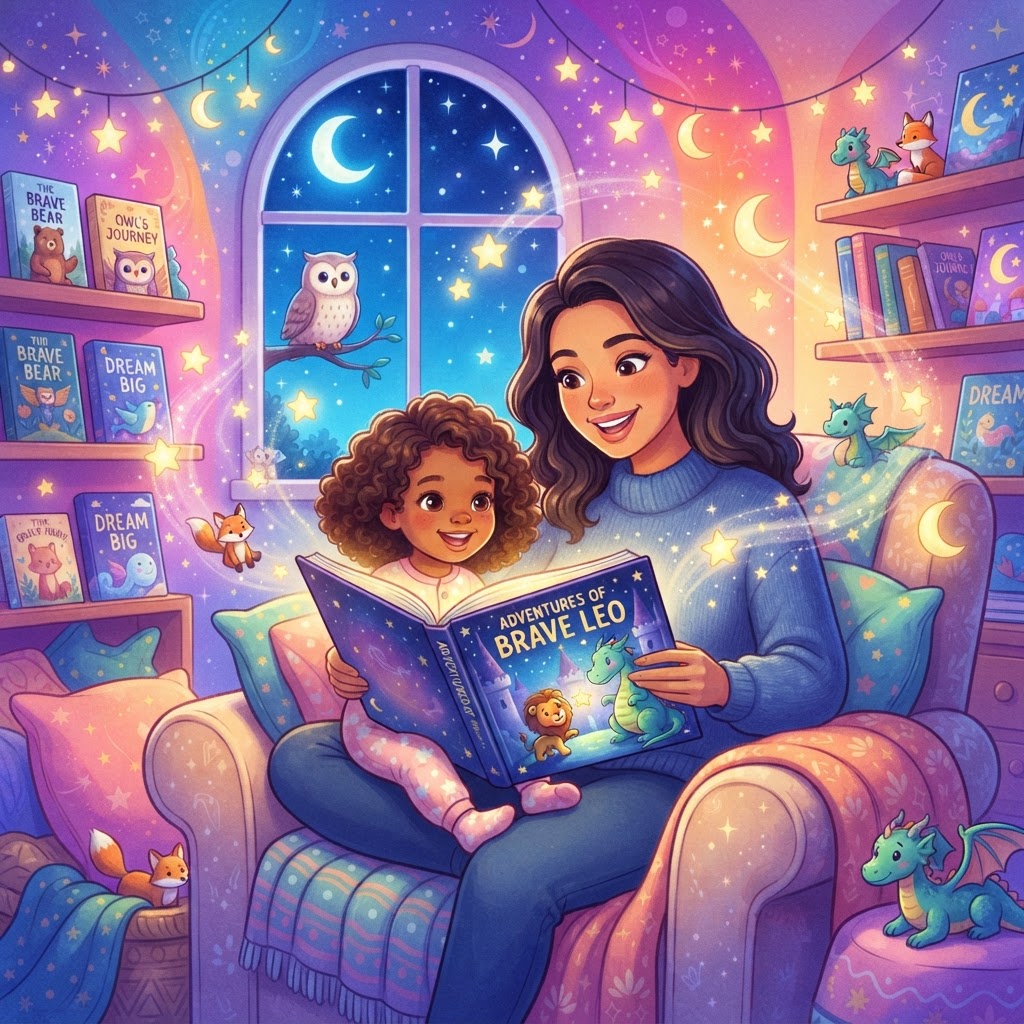
If you are looking for courage stories for 4 year olds, bedtime is one of the best times to share them. At this age, children are brave in small but important ways every day: trying preschool, sleeping in their own room, speaking up, meeting new people, or facing a dark hallway. The best bedtime stories for 4 year olds turn those moments into gentle adventures. They help children feel safe, capable, and understood while keeping the bedtime routine calm and cozy.
Why do courage bedtime stories work so well for 4-year-olds?
Courage bedtime stories work well for 4-year-olds because they match the real challenges children this age face. Four-year-olds are learning independence, but they still need plenty of reassurance. A story lets them practice bravery in a safe, predictable way.
At age 4, many children have vivid imaginations. That is wonderful for play, but it can also make small worries feel big. A creaky door, a first swim lesson, or a loud dog can all feel intense. In a good story, a child sees a character feel nervous, try anyway, and come out okay.
This matters because preschoolers learn through repetition and emotional modeling. When a character says, “I feel scared, but I can take one small step,” children start to borrow that language for themselves. That is one reason kids courage stories can become part of a healthy bedtime routine.
Many 4-year-olds also love stories where the hero is small, kind, and relatable. A bunny, child, bear, or dragon who succeeds through steady effort often feels more meaningful than a superhero who is never afraid.
What developmental milestones shape the best bedtime stories for this age?
The best stories for 4-year-olds reflect their growing language, imagination, and emotional awareness. Children this age can usually follow a simple plot, talk about feelings, and enjoy pretend play, but they still need clear structure and quick resolution.
According to the CDC’s developmental milestones for age 4, many children can tell parts of a story, use longer sentences, and engage in imaginative play. That means they are ready for a beginning-middle-end story, as long as it stays simple.
Emotionally, 4-year-olds are also learning how to name fear, frustration, pride, and excitement. Resources from Zero to Three and the American Academy of Pediatrics via HealthyChildren.org highlight how routines, co-regulation, and responsive adults help young children manage big feelings. A bedtime story can support all three.
A strong courage story for this age usually includes:
- One clear problem
- A familiar setting, like home, school, or the park
- A hero with feelings your child recognizes
- A small act of bravery
- A comforting ending
That mix helps a child feel stretched, not overwhelmed.
How long should bedtime stories for 4 year olds be?
For most 4-year-olds, the ideal bedtime story is about 5 to 10 minutes long. In word count, that often means roughly 500 to 900 words, depending on pacing, pictures, and how much you pause to talk.
This age group can often pay attention longer than toddlers, but bedtime is different from daytime. Children are winding down. If the story is too long, too busy, or full of twists, it can become stimulating instead of soothing.
A good rule is to watch your child, not just the clock. The story is probably the right length if your child:
- Stays relaxed and engaged
- Asks one or two questions, not ten
- Follows the main problem
- Settles more easily when the story ends
Shorter is often better for courage bedtime stories. One brave moment is enough. A child does not need a giant quest before sleep. They need a story that says, “You can feel nervous and still be brave.”
Which courage themes feel most meaningful at age 4?
The best courage themes for 4-year-olds are close to their everyday lives. Preschoolers connect most deeply with stories about small, real acts of bravery rather than dramatic danger.
Here are themes that usually land well:
- Trying something new: first dance class, first haircut, new food, new shoes
- Speaking up: asking for help, saying “I don’t like that,” joining a game
- Nighttime bravery: shadows, thunder, sleeping in a big-kid bed
- Social courage: making a friend, apologizing, taking turns
- Perseverance: trying again after a mistake
- Helping others: being brave for a sibling, pet, or friend
These themes work because they respect what bravery looks like at 4. Courage is not the absence of fear. It is taking one manageable step while still feeling a little unsure.
If your child responds well to gentle friendship-based stories, you may also enjoy these kind bedtime stories for 4-year-olds. If they love heroes and bold moments, these brave bedtime stories for 4-year-olds can offer similar support. And if imagination helps your child process feelings, fantasy bedtime stories for 4-year-olds can make courage feel extra magical.
What should parents avoid in courage bedtime stories?
Parents should avoid stories that are too scary, too complicated, or too preachy. A courage story should build confidence, not create new fears or turn bedtime into a lesson.
Watch out for these common problems:
- High-stakes danger: monsters chasing the hero, getting lost for a long time, separation without comfort
- Graphic details: intense storms, injuries, or frightening imagery
- Shame-based messages: “good kids are never scared”
- Long, tangled plots: too many characters or problems
- No emotional resolution: ending before the child feels safe again
It is also wise to avoid making bravery look instant. Many adults accidentally tell stories where the hero is scared for one second and then suddenly fearless. That can feel false to a 4-year-old. A better arc is: the hero feels nervous, gets support, tries one small step, and feels proud afterward.
The tone matters, too. For bedtime, choose cozy courage over thrilling courage. The goal is steady confidence, not adrenaline.
What are five courage bedtime story ideas to try tonight?
The best story ideas for this age are simple, warm, and easy to personalize. Each one should feature a clear fear, a helpful support, and a satisfying small win.
1. The little fox and the dark hallway
A little fox needs to carry his teddy from the living room to his bedroom after sunset. He notices shadows on the wall, takes three deep breaths, and discovers the “scary shape” is only a plant.
2. Maya’s first day at music class
Maya wants to join the singing circle but feels shy when she hears all the new voices. With a teacher’s smile and a friend holding her hand, she sings one line and feels proud.
3. The dragon who asked for help
A tiny dragon wants to build a kite but cannot do the tail by himself. He learns that asking for help is a brave choice, not a weak one.
4. The bunny who said, “Can I play too?”
At the playground, a bunny watches other children build a sandcastle. She feels nervous, practices the words in a whisper, then walks over and joins in.
5. Theo and the thunder blanket
Theo hears thunder at bedtime and wants to hide. Instead, he snuggles under a “brave blanket,” counts the rumbles, and learns storms can be loud without being dangerous.
These ideas work especially well because they mirror common preschool worries. They also give children words they can reuse later: “I can ask,” “I can try,” “I can take a breath,” and “I can do hard things slowly.”
How can parents use personalized courage stories from InstaTales?
Personalized stories can make courage feel more real because the child sees their own world reflected back to them. When a story uses your child’s name, favorite animal, or current challenge, the lesson becomes easier to remember and trust.
With InstaTales, you can create your own personalized bedtime story around a very specific bravery goal. For example, you might generate a story about your child starting preschool, visiting the dentist, sleeping alone, or trying the swimming pool for the first time.
Personalization works best when you keep the prompt gentle and specific. Include:
- Your child’s first name or nickname
- One current fear or challenge
- A favorite character type, like unicorns, trucks, or puppies
- A calm ending with comfort and success
- One coping skill, such as deep breathing or asking for help
You can also save favorites in your story library for easy re-reading. That matters because preschoolers learn through repetition. Hearing the same story several nights in a row often deepens the emotional benefit.
For many families, this is where AI can be genuinely helpful. Instead of searching for the perfect off-the-shelf story, you can create courage stories for 4 year olds that fit your child’s exact stage, personality, and bedtime needs.
Frequently Asked Questions
Are courage bedtime stories good for anxious 4-year-olds?
Yes, as long as the stories stay gentle and reassuring. The best ones name the fear, show support, and end with safety and calm.
How scary should courage stories be for preschoolers?
Only mildly scary. A 4-year-old can handle tension, but bedtime stories should avoid intense danger, graphic details, or long unresolved fear.
What is the best length for kids courage stories at bedtime?
About 5 to 10 minutes is ideal for most children this age. That is long enough to tell a meaningful story but short enough to help them wind down.
Can personalized stories really help children feel braver?
They often can, because children connect strongly to stories that sound like their own life. A personalized story can make coping strategies feel familiar and easier to use.
What kind of courage should a 4-year-old practice in stories?
Focus on everyday bravery, not heroic danger. Good examples include trying something new, speaking up, sleeping independently, or asking for help.
How often should I read courage bedtime stories?
A few times a week is plenty, and repetition helps. If your child is facing a specific challenge, reading the same story for several nights can be especially comforting.
Ready to Create a Personalized Bedtime Story?
Use our free AI bedtime story generator to create a personalized illustrated story for your child in 30 seconds — no credit card needed.
Popular story types:
Maya Rodriguez
Lead Content Editor & Early Literacy Specialist
Maya is a former early childhood educator and literacy specialist with over a decade of experience helping children develop a love of reading. She leads content at InstaTales, where she writes about the science of storytelling, child development, and how families can use personalized AI stories to build literacy and emotional resilience.
instatales.ai