Best educational bedtime stories for 3-year-olds
Discover the best educational bedtime stories for 3-year-olds — themes, tips, and story ideas that will delight your child at bedtime.
✦ Key Takeaways
- •Three-year-olds are developing fast, and their stories should match that stage.
- •Educational bedtime stories work well because 3-year-olds learn best through relationships, repetition, and imagination.
- •The ideal story length for most 3-year-olds is about 3 to 7 minutes, or roughly 300 to 700 words.
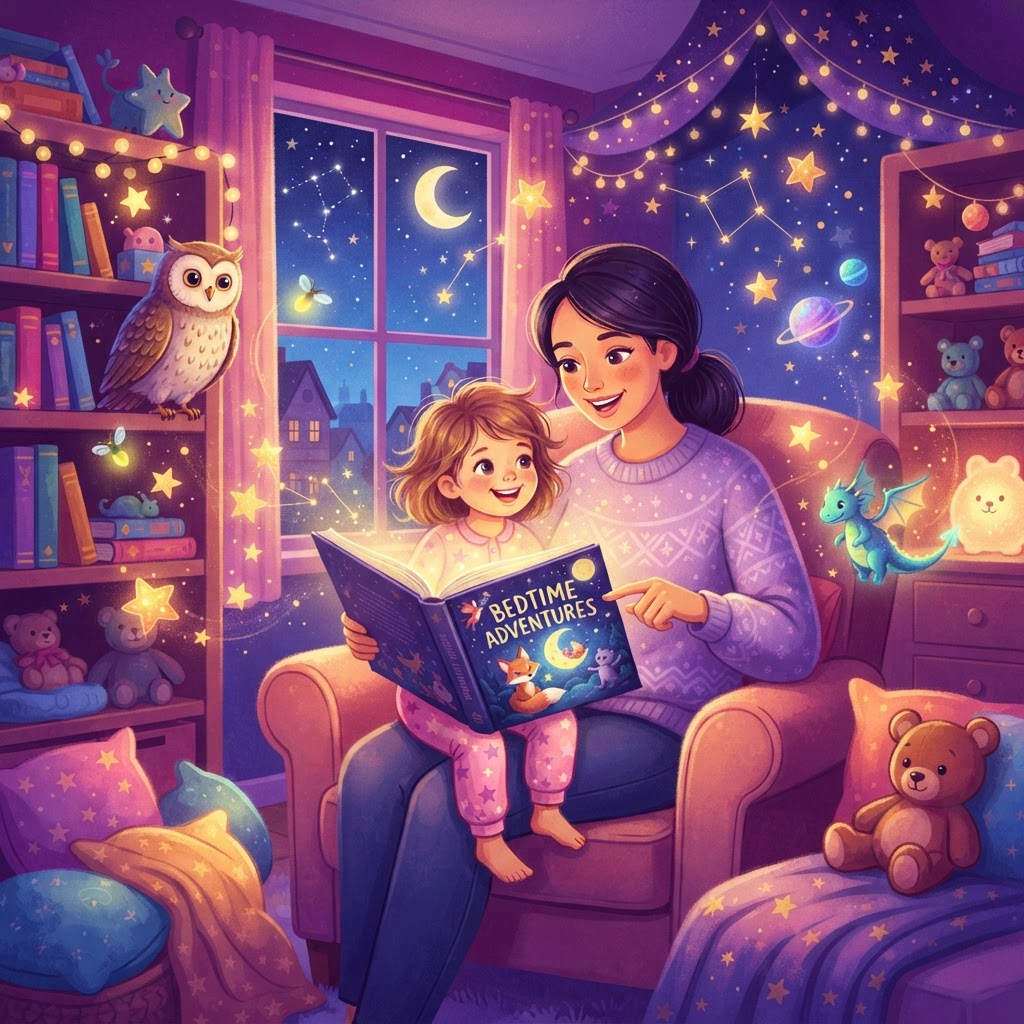
Finding the best educational bedtime stories for 3-year-olds can make evenings calmer and more meaningful at the same time. At this age, children are curious, chatty, imaginative, and ready for simple stories that teach through play. The right bedtime stories for 3 year olds can build language, support emotional growth, and gently introduce early concepts like counting, kindness, routines, and problem-solving.
Parents often ask for stories that are both soothing and useful. That is exactly where educational stories for 3 year olds shine: they can help children learn without feeling like a lesson. Below, you’ll find a practical guide to choosing kids educational stories that fit how 3-year-olds actually think, feel, and learn.
What are 3-year-olds learning and why does it matter for bedtime stories?
Three-year-olds are developing fast, and their stories should match that stage. Most children at this age are building vocabulary, pretending more, noticing feelings, and learning to follow short sequences.
According to the CDC’s developmental milestones for 3-year-olds, many children at this age can speak in short conversations, ask “who,” “what,” and “where” questions, and engage in imaginative play. That means they respond well to stories with:
- familiar routines
- simple cause and effect
- repeated phrases
- everyday emotions
- clear, happy endings
A 3-year-old usually does not need a complicated plot. In fact, simpler is better. A story about brushing teeth before bed, helping a friend find a toy, or counting ducks at the pond may be more engaging than a long adventure with too many twists.
This is also the age when repetition feels comforting, not boring. Hearing the same structure again and again helps children predict what happens next, which strengthens comprehension and gives them a sense of control.
Why are educational bedtime stories so effective for 3-year-olds?
Educational bedtime stories work well because 3-year-olds learn best through relationships, repetition, and imagination. A calm story shared with a parent combines all three.
Research-backed early literacy guidance from the American Academy of Pediatrics shows that reading aloud supports language development, attention, and bonding. Bedtime adds another benefit: children are quieter, more receptive, and often eager for one-on-one connection.
Well-chosen educational bedtime stories can help a 3-year-old practice:
- new words and sentence patterns
- early number and color concepts
- empathy and emotional language
- listening skills
- memory and recall
- daily routines and healthy habits
The key is that the story should teach lightly. At bedtime, children are not looking for a lecture. They are looking for comfort, rhythm, and a safe emotional landing at the end of the day.
How long should bedtime stories for 3 year olds be?
The ideal story length for most 3-year-olds is about 3 to 7 minutes, or roughly 300 to 700 words. That is usually long enough to feel satisfying but short enough to hold attention before sleep.
Some children can enjoy a little more, especially if the story includes repetition or a familiar character. But many 3-year-olds lose focus when stories are too detailed, too wordy, or too emotionally intense.
A good bedtime story for this age usually has:
- one main idea
- one simple problem
- one gentle solution
- a calm ending
If your child asks questions during the story, that is a good sign. It means they are engaged. You can pause, answer briefly, and keep going. Interactive reading often helps children understand more than reading straight through.
What themes work best in educational stories for 3 year olds?
The best themes are close to a 3-year-old’s real world and easy to imagine. Stories are most effective when children can connect them to daily life, play, or feelings they already know.
Here are some strong themes for educational stories for 3 year olds:
Daily routines
Stories about bedtime, getting dressed, bath time, or cleaning up help children understand sequence and expectations. They also make routines feel less like a battle.
Feelings and friendships
At 3, children are learning to name emotions and manage frustration. Stories about sharing, waiting, apologizing, or helping a friend teach social skills in a safe way.
Early learning concepts
Counting, shapes, colors, opposites, weather, and animal sounds are all ideal for this age. These concepts feel playful when woven into a story instead of presented like drills.
Nature and discovery
Children often love learning through animals, gardens, rain, bugs, and seasons. If your child enjoys outdoor themes, gentle nature bedtime stories can be a wonderful fit.
Big-interest topics
Many preschoolers become deeply interested in one thing at a time. If your child loves trucks, stars, sea creatures, or dinosaurs, topic-based stories can hold attention beautifully. You might explore soothing ocean stories for bedtime or playful dinosaur bedtime stories to connect learning with their favorite interests.
What should parents avoid in kids educational stories at bedtime?
Avoid stories that overstimulate, overload, or frighten your child right before sleep. Even a “good” educational message can fail if the story feels too intense for bedtime.
Try to avoid:
- fast-paced action with lots of conflict
- scary villains or threatening scenes
- too many characters to track
- heavy moralizing
- long explanations or factual overload
- unresolved endings
Parents sometimes assume educational means more facts are better. For 3-year-olds, that is rarely true. A story that teaches one idea clearly is much more effective than a story trying to cover counting, planets, emotions, weather, and manners all at once.
It also helps to avoid language that is too advanced. Children benefit most when they can follow the meaning while still hearing a few new words in context. Organizations like ZERO TO THREE have long emphasized that young children learn through warm, responsive interactions, not pressure-filled teaching moments.
What are five great educational bedtime story ideas for 3-year-olds?
The best story ideas for this age are simple, warm, and built around one early learning goal. Each idea below can easily become a short, soothing bedtime story.
1. The Bunny Who Counted Goodnight
A little bunny says goodnight to one moon, two clouds, three flowers, and four sleepy birds. This teaches counting, observation, and bedtime rhythm.
2. Mia and the Feelings Balloon
Mia’s balloon changes color with her feelings during the day, and she learns to name happy, sad, mad, and proud. This supports emotional vocabulary and self-awareness.
3. The Tiny Turtle’s Clean-Up Song
A turtle sings a short song while putting away shells, toys, and books before bed. This reinforces routine, sorting, and responsibility.
4. Leo’s Rainy-Day Boots
Leo splashes through puddles and notices big/small, wet/dry, and near/far. This introduces opposites and simple descriptive language through play.
5. Nora and the Sleepy Garden
Nora visits a garden at dusk and notices bees resting, flowers closing, and the sky changing color. This teaches gentle nature observation and helps children wind down.
If your child loves magical settings too, you can balance learning themes with imagination through age-appropriate fairy-tale bedtime stories.
How can parents make educational bedtime stories more effective?
A few simple reading habits can turn a good story into a rich learning moment. The goal is not to quiz your child but to help them engage naturally.
Try these practical strategies:
- Pause for prediction: “What do you think the bunny will count next?”
- Name feelings: “How do you think Mia felt when the balloon turned red?”
- Connect to real life: “You wore your rain boots today too.”
- Repeat favorite lines: Repetition builds confidence and memory.
- Keep your voice calm: A soft, steady tone helps stories stay bedtime-friendly.
You can also re-read favorite stories often. Repetition is powerful at this age. Children learn more deeply when they know the structure and can focus on a new word, feeling, or concept each time.
How can InstaTales help parents create personalized educational bedtime stories?
Personalized stories can be especially effective because 3-year-olds love hearing about themselves, their favorite things, and familiar routines. When a child hears their own name, favorite animal, or daily experiences in a story, attention and emotional connection often increase right away.
With InstaTales, parents can create your own personalized bedtime story tailored to a 3-year-old’s interests, developmental stage, and bedtime needs. You might generate a calm story about counting puppies, learning to share at preschool, or exploring colors in a moonlit garden.
This can be especially helpful if your child is in a strong “favorite topic” phase. You can build stories around bedtime-friendly themes like kindness, feelings, routines, and early learning concepts, then save the ones that work best in your story library for easy re-reading. Families who want more inspiration can also browse the InstaTales blog for additional theme ideas and reading tips.
For educators, personalized stories can support preschool learning goals too. If you use stories beyond bedtime, InstaTales for teachers can help connect story-based learning with classroom themes in a child-friendly way.
Frequently Asked Questions
What makes a story educational for a 3-year-old?
A story is educational when it supports age-appropriate learning in a natural way. For 3-year-olds, that usually means simple vocabulary, feelings, routines, counting, colors, or social skills woven into an easy plot.
How many bedtime stories should I read to my 3-year-old?
One or two short stories is usually enough for most children this age. The best number is whatever keeps bedtime calm and consistent without making the routine too long.
Are personalized stories better than regular books?
Personalized stories can be very effective because they feel familiar and exciting to young children. They work best when combined with a wider mix of books, re-reading, and parent interaction.
Can bedtime stories really help language development?
Yes, regular read-aloud time supports vocabulary, listening, and comprehension. Short conversations during the story can make those benefits even stronger.
What if my child only wants the same story every night?
That is very common and developmentally normal at age 3. Repetition helps children feel secure and gives them more chances to understand language, sequence, and meaning.
Should educational bedtime stories always teach a lesson?
No. The best stories teach gently through the plot, not through preaching. A warm, simple story that models kindness, curiosity, or problem-solving is often more effective than an obvious moral.
Ready to Create a Personalized Bedtime Story?
Use our free AI bedtime story generator to create a personalized illustrated story for your child in 30 seconds — no credit card needed.
Popular story types:
Maya Rodriguez
Lead Content Editor & Early Literacy Specialist
Maya is a former early childhood educator and literacy specialist with over a decade of experience helping children develop a love of reading. She leads content at InstaTales, where she writes about the science of storytelling, child development, and how families can use personalized AI stories to build literacy and emotional resilience.
instatales.ai