Best fairy tales bedtime stories for 3-year-olds
Discover the best fairy tales bedtime stories for 3-year-olds — themes, tips, and story ideas that will delight your child at bedtime.
✦ Key Takeaways
- •Three-year-olds are imaginative, curious, and still building emotional regulation.
- •Fairy tales work well for many 3-year-olds because they combine imagination with simple emotional patterns.
- •For most 3-year-olds, the ideal bedtime story is short enough to hold attention and calm enough to support sleep.
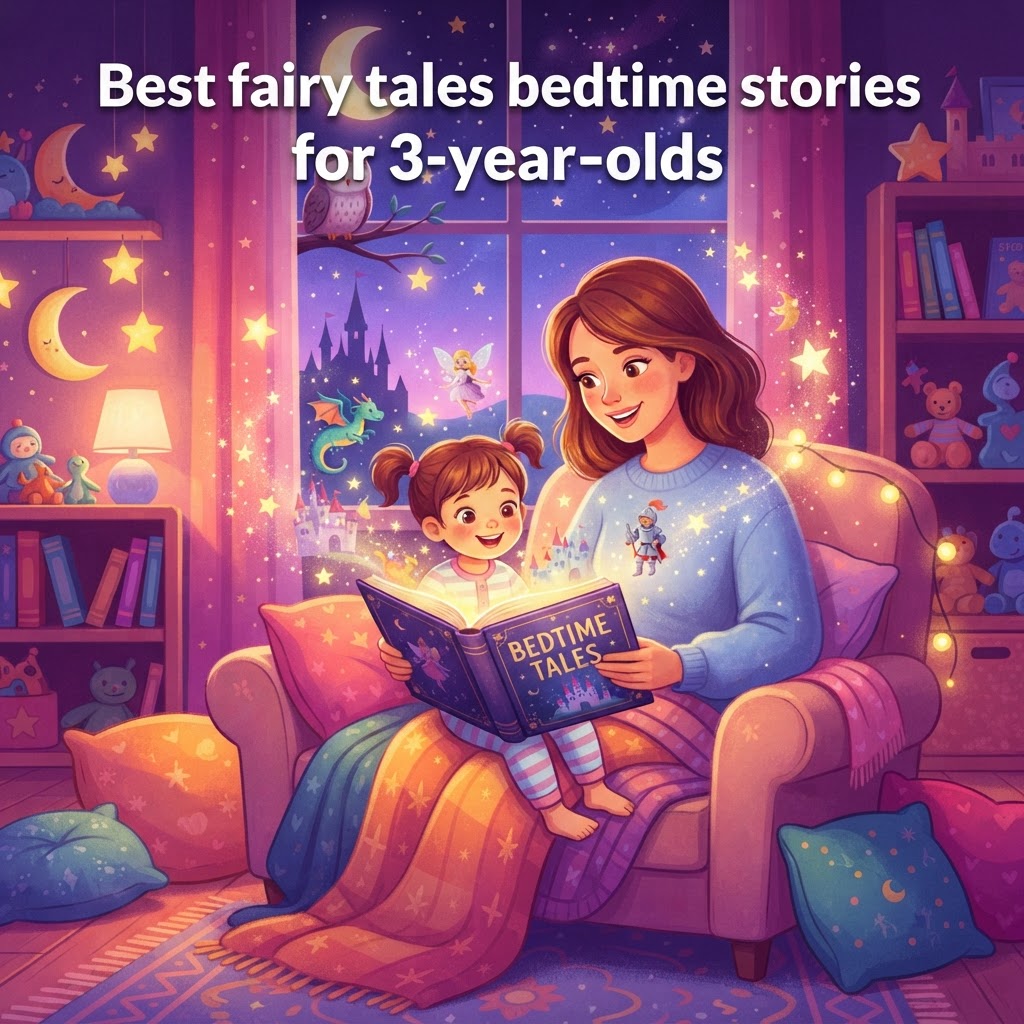
Choosing the best fairy tales bedtime stories for 3-year-olds is less about finding the most famous tale and more about matching the story to your child’s stage of development. At this age, children love wonder, rhythm, and happy endings, so the right bedtime stories for 3 year olds can feel magical without becoming overwhelming. If you are looking for gentle kids fairy-tales stories that calm the evening and support language growth, this guide will help you choose well.
What developmental milestones matter most for 3-year-olds at bedtime?
Three-year-olds are imaginative, curious, and still building emotional regulation. The best fairy-tales stories for 3 year olds meet them where they are: eager for make-believe, but still needing safety, repetition, and clear endings.
Around age 3, many children can follow a short sequence, answer simple questions, and enjoy pretend play. The CDC’s 3-year developmental milestones highlight growing language, social awareness, and imagination. The American Speech-Language-Hearing Association also notes that many children in this age range begin using longer sentences and understanding simple story events.
That matters for bedtime reading because 3-year-olds often do best with stories that include:
- One main problem
- One or two memorable characters
- Repeated phrases
- Clear emotional cues
- A comforting resolution
In practice, that means a fairy tale about a bunny finding a lost star is usually a better fit than a long, plot-heavy classic with danger, trickery, and multiple settings.
Why do fairy-tales bedtime stories appeal so strongly to 3-year-olds?
Fairy tales work well for many 3-year-olds because they combine imagination with simple emotional patterns. Magic, transformation, and gentle repetition make stories feel exciting while still predictable.
At this age, children are drawn to big ideas in small packages: a tiny helper, a kind forest, a sleepy dragon, a wish that comes true. Fairy tales give them symbolic stories they can understand without needing realistic logic. A talking fox or helpful fairy feels perfectly normal to a 3-year-old.
Fairy tales also support early learning. Shared reading builds vocabulary, attention, and parent-child connection, and the American Academy of Pediatrics has long emphasized the value of reading aloud in early childhood. For bedtime, fairy tales add one more benefit: they let children explore small worries from a safe distance.
That is why gentle fairy-tales bedtime stories often become favorites. A child can hear the same story night after night and still find it soothing, because repetition brings security.
How long should bedtime stories for 3-year-olds be?
For most 3-year-olds, the ideal bedtime story is short enough to hold attention and calm enough to support sleep. A good target is about 3 to 7 minutes, or roughly 300 to 700 words.
Some children can enjoy a little more, especially if the story uses repetition and familiar characters. But bedtime is not the best time for a long moral lesson or a complicated adventure.
A strong bedtime story for this age usually includes:
- A quick introduction
- One simple challenge
- A gentle magical moment
- A peaceful ending
If your child asks for “one more,” that is often a sign the length is right. If they wiggle, interrupt constantly, or seem more energized than sleepy, the story may be too long or too stimulating.
Parents who want more age-specific inspiration can also explore themed ideas like magic bedtime stories, which naturally pair wonder with simple structure.
Which fairy-tale themes are best for 3-year-olds?
The best themes for 3-year-olds are comforting, familiar, and emotionally clear. Look for stories about kindness, bedtime routines, small discoveries, helpers, friendship, and gentle bravery.
At age 3, children do not need high-stakes drama to stay engaged. In fact, the sweetest kids fairy-tales stories are often built around everyday emotions dressed up in magical clothes.
Themes that work especially well include:
- Kindness and helping: a fairy mends a torn blanket or a woodland creature shares berries
- Friendship: two tiny characters solve a simple problem together
- Bedtime comfort: the moon, stars, blankets, lanterns, and sleepy animals
- Gentle courage: a child character tries something new with support
- Nature and wonder: dew drops, flowers, clouds, and talking trees
These themes help children process daily experiences while keeping the tone soft. If your child loves familiar emotional topics, you might also enjoy friendship bedtime stories or nature-themed bedtime stories.
What should parents avoid when choosing fairy-tales stories for 3 year olds?
Parents should avoid stories that are too scary, too long, or emotionally confusing right before sleep. Many classic fairy tales can be adapted, but the original versions are often not ideal for bedtime at age 3.
Watch out for:
- Threatening villains
- Harsh punishment
- Children abandoned or left alone
- Dark forests with intense fear
- Fast, chaotic pacing
- Endings that feel sad or unresolved
Even if a child seems interested, bedtime is different from daytime reading. Right before sleep, young children are more sensitive to emotional tension. A scary wolf at 2 p.m. may feel exciting; at 7:30 p.m., it may feel very real.
A good rule is simple: keep the wonder, soften the danger. If you love classics, retell them in gentler language. “The giant was loud and grumpy” often works better than vivid peril. For parents building a calmer evening routine, bedtime-focused story ideas can help.
What are five great fairy-tales bedtime story ideas for 3-year-olds?
The best story ideas for this age are simple, magical, and emotionally safe. Each of these concepts gives your child a clear beginning, a tiny problem, and a cozy ending.
1. The Little Lantern Fairy
A tiny fairy forgets how to light her lantern before bedtime. With help from fireflies, she learns that kindness makes her lantern glow.
2. The Sleepy Dragon’s Lullaby
A baby dragon cannot fall asleep because his hiccups keep making sparks. A bird, a bunny, and the moon teach him a soft bedtime song.
3. The Shoemaker and the Dancing Buttons
A kind shoemaker loses the shiny buttons for a child’s coat. Overnight, helpful woodland sprites roll them home in a sparkling parade.
4. Princess Puddle and the Golden Boots
A cheerful little princess wants to jump in every puddle, but her boots keep disappearing. She learns to share, and the puddle fairies return them with a thank-you gift.
5. The Cloud Castle Blanket
A child visits a soft castle in the clouds where sleepy fairies sew blankets from moonbeams. The blanket comes home just in time for cuddles and sleep.
These are the kinds of fairy-tales bedtime stories that invite participation too. Your child can guess what happens next, repeat a phrase, or name the helper character.
How can parents make fairy tales more engaging and soothing at bedtime?
Parents can make fairy tales work better by reading slowly, using repetition, and keeping the tone calm. A soothing delivery often matters as much as the story itself.
A few practical bedtime techniques make a big difference:
- Lower your voice as the story goes on
- Pause before repeated lines so your child can join in
- Replace scary details with gentle ones
- End with a sleepy image: moonlight, blankets, stars, or soft music
- Connect the story to your child’s world
For example, if your child loves rabbits, swap in a bunny. If they are working on sharing, let the fairy tale reflect that theme gently. This kind of tailoring helps the story feel both magical and relevant.
You can also rotate themes to keep bedtime fresh. The InstaTales blog includes more inspiration, including story categories that match common preschool interests.
How can InstaTales help parents create personalized fairy tales for 3-year-olds?
InstaTales can help by turning your child’s interests, name, and bedtime needs into personalized fairy tales made for their age. That means parents can create stories that feel magical but still stay short, gentle, and developmentally appropriate.
Personalization matters more than many parents expect. A 3-year-old is far more likely to lean in when the main character has their name, favorite stuffed animal, or familiar bedtime routine. Instead of forcing a classic tale that does not quite fit, you can create your own personalized bedtime story around exactly what your child loves.
That can be especially useful if your child wants:
- The same story structure every night
- A favorite character in new adventures
- Softer versions of traditional fairy tales
- Stories tied to current feelings, like shyness or starting preschool
Parents can also save favorites in your story library for easy rereading, which is ideal for 3-year-olds who crave repetition. If you want a quicker starting point, ready-made story templates can help you build a gentle fairy tale in minutes.
Frequently Asked Questions
Are classic fairy tales too scary for 3-year-olds?
Some are. Many traditional versions include danger, abandonment, or frightening villains, so gentler retellings are usually a better bedtime choice for this age.
What makes a good bedtime story for a 3-year-old?
A good bedtime story is short, predictable, and emotionally safe. It should have simple language, a small problem, and a calm, happy ending.
How often should I read bedtime stories to my 3-year-old?
Daily reading is ideal, even if it is only five minutes. Consistent read-aloud time supports language development, bonding, and a steady bedtime routine.
Can personalized AI stories be helpful for preschoolers?
Yes, when they are age-appropriate and parent-guided. Personalized stories can increase attention and comfort by including familiar names, routines, and favorite themes.
Should I change a story if my child seems upset?
Yes. It is completely fine to soften scenes, skip scary details, or change the ending so bedtime stays reassuring and restful.
Ready to Create a Personalized Bedtime Story?
Use our free AI bedtime story generator to create a personalized illustrated story for your child in 30 seconds — no credit card needed.
Popular story types:
Maya Rodriguez
Lead Content Editor & Early Literacy Specialist
Maya is a former early childhood educator and literacy specialist with over a decade of experience helping children develop a love of reading. She leads content at InstaTales, where she writes about the science of storytelling, child development, and how families can use personalized AI stories to build literacy and emotional resilience.
instatales.ai