Best nature bedtime stories for 3-year-olds
Discover the best nature bedtime stories for 3-year-olds — themes, tips, and story ideas that will delight your child at bedtime.
✦ Key Takeaways
- •Nature bedtime stories work well for 3-year-olds because they match how children this age learn: through repetition, sensory detail, and concrete experiences.
- •At age 3, children usually do best with stories that are simple, repetitive, and emotionally safe.
- •For most 3-year-olds, the ideal bedtime story lasts about 5 to 8 minutes.
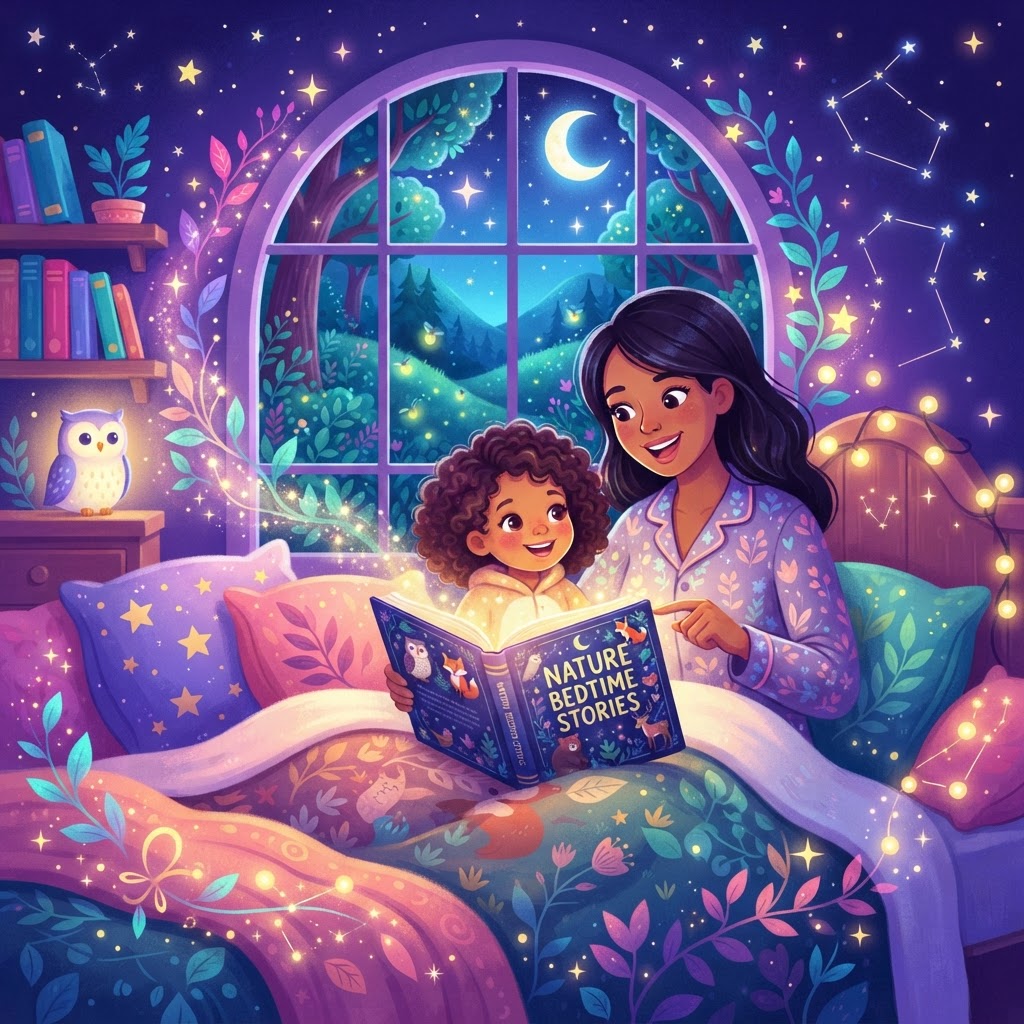
If you’re looking for nature stories for 3 year olds, bedtime is a wonderful place to start. At this age, children are curious about birds, rain, trees, mud, moonlight, and tiny creatures they can spot in the garden or on a walk. The best nature bedtime stories use that natural curiosity to create calm, comforting moments that support language, imagination, and emotional security before sleep.
For parents, this matters because 3-year-olds are in a sweet spot: they want simple plots, familiar routines, and gentle wonder. A well-chosen story about a sleepy fox, a quiet forest, or a raindrop’s journey can feel magical without becoming overstimulating. If your child already enjoys gentle bedtime stories for 3-year-olds, nature themes can add freshness while keeping the same soothing rhythm.
Why are nature bedtime stories such a good fit for 3-year-olds?
Nature bedtime stories work well for 3-year-olds because they match how children this age learn: through repetition, sensory detail, and concrete experiences. A story about leaves falling, frogs hopping, or stars appearing one by one is easy for a young child to picture and remember.
Three-year-olds are just beginning to connect words with the real world in richer ways. When they hear about soft moss, sleepy birds, or a little stream, they can often link that to something they have seen outside. That makes kids nature stories feel meaningful rather than abstract.
Nature stories also tend to be naturally rhythmic. Repeated phrases like “the moon rose higher” or “one by one, the animals yawned” help children anticipate what comes next, which is calming at bedtime.
There is another benefit too: nature stories invite wonder without needing loud action. Unlike fast-paced tales, they can hold attention while gently slowing the body and mind down.
What developmental milestones matter when choosing bedtime stories for 3-year-olds?
At age 3, children usually do best with stories that are simple, repetitive, and emotionally safe. They are building language quickly, using imagination more confidently, and learning to manage big feelings, but they still need a lot of predictability.
According to the CDC’s developmental milestones for 3-year-olds, many children at this age speak in short conversations, enjoy pretend play, and can follow simple routines. That means a bedtime story can be a little more descriptive than one for a toddler, but it should still stay clear and concrete.
Look for stories that support these age-typical needs:
- Simple cause and effect: “The rain fell, so the flowers drank.”
- Gentle repetition: repeated lines help memory and participation
- Familiar emotions: sleepy, curious, proud, a little worried, then reassured
- Imaginative play: talking animals or friendly trees are often a hit
- A clear ending: bedtime stories for 3 year olds should feel settled, not unresolved
Research from the Center on the Developing Child at Harvard University also highlights how responsive back-and-forth interaction supports early brain development. In practice, that means stories are even better when your child can point, name, repeat, or answer simple questions.
How long should nature bedtime stories be for a 3-year-old?
For most 3-year-olds, the ideal bedtime story lasts about 5 to 8 minutes. That is usually long enough to feel satisfying, but short enough to avoid restlessness.
In word-count terms, many parents find that 300 to 700 words works well, depending on how interactive the reading is. If your child likes to stop and talk about every bunny, acorn, and cloud, shorter is often better.
A good structure for this age is:
- one main character
- one simple goal
- one mild problem
- one reassuring resolution
For example: a little hedgehog wants to find the coziest sleeping spot, explores three quiet places, then curls up under a fern. That is enough plot for a 3-year-old.
If your child loves animals, you may also want to rotate in animal bedtime stories for 3-year-olds, since animal characters often make nature themes even more relatable.
Which nature themes work best at bedtime?
The best bedtime nature themes are slow, sensory, and reassuring. Think quiet forests, moonlit skies, gentle rain, sleepy animals, gardens, seasons, and small discoveries rather than high-stakes adventure.
These themes tend to work especially well:
- Nightfall in nature: stars appearing, owls settling, crickets chirping
- Gentle weather: soft rain, warm sunshine after a shower, misty morning
- Sleepy animals: cubs, foxes, rabbits, bears, birds returning to nests
- Gardens and growth: seeds sprouting, flowers closing at dusk, vegetables “going to sleep”
- Seasonal changes: autumn leaves, spring puddles, summer fireflies, winter snow
- Tiny journeys: a leaf floating downstream or a snail crossing the path
These subjects are ideal because they help children notice patterns in the world. Shared reading also supports language growth and connection; organizations like Reach Out and Read have long emphasized the developmental value of reading aloud with young children.
If your child is on the younger end of 3 or still prefers very simple stories, you might also borrow ideas from these nature stories for 2-year-olds, then add a little more detail.
What should parents avoid in kids nature stories for this age?
Avoid stories that are too scary, too busy, or too long for bedtime. A 3-year-old can enjoy a little suspense, but bedtime is usually not the best moment for danger-heavy plots or emotionally intense endings.
Be cautious with:
- Predators and chase scenes that feel threatening
- Storms, darkness, or getting lost without quick reassurance
- Too many characters to track
- Overloaded facts that sound like a lesson instead of a story
- Fast, noisy pacing that revs children up
- Sad or unresolved endings that may linger after lights out
This does not mean nature stories have to be bland. A child can handle a small problem, like a squirrel who cannot find the right tree branch, as long as the solution comes quickly and kindly.
A practical test is simple: ask yourself whether the story helps your child’s breathing slow down. If it feels exciting enough for daytime play, save it for earlier and choose a softer bedtime option instead.
What are five calming nature story ideas to try tonight?
The best story ideas for this age are specific, sensory, and easy to personalize. Start with one simple natural setting and one gentle goal.
Here are five strong ideas for nature bedtime stories:
1. The Bunny Who Said Goodnight to the Garden
A small bunny visits the tomato plants, bees, and moonflowers before bedtime. Each part of the garden says goodnight in its own quiet way.
2. The Little Raindrop’s Sleepy Journey
A raindrop lands on a leaf, slides into a stream, and drifts past sleepy ducks and reeds. Nothing dramatic happens; the journey is calm and repetitive.
3. Bear Cub and the Three Cozy Forest Beds
A bear cub tries moss, ferns, and a hollow log before finding the perfect sleeping place. This works well because 3-year-olds love comparison and repetition.
4. Firefly Lights for the Moon
A child or animal notices that the forest feels dark, then discovers fireflies blinking one by one. The “problem” is mild, and the ending is warm and magical.
5. The Snail Who Took the Long Way Home
A tiny snail moves slowly past pebbles, grass, and dew drops on the way to bed. The pace itself models calm.
These can also blend well with other favorite themes, especially if your child likes gentle adventure or friendship-based plots. For more variety, browse the InstaTales blog for age-based bedtime inspiration.
How can InstaTales help you create personalized nature stories for 3-year-olds?
Personalized stories often hold a 3-year-old’s attention better because they feel familiar and emotionally safe. When a child hears their own name, favorite animal, or local park woven into a story, they usually engage more deeply.
With InstaTales, you can create your own personalized bedtime story around simple nature themes like fireflies, rain puddles, forest animals, or a sleepy garden. That makes it easier to match the story to your child’s current interests, attention span, and bedtime mood.
A few practical ways to personalize effectively:
- use your child’s first name
- include one favorite animal
- choose one setting they know, like a backyard or nearby park
- keep the plot gentle and repetitive
- end with sleep, cuddles, or quiet moonlight
If you find a story that really works, save it in your story library so you can revisit it on tired evenings. Re-reading familiar stories is not a problem at this age; in fact, it often strengthens comprehension, confidence, and comfort.
Frequently Asked Questions
What makes a good nature story for a 3-year-old?
A good nature story is short, soothing, and easy to follow. It should have simple language, a clear ending, and gentle sensory details like rain, leaves, moonlight, or sleepy animals.
How often should I read bedtime stories to my 3-year-old?
Daily reading is ideal, even if it is only 5 to 10 minutes. Consistent shared reading supports language, routine, and parent-child connection.
Are nature bedtime stories better than other bedtime stories for 3 year olds?
Not always better, but often especially calming. Nature themes naturally lend themselves to slow pacing, repetition, and peaceful endings, which can be very helpful before sleep.
Can a 3-year-old handle stories with mild conflict?
Yes, as long as the conflict is brief and reassuring. A lost acorn or a sleepy fox looking for a den is usually fine; a frightening storm or chase scene may be too intense at bedtime.
Should bedtime stories for 3-year-olds be educational?
They can be, but they should not feel like a lesson. The best stories teach gently through experience, naming animals, weather, seasons, and feelings in a natural way.
Can I use AI to make custom kids nature stories?
Yes, if you keep the story age-appropriate and review it first. AI can be a helpful tool for creating personalized, calming stories that match your child’s interests and bedtime routine.
Ready to Create a Personalized Bedtime Story?
Use our free AI bedtime story generator to create a personalized illustrated story for your child in 30 seconds — no credit card needed.
Popular story types:
Maya Rodriguez
Lead Content Editor & Early Literacy Specialist
Maya is a former early childhood educator and literacy specialist with over a decade of experience helping children develop a love of reading. She leads content at InstaTales, where she writes about the science of storytelling, child development, and how families can use personalized AI stories to build literacy and emotional resilience.
instatales.ai