Best nature bedtime stories for 2-year-olds
Discover the best nature bedtime stories for 2-year-olds — themes, tips, and story ideas that will delight your child at bedtime.
✦ Key Takeaways
- •At age two, children are ready for short, simple stories with clear patterns.
- •Nature bedtime stories appeal to toddlers because nature feels both real and magical.
- •For most toddlers, the ideal bedtime story length is about 3 to 7 minutes.
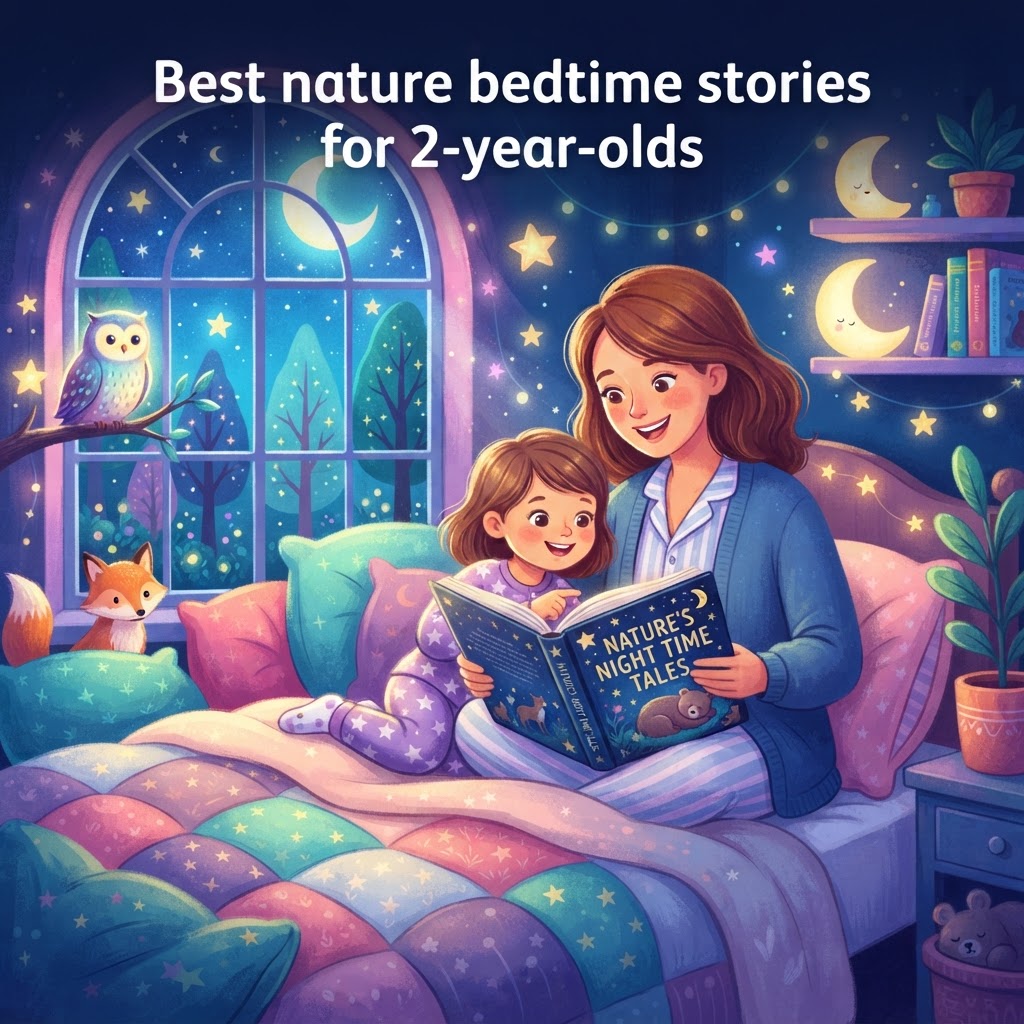
Finding the right bedtime stories for 2 year olds can feel surprisingly specific. At this age, children want stories that are gentle, familiar, and easy to follow—but they also love little moments of wonder. That is why nature bedtime stories work so well: they offer calm rhythms, soothing imagery, and simple discoveries that match a toddler’s world.
For many families, nature stories for 2 year olds become a lovely bridge between busy daytime play and quiet nighttime sleep. A tiny bird finding its nest, a raindrop landing on a leaf, or a bunny saying goodnight to the moon can hold a two-year-old’s attention without overstimulating them. If you are looking for kids nature stories that truly suit this age, here is what to know.
What developmental milestones matter when choosing stories for 2-year-olds?
At age two, children are ready for short, simple stories with clear patterns. Most 2-year-olds are building vocabulary quickly, following basic sequences, and enjoying pretend play, but they still need repetition and emotional security.
According to the CDC’s 2-year developmental milestones, many toddlers at this age can point to familiar objects, say short phrases, and follow simple instructions. The American Academy of Pediatrics also notes that toddlers learn best through warm interaction, naming, and repetition.
That matters for story choice. The best nature stories for 2 year olds usually include:
- familiar words like bird, tree, moon, flower, rain
- one main event rather than a complex plot
- repeated phrases toddlers can join in with
- comforting emotions, such as curiosity, safety, or sleepiness
- clear pictures in the mind, even if the story is spoken aloud
If you want broader recommendations for this stage, our guide to more bedtime picks for this age can help.
Why do nature bedtime stories appeal so strongly to 2-year-olds?
Nature bedtime stories appeal to toddlers because nature feels both real and magical. A two-year-old may already know birds, dogs, leaves, and stars from daily life, so these stories feel easy to understand while still leaving room for wonder.
Toddlers are in a phase of intense noticing. They love small changes: a cloud moving, a bug crawling, a flower opening. Nature stories match that developmental need by focusing on simple observation rather than fast action. This slower pace supports bedtime especially well.
Nature also naturally supports calming sensory language. Soft wind, falling leaves, sleepy animals, and nighttime skies all create a peaceful mood. Research from organizations such as Zero to Three consistently emphasizes that predictable, soothing routines help young children settle and feel secure. A gentle story about the natural world fits beautifully into that routine.
How long should bedtime stories for 2-year-olds be?
For most toddlers, the ideal bedtime story length is about 3 to 7 minutes. That is usually long enough to feel satisfying, but short enough to match a 2-year-old’s attention span and bedtime energy.
If your child is very active or overtired, aim shorter. If they enjoy books and language, you may be able to stretch a little longer—but only if the story stays simple. A good rule is this: stop before your child loses the thread.
The best bedtime stories for 2 year olds often have:
- 150 to 400 words if read aloud
- one setting, such as a forest, garden, pond, or backyard
- one emotional arc, like “explore, cuddle, sleep”
- a soft ending that clearly signals rest
Longer stories are not automatically better. At bedtime, calm and clarity matter more than plot twists.
Which nature themes work best for 2-year-olds at bedtime?
The best themes are familiar, gentle, and sensory-rich. Toddlers respond especially well to stories about animals, weather, nighttime routines in nature, and small discoveries.
Here are strong bedtime-friendly themes to explore:
- Sleepy animals: a fox curling up, ducklings settling near the pond, baby bears finding their den
- Weather in soft forms: light rain, drifting snow, warm sunshine after a nap
- Garden or forest walks: spotting leaves, flowers, pebbles, and birds
- Moon and stars: nighttime skies feel naturally soothing and rhythmic
- Seasons: simple changes like crunchy autumn leaves or spring blossoms
- Kindness in nature: animals helping each other, sharing shade, or staying close
If your child especially loves creatures, you may also enjoy our roundup of animal-themed bedtime stories. For children who want a little more movement, gentle adventure stories for toddlers can be a good next step.
What should parents avoid in nature stories for 2-year-olds?
Parents should avoid anything too intense, confusing, or emotionally unresolved right before bed. Even beautiful kids nature stories can become poor bedtime choices if they include danger, loud surprises, or too many new ideas at once.
Try to skip or soften:
- predators chasing prey in a frightening way
- storms, darkness, or getting lost without quick reassurance
- heavy lessons or moralizing
- long descriptive passages without action or repetition
- too many characters or scene changes
- endings that feel abrupt or uncertain
This does not mean stories must be bland. Toddlers can handle tiny moments of tension—like a bunny wondering where its blanket of moss is—as long as comfort comes quickly. Bedtime stories should regulate, not activate.
How can parents make nature bedtime stories more engaging for 2-year-olds?
The most effective approach is simple, interactive reading. A warm voice, repeated lines, and a few easy questions can make nature stories for 2 year olds much more meaningful.
Try these educator-tested techniques:
- repeat key phrases: “Goodnight, little leaf”
- use sound gently: “drip, drip,” “swish, swish,” “hoot, hoot”
- invite pointing: “Can you find the moon?”
- connect to real life: “We saw birds today too”
- keep your pace slow and rhythmic
- let your child say the last word of a repeated line
Early language research and classroom practice both show that responsive reading helps toddlers build vocabulary and comprehension. The National Association for the Education of Young Children, or NAEYC, also recommends interactive reading as a powerful way to support early literacy.
What are the best nature bedtime story ideas for 2-year-olds?
The best story ideas are short, sensory, and comforting. These five ideas are especially well suited to bedtime and easy for parents to retell or personalize.
1. The Little Rabbit and the Sleepy Garden
A small rabbit hops through the garden saying goodnight to the carrots, daisies, and dew drops. Each stop repeats the same calming phrase until the rabbit snuggles into bed under a soft leaf.
2. The Raindrop’s Quiet Journey
One tiny raindrop lands on a leaf, slides to a flower, then trickles into a puddle where frogs are already getting sleepy. The gentle movement makes this a perfect wind-down story.
3. Bear Cub Finds the Moon
A bear cub sees the moon above the trees and wonders if it is following along. Mama Bear explains that the moon watches over everyone at night, and they walk home together.
4. The Bird Who Collected Goodnights
A little bird flies past the pond, meadow, and nest tree collecting “goodnight” from every friend. By the time the bird returns home, your child can predict the repeating pattern.
5. Fox and the Warm Falling Leaves
A fox feels the first autumn leaves drift down and uses them to make a soft bed. The story ends with the forest growing quiet one sound at a time.
If you want more ideas for younger toddlers, our guide to nature stories for 1-year-olds offers gentler, even simpler options.
How can InstaTales help parents create personalized nature bedtime stories?
InstaTales can help by turning your child’s age, interests, and bedtime routine into a personalized story in seconds. For families who want fresh nature bedtime stories without having to invent one every night, that can be a practical and thoughtful option.
You might create a story where your toddler’s name appears in a moonlit forest, a rainy garden, or a butterfly meadow. You can create your own personalized bedtime story based on favorite animals, soothing settings, or familiar bedtime phrases. If your child asks for the same story again tomorrow, you can keep it in your story library for easy rereading.
That personalization matters. Two-year-olds often connect best with stories that reflect their daily life—favorite colors, a beloved stuffed bunny, a recent walk in the park, or a fascination with puddles. If you want more inspiration, the InstaTales blog includes additional ideas for age-based story planning.
How can parents build a soothing bedtime routine around nature stories?
A short, predictable routine helps nature stories work even better. The story becomes more powerful when it is part of a repeated sequence your toddler recognizes.
A simple routine might look like this:
- bath or wash-up
- pajamas
- dim lights
- one short kids nature story
- cuddle and final goodnight phrase
Keep the same order most nights. Toddlers thrive on predictability, and the story can become a cue that sleep is near. If your child likes repetition, use the same closing line each evening, such as, “The moon is up, the birds are sleeping, and now it is your turn.”
Frequently Asked Questions
Are nature stories good for 2-year-olds at bedtime?
Yes. Nature stories are often calm, familiar, and sensory-rich, which makes them a strong match for toddler bedtime. They can soothe without overstimulating.
How many bedtime stories should I read to a 2-year-old?
One or two short stories are usually enough. The goal is a calm routine, not a long reading session that pushes bedtime too late.
What makes a nature bedtime story toddler-friendly?
A toddler-friendly story has simple language, repetition, one main idea, and a comforting ending. Familiar themes like animals, rain, trees, and the moon work especially well.
Can personalized stories help a 2-year-old engage more?
Yes. When a story includes your child’s name, favorite animal, or daily experiences, toddlers often listen more closely and remember the pattern better.
Should bedtime stories teach facts about nature?
A few simple facts are fine, but bedtime is not the best time for heavy teaching. Focus first on comfort, rhythm, and connection, then let learning happen naturally.
What if my child wants the same story every night?
That is completely normal. Repetition supports language development, memory, and emotional security at this age, so there is no need to worry.
Ready to Create a Personalized Bedtime Story?
Use our free AI bedtime story generator to create a personalized illustrated story for your child in 30 seconds — no credit card needed.
Popular story types:
Maya Rodriguez
Lead Content Editor & Early Literacy Specialist
Maya is a former early childhood educator and literacy specialist with over a decade of experience helping children develop a love of reading. She leads content at InstaTales, where she writes about the science of storytelling, child development, and how families can use personalized AI stories to build literacy and emotional resilience.
instatales.ai