Best Explorers Bedtime Stories for Kids
The best explorers bedtime stories for children — magical tales that make bedtime an adventure.
✦ Key Takeaways
- •The best explorers stories for bedtime combine adventure with emotional safety.
- •The best bedtime explorer themes are gentle, sensory, and hopeful.
- •Children love explorer stories that feel personal, visual, and full of small discoveries.
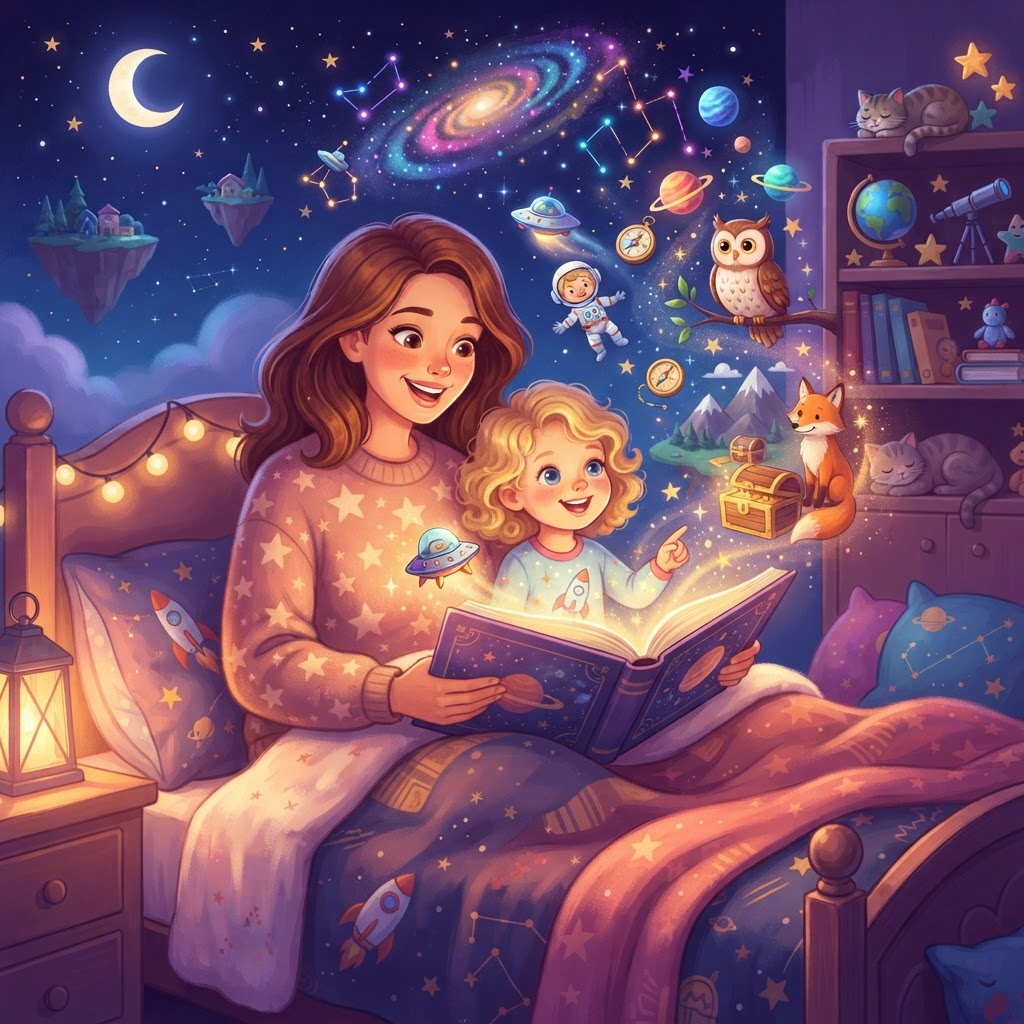
If your child loves maps, hidden trails, sea voyages, and brave discoveries, explorers bedtime stories can turn nighttime into a gentle adventure. The best ones balance curiosity with calm, giving children the thrill of discovery without making bedtime feel too exciting to sleep.
For young children, story time is more than entertainment. Research from the American Academy of Pediatrics has long linked shared reading with stronger language development, warm parent-child bonding, and healthy routines. That makes best explorers stories a wonderful choice for families who want bedtime to feel imaginative, reassuring, and meaningful.
What makes the best explorers bedtime stories for children?
The best explorers stories for bedtime combine adventure with emotional safety. They invite children to imagine new places while still ending in comfort, connection, and rest.
A strong explorer story for ages 1-10 usually includes a few key ingredients:
- A clear goal, such as finding a glowing shell, following a star map, or helping a lost animal home
- A kind main character children can relate to
- A setting that feels exciting but not frightening
- Gentle problems that can be solved with teamwork, courage, or creativity
- A peaceful ending that brings the child back to safety
For bedtime, the tone matters as much as the plot. Fast-paced danger, loud conflict, or scary villains can overstimulate children right before sleep. Instead, the most effective explorers tales use wonder, rhythm, and reassuring repetition.
This approach also fits what child development experts recommend. The Harvard Center on the Developing Child explains that imaginative play and storytelling help children build flexible thinking, memory, and self-regulation. In simple terms, when children imagine journeys and solve story problems, they are practicing important thinking skills in a safe way.
Which explorer themes work best at bedtime?
The best bedtime explorer themes are gentle, sensory, and hopeful. Children enjoy discovery at night most when the journey feels magical rather than stressful.
Here are themes that work especially well for explorers for kids at bedtime:
- Nature discovery: forest paths, moonlit gardens, quiet beaches, snowy trails
- Treasure with meaning: finding kindness, friendship, or a memory instead of gold
- Animal guides: a turtle navigator, a wise owl, or a lantern-carrying fox
- Soft travel: hot-air balloons, little boats, cloud paths, or star maps
- Homecoming: every adventure ends with a return to bed, home, or a cozy campfire
These themes are powerful because they support curiosity without overwhelming the senses. The National Association for the Education of Young Children, or NAEYC, highlights how imaginative storytelling and play help children make sense of the world. Explorer stories do this beautifully: they let children try bravery, ask questions, and feel capable.
If your child already loves fantasy, you can also blend exploring with other bedtime favorites, like magical fairy stories or space-themed adventures.
What are five explorer story ideas children love?
Children love explorer stories that feel personal, visual, and full of small discoveries. These five ideas are especially strong because they can be adapted for toddlers, preschoolers, and early readers.
1. The Moon Map in the Attic
A child finds an old silver map that only glows at bedtime. Each night, it reveals a new path to a peaceful place, like a whispering hill or a lake of stars.
2. The Little Boat to Shell Island
A gentle ocean story where a child explorer sails with a sleepy seal to return a singing shell to its home. This works well for children who enjoy repetitive phrases and calming water imagery.
3. The Forest Trail of Lantern Fireflies
A child follows tiny glowing fireflies through the woods to help a baby hedgehog find its family. The journey includes soft sounds, friendly creatures, and a safe return before dawn.
4. The Mountain of Lost Wishes
An explorer climbs a quiet mountain to deliver forgotten wishes back to the children who made them. This is ideal for older children who enjoy more emotional depth.
5. The Sandcastle Secret Expedition
A beach explorer discovers a hidden tunnel beneath a sandcastle where tiny crabs keep bedtime treasures. Younger children love the playful scale and simple quest structure.
These ideas also mix well with other popular bedtime genres. A child who enjoys bold heroes may also like gentle superhero adventures, while children who adore oversized worlds might enjoy big, cozy giant tales.
How can parents use explorers bedtime stories to support learning and calm?
Parents can use explorers bedtime stories to build vocabulary, confidence, and emotional security at the same time. The key is to keep the story interactive, but not overstimulating.
A few practical strategies work especially well:
- Ask simple prediction questions: “What do you think the explorer will find?”
- Repeat comforting phrases: “Step by step, safe and slow.”
- Add sensory language: soft moss, cool moonlight, sleepy waves
- Let your child choose one detail, such as the map, animal helper, or treasure
- End with a calming image, like stars above a blanket or a lantern going dim
This style supports what researchers in emergent literacy, including Whitehurst and Lonigan, have described for years: children learn language best through warm, responsive back-and-forth reading. Explorer stories are perfect for that because they naturally invite wondering, noticing, and talking.
For teachers or homeschool families, explorer themes also connect well to geography, habitats, weather, and cultural curiosity. If you want classroom-friendly prompts, InstaTales for teachers can help turn story time into a creative literacy activity.
How can you create custom explorers adventures with InstaTales?
You can create custom explorer stories by starting with one child, one destination, and one calm bedtime goal. Personalized stories work well because children are more engaged when they hear familiar details woven into the adventure.
A simple formula is:
- Main character: your child’s name, age, or favorite animal friend
- Destination: jungle trail, snowy cave, moon garden, treasure beach
- Mission: find a star compass, help a creature, return a glowing stone
- Bedtime mood: cozy, dreamy, brave, gentle
- Ending: safe return home and drift to sleep
With InstaTales, you can create your own personalized bedtime story in just a few prompts. If you want a quick starting point, the built-in story templates make it easy to shape explorer plots by age, mood, and theme. And if your child wants to hear the same favorite journey again tomorrow, you can save it in your story library for easy rereading.
This is especially helpful for families with specific interests. If your child loves oceans, treasure maps, or hidden worlds, you can create explorer stories that feel tailor-made rather than generic.
What does a calming explorers tale sound like at bedtime?
A calming explorer tale sounds gentle, rhythmic, and sensory-rich. The language should move like a lullaby, even when the story includes discovery and surprise.
Here is a short sample excerpt:
Mila tucked the little lantern under her blanket and watched it glow like a sleepy firefly. On the windowsill sat a folded map, silver as moonlight, with her name written in tiny golden letters.
“Tonight,” whispered the map, “we will follow the path of quiet stars.”
Mila tiptoed into the dream forest, where the trees hummed softly and the grass felt warm beneath her feet. A small fox with a velvet-blue scarf appeared beside her.
“No need to hurry,” said the fox. “The best explorers listen carefully.”
Together they crossed a bridge of petals, found a nest of lost wishes, and placed each one back into the night sky. When the last star twinkled into place, the map curled up like a sleepy leaf.
Mila climbed back into bed, and the lantern gave one final glow, as if to say, “Adventure is over. Rest now.”
Notice why this works: the mission is clear, the imagery is vivid, and the ending leads directly back to sleep. That is the sweet spot for explorers bedtime stories.
If you want more inspiration, browse the InstaTales blog for themed story ideas and age-based reading tips.
Frequently Asked Questions
What age are explorers bedtime stories best for?
Explorer stories can work from ages 1-10, but the structure should change by age. Toddlers do best with simple journeys and repetition, while older children enjoy richer plots, clues, and emotional themes.
Are explorers stories too exciting for bedtime?
Not if they are written with a calm tone. Gentle pacing, low-stakes challenges, and a cozy ending make adventure feel soothing instead of stimulating.
What themes should I avoid in bedtime explorer stories?
It is usually best to avoid intense danger, frightening villains, loud conflict, or cliffhanger endings right before sleep. Bedtime stories should create curiosity and comfort, not tension that lingers.
How do I make explorer stories feel personal to my child?
Use your child’s name, favorite places, preferred animals, and familiar bedtime objects. Small details like a red raincoat, a toy compass, or a moon-shaped lantern make the story feel special.
Can explorer stories be educational too?
Yes. Explorer stories can introduce geography, habitats, weather, problem-solving, and emotional skills in a natural way. They are especially effective when children ask questions and help imagine what happens next.
How can I save custom explorer stories for later?
If you create stories online, it helps to organize favorites so children can revisit them. InstaTales lets families save bedtime adventures in your story library, making beloved stories easy to reread.
Ready to Create a Personalized Bedtime Story?
Use our free AI bedtime story generator to create a personalized illustrated story for your child in 30 seconds — no credit card needed.
Popular story types:
Maya Rodriguez
Lead Content Editor & Early Literacy Specialist
Maya is a former early childhood educator and literacy specialist with over a decade of experience helping children develop a love of reading. She leads content at InstaTales, where she writes about the science of storytelling, child development, and how families can use personalized AI stories to build literacy and emotional resilience.
instatales.ai