Best sharing bedtime stories for 3-year-olds
Discover the best sharing bedtime stories for 3-year-olds — themes, tips, and story ideas that will delight your child at bedtime.
✦ Key Takeaways
- •Sharing bedtime stories help 3-year-olds practice empathy, turn-taking, and emotional language in a calm setting.
- •The best stories for this age match a 3-year-old’s short attention span, growing vocabulary, and early social awareness.
- •A good sharing story for a 3-year-old is short, reassuring, and rooted in everyday life.
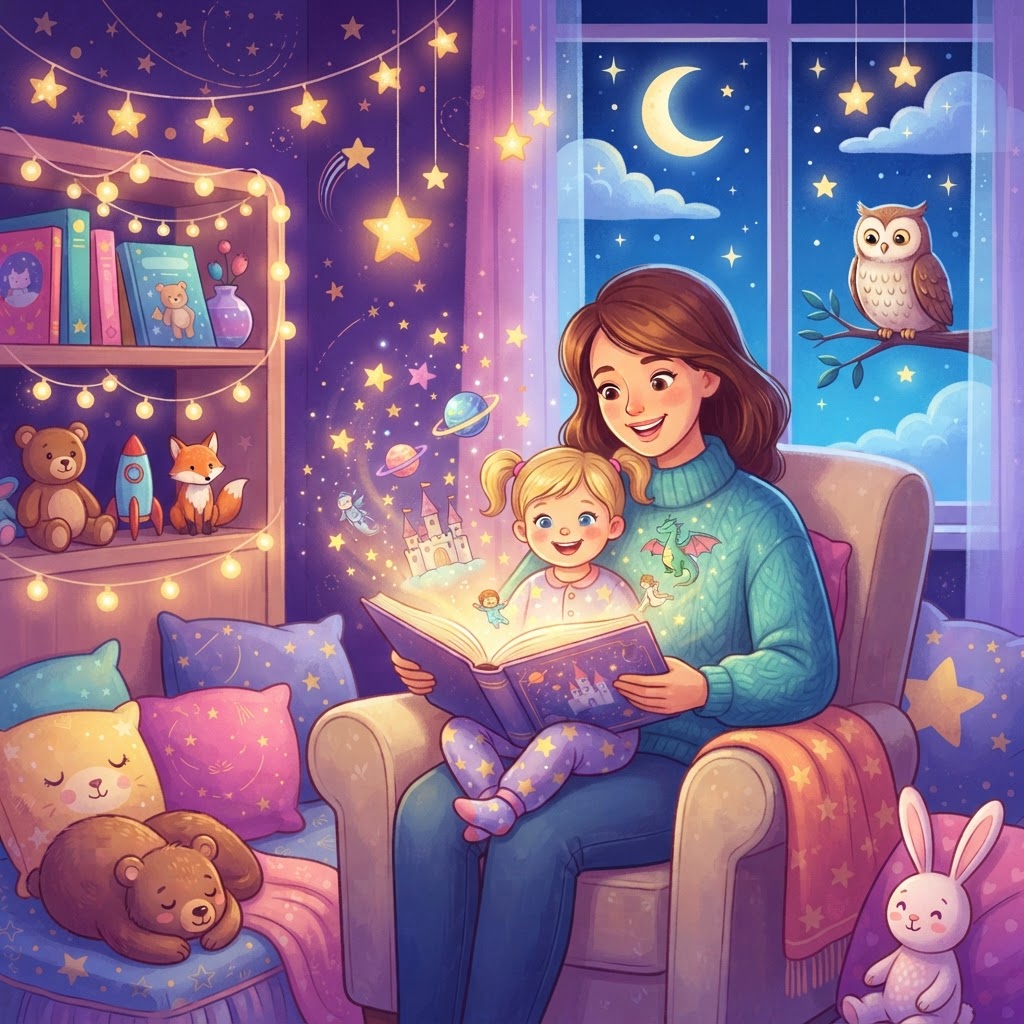
At age 3, children are just beginning to understand that other people have feelings, wants, and turns too. That makes bedtime the perfect moment to introduce sharing bedtime stories that feel gentle, simple, and emotionally safe. If you are looking for the best sharing stories for 3 year olds, this guide will help you choose stories that match your child’s development, support social learning, and still feel cozy enough for sleep.
Why are sharing bedtime stories so helpful for 3-year-olds?
Sharing bedtime stories help 3-year-olds practice empathy, turn-taking, and emotional language in a calm setting. At this age, children are still naturally egocentric, which means they often see the world mostly from their own point of view. Stories give them a safe way to watch characters learn to share, wait, and cooperate.
According to the CDC’s developmental milestones, many 3-year-olds are growing in language, pretend play, and early social skills. They may be able to play with other children, take part in simple routines, and express feelings more clearly than they could at age 2. That makes bedtime stories for 3 year olds especially powerful because children can follow a simple social problem and a warm resolution.
Bedtime is also lower pressure than playtime. Instead of correcting behavior in the moment, you can explore ideas through story:
- A bunny shares blocks with a friend
- A little dragon learns to wait for a turn
- Two siblings discover that sharing makes a game more fun
For many families, kids sharing stories become a gentle way to revisit daily struggles without shame or conflict.
What developmental milestones matter when choosing sharing stories for 3-year-olds?
The best stories for this age match a 3-year-old’s short attention span, growing vocabulary, and early social awareness. Children of this age can understand simple cause and effect, but they still need clear plots and predictable emotions.
Research from Zero to Three and early childhood educators consistently shows that preschoolers learn best through repetition, routine, and emotionally meaningful interactions. In practice, that means a good sharing story should reflect what a 3-year-old can actually process.
Look for stories that fit these milestones:
- Simple emotions: happy, sad, frustrated, proud
- Clear social situations: sharing toys, snacks, crayons, or space
- Repetition: repeated phrases help children anticipate what happens next
- Concrete outcomes: “When Mia shared, both friends could play”
- Short scenes: too many characters or twists can feel confusing
A 3-year-old does not need a lecture on generosity. They need a story where one small problem is solved in a warm, understandable way.
If your child also loves stories with gentle lessons, you might enjoy these moral bedtime stories for 3-year-olds, which often pair kindness and sharing naturally.
What makes a good sharing bedtime story for this age?
A good sharing story for a 3-year-old is short, reassuring, and rooted in everyday life. It should feel close enough to your child’s world that they can imagine themselves in it.
The strongest sharing stories for 3 year olds often include:
- One relatable problem: two children want the same toy
- One clear emotional moment: someone feels upset or left out
- One gentle solution: taking turns, sharing together, or finding another option
- One comforting ending: everyone feels safe, connected, and calm
Ideal story length is usually 3 to 6 minutes when read aloud, or around 300 to 600 words. Some 3-year-olds can enjoy a little longer, especially if the language is repetitive and soothing. But for bedtime, shorter is often better.
The rhythm matters too. Use soft language, familiar objects, and a calm pace. Stories about sharing do not need high drama to be memorable. In fact, if your main goal is sleep, pairing social learning with a soothing tone works especially well. For more sleep-friendly picks, see these calming bedtime stories for 3-year-olds.
Which themes work best in sharing bedtime stories?
The best themes for sharing stories are everyday, visual, and emotionally simple. Preschoolers connect most deeply with situations they recognize from home, daycare, the playground, or family life.
Here are some themes that work beautifully in bedtime stories for 3 year olds:
Sharing toys
This is the classic preschool conflict for a reason. Whether it is blocks, trucks, dolls, or puzzles, toy-sharing stories help children rehearse what to do before the next real-life disagreement.
Taking turns
Turn-taking is often easier for 3-year-olds to understand than abstract “sharing.” A story about waiting for the swing, passing the crayons, or each getting a turn with a favorite stuffed animal can feel very concrete.
Sharing space
Some children do better with stories about making room rather than giving something away. A blanket fort, playmat, or picnic bench can become a simple lesson in cooperation.
Sharing attention
A new sibling, a playdate, or even a parent reading to two children at once can spark big feelings. Stories that name jealousy gently can help children feel understood.
Sharing kindness
Sometimes the “shared” thing is not an object at all. Smiles, songs, helping hands, and snacks can show children that generosity comes in many forms.
If your child enjoys imagination alongside social themes, fantasy bedtime stories for 3-year-olds can make these lessons feel even more magical.
What should parents avoid in kids sharing stories?
Avoid stories that shame, overwhelm, or demand perfect behavior. The goal is to build understanding, not pressure.
Here are the biggest things to skip:
- Harsh moralizing: If the story sounds like a lecture, many 3-year-olds tune out.
- Villains and punishments: A child who does not share should not be portrayed as “bad.”
- Too much conflict: Big arguments, crying scenes, or scary tension can overstimulate at bedtime.
- Complicated plots: Multiple problems and side characters make it harder for young children to follow the main lesson.
- Forced sharing messages: Children also need to learn boundaries, consent, and comfort. Not every item must be shared immediately.
The American Academy of Pediatrics emphasizes that young children learn through warm, responsive relationships and repeated practice, not fear or embarrassment. Their guidance on early literacy and shared reading also supports the value of calm, connected reading routines (AAP HealthyChildren).
In other words, the best kids sharing stories leave children feeling capable, not corrected.
What are five sharing bedtime story ideas to try tonight?
The easiest story ideas are simple, familiar, and centered on one small success. These five prompts are ideal if you want fresh sharing bedtime stories without overcomplicating the lesson.
1. The Two Bears and the Blue Blanket
Two bear cubs both want the same cozy blanket for storytime. They discover it is big enough to share if they snuggle close and each hold one corner.
2. Lulu the Bunny Shares Her Carrots
Lulu brings three carrots to the garden and meets a hungry friend who has none. She feels unsure at first, then shares one and finds the picnic becomes more fun.
3. Max and the Red Truck Take Turns
Max and his friend both want the shiny red truck. A parent helps them set a simple turn-taking plan, and they soon build a road together.
4. The Little Dragon Who Shared a Song
A tiny dragon wants all the bedtime songs to himself. When he lets his sister choose one too, they discover a new favorite lullaby together.
5. Poppy’s Crayons for Everyone
Poppy loves her crayon box and worries they might break. With a little reassurance, she shares them during drawing time and feels proud when everyone makes a picture.
If your child responds well to courage and social growth together, brave bedtime stories for 3-year-olds can also help with situations where sharing feels hard or new.
How can parents make sharing stories more meaningful at bedtime?
A short conversation and a predictable reading routine help story lessons stick. You do not need a formal teaching moment; a few calm questions are enough.
Try this simple bedtime approach:
- Read slowly and keep your voice warm
- Pause once or twice to name feelings
- Ask one easy question like, “How did the bunny help?”
- Connect it to real life without pressure: “That was like sharing blocks today”
- End with comfort, not correction
This style of reading is supported by child development research on dialogic reading and responsive interaction, including work highlighted by Harvard’s Center on the Developing Child. Young children learn best when adults help them notice emotions, actions, and outcomes in a safe relationship.
If you want to build a broader reading routine, the InstaTales blog also has helpful ideas for story themes, reading habits, and age-by-age bedtime support.
How can InstaTales help you create personalized sharing stories for 3-year-olds?
Personalized stories can make sharing lessons feel more relevant because the characters, setting, and problem match your child’s world. When a story includes your child’s favorite toy, pet, or bedtime routine, they are often more engaged and more open to the message.
With InstaTales, parents can create your own personalized bedtime story around sharing, turn-taking, kindness, or friendship. You might create a story about your child sharing blocks at preschool, taking turns with a sibling, or helping a nervous friend at the park.
Personalization is especially useful for 3-year-olds because it lets you tailor the story to:
- Your child’s name and interests
- The exact social challenge they are working on
- A gentle bedtime tone
- A short, age-appropriate length
You can also save favorite stories in your story library for easy rereading. That matters because repetition is one of the best ways young children absorb social lessons over time.
Frequently Asked Questions
What is the best length for bedtime stories for 3 year olds?
For most 3-year-olds, 3 to 6 minutes is ideal at bedtime. That usually means around 300 to 600 words, with simple language and one clear idea.
Why do sharing stories appeal to 3-year-olds?
They appeal because 3-year-olds are just starting to understand other people’s feelings and turns. Stories let them explore sharing in a calm, low-stakes way before they face it in real life.
Should sharing bedtime stories always teach a lesson?
No. The story should feel warm and enjoyable first, with the lesson woven in naturally. Young children learn better from gentle examples than from heavy moral messages.
What if my child resists stories about sharing?
That is normal, especially if sharing feels hard right now. Try stories about turn-taking, helping, or playing together first, then return to direct sharing themes later.
Can personalized stories help with social skills?
Yes. Personalized stories often hold a child’s attention better because the characters and situations feel familiar. That can make social lessons like sharing, waiting, and kindness easier to understand.
Are sharing stories useful outside bedtime?
Absolutely. These stories also work before playdates, after daycare, or during preschool routines. If adults keep the tone calm and supportive, stories can reinforce social learning at many points in the day.
Ready to Create a Personalized Bedtime Story?
Use our free AI bedtime story generator to create a personalized illustrated story for your child in 30 seconds — no credit card needed.
Popular story types:
Maya Rodriguez
Lead Content Editor & Early Literacy Specialist
Maya is a former early childhood educator and literacy specialist with over a decade of experience helping children develop a love of reading. She leads content at InstaTales, where she writes about the science of storytelling, child development, and how families can use personalized AI stories to build literacy and emotional resilience.
instatales.ai