Best brave bedtime stories for 3-year-olds
Discover the best brave bedtime stories for 3-year-olds — themes, tips, and story ideas that will delight your child at bedtime.
✦ Key Takeaways
- •Brave bedtime stories are a great fit for many 3-year-olds because this is the age when children start reaching for independence while still needing lots of comfort.
- •Brave stories appeal to 3-year-olds because they turn everyday worries into manageable, story-sized problems.
- •Most bedtime stories for 3 year olds work best when they last about 3 to 7 minutes, or roughly 300 to 700 words.
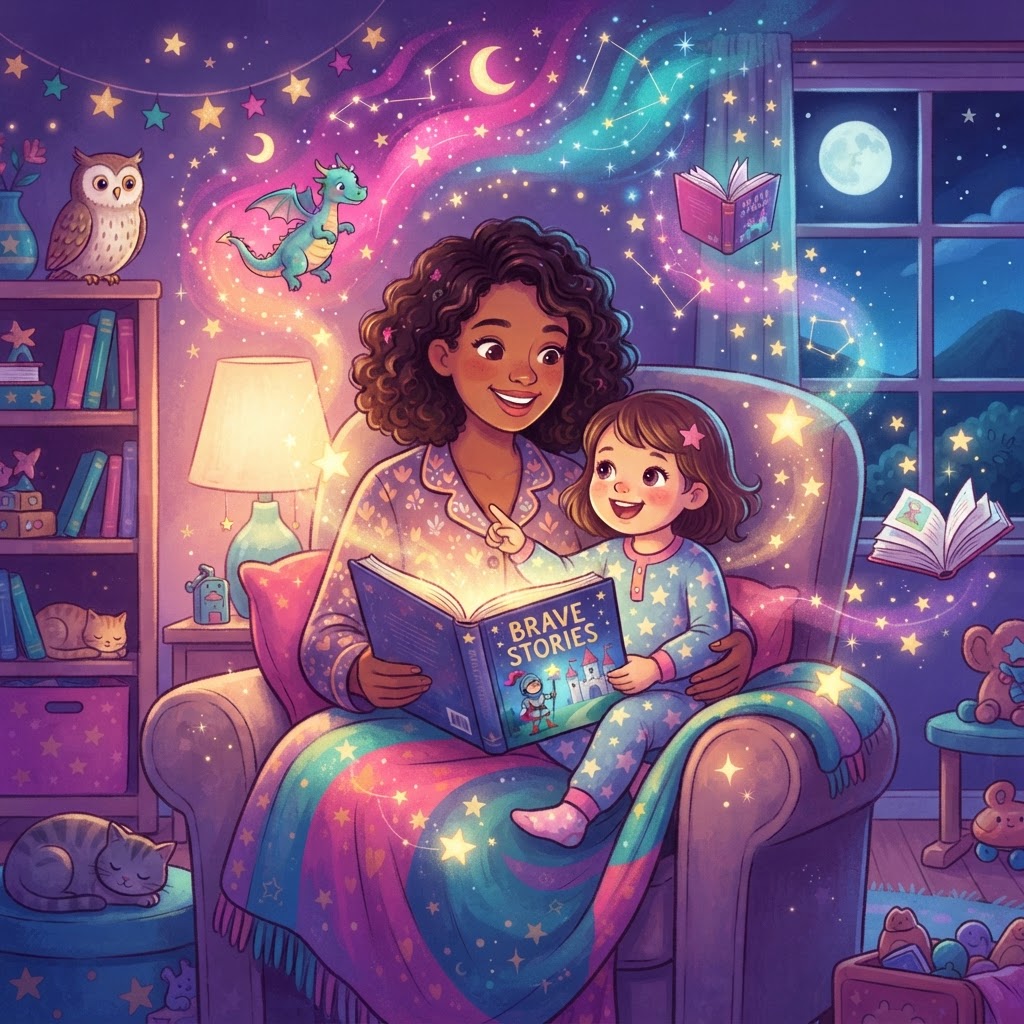
If your child is suddenly afraid of shadows, proud of putting on their own shoes, or eager to “do it myself,” a gentle story about courage can feel just right at bedtime. The best brave bedtime stories help 3-year-olds practice confidence in a safe, cozy way.
For parents looking for brave stories for 3 year olds, the key is choosing stories that feel reassuring, not intense. At this age, the most effective bedtime stories for 3 year olds pair small acts of bravery with warmth, repetition, and a happy ending.
What makes brave bedtime stories a good fit for 3-year-olds?
Brave bedtime stories are a great fit for many 3-year-olds because this is the age when children start reaching for independence while still needing lots of comfort. They want to try new things, but they also feel worries deeply and need help naming those feelings.
Around age 3, many children can:
- follow a simple beginning-middle-end plot
- understand basic emotions like happy, sad, scared, and proud
- enjoy pretend play and magical thinking
- connect strongly to familiar routines and repeated phrases
- feel nervous about new experiences, separation, or the dark
The CDC’s developmental milestones for 3-year-olds show that children this age are growing quickly in language, social skills, and imagination. That makes kids brave stories especially effective: a child can see a character feel unsure, try anyway, and end safely.
In practice, bravery for a 3-year-old rarely means battling dragons. It usually means sleeping in a dark room, saying hello to a new friend, trying a new food, or walking into preschool with a deep breath.
Why do brave stories appeal to 3-year-olds at bedtime?
Brave stories appeal to 3-year-olds because they turn everyday worries into manageable, story-sized problems. At bedtime, that matters even more, because tired children often feel emotions more strongly.
A good brave story tells a child, “It is okay to feel a little scared, and you can still do the next small thing.” That is a powerful message for preschoolers who are learning self-control but are not yet able to talk through every fear on their own.
Organizations like Zero to Three have long emphasized that young children learn through relationships, play, and repetition. Brave stories work because they let children rehearse courage in an imaginative setting while staying close to a trusted adult.
This is also why many parents find that brave stories for 3 year olds work best when they sound calm, rhythmic, and familiar. If your child is already overtired or sensitive at night, you can blend courage with gentleness by alternating with calming bedtime stories.
How long should bedtime stories for 3-year-olds be?
Most bedtime stories for 3 year olds work best when they last about 3 to 7 minutes, or roughly 300 to 700 words. That length gives enough room for a tiny challenge and a satisfying resolution without overstimulating your child before sleep.
At age 3, attention spans are growing, but they are still short. A story that feels too long may lead to wriggling, questions that restart the plot, or a second wind right when you want calm.
A strong bedtime structure looks like this:
- one simple problem
- one or two gentle attempts
- help from a caring adult, friend, or animal
- a safe, happy ending
- a repeated line your child can join in with
For example, “I can be brave, one small step at a time” is easier for a preschooler to hold onto than a long lesson about courage.
If your child enjoys stories that also build vocabulary or early thinking skills, you may also like these educational bedtime stories for 3-year-olds. The best stories at this age often teach without feeling like a lesson.
Which brave themes work best in bedtime stories for 3-year-olds?
The best brave themes for 3-year-olds are small, familiar, and emotionally safe. Everyday bravery helps young children connect the story to their own lives and leaves them feeling capable rather than overwhelmed.
Here are the themes that tend to work especially well:
-
Trying something new
A child tastes a new fruit, wears a raincoat, or joins a new game. -
Facing bedtime fears
A character hears nighttime sounds, checks the room, gets a cuddle, and settles peacefully. -
Brief separation with reunion
A child waves goodbye at preschool or stays with Grandma, then reconnects happily later. -
Helping someone else
A timid bunny carries a note to a friend or a little bear helps find a missing blanket. -
Recovering after a mistake
A child spills blocks, feels upset, then takes a breath and tries again.
These themes support emotional growth without pushing children into fear-based plots. For many preschoolers, brave bedtime stories feel even more inviting when wrapped in wonder, so gentle fairy-tale bedtime stories can be a lovely option too.
What should parents avoid in brave bedtime stories?
Parents should avoid brave stories that are too scary, too fast, or too emotionally unresolved right before sleep. A bedtime story should help your child feel secure, not leave them thinking about danger after the lights go out.
Be cautious with:
- villains that chase, trap, or threaten
- characters getting lost without quick reassurance
- loud, chaotic, or highly dramatic plots
- shame-based messages like “big kids aren’t scared”
- endings that stay sad, confusing, or open-ended
- lessons that push bravery as “never feeling fear”
That last point matters. Healthy bravery is not the absence of fear. It is trying with support, then feeling proud afterward.
The American Academy of Pediatrics’ HealthyChildren guidance on healthy sleep habits also reinforces the value of a calm, predictable bedtime routine. In other words, if a story raises your child’s heartbeat, it may be better for daytime than bedtime.
A useful rule of thumb: if the main conflict would make your child cling to you, ask lots of worried questions, or need extra reassurance after the story ends, it is probably too intense for night.
What are five great brave bedtime story ideas for 3-year-olds?
The best story ideas for this age use one small fear, one kind helper, and one happy ending. Personalized stories are especially effective because 3-year-olds love hearing their own name, favorite toy, and familiar places in the plot.
With InstaTales, you can create your own personalized bedtime story around your child’s real-life brave moment, then save favorite versions in your story library for easy re-reading.
1. The Little Lantern Walk
A child hears soft nighttime sounds and takes a short walk down the hallway with a tiny lantern. Each sound turns out to be something friendly: the heater humming, the cat stretching, the wind saying goodnight.
2. The First Hello at the Park
A shy toddler wants to join another child on the slide but feels nervous. With one deep breath and a wave, they say hello and discover a new friend who was feeling shy too.
3. The Brave Bunny and the Rain Boots
A bunny is unsure about puddles, mud, and a drizzly day. By the end, the bunny learns that new sensations can be fun when a grown-up is nearby and the boots go splash-splash.
4. The Teddy Who Slept in the Dark
A favorite stuffed animal worries about sleeping when the room gets dim. The child shows Teddy the night-light, the blanket, and the moon outside, and together they learn that darkness can feel cozy.
5. The Tiny Whale’s First Big Swim
A small whale is nervous about swimming a little farther from home. Guided by a calm parent, the whale explores safely, then returns proud and ready to rest. If your child loves sea settings, ocean-themed courage stories can be especially soothing.
When creating kids brave stories, keep the emotional win simple. The goal is not to impress your child with plot twists. The goal is to help them say, “I felt a little scared, and then I was okay.”
How can parents use personalized brave stories well?
Personalized brave stories work best when they reflect a real challenge your child is facing and gently reshape it into a success story. This makes the story feel meaningful without becoming too intense.
Try using your child’s:
- first name or nickname
- favorite animal or toy
- familiar setting, like home, daycare, or the park
- current challenge, like bedtime fears or first-day nerves
- preferred ending, such as a cuddle, song, or glowing night-light
This approach is one reason AI storytelling can be useful. Instead of hunting through many books for the perfect fit, parents can create bedtime stories for 3 year olds that match their child’s exact stage and temperament.
The best personalized stories are still simple. One brave moment is enough. A 3-year-old does not need a big hero arc; they need a warm rehearsal for tomorrow.
Frequently Asked Questions
What makes a story “brave” for a 3-year-old?
A brave story for a 3-year-old usually focuses on everyday courage, not danger. It might be about trying something new, sleeping peacefully, or speaking up with help.
Are brave bedtime stories too exciting before sleep?
Not if they are gentle and age-appropriate. The best brave bedtime stories use low stakes, calm language, and a secure ending so children feel relaxed, not keyed up.
How often should I repeat the same brave story?
Very often, if your child wants it. Repetition helps preschoolers feel secure and lets them absorb the emotional message more deeply each time.
What if my child is scared of the dark?
Choose stories where darkness is handled softly and safely, with comfort nearby. A night-light, a favorite stuffed animal, and a reassuring ending can make brave stories for 3 year olds much more effective.
Can personalized AI stories help preschoolers?
Yes, when they are age-appropriate and parent-guided. Personalized stories can reflect a child’s real fears and strengths, which often makes the lesson feel more comforting and memorable.
Should brave stories always teach a lesson?
Not in a heavy-handed way. The best bedtime stories for 3 year olds let the lesson emerge naturally through a small success, a warm relationship, and a peaceful ending.
Ready to Create a Personalized Bedtime Story?
Use our free AI bedtime story generator to create a personalized illustrated story for your child in 30 seconds — no credit card needed.
Popular story types:
Maya Rodriguez
Lead Content Editor & Early Literacy Specialist
Maya is a former early childhood educator and literacy specialist with over a decade of experience helping children develop a love of reading. She leads content at InstaTales, where she writes about the science of storytelling, child development, and how families can use personalized AI stories to build literacy and emotional resilience.
instatales.ai