Best calming bedtime stories for 3-year-olds
Discover the best calming bedtime stories for 3-year-olds — themes, tips, and story ideas that will delight your child at bedtime.
✦ Key Takeaways
- •At age 3, children are developing fast, and that affects what kinds of stories help them relax.
- •Calming stories for 3 year olds work because they support emotional regulation and bedtime routine at the same time.
- •For most children, the ideal bedtime story length is short: about 5 to 8 minutes, or roughly 300 to 700 words.
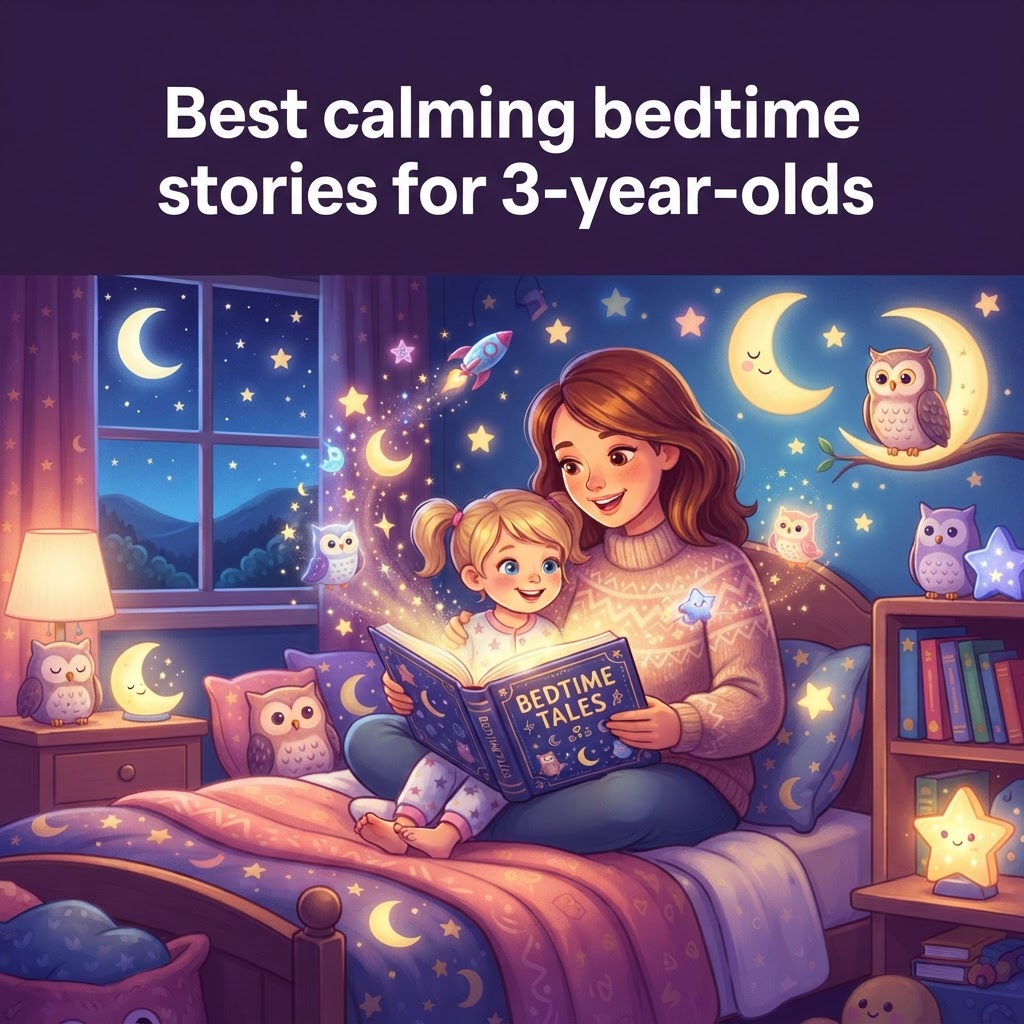
If you're searching for the best calming bedtime stories for 3-year-olds, the sweet spot is usually simple: a gentle plot, familiar language, and a peaceful ending. At this age, children love stories that feel safe and predictable, so the most effective bedtime stories for 3 year olds are not the most exciting ones — they are the ones that help little bodies slow down, big feelings settle, and bedtime feel cozy instead of stressful.
What developmental changes matter at bedtime for 3-year-olds?
At age 3, children are developing fast, and that affects what kinds of stories help them relax. Most 3-year-olds have bigger imaginations, stronger opinions, growing language skills, and more awareness of emotions than they did even a few months earlier.
According to the CDC’s developmental milestones for 3-year-olds, many children this age can speak in short conversations, engage in pretend play, and follow simple routines. That is wonderful for storytelling, because it means they can enjoy more character-based plots and repeated phrases.
But it also means bedtime can get trickier. A 3-year-old may:
- resist sleep because they want “one more thing”
- replay the day through pretend talk
- feel new fears about darkness, separation, or noises
- become overstimulated by dramatic stories
That is why kids calming stories work so well at this age. They match a child’s growing imagination without pushing them into excitement or worry.
Why do calming bedtime stories work so well for 3-year-olds?
Calming stories for 3 year olds work because they support emotional regulation and bedtime routine at the same time. A soothing story gives your child a clear signal that the day is ending and rest is coming next.
Child sleep experts, including the American Academy of Pediatrics through HealthyChildren.org, consistently emphasize the value of predictable bedtime routines. Storytime is one of the strongest routine anchors because it combines connection, language, and calm.
Research also supports this. A widely cited study by Jodi Mindell and colleagues found that consistent bedtime routines were linked to better sleep outcomes in young children, including easier sleep onset and fewer night wakings. In practice, I often see the same thing: when the story is quiet, rhythmic, and emotionally safe, children settle more smoothly.
The best calming bedtime stories often include:
- a slow pace
- soft repetition
- a problem that feels small and solvable
- comforting sensory details like moonlight, blankets, or gentle rain
- an ending where everyone is safe, sleepy, and loved
For many families, bedtime stories are not just entertainment. They are part of the child’s regulation toolkit.
How long should bedtime stories for 3-year-olds be?
For most children, the ideal bedtime story length is short: about 5 to 8 minutes, or roughly 300 to 700 words. That is long enough to feel satisfying, but short enough to avoid restlessness.
Three-year-olds can enjoy longer books during the day, but bedtime is different. When you want sleep, you want a story that helps the brain wind down rather than reengage.
A helpful rule is this: stop while your child still feels content, not overtired. If a story stretches too long, many children start asking questions, getting silly, or requesting another book.
The best bedtime stories for this age usually have:
- one main character
- one simple goal
- one mild obstacle
- one comforting resolution
If your child loves themed stories, it can help to choose naturally soothing subjects. Gentle nature bedtime stories for 3-year-olds or quiet ocean stories for little ones often work especially well because the settings themselves feel peaceful.
What themes make the best calming bedtime stories?
The best themes are reassuring, familiar, and sensory-rich. For 3-year-olds, calming story themes should invite wonder without creating suspense.
This age group loves repetition and recognizable patterns. They enjoy hearing about bedtime routines, animal families, tiny adventures, and sleepy places because those themes feel understandable and safe.
Strong themes to explore include:
- Going to sleep: a bunny, bear, or child getting ready for bed
- Nature at night: stars, crickets, moonlight, trees, soft wind
- Gentle journeys: a short walk home, a boat drifting to shore, a cloud floating by
- Care and comfort: cuddles, family connection, a favorite toy, a kind helper
- Small discoveries: finding a glowing pebble, hearing an owl, tucking flowers in for the night
For some children, familiar “favorite” themes can also be calming when handled softly. A child who adores fantasy may enjoy gentle fairy-tale bedtime stories, while a child who loves the sky may settle beautifully with quiet space-themed bedtime stories that focus on stars twinkling and planets yawning.
The key is not the category alone. It is the emotional tone.
What should parents avoid in bedtime stories for 3-year-olds?
Avoid stories that create emotional or sensory intensity right before sleep. Even if your child likes dragons, dinosaurs, or wild adventures during the day, bedtime is usually not the moment for chase scenes, cliffhangers, or loud humor.
The organization ZERO TO THREE often highlights how young children depend on co-regulation and predictable routines. Bedtime stories should support that sense of safety, not disrupt it.
Try to avoid:
- fast-moving plots with lots of action
- scary images, villains, or getting lost
- unresolved endings
- too many characters to track
- overstimulating sound effects or shouting
- heavy “teaching” messages that feel like a lecture
Also be careful with stories that seem calm at first but introduce a big emotional twist near the end. A 3-year-old may fixate on the tense part long after the story is done.
If your child asks for a high-energy topic, you can still make it work by softening it. For example, a dinosaur story can become a sleepy nest story rather than a roaring chase story. Calm storytelling is often about tone more than topic.
Which calming story ideas can you try tonight?
The best story ideas are short, cozy, and easy to repeat. Here are five calming bedtime stories for 3 year olds that fit this stage especially well.
-
The Little Bear Who Tucked In the Forest
A small bear says goodnight to the fern, the stream, the owl, and the moon before curling into bed. This works well because repetition creates predictability. -
Milo’s Slow Cloud Ride
A child floats on a soft cloud that drifts past sleepy birds and twinkling stars, then glides gently back home. The imagery is peaceful and slow. -
The Bunny and the Warm Blanket Hill
A bunny climbs a tiny hill to find the coziest blanket in the meadow, then discovers all the animals are settling in too. This gives a clear beginning, middle, and sleepy end. -
Luna the Boat Comes Home
A little boat rocks across calm evening water, passing reeds and fireflies before returning to the dock. Perfect for children who like movement but need a gentle pace. -
The Toy That Needed a Goodnight Hug
A stuffed toy feels restless until a child helps it yawn, stretch, and get tucked in. This is especially useful for children who resist bedtime themselves.
If you want fresh stories without inventing them from scratch every night, you can create your own personalized bedtime story with InstaTales. Personalizing the child’s name, favorite animal, or comfort object can make kids calming stories feel even more engaging while still keeping the tone soft and sleep-friendly.
How can parents use personalized AI stories at bedtime?
Personalized AI stories can be a wonderful bedtime tool when parents guide the tone and keep the content simple. The safest approach is to treat AI as a creative helper, not a replacement for your judgment.
For example, you might generate a story about your child and their favorite rabbit toy taking a moonlit walk, then choose a short version with a peaceful ending. That combination of personalization and predictability can be very effective for bedtime.
With InstaTales, parents can build stories around a child’s interests while keeping the structure calm and age-appropriate. You can also save favorite sleepy-time stories in your story library so the ones that work best are easy to revisit. Repetition is not boring for 3-year-olds — it is often exactly what helps them settle.
A few practical tips for using personalized stories well:
- choose one quiet setting
- keep the story under 8 minutes
- end with sleep, rest, or cuddles
- avoid surprise twists
- reuse favorite phrases from night to night
That balance makes personalized storytelling feel magical without becoming overstimulating.
Frequently Asked Questions
What makes a bedtime story calming for a 3-year-old?
A calming story has a slow pace, simple language, and a safe ending. It helps children feel secure rather than excited, worried, or silly before sleep.
How many bedtime stories should I read to my 3-year-old?
For many families, one or two short stories is enough. The best number is the one that feels predictable and peaceful without stretching bedtime too long.
Can exciting stories cause bedtime resistance?
Yes, they can. Fast or suspenseful stories may wake children up emotionally, which can lead to more questions, delays, or difficulty settling.
Are personalized stories good for 3-year-olds?
Yes, personalized stories can be very effective when they stay short and gentle. Hearing their own name and familiar details often helps children stay engaged and feel secure.
What if my child wants the same calming story every night?
That is very normal and often helpful. Repetition supports memory, language, and emotional comfort, especially at bedtime.
Can calming stories help with toddler fears at night?
They can help a lot when they include reassurance, loving adults, and predictable endings. Stories cannot remove every fear, but they can make bedtime feel safer and more manageable.
Ready to Create a Personalized Bedtime Story?
Use our free AI bedtime story generator to create a personalized illustrated story for your child in 30 seconds — no credit card needed.
Popular story types:
Maya Rodriguez
Lead Content Editor & Early Literacy Specialist
Maya is a former early childhood educator and literacy specialist with over a decade of experience helping children develop a love of reading. She leads content at InstaTales, where she writes about the science of storytelling, child development, and how families can use personalized AI stories to build literacy and emotional resilience.
instatales.ai