Chinese Stories for Kids: Myths Made Gentle
Exciting Chinese stories for kids — gods, heroes, monsters, and adventures from Chinese mythology, retold for young readers.
✦ Key Takeaways
- •Chinese stories for kids are captivating because they combine vivid fantasy with clear emotional lessons.
- •The best Chinese mythology for children focuses on memorable characters and easy-to-follow themes.
- •The best Chinese tales for ages 5 to 8 are short, visual, and emotionally clear.
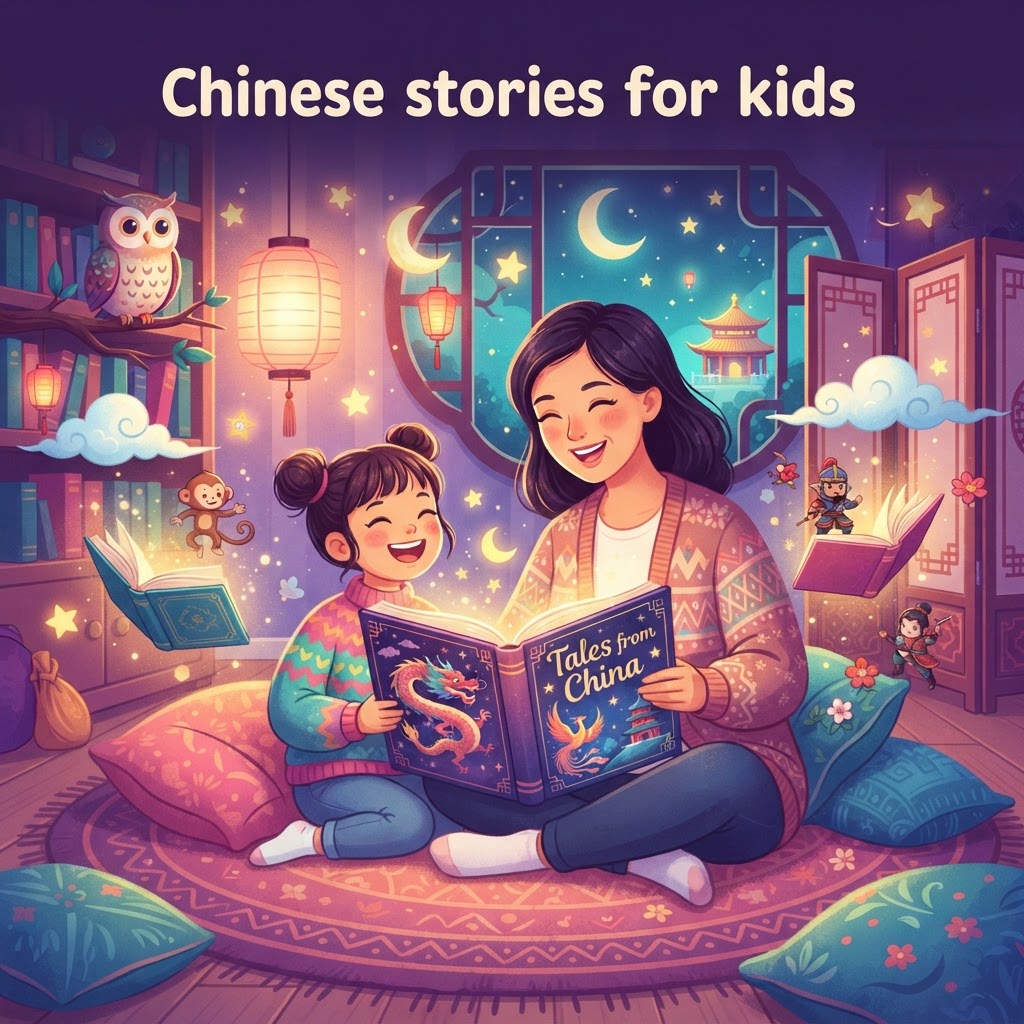
From moon palaces and dragon kings to brave archers and clever monkeys, Chinese stories for kids offer wonder, rhythm, and big imagination. They also introduce children to one of the world's richest storytelling traditions. If you're looking for Chinese tales that feel magical but still age-appropriate, this guide will help you choose the right themes, adapt them gently, and even create personalized versions at home or in the classroom.
What makes Chinese stories for kids so captivating?
Chinese stories for kids are captivating because they combine vivid fantasy with clear emotional lessons. Children are drawn to dragons, animal helpers, magical mountains, and quests that reward courage, kindness, and clever thinking.
Many traditional kids Chinese stories also use patterns children love: repetition, transformation, and strong contrasts between problem and solution. A child can quickly follow a story about a missing sun, a journey to the moon, or a mischievous monkey who learns a lesson.
For families, these stories are especially useful because they open the door to culture without feeling like a history lesson. When retold simply, they can help children explore:
- bravery and perseverance
- respect for family and community
- balance between power and kindness
- curiosity about nature, the sky, and animals
If your child already enjoys gentle Egyptian myths or Norse legends for children, Chinese mythology often feels like a natural next step.
Which characters and themes from Chinese mythology work best for children?
The best Chinese mythology for children focuses on memorable characters and easy-to-follow themes. For ages 5-8, the strongest choices are heroes, moon figures, animal spirits, and magical protectors rather than dense dynasties or complex religious philosophy.
A few core figures appear again and again in child-friendly retellings:
- Chang'e — the moon goddess, often featured in gentle stories about longing, beauty, and the Moon Festival
- Hou Yi — the heroic archer who shoots down extra suns to save the earth
- The Jade Rabbit — a kind, comforting moon companion children easily remember
- The Monkey King, Sun Wukong — funny, bold, and full of energy, though adult versions need simplification
- Dragon Kings — powerful rulers of water who can be framed as mysterious rather than frightening
- Nian — the New Year monster, perfect for a story about loud drums, red paper, and bravery
The most child-friendly themes in Chinese tales include helping others, restoring balance, showing respect, and using wit instead of force. For background on Chinese culture and mythology, Asia for Educators at Columbia University is a strong classroom-friendly source.
Which Chinese tales are best for ages 5 to 8?
The best Chinese tales for ages 5 to 8 are short, visual, and emotionally clear. Children in this age range do best with one main problem, one or two magical elements, and an ending that feels safe and satisfying.
Here are 7 age-appropriate story ideas inspired by Chinese mythology children can enjoy:
1. The Archer Who Saved the Sky
Retell the story of Hou Yi as a hero who helps the earth when too many suns make the world too hot. Keep the focus on courage and protecting people.
2. The Girl on the Moon
Use Chang'e as a gentle, dreamy character who watches over children from the moon. This works especially well as a bedtime story.
3. The Jade Rabbit's Kindness
Create a soft tale about the Jade Rabbit helping lost animals or making mooncakes for a festival. This version is ideal for younger or more sensitive children.
4. The Monster Afraid of Red
The story of Nian is excellent for group reading. Children love learning how people used red decorations, lanterns, and loud sounds to scare away a monster without fighting.
5. The Friendly River Dragon
A small village asks a dragon for rain during a dry season. The story can center on gratitude, patience, and caring for nature.
6. The Monkey King's First Good Deed
Instead of telling the full epic, choose one simple adventure where Sun Wukong uses his cleverness to help someone. This keeps the energy while avoiding chaos and violence.
7. The Moon Festival Wish
Build an original story around lanterns, family reunion, and mooncakes. This gives children cultural touchpoints without needing deep mythological knowledge.
These story starters are especially good if you want Chinese stories for kids that feel magical without being overwhelming.
What should adults adapt when retelling Chinese mythology for children?
Adults should adapt tone, complexity, and consequences when sharing Chinese mythology with children. The goal is not to erase the original stories, but to retell them in a way that respects both the tradition and the child's developmental stage.
Some classic myths include revenge, punishment, frightening monsters, or morally mixed heroes. For ages 5-8, it helps to:
- soften graphic details like battles, injuries, or harsh punishments
- reduce complicated backstory about gods, kingdoms, or long family lines
- shift the focus from revenge to repair, problem-solving, or courage
- explain symbols simply such as why red means luck or why dragons can represent power and rain
- keep cultural respect by naming the story's origin and not blending unrelated traditions into one “fantasy Asia” setting
This approach fits what early childhood experts recommend about storytelling. The American Academy of Pediatrics emphasizes shared reading and conversation as a way to build language and emotional connection, and Harvard's Center on the Developing Child highlights how back-and-forth discussion supports understanding and self-regulation.
In practice, that means pausing to ask, “Why do you think the rabbit helped?” or “What would you do if you saw the moon every night?” Those simple questions turn Chinese stories for kids into rich learning moments.
How can Chinese stories support children's learning and emotional growth?
Chinese stories support learning by building vocabulary, cultural awareness, and empathy at the same time. A well-chosen myth gives children new words, memorable images, and a safe way to think about feelings like fear, bravery, jealousy, or homesickness.
For parents and teachers, these stories can support:
- language development through repeated phrases and descriptive imagery
- cultural literacy by introducing festivals, symbols, and traditional values
- emotional learning through characters who make mistakes, help others, or face challenges
- imagination and sequencing as children retell the beginning, middle, and end
This is one reason mythology works so well in thematic units. A class comparing the moon in different cultures, for example, might pair Chinese moon legends with stories from other traditions, including Celtic tales for young readers or Native American story traditions for children.
How can you create personalized Chinese-inspired stories with InstaTales?
You can use InstaTales to turn classic themes from Chinese mythology into personalized bedtime stories your child will actually want to hear again. The key is to keep the inspiration clear while making the plot simple, warm, and age-appropriate.
A good process looks like this:
- Start with one theme: the moon, a dragon, a lantern festival, or a brave helper
- Choose one central feeling: nervousness, curiosity, kindness, or perseverance
- Add your child's details: name, favorite animal, sibling, or hometown weather
- Keep the structure short: problem, magical help, happy resolution
You can create your own personalized bedtime story using prompts like:
- “Write a gentle Chinese-inspired bedtime story for a 6-year-old about a child who meets the Jade Rabbit.”
- “Create a story about a kind river dragon helping a village during the Moon Festival.”
- “Make a funny Monkey King adventure with no fighting and a calm bedtime ending.”
If you want a quicker starting point, browse story templates and adapt the setting, symbols, and character roles. Once you find a version your child loves, save it in your story library so you can reread it, adjust the reading level, or turn it into a family tradition.
Frequently Asked Questions
Are Chinese stories for kids suitable for bedtime?
Yes, many are. Choose gentle stories about the moon, festivals, animal helpers, or brave problem-solving rather than battle-heavy myths.
What age is best for Chinese mythology children can understand?
Ages 5-8 are a great starting point. At this stage, children usually enjoy magical plots and can follow simple cultural context when it is explained clearly.
Which Chinese tale is best for a child who scares easily?
The Jade Rabbit or a soft Chang'e moon story is usually the best fit. These stories feel soothing, visual, and emotionally safe.
Do I need to retell the original myths exactly?
No. It is better to stay true to the spirit of the story while adapting content for your child's age, attention span, and emotional sensitivity.
Can teachers use Chinese stories in the classroom?
Absolutely. Chinese tales work well for units on folktales, festivals, the moon, seasons, and world cultures, especially when paired with discussion and art activities.
Ready to Create a Personalized Bedtime Story?
Use our free AI bedtime story generator to create a personalized illustrated story for your child in 30 seconds — no credit card needed.
Popular story types:
Maya Rodriguez
Lead Content Editor & Early Literacy Specialist
Maya is a former early childhood educator and literacy specialist with over a decade of experience helping children develop a love of reading. She leads content at InstaTales, where she writes about the science of storytelling, child development, and how families can use personalized AI stories to build literacy and emotional resilience.
instatales.ai