Celtic Stories for Kids: Myths Made Magical
Exciting Celtic stories for kids — gods, heroes, monsters, and adventures from Celtic mythology, retold for young readers.
✦ Key Takeaways
- •Celtic tales are especially appealing to children because they blend adventure, nature, and strong emotion in simple, memorable story patterns.
- •The best Celtic mythology characters for children are the ones connected to bravery, creativity, nature, and transformation.
- •The best Celtic tales for ages five to eight are short, emotionally clear, and built around one magical idea.
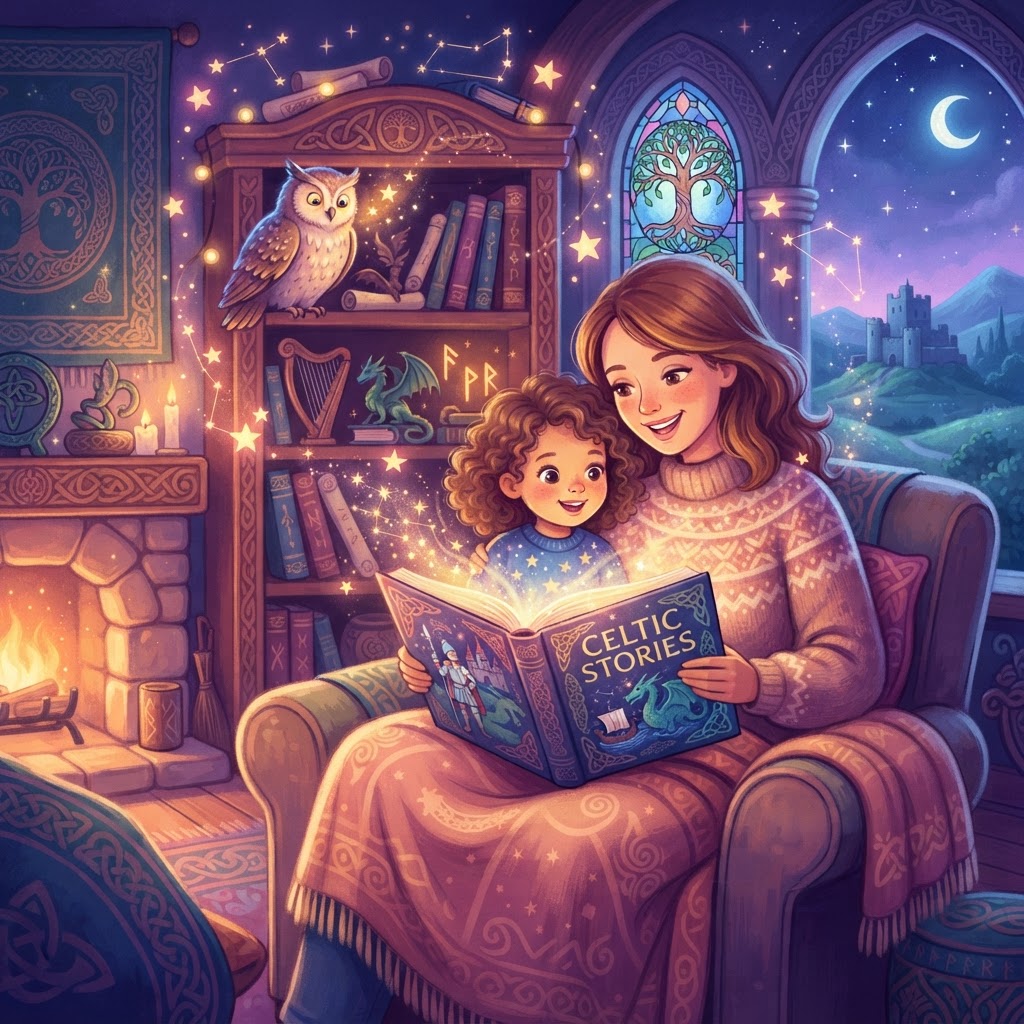
Celtic stories are full of brave children, wise animals, magical lakes, shape-shifting beings, and journeys into enchanted lands. That makes Celtic stories for kids a wonderful choice for families who want myths with wonder, heart, and just the right amount of mystery.
If your child already enjoys Greek myths for young readers or Norse myths for children, Celtic tales offer a different kind of magic: greener landscapes, music-filled adventures, and stories where kindness and cleverness matter as much as strength. In this guide, you’ll find the key characters and themes in Celtic mythology children can enjoy, age-appropriate story ideas, tips for adapting myths gently, and ways to create your own Celtic-inspired bedtime tales.
What makes Celtic stories for kids so captivating?
Celtic tales are especially appealing to children because they blend adventure, nature, and strong emotion in simple, memorable story patterns. Young listeners often connect with magical animals, hidden worlds, and heroes who must be brave, loyal, or wise.
Celtic mythology is not one single book of myths. It includes stories from Irish, Welsh, Scottish, and related traditions. Many of these tales feature:
- enchanted forests, hills, rivers, and seas
- magical creatures such as selkies, hounds, giants, and fairies
- heroes who win through courage or quick thinking
- themes of family, friendship, promises, and belonging
- repeated patterns that help young children follow the plot
This structure matters. Early literacy research shows children learn well through repetition, prediction, and back-and-forth conversation during reading. The American Academy of Pediatrics encourages reading aloud because it supports language, attention, and connection between adult and child, especially when stories lead to discussion and shared imagination (HealthyChildren.org).
Celtic myths also fit beautifully with what many parents already know from experience: children love stories that feel big and magical, but still end in safety and comfort. That is one reason they pair so well with bedtime and with the same qualities explained in why children enjoy adventure tales.
Who are the main characters in Celtic mythology children can enjoy?
The best Celtic mythology characters for children are the ones connected to bravery, creativity, nature, and transformation. You do not need to introduce every god or every battle to make kids Celtic stories meaningful.
Here are a few strong starting points:
- Brigid – Often linked with fire, poetry, healing, and spring. She works well in gentle stories about kindness, creativity, and helping others.
- Lugh – A bright, skilled hero associated with many talents. For children, he can become the “many-gifted” character who solves problems with both bravery and skill.
- Fionn mac Cumhaill – One of the most child-friendly Celtic heroes. His tales often involve wisdom, adventure, and magical knowledge.
- The Children of Lir – A famous Irish tale about siblings transformed into swans. It needs softening for young readers, but its themes of family love and hope are powerful.
- Oisín and Tír na nÓg – A beautiful journey story about a magical land of youth, best adapted as a bittersweet but gentle adventure.
- Rhiannon – A Welsh mythic figure associated with horses, mystery, and calm strength.
For reliable background on early Irish tradition and myth, parents can explore resources from Boston College’s Irish Studies program. You do not need to become a mythology expert, but a trustworthy academic source helps when you want to check names, origins, or themes.
Which Celtic tales work best for ages five to eight?
The best Celtic tales for ages five to eight are short, emotionally clear, and built around one magical idea. At this age, children usually enjoy wonder and suspense, but they still need simple motives, comforting endings, and limited violence.
Here are seven age-appropriate story ideas inspired by Celtic mythology children can enjoy:
1. Fionn and the Salmon of Wisdom
A curious boy tastes a magical salmon and gains great wisdom. This is one of the strongest Celtic stories for kids because it is short, memorable, and centered on learning.
2. Brigid Brings the First Spring Fire
Retell Brigid as a gentle bringer of warmth, light, and creativity after winter. This works beautifully for bedtime or seasonal classroom themes.
3. The Swan Children Find Their Song
Adapt The Children of Lir so the focus stays on sibling love, resilience, and the beauty of music and nature. Keep the transformation magical rather than frightening.
4. Oisín’s Visit to Tír na nÓg
Turn this into a glowing journey to a land where no one is lonely and every meadow sings. For younger children, reduce the sadness and end with Oisín bringing back wonder and gratitude.
5. The Selkie’s Lost Skin
A selkie searches for her seal skin with help from a kind child. This version emphasizes empathy, ocean imagery, and doing the right thing.
6. Lugh and the Impossible Tasks
Present Lugh as a hero who completes magical challenges by using different talents. Children love the message that being good at many things can help others.
7. The Friendly Giant at the Cliffs
Inspired by Celtic giant tales, this story can focus on a giant who looks scary but protects animals and children. It is a good way to introduce “don’t judge by appearances.”
These stories also make strong bridges to other myth traditions. If your child likes comparing cultures, you can explore Egyptian myths made gentle or Roman myths for children next.
What parts of Celtic mythology should adults adapt for children?
Adults should adapt violence, tragedy, and complicated family history before sharing Celtic tales with young children. The goal is not to erase the mythology, but to retell it in a way that protects a child’s sense of safety.
For ages 5-8, I recommend these changes:
- Soften battles into contests, quests, or clever escapes
- Reduce frightening transformations by emphasizing magic over loss
- Simplify relationships so children can follow who is who
- Choose one theme such as bravery, loyalty, or kindness
- End with reassurance even if the original myth is sadder
This approach matches what we know from child development. Young children benefit most when adults help them process story emotions through conversation. The Harvard Center on the Developing Child explains how back-and-forth interaction builds understanding and emotional regulation. In practice, that means pausing to ask, “How do you think Fionn felt?” or “What would you do to help the selkie?”
A good retelling is not less meaningful because it is gentler. It is simply more developmentally appropriate.
How can parents and teachers use Celtic tales to support learning?
Celtic tales can support literacy, vocabulary, cultural learning, and emotional growth when adults read them interactively. They are especially useful for discussing nature, courage, choices, and how stories travel across cultures.
Try these simple teaching ideas:
- ask children to predict what the hero will do next
- look at a map of Ireland, Scotland, or Wales before reading
- collect “magic words” like harp, mist, oak, swan, and hill
- compare a Celtic hero with a hero from another tradition
- invite children to draw the enchanted setting after the story
Research on dialogic reading, including work by Grover Whitehurst and colleagues, shows that children build language skills when adults turn reading into a conversation instead of a performance. That makes Celtic tales especially helpful, because they are rich in imagery and easy to pause and discuss.
For classroom use, teachers can turn one myth into a week of reading, art, and storytelling prompts. If you want structured support, InstaTales for teachers offers a simple way to create story-based activities around themes like myths, legends, and world cultures.
How can you create Celtic-inspired bedtime stories with InstaTales?
You can use InstaTales to turn Celtic themes into personalized, age-appropriate bedtime stories in minutes. This is especially helpful if you want the mood of Celtic mythology without the darker details of the original tales.
Start with one clear prompt, such as:
- “A gentle Celtic bedtime story about a child who meets a swan prince by a moonlit lake”
- “A cozy Irish-inspired adventure where Brigid helps a little girl bring spring to her village”
- “A Welsh-style magical pony story with a brave child and a hidden hill kingdom”
Then tailor the story for your child:
- choose your child’s name and favorite setting
- ask for a calm tone and a happy ending
- set the reading level for ages 5-8
- request themes like kindness, courage, or curiosity
From there, you can create your own personalized bedtime story and save favorites in your story library for easy rereading. If you want a faster starting point, browse the built-in story templates and adapt a myth-inspired adventure to fit your child’s age and interests.
Frequently Asked Questions
Are Celtic stories suitable for young children?
Yes, many are, especially when retold in a gentle and simple way. Choose stories with magical journeys, animals, or clever heroes, and soften any violence or sadness.
What is the difference between Celtic mythology and fairy tales?
Celtic mythology usually includes gods, legendary heroes, and ancient cultural beliefs, while fairy tales are often simpler folk stories. For children, the two can overlap in mood because both include magic, transformation, and wonder.
Which Celtic hero is best for kids?
Fionn mac Cumhaill is often the easiest starting point. His stories are adventurous, memorable, and can be adapted to emphasize wisdom and problem-solving over battle.
How do I make Celtic mythology children can enjoy at bedtime?
Keep the plot focused on one magical problem, use soothing nature imagery, and end with safety and comfort. Bedtime versions work best when the mood is mysterious but never scary.
Can Celtic tales be used in school?
Absolutely. They support literacy, geography, art, and cultural comparison, especially in units on myths and legends. Teachers can also use them for vocabulary work and creative retelling.
How can I generate kids Celtic stories with AI safely?
Use clear prompts, set the age range, and ask for gentle language and a happy ending. It also helps to review the story once before reading it aloud, just as you would with any new book or retelling.
Ready to Create a Personalized Bedtime Story?
Use our free AI bedtime story generator to create a personalized illustrated story for your child in 30 seconds — no credit card needed.
Popular story types:
Maya Rodriguez
Lead Content Editor & Early Literacy Specialist
Maya is a former early childhood educator and literacy specialist with over a decade of experience helping children develop a love of reading. She leads content at InstaTales, where she writes about the science of storytelling, child development, and how families can use personalized AI stories to build literacy and emotional resilience.
instatales.ai