Egyptian Stories for Kids: Myths Made Gentle
Exciting Egyptian stories for kids — gods, heroes, monsters, and adventures from Egyptian mythology, retold for young readers.
✦ Key Takeaways
- •Egyptian stories for kids are appealing because they mix magic, adventure, and strong visual symbols.
- •The best Egyptian mythology children’s characters are the ones with clear roles, strong visual identities, and gentle story potential.
- •The most child-friendly themes in Egyptian tales are protection, problem-solving, nature, and the daily return of hope.
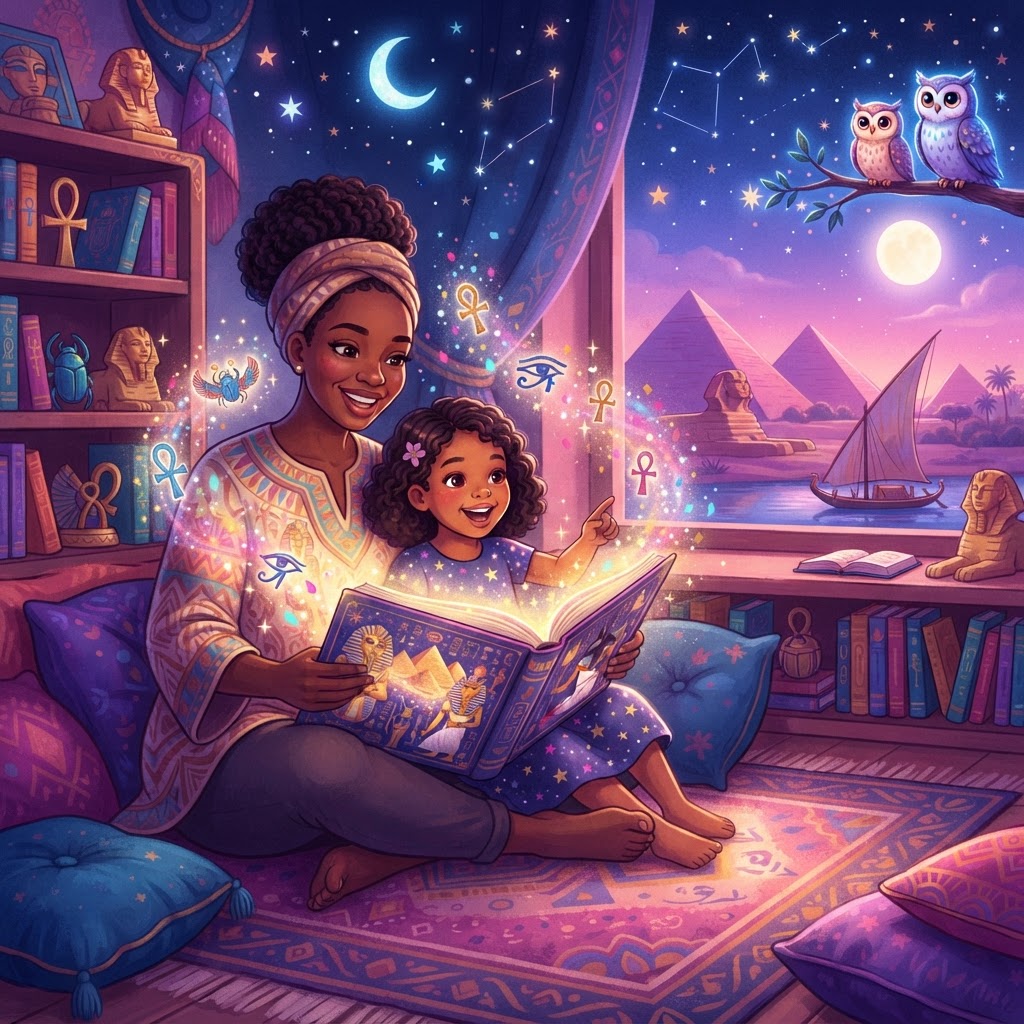
Ancient Egypt gives children exactly what great bedtime stories need: mystery, brave quests, animal-headed gods, clever heroes, and a world shaped by the sun and stars. The best Egyptian stories for kids keep that sense of wonder while gently adapting the scarier parts of myth. For parents and teachers, that means choosing simple plots, kind heroes, and clear themes children can understand.
Done well, Egyptian tales can support both imagination and learning. Shared storytelling builds language, memory, and emotional connection, and decades of dialogic reading research, including work by Grover Whitehurst, show that children learn more when adults pause, ask questions, and invite predictions. That is one reason myths can be so effective: they are rich enough to spark talk, but simple enough to retell in a child-friendly way.
Why are Egyptian stories for kids so appealing?
Egyptian stories for kids are appealing because they mix magic, adventure, and strong visual symbols. Children quickly connect with golden suns, talking animals, hidden tombs, river journeys, and characters who solve problems with courage or kindness.
Ancient Egyptian mythology is especially memorable because its images are vivid. A child may not remember the word “mythology,” but they will remember a falcon-headed sky god, a clever cat protecting a family, or a little boat carrying the sun across the sky.
These stories also work well because they repeat big ideas children enjoy:
- Light returning after darkness
- Good choices bringing help
- Journeys with a clear goal
- Animal helpers and magical objects
- Families, friendship, and protection
If your child already loves quests, dragons, or treasure hunts, Egyptian myths often feel like a fresh version of those same interests. If you want similar cross-cultural inspiration, you can also explore gentle Greek myths or softened Norse adventures.
Which Egyptian mythology characters are best for children?
The best Egyptian mythology children’s characters are the ones with clear roles, strong visual identities, and gentle story potential. For young readers, it helps to focus on protectors, helpers, and seekers rather than on conflict-heavy gods.
Here are some of the easiest figures to adapt into kids Egyptian stories:
- Ra – the sun god, ideal for stories about light, morning, and bravery
- Bastet – the cat goddess, perfect for comfort, home, and protection
- Thoth – a wise helper linked with learning, writing, and moonlight
- Horus – a sky hero who can be framed as brave and watchful
- Anubis – often better presented as a careful guide and protector
- Isis – a clever, loving mother figure associated with healing and care
- The Nile – not a character in the usual sense, but a powerful story-setting full of life
For factual background on ancient Egyptian beliefs and objects, the University of Chicago’s Oriental Institute is a useful university source. You do not need to teach every detail. In fact, younger children usually respond best when one character has one clear strength, such as kindness, wisdom, or bravery.
What themes from Egyptian tales are easiest for children to understand?
The most child-friendly themes in Egyptian tales are protection, problem-solving, nature, and the daily return of hope. These themes feel concrete to children, even when the setting is ancient and magical.
The strongest themes to highlight are:
- Light after dark – the sun rises again, and safety returns
- Order and balance – everyone has a role in keeping the world peaceful
- Kindness and loyalty – friends help each other on a journey
- Respect for nature – the river, animals, and seasons matter
- Learning and wisdom – clever thinking can solve hard problems
These themes line up well with what child development experts recommend. The Harvard Center on the Developing Child emphasizes that back-and-forth conversation and emotionally safe relationships help children learn best. A gentle myth retelling creates both: a safe story world and lots of chances to talk.
In practice, children ages 4-8 usually enjoy mythology most when the emotional message is simple. “Be brave when the world feels dark” works better than a complicated family feud among gods.
Which Egyptian stories for kids work best as gentle retellings?
The best Egyptian stories for kids are short, visual, and centered on one challenge. You do not need to retell original myths word for word. Instead, use the setting and characters as inspiration for age-appropriate adventures.
Here are 7 story ideas that work well for bedtime, classrooms, or creative play:
1. Ra and the Missing Sunrise
Ra’s golden boat cannot find the morning path across the sky. A child helper follows star clues and learns that courage can bring back the light.
2. Bastet and the Noisy Night
A nervous kitten hears strange sounds in a moonlit temple. Bastet teaches the kitten how to listen carefully, stay calm, and protect the people it loves.
3. Thoth’s Lost Scroll
Thoth misplaces a magical scroll that helps the birds remember their songs. A young scribe solves riddles to return it before sunset.
4. The Nile’s Secret Gift
A child waits for the Nile flood and worries the crops will not grow. The river reveals small signs of hope, patience, and renewal.
5. Horus and the Feather of Truth
Instead of battle, this version focuses on fairness. Horus must decide how to settle a disagreement between two friends using honesty and empathy.
6. The Moon Garden of Isis
Isis grows a garden that blooms only under moonlight. When one flower fades, children go on a gentle nighttime quest to help it bloom again.
7. Anubis and the Lantern Path
Anubis becomes a calm guide who helps lost travelers find their way home through the desert using stars, lanterns, and kindness.
These kinds of plots are effective because they combine mythic wonder with familiar childhood emotions. That is also why adventure stories are so engaging for young readers: they let children practice bravery in a safe way.
What should adults adapt when retelling Egyptian mythology for children?
Adults should adapt violence, death imagery, revenge plots, and complex divine relationships. The goal is not to erase mythology, but to shape it for a child’s stage of development.
Some parts of original Egyptian mythology can be intense. For young children, it is usually best to:
- Replace battles with contests, puzzles, or rescue missions
- Reframe underworld scenes as journeys, guidance, or remembrance
- Simplify family conflict into misunderstandings or lessons
- Skip graphic transformations or punishments
- Focus on emotional safety, not fear
This approach is supported by early childhood practice. The National Association for the Education of Young Children highlights the value of imaginative play and storytelling when children feel secure enough to explore ideas without being overwhelmed.
A useful rule is this: keep the wonder, soften the danger. If a myth depends mainly on violence, use the setting and symbols instead of the full plot. A scarab charm, moon boat, temple cat, or hidden papyrus map can carry the Egyptian feel without the heavy content.
How can parents and teachers use InstaTales to create kids Egyptian stories?
Parents and teachers can use InstaTales to turn Egyptian mythology into personalized, age-appropriate adventures. The easiest method is to start with one mythic element, one child-friendly goal, and one emotional lesson.
If you want to create your own personalized bedtime story, try prompts like these:
- “Write a gentle Egyptian bedtime story for a 5-year-old about Bastet helping a shy kitten feel brave.”
- “Create an Egyptian-inspired adventure where Ra’s sun boat is delayed and two siblings help bring back morning.”
- “Tell a calm classroom story about Thoth teaching children how to solve a riddle and work as a team.”
To keep the tone right, specify:
- The child’s age
- A bedtime-safe mood
- No scary scenes or fighting
- A happy ending
- A clear lesson, like courage, patience, or kindness
You can also speed things up with story templates, then save favorites in your story library for easy re-reading. For classrooms, InstaTales for teachers can help turn mythology units into reading, art, or writing activities.
A simple extension activity works well too. After the story, ask:
- Which character helped the most?
- What clue solved the problem?
- What animal would you add to the story?
- What should happen next on the Nile?
That kind of conversation supports comprehension and vocabulary while keeping the experience playful. If your child enjoys myth-based adventures, the InstaTales blog also has more themed reading ideas.
How can you make Egyptian mythology children’s stories both fun and accurate?
You can make Egyptian mythology children’s stories fun and accurate by keeping the real setting and symbols while simplifying the plot. Accuracy for young children does not mean including every hard detail. It means using the culture with care and avoiding random “mummy magic” clichés.
A balanced retelling usually includes:
- Real names like Ra, Isis, Bastet, or Thoth
- Real settings such as the Nile, desert, temple, or sun boat
- Real symbols like scarabs, papyrus, reeds, stars, and cats
- Gentle invented plots that suit the child’s age
This approach helps children enjoy the story now and build curiosity for deeper learning later. It can even lead naturally into history, art, geography, and writing activities, much like themed learning around inventor stories for kids.
Frequently Asked Questions
Are Egyptian stories for kids too scary?
Not if they are adapted with care. Choose stories that focus on adventure, wisdom, animals, and problem-solving instead of death, punishment, or battles.
What age is best for Egyptian mythology children’s stories?
Many children enjoy gentle Egyptian-inspired stories from ages 4-8. Younger children do best with simple plots, while older children can handle more history and symbolism.
Which Egyptian god is easiest for children to understand?
Bastet is often the easiest because she connects to cats, home, and protection. Ra is also a strong choice because children quickly understand the idea of bringing back the sun.
How do I explain Egyptian mythology to a child?
Start by saying myths are old stories people told to explain the world and share important ideas. Then give one example, such as Ra bringing the sunrise or Thoth helping people learn.
Can teachers use kids Egyptian stories in class?
Yes, they work well in literacy, history, art, and social-emotional learning. A short myth retelling can lead into map work, drawing symbols, vocabulary practice, or creative writing.
How can I make my own Egyptian tales at home?
Pick one character, one setting, and one simple problem. Then use InstaTales to build a personalized story with a calm tone, an age-appropriate challenge, and a happy ending.
Ready to Create a Personalized Bedtime Story?
Use our free AI bedtime story generator to create a personalized illustrated story for your child in 30 seconds — no credit card needed.
Popular story types:
Maya Rodriguez
Lead Content Editor & Early Literacy Specialist
Maya is a former early childhood educator and literacy specialist with over a decade of experience helping children develop a love of reading. She leads content at InstaTales, where she writes about the science of storytelling, child development, and how families can use personalized AI stories to build literacy and emotional resilience.
instatales.ai