Ecosystems stories for curious kids
Feed your child's curiosity with these ecosystems stories that combine imagination with real science and discovery.
✦ Key Takeaways
- •Stories help children remember science because they give facts emotion, sequence, and meaning.
- •Children should first learn that an ecosystem is a place where living and nonliving things work together.
- •The best ecosystems stories pair one exciting plot with a few accurate facts.
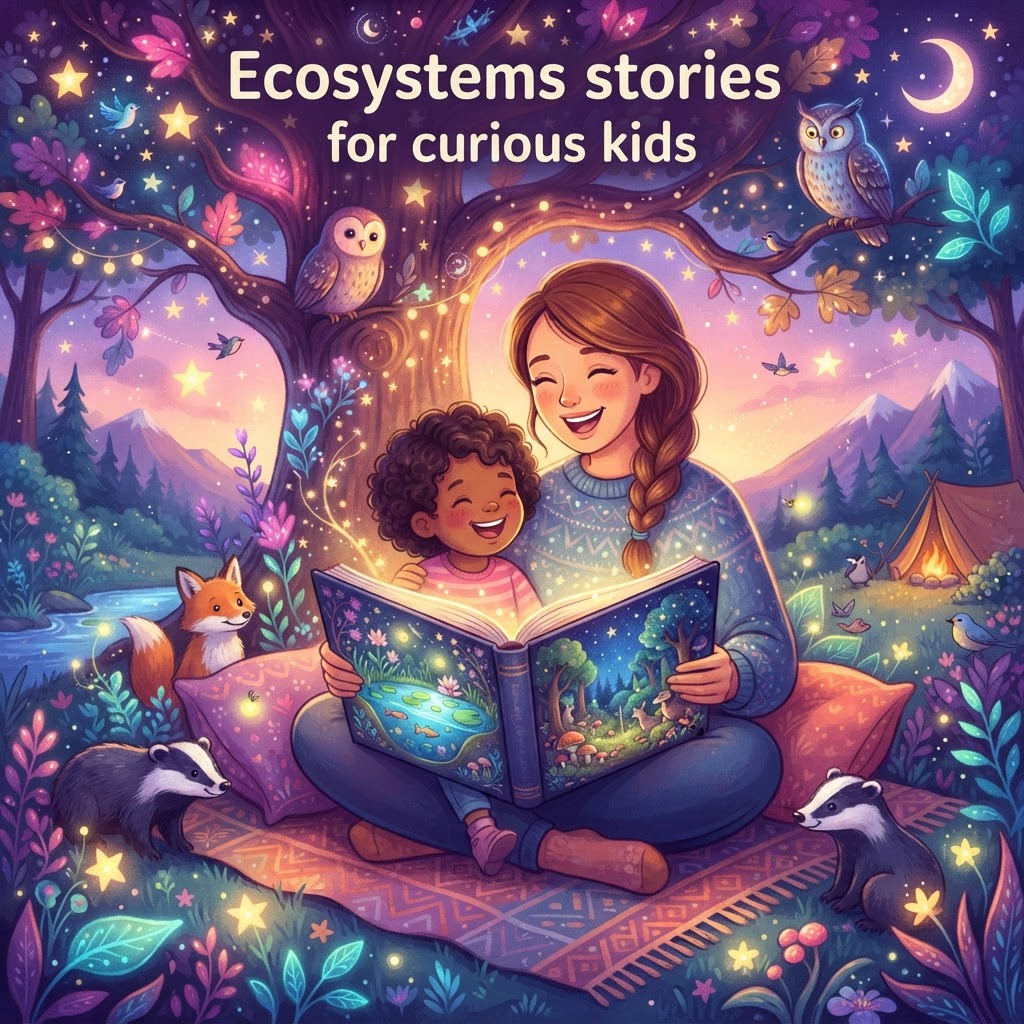
Curious children often learn science best when facts are wrapped in a story. Ecosystems stories turn abstract ideas like food chains, habitats, and balance in nature into characters, problems, and discoveries that children can picture and remember. For families looking for ecosystems for kids that feel playful rather than textbook-heavy, story-based learning is a gentle, effective place to begin.
When a child follows a hummingbird through a rainforest or a fox across the Arctic tundra, they are not just being entertained. They are building background knowledge, vocabulary, and scientific thinking. That is why ecosystems adventures children can enjoy at bedtime, in classrooms, or during quiet reading time are so powerful.
Why do ecosystems stories help kids remember science?
Stories help children remember science because they give facts emotion, sequence, and meaning. Instead of memorizing isolated terms, children see how living things depend on one another and what happens when a habitat changes.
Child development experts have long noted that young children learn through relationships, repetition, and rich language. The National Association for the Education of Young Children emphasizes that early science grows through inquiry, conversation, and observation. A story naturally supports all three.
Narrative also makes cause and effect easier to understand. If a pond dries up in a story, children can follow what happens next to frogs, insects, and plants. That sequence helps curious kids ecosystems concepts stick far better than a list of definitions.
For parents who want more nature-based reading ideas, these science-themed stories about ecosystems can be a helpful next step.
What should children learn about ecosystems first?
Children should first learn that an ecosystem is a place where living and nonliving things work together. Plants, animals, water, soil, sunlight, and weather all affect one another.
A simple early foundation includes:
- Habitats: where plants and animals live
- Needs: food, water, shelter, air, and space
- Roles: plants make food, animals eat plants or other animals, decomposers break things down
- Change: seasons, storms, heat, and human actions can affect balance
The National Geographic Society explains ecosystems in a child-friendly way and offers strong background for adults. For most children ages 4-10, the goal is not mastering every term. It is understanding that nature is connected.
That same connected thinking prepares children for related topics like photosynthesis stories and even physical science themes such as light and shadows stories.
Which ecosystems stories can spark curiosity and teach real facts?
The best ecosystems stories pair one exciting plot with a few accurate facts. Children do not need a lecture; they need a memorable adventure with science woven in naturally.
A rainforest rescue mission?
A child and a tree frog travel from the dark forest floor to the sunny canopy to return a lost seed. Along the way, they discover that rainforests have layers, many animals live high in the trees, and warm, wet conditions help plants grow quickly. You can also mention that tropical rainforests hold an enormous variety of species.
A tide pool treasure hunt?
A curious crab leads two siblings through a rocky tide pool after the ocean pulls back. The story can introduce real facts like how tides change habitats during the day, sea stars are animals, and anemones catch food with stinging tentacles. This is a great format for showing how some creatures survive both splashing waves and exposed rocks.
A desert moonlight garden?
A young kangaroo rat searches for a blooming cactus flower under the stars. Children learn that many desert animals are nocturnal to avoid daytime heat, cacti store water, and desert plants and animals have special adaptations for dry conditions. This kind of story helps kids see that deserts are full of life, not empty spaces.
A pond builders adventure?
A tadpole, a dragonfly nymph, and a duckling work together to protect a patch of reeds. Real science fits easily here: frogs change through metamorphosis, dragonflies begin life underwater, and ponds provide shelter for insects, fish, amphibians, and birds. Young children especially enjoy water-based ecosystems because the changes are easy to picture.
An Arctic teamwork journey?
A polar bear cub and an Arctic fox follow clues across sea ice to find a safe den. The story can include facts about camouflage, insulation from thick fur or fat, and how sea ice supports parts of the Arctic food web. If you mention climate change, keep it gentle and concrete for younger children: warming can make it harder for some animals to find food and rest.
These ecosystems stories work best when each one teaches just two or three big ideas. That keeps the science accurate, clear, and age-appropriate.
How can parents and teachers prompt InstaTales for science-rich ecosystem adventures?
The strongest prompts are specific, simple, and fact-focused. If you name the ecosystem, age level, tone, and science facts you want included, the story will be much more useful.
A helpful prompt formula is:
- Child’s age
- Ecosystem or habitat
- Main character
- 2-3 science facts to include
- Tone or style
- Story length
- Optional reflection question at the end
For example:
- “Write a gentle bedtime story for a 5-year-old about a fox exploring a forest ecosystem. Include facts about food chains, tree roots, and decomposers. Use warm, simple language and end with one question.”
- “Create an adventurous story for an 8-year-old about a coral reef ecosystem. Include symbiosis, camouflage, and how pollution affects reefs. Make it exciting but not scary.”
If you want to create your own personalized bedtime story, it helps to ask for “scientifically accurate facts woven naturally into the plot.” You can also use story templates to speed up the process when you already know the theme.
For teachers, prompts work best when they connect to a unit goal. You might ask for a story that compares pond and forest habitats or introduces vocabulary before a class discussion. That is one reason many educators use narrative as a bridge between literacy and science.
How can adults keep ecosystems stories accurate and age-appropriate?
Adults can keep stories both accurate and child-friendly by choosing a few essential facts and checking them against trusted sources. The goal is wonder first, precision close behind.
A few practical guidelines help:
- Stick to 2-3 true facts per story for younger children
- Use concrete language like “home,” “food,” and “weather” before abstract terms
- Avoid disaster-heavy framing for ages 1-6
- Invite questions after reading: “What did the frog need to survive?”
- Double-check unfamiliar facts with trusted sources such as NASA Climate Kids or National Geographic
In my experience working with children’s learning materials, the most successful science stories sound like stories first. They use accurate details, but they still leave room for delight, prediction, and conversation. That balance is what helps ecosystems for kids feel alive instead of intimidating.
Frequently Asked Questions
What age can children start learning about ecosystems?
Children can start learning basic ecosystem ideas as early as preschool. Young children understand simple concepts like animal homes, plant needs, and how weather affects living things.
What makes a good ecosystems story for kids?
A good story includes one clear setting, a small number of accurate facts, and a problem the characters solve. It should feel imaginative while still teaching how living things depend on their environment.
How long should a science bedtime story be?
For toddlers and preschoolers, 3-5 minutes is often enough. For children ages 6-10, longer stories with a few richer facts usually work well, especially if the child enjoys asking questions afterward.
Can ecosystems stories support school learning?
Yes, they can reinforce classroom vocabulary and help children remember key concepts. Stories are especially useful before or after hands-on activities like nature walks, drawing habitats, or simple science lessons.
How do I make AI-generated stories more educational?
Be specific in your prompt about the child’s age, the ecosystem, and the facts you want included. Asking for a short recap or reflection question at the end also strengthens learning.
Should every ecosystems story include an environmental message?
Not always. It is often better to focus first on understanding and wonder, then gently introduce care, responsibility, and conservation in age-appropriate ways.
Get a new bedtime story every week
Free, personalized, and delivered to your inbox. No spam, ever.
Ready to Create a Personalized Bedtime Story?
Use our free AI bedtime story generator to create a personalized illustrated story for your child in 30 seconds — no credit card needed.
Popular story types:
Maya Rodriguez
Lead Content Editor & Early Literacy Specialist
Maya is a former early childhood educator and literacy specialist with over a decade of experience helping children develop a love of reading. She leads content at InstaTales, where she writes about the science of storytelling, child development, and how families can use personalized AI stories to build literacy and emotional resilience.
instatales.ai