7 Eid Stories for Kids to Share at Bedtime
Celebrate Eid with these magical stories for kids — festive, fun, and perfect for the season.
✦ Key Takeaways
- •Eid stories help children understand that Eid is a celebration of faith, thankfulness, kindness, and togetherness.
- •Eid bedtime stories are meaningful because they combine emotional connection with learning.
- •The best Eid story ideas are simple, sensory, and centered on a child’s experience.
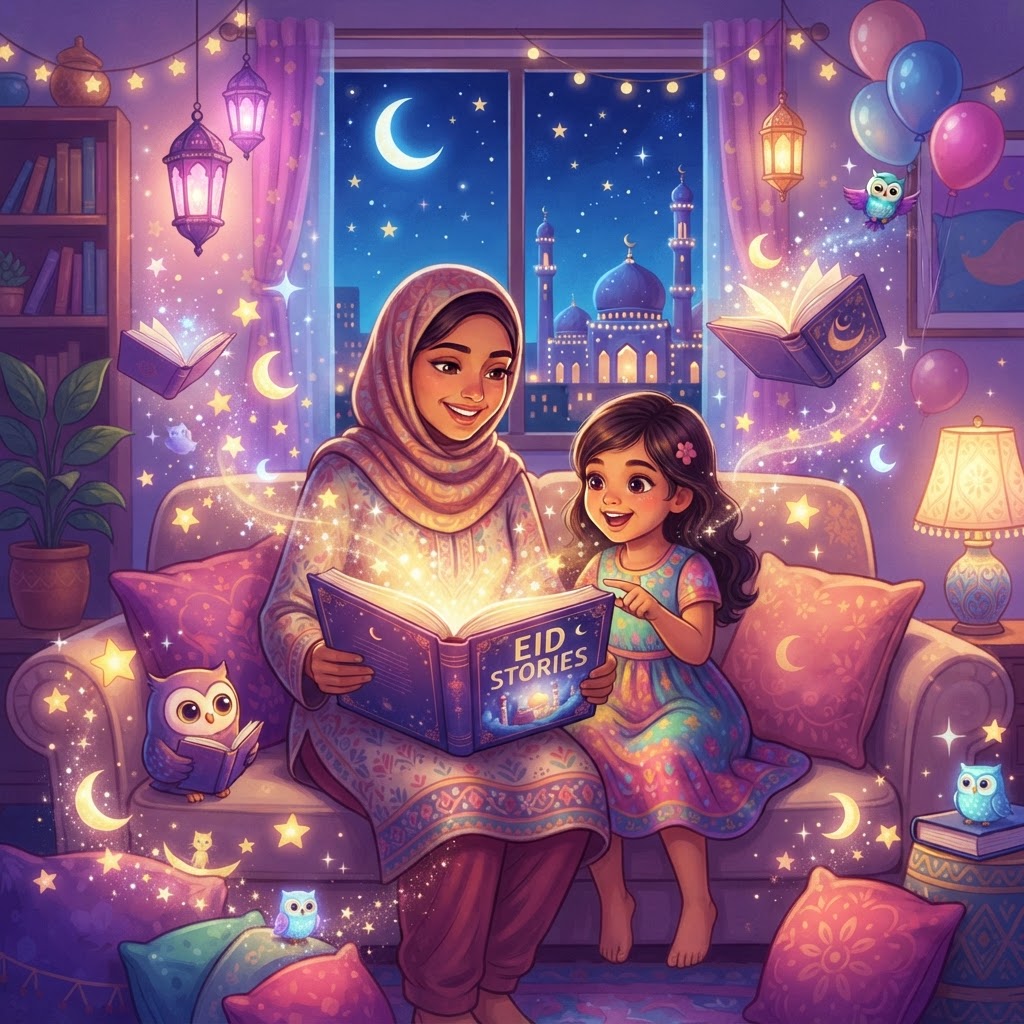
Eid is a beautiful time for family, gratitude, prayer, generosity, and joy. If you are looking for Eid stories for kids, the best ones do more than entertain: they help children understand the meaning of the holiday in a warm, age-appropriate way. Whether you want gentle Eid bedtime stories, playful kids Eid tales, or thoughtful Eid stories children can relate to, this guide will help you choose story themes that feel festive, comforting, and memorable.
What do Eid stories help children understand about the holiday?
Eid stories help children understand that Eid is a celebration of faith, thankfulness, kindness, and togetherness. For young children, the clearest explanation is that Eid is a special day when families pray, dress up, share food, give gifts, and care for others.
There are two main Eids in Islam:
- Eid al-Fitr comes at the end of Ramadan, a month of fasting, reflection, and kindness.
- Eid al-Adha honors trust in God, generosity, and sharing with others.
For children ages 1-10, keep the meaning simple. You might say: “Eid is a happy holiday when families thank God, spend time together, and share with people around them.” Stories make these ideas easier to feel and remember than a long explanation would.
That is why Eid stories for kids work so well. A child may not remember every detail about the holiday’s history, but they will remember the little girl who shared her sweets, the boy who saved a seat for Grandma, or the moon that seemed to smile on Eid morning.
Why are Eid bedtime stories so meaningful for young children?
Eid bedtime stories are meaningful because they combine emotional connection with learning. Children understand big ideas best through repetition, imagination, and shared routines like reading before bed.
Child development research supports this. The American Academy of Pediatrics recommends reading aloud regularly because it builds language, attention, and bonding. The Harvard Center on the Developing Child also highlights how back-and-forth conversation helps children build strong brain connections.
During Eid, stories can support children by helping them:
- understand family traditions
- name feelings like excitement, gratitude, or nervousness
- learn values like generosity and patience
- see themselves in holiday moments
A short bedtime tale about Eid can be especially comforting after a busy day of visitors, outfits, sweets, and celebration.
Which Eid story ideas work best for children?
The best Eid story ideas are simple, sensory, and centered on a child’s experience. Young readers connect most with stories about family, surprises, helping others, and feeling included.
Here are 7 festive Eid stories for kids you can use at home or in the classroom:
-
The Moon That Found Eid
A child keeps looking for the crescent moon and imagines it guiding families across the world toward celebration night. -
My First Eid Outfit
A shy child worries about wearing new clothes to Eid prayer, then learns that confidence grows when family cheers them on. -
The Lost Eidi Envelope
A funny mystery begins when a child misplaces their Eid gift money and discovers that honesty and teamwork matter more than the envelope itself. -
The Lantern of Kindness
A magical lantern glows brighter each time the main character does one kind deed during Eid. -
Grandma’s Sweet Kitchen
A child helps make festive treats and learns that recipes can carry family memories, love, and cultural identity. -
The Eid Picnic That Grew
One family brings food to the park, then shares it with neighbors and newcomers until the picnic becomes a joyful community feast. -
The Little Goat’s Big Thank-You
For an age-appropriate Eid al-Adha tale, focus on gratitude, caring, and sharing food with others rather than heavy detail.
These Eid stories children love often include familiar details: the smell of sweets, shiny shoes by the door, takbir in the background, cousins arriving, hugs after prayer, or a gift tucked into a small envelope.
If your family enjoys seasonal storytelling all year, you might also like these Hanukkah holiday stories or cozy Thanksgiving story ideas for more celebration-themed reading.
How can you create personalized Eid stories with InstaTales?
You can create better Eid stories by adding details that make the child feel seen. Personalized storytelling helps children engage more deeply because the story reflects their name, interests, feelings, and family traditions.
With InstaTales, you can create your own personalized bedtime story in just a few steps. Start with a simple prompt such as:
- child’s name and age
- whether the story is for Eid al-Fitr or Eid al-Adha
- favorite characters, animals, or themes
- tone: sleepy, funny, magical, or reflective
- family traditions to include, like prayer, sweets, gifts, or visiting grandparents
For example, you could write:
“Create a gentle Eid bedtime story for a 5-year-old named Sami who loves moons, kittens, and chocolate chip cookies. Include Eid prayer, family hugs, and a lesson about sharing.”
If you want a faster starting point, browse the built-in story templates. Once you make a story your child loves, save it in your story library so you can re-read it each Eid season.
Personalized Eid bedtime stories are also useful for siblings with different ages. You can create one version that is short and soothing for a toddler and another with a bigger plot for an older child. That kind of tailoring reflects what literacy experts at Reading Rockets often emphasize: children respond best when stories match their developmental stage and interests.
What does a gentle Eid bedtime story sound like?
A good Eid bedtime story sounds warm, sensory, and emotionally safe. It should feel festive without becoming overstimulating, especially if you are reading it right before sleep.
Here is a short sample excerpt:
On the night before Eid, Amina pressed her nose to the window and searched the sky.
“Do you think the moon can see our house?” she whispered.Mama smiled as she folded Amina’s new dress. “I think the moon sees every child waiting for Eid.”
Amina imagined the silver crescent floating quietly above rooftops, peeking into kitchens full of sweet cardamom smells and shining softly on shoes lined up by front doors. Somewhere, she thought, other children were brushing their hair, setting out tiny bracelets, and wondering if tomorrow would feel as magical as it sounded.
Before bed, Amina tucked one chocolate date into a little bowl by the table.
“What’s that for?” Baba asked.“For anyone who needs an extra sweet morning,” she said.
Baba kissed her forehead. “That,” he said, “is a very Eid kind of heart.”
And when Amina finally fell asleep, she dreamed the moon had bent low enough to wink at her.
This kind of excerpt works because it combines concrete details with a gentle emotional message. It is easy for children to picture, and it models generosity without sounding preachy.
How can families use kids Eid tales to build traditions?
Kids Eid tales can become part of your family tradition when you read them at the same meaningful moments each year. The story does not need to be long to become memorable.
Try using stories in these simple ways:
- read one on the last nights of Ramadan
- tell a short story after Eid prayer or before a meal
- let grandparents share a favorite Eid memory, then turn it into a tale
- invite children to draw the story’s moon, lantern, or feast scene
- make one personalized story each year and watch the collection grow
For many families, stories also open the door to broader conversations about identity, empathy, and belonging. A child who hears loving kids Eid tales begins to understand not only what happens on Eid, but why it matters.
Frequently Asked Questions
What age are Eid stories best for?
Eid stories can work for children from toddlers to age 10 when the language matches their stage. Younger children usually enjoy simple, repetitive bedtime tales, while older children can handle richer plots and more cultural detail.
What should an age-appropriate Eid story include?
An age-appropriate Eid story should include familiar experiences like family, food, prayer, gifts, gratitude, and kindness. For younger children, focus on warmth and celebration rather than complex history or heavy themes.
How long should Eid bedtime stories be?
For bedtime, shorter is often better. Aim for 3-5 minutes for toddlers and 5-10 minutes for children in early elementary years.
Can personalized Eid stories help reluctant readers?
Yes, personalized stories often help because children are more motivated when they see their own name, interests, and experiences in the story. That personal connection can make reading feel easier and more exciting.
Can teachers use Eid stories in the classroom?
Yes, if they are respectful, inclusive, and age-appropriate. Stories can help children learn about cultural traditions, empathy, and community in a way that feels accessible and engaging.
Ready to Create a Personalized Bedtime Story?
Use our free AI bedtime story generator to create a personalized illustrated story for your child in 30 seconds — no credit card needed.
Popular story types:
Maya Rodriguez
Lead Content Editor & Early Literacy Specialist
Maya is a former early childhood educator and literacy specialist with over a decade of experience helping children develop a love of reading. She leads content at InstaTales, where she writes about the science of storytelling, child development, and how families can use personalized AI stories to build literacy and emotional resilience.
instatales.ai