Mexico Folktales for Kids: Stories & Lessons
Discover the magic of Mexico through its folktales — traditional stories that teach, delight, and transport kids to another culture.
✦ Key Takeaways
- •Folktales from Mexico help children build cultural awareness, language, and empathy.
- •Children often connect best with Mexican folktales that feature animals, nature, family love, and clever problem-solving.
- •The best way to share Mexican folktales is to match the story’s tone and length to the child’s age.
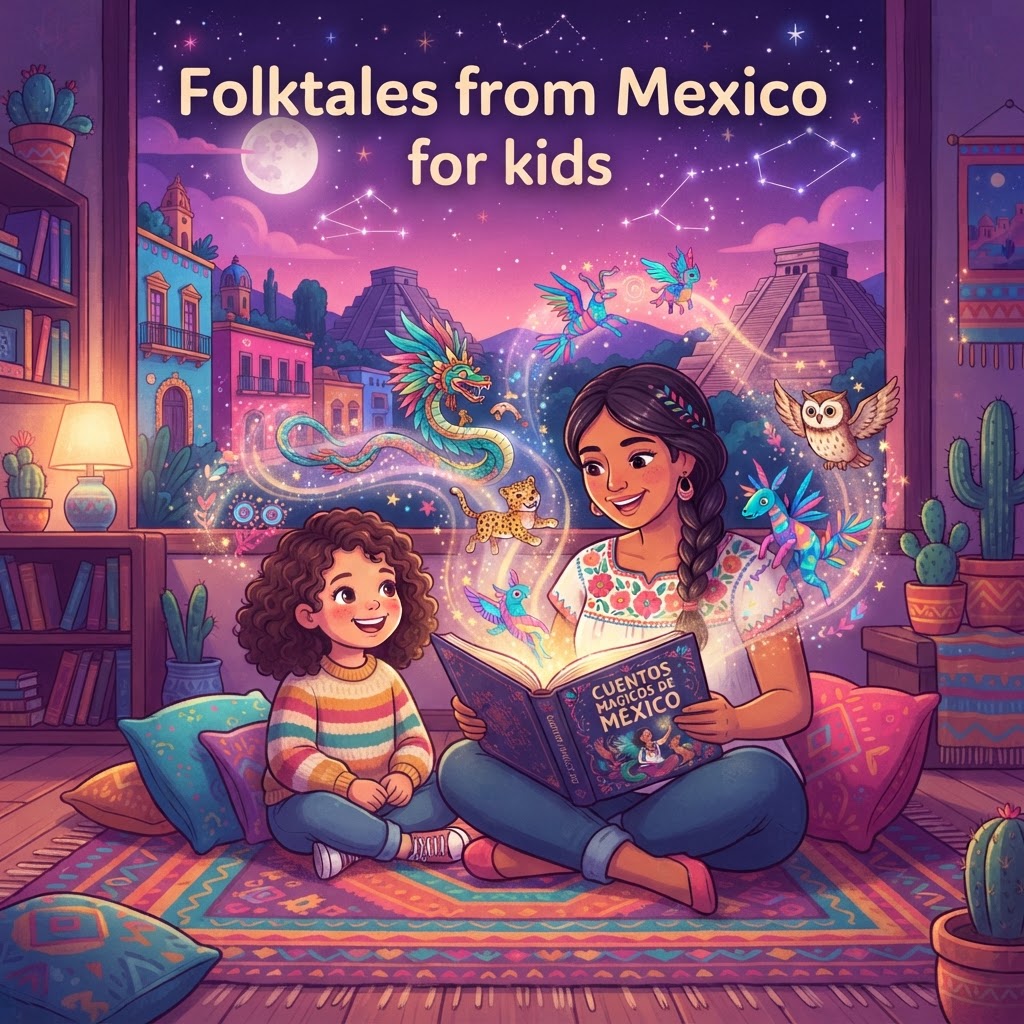
Mexican folktales give children more than a fun bedtime story. They open a window into family life, nature, history, and the values that shape communities across Mexico. For parents, teachers, and caregivers looking for Mexico folktales for kids, these traditional stories offer wonder, wisdom, and a gentle way to explore another culture together.
Mexico has many storytelling traditions, including Indigenous, Spanish, and regional influences. That means folktales from Mexico are not one single set of stories. They are a rich mix of animal tales, legends, origin stories, and family-centered traditions that help Mexico stories children hear feel memorable and meaningful.
Why are folktales from Mexico so valuable for children?
Folktales from Mexico help children build cultural awareness, language, and empathy. They also make big ideas easier to understand by turning them into characters, places, and simple choices.
Storytelling supports child development in powerful ways. Organizations such as the Harvard Center on the Developing Child emphasize that back-and-forth language experiences help build communication, memory, and emotional understanding. When an adult tells a folktale, pauses, and asks a child what they think will happen next, that child is doing important learning.
Mexican folktales are especially useful because they often combine:
- Strong moral lessons
- Rhythm and repetition
- Nature and animal imagery
- Family and community themes
- A sense of place, from mountains to villages to markets
For young listeners, that mix makes Mexico tales easy to enjoy and easy to remember.
Which folktale themes from Mexico do kids connect with most?
Children often connect best with Mexican folktales that feature animals, nature, family love, and clever problem-solving. These themes feel familiar to kids while introducing them to the culture and landscapes of Mexico.
Here are six traditional story themes that work well for children:
-
Trickster animal tales
In many Mexico folktales for kids, smaller animals outsmart bigger ones. A clever rabbit or quick-thinking bird may beat a stronger rival through wit, not force.
Lesson: Intelligence, patience, and creativity can solve problems.
How to share it: Let kids guess what the trickster should do next. -
Volcano and mountain legends
One well-known Mexican legend tells of Popocatépetl and Iztaccíhuatl, the volcanoes linked to love, loyalty, and bravery.
Lesson: Love, devotion, and courage matter.
How to share it: Show the mountains on a map and connect the story to real geography. -
Why-the-world-is-the-way-it-is stories
Many traditional tales explain the sun, moon, rain, animals, or crops in imaginative ways. These stories help children ask big questions about the world.
Lesson: Curiosity is good, and nature deserves respect.
How to share it: Follow the story with a nature walk or sky observation. -
Family remembrance stories
Some Mexican story traditions connect with memory, ancestors, and the idea that love continues through remembrance, especially around Día de los Muertos.
Lesson: Family bonds stay strong across time.
How to share it: Invite children to share a happy memory about a grandparent or loved one. -
Gentle warning legends
Mexico also has cautionary legends, such as soft, age-adjusted versions of La Llorona for older children. These should be told carefully and never too intensely for a child’s age.
Lesson: Actions have consequences, and feelings need care and guidance.
How to share it: Focus on safety, choices, and emotions rather than fear. -
Village and community helper tales
Some Mexico stories children enjoy most are about neighbors helping one another, sharing food, or solving a problem together.
Lesson: Community, kindness, and cooperation matter.
How to share it: Ask, “How could we help someone in our neighborhood today?”
One important note: many stories have different versions by region and family. That is normal in oral storytelling, and it is part of the beauty of folktales from Mexico.
How can parents share Mexican folktales in an age-appropriate way?
The best way to share Mexican folktales is to match the story’s tone and length to the child’s age. Keep it simple for young children, and add deeper discussion as kids grow.
Try these age-based approaches:
-
Ages 1-3:
Use very short retellings with animal sounds, repeated phrases, and simple emotions like happy, sad, or brave. -
Ages 4-6:
Add a clear beginning, middle, and end. Introduce a few Spanish words like abuela, conejo, or volcán if they fit naturally. -
Ages 7-10:
Talk about the moral, compare two versions of the story, or ask what the child would have done differently.
A few practical tips help a lot:
- Keep scary legends gentle or skip them for sensitive children.
- Use a map, photo, or piece of folk art to ground the story in real culture.
- Ask open questions like, “Why do you think the character made that choice?”
- Repeat favorite lines so children can join in.
Early childhood groups such as NAEYC and pediatric experts at the American Academy of Pediatrics have long highlighted the value of shared language experiences. Storytelling works best when it is interactive, warm, and calm.
How can you use InstaTales to create stories inspired by Mexico folklore?
InstaTales can help you create original bedtime stories inspired by Mexican folklore themes while keeping the content age-appropriate and personal. The key is to draw from the values, settings, and story patterns of folklore rather than copying sacred or culturally specific stories word for word.
You can create your own personalized bedtime story using details your child already loves, such as:
- a favorite animal
- a child’s name
- a hometown or travel dream
- a bedtime tone like gentle, magical, or adventurous
Try prompts like these:
- “Write a gentle bedtime story about a clever rabbit in Mexico who solves a problem by sharing.”
- “Create a folktale-inspired story set near two volcanoes, with themes of bravery and kindness.”
- “Tell a Mexico tale for a 5-year-old about family memory, marigolds, and love.”
- “Write a non-scary village story from Mexico for kids about neighbors helping one another.”
For faster inspiration, start with ready-made story templates and then add cultural details like markets, mountains, mariachi music, woven blankets, or desert animals in a respectful way. After you make a story, save it in your story library so your child can revisit favorite characters and themes.
If you teach cultural units or reading lessons, InstaTales for teachers can also support classroom storytelling, writing prompts, and compare-and-contrast activities.
Where can families learn more about authentic Mexican folklore and culture?
Families can learn more by using trusted museum, library, and education sources that show Mexico’s cultural diversity. This matters because Mexican folklore includes Indigenous, regional, and community traditions, not just a few famous legends.
Good places to explore include:
- The Library of Congress, which offers cultural collections and primary sources
- The Smithsonian Latino Center, which shares history, art, and cultural context
- The National Museum of the American Indian, which helps families understand Indigenous storytelling traditions across the Americas
You can also broaden your child’s world-story journey by reading our guides to folktales from India and folktales from Japan. Comparing stories from different places helps children notice universal themes like kindness, bravery, cleverness, and belonging.
The goal is not to turn bedtime into a history lesson. It is to give children a joyful, respectful way to meet another culture through story.
What should adults remember when choosing folktales from Mexico for kids?
Choose stories with care, context, and respect. The best Mexico tales for children are the ones that preserve wonder while matching a child’s age, sensitivity, and attention span.
A thoughtful approach looks like this:
- Pick themes before picking famous legends
- Share real cultural context in simple words
- Avoid turning sacred or complex traditions into stereotypes
- Let children ask questions and make connections to their own lives
When adults do this well, folktales from Mexico become more than entertainment. They become tools for empathy, curiosity, and family connection.
Frequently Asked Questions
What are the best Mexico folktales for kids?
The best choices are usually animal trickster tales, volcano legends, family remembrance stories, and gentle nature myths. These themes are vivid, meaningful, and easy to adapt for different ages.
Are Mexican folktales too scary for young children?
Some are, but many are not. Choose light animal tales and community stories for younger kids, and save warning legends for older children with softer retellings.
What lessons do folktales from Mexico teach?
They often teach cleverness, kindness, courage, respect for nature, and the importance of family and community. Many also help children think about consequences and problem-solving.
How can I make a respectful AI story inspired by Mexico folklore?
Use themes, settings, and values rather than copying a sacred or traditional story exactly. Focus on age-appropriate details, cultural respect, and a clear moral lesson.
Can teachers use Mexico stories in the classroom?
Yes. Mexican folktales work well for geography, culture, reading comprehension, and discussion about morals and character choices. They are especially useful in compare-and-contrast lessons with stories from other cultures.
Ready to Create a Personalized Bedtime Story?
Use our free AI bedtime story generator to create a personalized illustrated story for your child in 30 seconds — no credit card needed.
Popular story types:
Maya Rodriguez
Lead Content Editor & Early Literacy Specialist
Maya is a former early childhood educator and literacy specialist with over a decade of experience helping children develop a love of reading. She leads content at InstaTales, where she writes about the science of storytelling, child development, and how families can use personalized AI stories to build literacy and emotional resilience.
instatales.ai