A Calm Bedtime Story Routine for Preschoolers
Want to create a bedtime story routine for your preschooler? Here's a step-by-step guide to making story time a calming nightly ritual.
✦ Key Takeaways
- •Yes, a bedtime story routine helps preschoolers sleep better because it gives the brain a clear signal that the day is ending.
- •An ideal preschooler bedtime routine is short, calm, and predictable.
- •Preschool story time works best near the end of the bedtime routine, after active tasks are done and just before lights out.
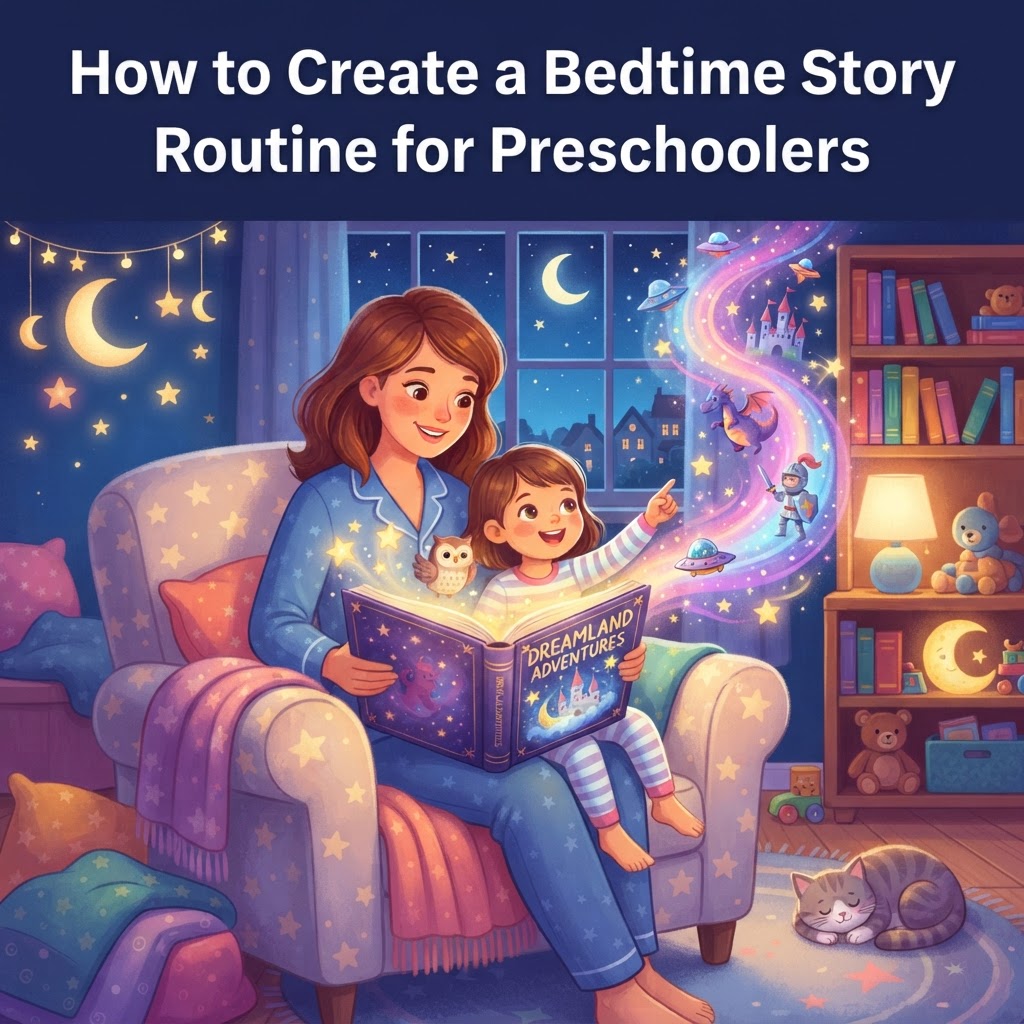
If bedtime feels like the hardest part of the day, you are not alone. Many parents of 3- to 5-year-olds want a calmer evening but get stuck in a cycle of stalling, extra requests, and overtired energy.
The good news is that a bedtime story routine for preschoolers does not need to be elaborate to work. A simple, predictable sequence with preschool story time built in can help your child feel safe, connected, and ready for sleep. If you are looking for a practical preschooler bedtime routine, here is a step-by-step guide grounded in child development and preschool sleep research.
Why does a bedtime story routine help preschoolers sleep better?
Yes, a bedtime story routine helps preschoolers sleep better because it gives the brain a clear signal that the day is ending. Predictable routines reduce stress, support emotional regulation, and make bedtime feel familiar instead of rushed.
Preschoolers thrive on repetition. When the same steps happen in the same order each night, children know what to expect. That matters because transitions are hard for young children, especially after a stimulating day.
Sleep experts also emphasize consistency. The American Academy of Sleep Medicine recommends 10 to 13 hours of sleep per 24 hours for children ages 3 to 5, including naps. The CDC shares similar guidance and notes that regular sleep routines support healthy growth, learning, and behavior.
A calming bedtime routine with stories can help by:
- lowering evening stress
- replacing active play with quiet connection
- building language and listening skills
- giving children a sense of control through familiar choices
- making separation at lights-out feel gentler
Reading together also supports development beyond sleep. The American Academy of Pediatrics has long encouraged shared reading because it supports vocabulary, attention, and parent-child bonding.
What does an ideal preschooler bedtime routine look like?
An ideal preschooler bedtime routine is short, calm, and predictable. For most preschoolers, 30 to 45 minutes is enough, with story time near the end.
The goal is not to pack in more activities. The goal is to follow the same basic order each night so your child’s body and brain begin to expect sleep.
A simple routine might look like this:
- 30-45 minutes before bed: turn off loud play and screens
- bath or quick wash-up
- pajamas and toilet
- brush teeth
- two short books or one longer story
- cuddle, goodnight phrase, lights out
If your child is very young or very tired, make it even simpler. A strong routine does not need a bath every night. It just needs a few repeatable steps your child can count on.
A helpful rule is to move from most active to least active. Brushing teeth may feel busy, but story time should be one of the final calm steps. After the story, try to avoid restarting the routine with snacks, toys, or negotiation.
What makes a routine work?
The best bedtime routine is one you can actually repeat. Keep these features in mind:
- same order
- similar bedtime each night
- few choices, not endless choices
- low light and low noise
- a clear ending
If you also have a younger child, it can help to compare what works by age. Our guide to bedtime routines for younger children can help if you are managing toddlers and preschoolers together.
When should preschool story time happen?
Preschool story time works best near the end of the bedtime routine, after active tasks are done and just before lights out. For most children, 10 to 20 minutes of reading is the sweet spot.
If stories happen too early, the calming effect may wear off before bedtime. If they happen after a lot of stalling, the story can become another delay tactic instead of a soothing ritual.
A good rhythm is:
- finish physical tasks first
- dim lights
- get into bed or a reading spot
- read one or two stories
- end with the same closing phrase every night
You can also match timing to your child’s sleep cues. If your preschooler gets silly, loud, or tearful in the evening, they may be overtired. In that case, start the routine 15 to 20 minutes earlier rather than stretching it longer.
For most preschoolers, bedtime story routines work best when they begin at roughly the same time each evening, even on weekends. A difference of more than an hour can make Monday bedtime much harder.
How do you choose the right books for preschool story time?
The best books for preschool bedtime are short, soothing, and easy to follow. Choose stories that help your child settle, not stories that rev them up.
Many preschoolers love funny books, adventure stories, and exciting plots during the day. At bedtime, however, gentler books usually work better. Look for:
- predictable structure and repetition
- simple plots with a clear beginning, middle, and end
- warm emotional tone
- rhythm or rhyme that slows the pace
- length your child can finish without restlessness
- topics your child connects with, like animals, family, friendship, or everyday routines
It is also fine to read the same book again and again. Repetition helps preschoolers process language and feel secure. If your child asks for the same story nightly, that is often a sign the routine is working.
You can also rotate in stories that gently support social-emotional learning. Themes like self-control in stories or inclusion during story time can be especially meaningful for preschool-aged children.
If you want more variety without overstimulating your child, you can create your own personalized bedtime story with familiar names, calming settings, and simple plots. Saving a few reliable favorites in your story library can make busy evenings much easier.
What if your preschooler resists bedtime stories or gets too excited?
If your preschooler resists bedtime stories, the answer is usually to simplify the routine and hold a calm, clear boundary. If they get too excited during stories, switch to shorter, quieter books and reduce choices.
Here are common bedtime problems and what to try:
What if my child asks for endless books?
Set a visible limit before you start. Say, “Tonight we are reading two books,” and let your child choose between two options.
What if story time turns silly?
Choose books with a slower rhythm and fewer jokes at bedtime. You can also read in a softer voice, dim the light more, and have your child lie down while listening.
What if my child will not sit still?
Preschoolers do not need to sit perfectly to benefit from reading. They can cuddle a stuffed animal, hold a blanket, or listen while lying beside you.
What if my child delays with questions or requests?
Preschoolers often use extra questions to stay connected. Build in a brief “talk time” after the story, then use the same closing phrase every night: “Story is finished, cuddle is finished, now it is sleep time.”
What if my child is scared at bedtime?
Use stories that feel reassuring and predictable. Avoid intense conflict, and keep the post-story routine steady with a night-light, comfort object, and brief goodnight ritual.
How can you keep a bedtime story routine consistent in real life?
Consistency matters more than perfection. Even a shortened routine works well if the same core steps happen in the same order.
On hectic nights, keep a “minimum bedtime routine” ready:
- toilet
- teeth
- one short story
- cuddle
- lights out
This helps your child learn that story time is part of bedtime, not something that disappears whenever life gets busy. The routine can be shorter, but it should still feel familiar.
It also helps to prepare ahead:
- keep bedtime books in one spot
- rotate only a few calming choices
- start the routine before your child is overtired
- make both caregivers use the same basic sequence
- use travel-friendly favorites when away from home
If your child enjoys personalized reading, having a few saved options ready can prevent last-minute scrambling. The easiest routines are the ones with less decision-making built into them.
Frequently Asked Questions
How long should bedtime story time be for a preschooler?
For most preschoolers, 10 to 20 minutes is enough. One or two short books usually works better than a long session that leads to overtiredness or stalling.
What time should a preschooler go to bed?
There is no perfect clock time for every child, but preschoolers usually need enough nighttime sleep to meet the recommended 10 to 13 hours in a full day, including naps. Choose a bedtime that allows your child to wake rested and keep it as consistent as possible.
Is it okay to read the same bedtime book every night?
Yes, absolutely. Repetition is comforting for preschoolers and supports language learning, memory, and confidence with story structure.
What if my child says they are not tired at story time?
That often means your child is overstimulated, not truly wide awake. Start the bedtime routine a little earlier, lower the lights, and keep story time calm and predictable.
Are personalized or AI bedtime stories okay for preschoolers?
Yes, if an adult chooses age-appropriate, gentle content and keeps the experience calm. Short, reassuring stories with simple plots work best at bedtime, especially when they are read aloud as part of a consistent routine.
Ready to Create a Personalized Bedtime Story?
Use our free AI bedtime story generator to create a personalized illustrated story for your child in 30 seconds — no credit card needed.
Popular story types:
Maya Rodriguez
Lead Content Editor & Early Literacy Specialist
Maya is a former early childhood educator and literacy specialist with over a decade of experience helping children develop a love of reading. She leads content at InstaTales, where she writes about the science of storytelling, child development, and how families can use personalized AI stories to build literacy and emotional resilience.
instatales.ai