Calming Bedtime Story Tips for an Anxious Child
If your child struggles with bedtime anxiety, a calming story can help. Here's how to create the perfect soothing story for your anxious child.
✦ Key Takeaways
- •A calming story can help because it gives an anxious child three things the nervous system loves: predictability, connection, and safety cues.
- •The most effective soothing stories for kids share a few clear traits: they move slowly, sound safe, and end in a predictable way.
- •A calming bedtime story works best when it follows a simple emotional arc: safety, small worry, comfort, resolution, sleep.
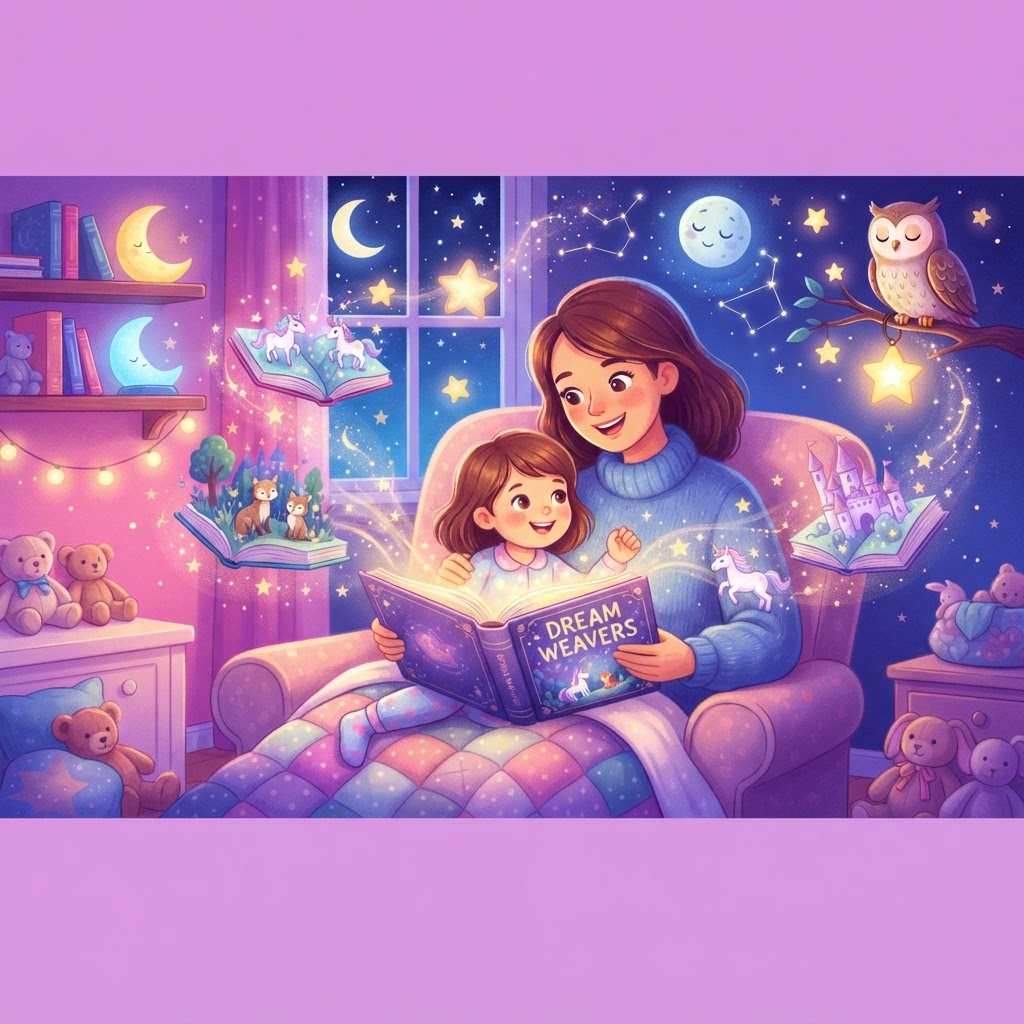
If your child gets tense, clingy, or full of worries at night, the right story can do more than entertain. A calming bedtime story can slow the body, soften busy thoughts, and make bedtime feel safe again. For many families, stories work best as part of a predictable evening routine—not as a cure for anxiety, but as a gentle, practical support.
Why can a calming bedtime story help an anxious child?
A calming story can help because it gives an anxious child three things the nervous system loves: predictability, connection, and safety cues. When a parent reads in a steady voice and the story follows a gentle pattern, children often shift from alertness into rest.
This matters because anxiety at bedtime is common. The National Institute of Mental Health notes that anxiety disorders are among the most common mental health conditions in children, and worries often show up during transitions like separation and sleep. Bedtime can feel especially big because the day is ending, the room is quiet, and children have less distraction from their thoughts.
Research also supports the value of calming routines. A review published in Sleep Medicine Reviews found that consistent bedtime routines are linked with better sleep outcomes in young children. A soothing story is one simple way to add calm structure to an anxious child bedtime routine.
That said, a story is not a replacement for professional support if your child’s anxiety is intense, persistent, or affecting daily life. Think of stories as one helpful tool in a bigger comfort plan.
What elements make a bedtime story actually soothing?
The most effective soothing stories for kids share a few clear traits: they move slowly, sound safe, and end in a predictable way. If a story feels exciting, surprising, or emotionally intense, it may be a great daytime story but not a bedtime one.
Here are the core elements to include:
- Slow pace: Keep the plot simple. One small goal is enough, like finding a cozy place to rest or saying goodnight to forest friends.
- Sensory details: Use soft, concrete images children can feel in their bodies: warm blankets, quiet rain, moonlight, slow breathing, a gentle breeze.
- Predictable structure: Start safe, introduce a small worry, offer comfort, and end with rest. Children relax when they can sense where a story is going.
- Gentle imagery: Think floating clouds, sleepy animals, glowing stars, or a calm walk home. Avoid chase scenes, loud sounds, or sharp emotional turns.
- Repetition: Reassuring phrases like “You are safe,” “Everyone is getting sleepy,” or “The night knows how to be quiet” can be deeply regulating.
- Low stakes: The problem should be mild and manageable, not dramatic. A lost acorn is better than a dangerous storm.
It also helps to avoid common bedtime triggers:
- Villains or “bad guys”
- Characters getting lost from parents for long periods
- Races, countdowns, or urgency
- Overly silly humor that ramps energy up
- Lessons that feel preachy or heavy
If you want to extend the calm beyond the page, pair the story with the same reading voice each night. Our guide on reading aloud with calm pacing can help with that.
How should you build a calming bedtime story from beginning to end?
A calming bedtime story works best when it follows a simple emotional arc: safety, small worry, comfort, resolution, sleep. This structure helps children experience concern without getting stuck in it.
A reliable story flow looks like this:
Start with safety
Open in a secure setting: a cozy den, a moonlit bedroom, a quiet garden, or a sleepy boat on a still lake. In the first lines, signal that the world is calm.
Add one small worry
Introduce a gentle challenge, such as “Bunny worries the night sounds are too new” or “Leo wonders if the stars can still see him.” Keep the feeling real but the stakes low.
Offer co-regulation
Bring in a calming helper, like a parent, grandparent, animal friend, or even the moon. The helper does not “fix” everything dramatically. Instead, they slow things down with breathing, naming sensations, or a simple routine.
Resolve with competence and comfort
Let the child character do one small brave thing: take three slow breaths, tuck in a toy, listen to the wind, or whisper goodnight. That builds confidence without pressure.
End with an unmistakable rest cue
Close with drowsy language: eyes growing heavy, blankets feeling warm, stars glowing quietly, everyone settling into sleep. End the story where the body should go next.
For many children, shorter is better. If you want to build bedtime storytelling into a regular ritual, a family storytelling habit can make the whole evening feel steadier.
How can you prompt InstaTales to create soothing stories for kids?
The best AI prompts are specific. If you want InstaTales to generate a calming bedtime story, tell it exactly what emotional tone, structure, and sensory style you want.
When you create your own personalized bedtime story, include these details in your prompt:
- Your child’s age
- Their name or favorite character type
- The bedtime worry to soften, such as fear of darkness, separation, or busy thoughts
- A calm setting, like a forest, ocean, bedroom, or sky
- The pace, such as slow, gentle, and low-action
- The story structure, like “safe beginning, small worry, comforting helper, sleepy ending”
- Specific sensory details, such as soft blankets, warm light, quiet rain
- A few reassuring repeated phrases
- What to avoid, like villains, loud surprises, or getting lost
- The ideal length, such as 5 minutes or 600 words
A useful prompt formula is:
Write a slow, soothing bedtime story for a 5-year-old named Maya who feels nervous at bedtime. Use gentle sensory details, a predictable structure, and a calming helper. Include three repeated reassuring phrases. Avoid any scary scenes, villains, or loud surprises. End with Maya feeling safe, sleepy, and ready to rest.
If you want a faster start, use the ready-made story templates. And when you find a story that really works, save it in your story library so you can re-read the same calming favorite during harder nights.
What are 5 calming story templates you can use tonight?
These five templates are designed for soothing stories for kids and work especially well during an anxious child bedtime routine. Each one gives you a simple emotional path and an easy AI prompt.
1. The sleepy forest walk
A child and a gentle animal guide walk through a quiet forest, noticing sleepy sounds and glowing lights. Nothing dramatic happens; the journey itself is the calming experience.
Prompt: Write a slow bedtime story about a child taking a moonlit forest walk with a kind fox. Include soft moss, quiet crickets, and repeated phrases about being safe and sleepy.
2. The worry boat on the quiet lake
A child places worries into tiny paper boats and watches them float across a still lake. This is especially helpful for kids with racing thoughts.
Prompt: Create a calming bedtime story where a child names small worries and places them on paper boats in a quiet lake. The story should feel peaceful, predictable, and end with the water becoming still.
3. The goodnight animal check-in
A child visits sleepy animals one by one—bear, bunny, owl, deer—and each animal models one calming skill. Repetition makes this template very regulating.
Prompt: Write a gentle bedtime story where a child says goodnight to four sleepy animals. Each animal teaches one calm step, like breathing slowly or relaxing shoulders.
4. The cloud-breathing journey
A child lies on a soft cloud and floats slowly through the night sky, matching breaths to drifting motion. This works well for children who need help tuning into their bodies.
Prompt: Tell a soothing bedtime story about a child floating on a soft cloud and taking slow breaths with the stars. Use very gentle imagery and no excitement or danger.
5. The cozy home settling story
A house, room, or village gets ready for sleep step by step: lights dim, tea cools, toys rest, curtains close, and everyone settles. This mirrors the child’s real bedtime routine.
Prompt: Write a bedtime story where every part of a cozy home gets ready for sleep in a calm sequence. Include warm light, soft blankets, and a very sleepy ending.
If your child likes participating, invite them to choose the setting or helper character. That small choice can increase emotional buy-in, much like guided story-making does in helping kids create their own stories.
How can you make sure the story stays supportive and not overstimulating?
A calming story should lower energy, not raise it. The easiest test is to watch your child’s body while you read: breathing should slow, muscles should soften, and interruptions should decrease.
If your child seems more alert, try these adjustments:
- Shorten the story
- Remove the problem entirely for a few nights
- Use more repetition and fewer plot details
- Lower your reading volume and speed
- Switch to familiar stories instead of new ones
- Re-read the same successful story from your story library
The American Academy of Pediatrics emphasizes the value of consistent sleep habits, and organizations like Child Mind Institute note that anxious children often do best with clear, supportive routines. In practice, that means your best bedtime story may be the one that feels almost boring to an adult—but wonderfully predictable to a child.
Frequently Asked Questions
How long should a calming bedtime story be?
For most children, shorter works better at night. Aim for 3-5 minutes for toddlers, 5-8 minutes for preschoolers, and 8-10 minutes for older kids who can stay calm with longer stories.
Should I include my child’s real worry in the story?
Yes, but soften it. Name the feeling gently without replaying the full fear, and always move quickly toward comfort, safety, and resolution.
Is it okay to read the same bedtime story every night?
Absolutely. Repetition is often calming for anxious children because it makes the emotional path familiar and predictable.
Can AI stories replace reading together?
No. The strongest calming effect usually comes from the mix of a helpful story and a trusted adult’s voice, presence, and rhythm.
When should I seek extra help for bedtime anxiety?
If bedtime fears are intense, last for weeks, disrupt sleep regularly, or spill into school, play, or daytime functioning, talk with your pediatrician or a child mental health professional. Stories help, but persistent anxiety deserves fuller support.
Ready to Create a Personalized Bedtime Story?
Use our free AI bedtime story generator to create a personalized illustrated story for your child in 30 seconds — no credit card needed.
Popular story types:
Maya Rodriguez
Lead Content Editor & Early Literacy Specialist
Maya is a former early childhood educator and literacy specialist with over a decade of experience helping children develop a love of reading. She leads content at InstaTales, where she writes about the science of storytelling, child development, and how families can use personalized AI stories to build literacy and emotional resilience.
instatales.ai