Doctor Visit Stories for Kids That Ease Anxiety
Doctor visits can be scary for kids. Stories can help them feel prepared and brave. Here's how to use stories to ease doctor anxiety.
✦ Key Takeaways
- •Stories help because they make the unknown feel predictable.
- •The best way to use stories is to read them calmly, early, and more than once.
- •A helpful story should be honest, simple, and specific.
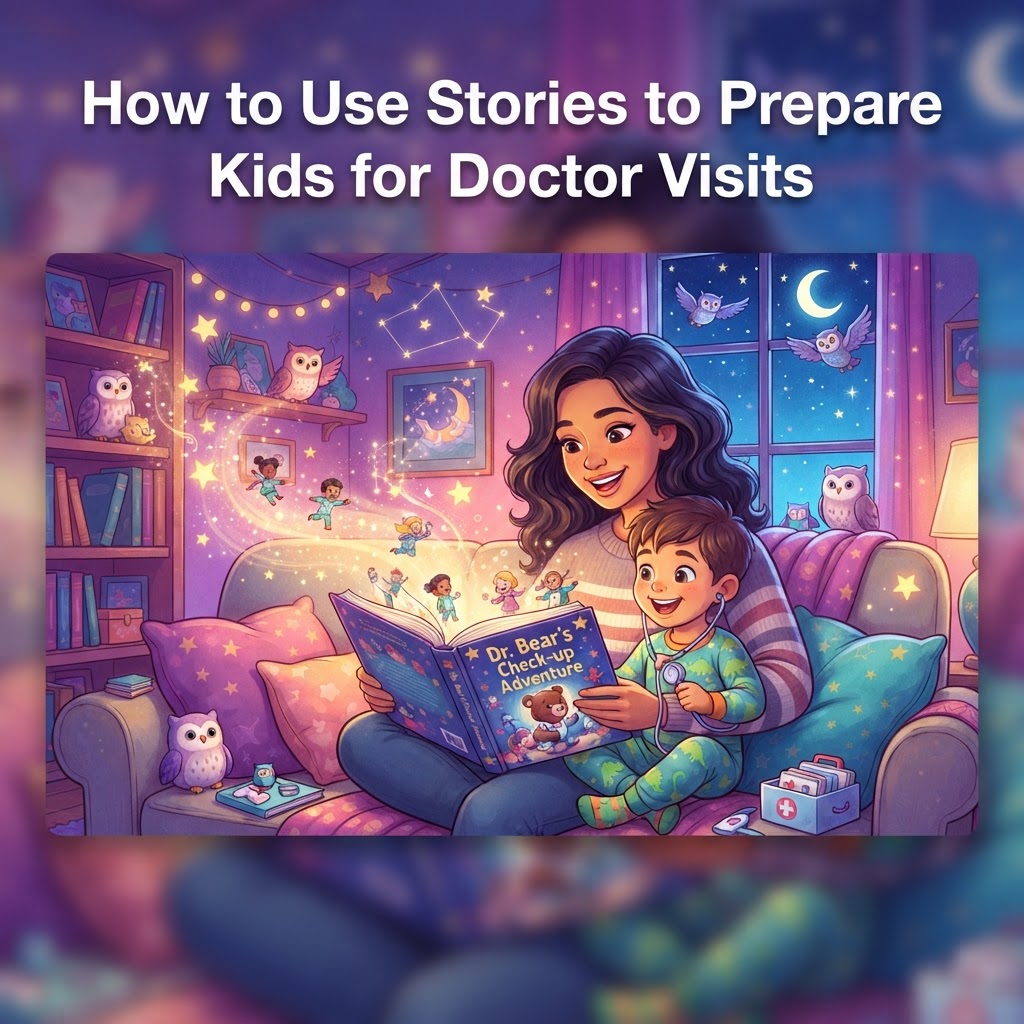
A doctor appointment can feel huge to a young child. New rooms, unfamiliar tools, waiting, questions, and the possibility of a shot can all trigger worry.
That is why doctor visit stories for kids can be so effective. A well-told story gives children a mental rehearsal: who they will meet, what might happen, what they can do if they feel scared, and how they can get through the visit safely. For many families, stories turn a stressful unknown into a manageable plan.
Why do stories help when children feel nervous about the doctor?
Stories help because they make the unknown feel predictable. When children can picture what will happen, they often feel more in control and less overwhelmed.
This matters because anxiety grows in uncertainty. Research in pediatric care has long shown that age-appropriate preparation can lower distress before medical visits and procedures. Organizations like the American Academy of Pediatrics and Nemours KidsHealth encourage parents to prepare children honestly and simply, rather than springing the experience on them.
Stories work especially well because they:
- Name the experience in child-friendly language
- Model brave behavior through a relatable character
- Normalize feelings like worry, curiosity, or embarrassment
- Teach coping skills such as deep breathing, asking questions, or holding a parent’s hand
- Use repetition, which helps young children process new events
This is especially helpful for children ages 2-10, who often learn best through play, repetition, and imagination. If your child already responds well to books about emotions, our guide to stories about feelings can help you build on that skill before a checkup.
How can you read doctor visit stories for kids in a way that lowers anxiety?
The best way to use stories is to read them calmly, early, and more than once. A single rushed story the night before may help a little, but repeated, low-pressure exposure is usually more effective.
Try reading a medical story for children several days before the appointment. Then revisit it once or twice, especially if your child asks new questions. This gives them time to absorb the information without feeling pushed.
A few practical tips:
- Choose a quiet time. Bedtime, after lunch, or another calm part of the day works well.
- Pause for questions. Let your child interrupt. Curiosity is a good sign.
- Name feelings directly. Say, “It sounds like the character feels nervous. Have you ever felt like that?”
- Practice coping skills during the story. Take a deep breath together or practice keeping an arm still.
- Keep your tone steady. Matter-of-fact language is more reassuring than “Don’t worry, it won’t be bad.”
It also helps to pair the story with a comforting routine. A familiar blanket, stuffed animal, or a cozy story time space can make the reading feel safe and predictable.
What should a good doctor visit story include?
A helpful story should be honest, simple, and specific. Children do better when a story tells the truth in a manageable way instead of making big promises like “nothing scary will happen.”
The most useful medical stories children can hear usually include five elements:
A clear sequence
Children feel calmer when they know the order of events. For example:
- We drive to the clinic
- We check in
- We sit in the waiting room
- A nurse calls our name
- The doctor listens, looks, or checks
- Then we go home
Realistic details
Mention what your child may see, hear, or feel:
- A scale
- A blood pressure cuff that squeezes
- A stethoscope that feels cool
- Bright lights
- A quick shot or finger prick, if that is likely
If a shot may happen, say so. Research and clinical guidance suggest that honest preparation builds trust better than surprise.
Emotional permission
Children need to know that fear is allowed. Good stories say things like:
- “Max felt wiggly and unsure.”
- “Lina did not love the shot, but she got through it.”
- “Dad stayed nearby and helped her breathe.”
Coping tools
Show the child what they can do:
- Hold a grown-up’s hand
- Sit on a parent’s lap
- Count to five
- Blow “birthday candle” breaths
- Ask, “What happens next?”
- Choose a sticker afterward
A steady ending
The ending should reassure without overpromising. Think: “The visit was not her favorite part of the day, but she was proud of herself,” rather than “It was so fun!”
If your child likes stories that connect everyday bravery with other life skills, you can also explore related themes on the InstaTales blog, including friendship, feelings, and new experiences.
What are 5 story prompts you can use before an appointment?
The best story prompts are specific to the visit and the child’s biggest worry. A strong prompt turns a vague fear into a familiar script your child can practice.
Here are five prompts you can use right away:
1. The brave checkup story
“Write a gentle bedtime story about a child named [Name] going for a routine checkup. Include the waiting room, a nurse, the doctor listening to their heartbeat, and [Name] feeling nervous at first but using deep breaths and a parent’s hand to feel brave.”
2. The first shot story
“Create a short story for a 4-year-old about [Name] getting a vaccine. Explain that the pinch is quick, that it is okay to cry, and that [Name] feels proud afterward.”
3. The worried but curious child story
“Tell a story about [Name], who has lots of questions before the doctor visit. Show the doctor answering kindly and explaining each tool before using it.”
4. The sensory-sensitive visit story
“Write a calm, predictable story about [Name] visiting the doctor with bright lights, new sounds, and waiting time. Include a comfort item, simple step-by-step explanations, and a quiet reward at the end.”
5. The helper role story
“Create a story where [Name] is the helper during the doctor visit. They practice sitting still, telling how their body feels, and choosing a sticker after the exam.”
You can save successful versions in your story library so your child can revisit the same reassuring story before future appointments.
How can you create a personalized story about your child’s upcoming visit?
Personalized stories work best when they mirror your child’s real experience. The closer the story matches the actual appointment, the more useful it becomes as preparation.
Start with a few details:
- Your child’s name and age
- The reason for the visit
- What your child is most worried about
- Who will go with them
- What is likely to happen during the appointment
- A coping strategy that already works for your child
Then shape the story around three simple parts:
Before the visit
Show what the child is thinking and how the family prepares. For example: packing a comfort toy, talking about the plan, or practicing “smell the flower, blow the candle” breathing.
During the visit
Describe each step simply and in order. Keep the language concrete. Younger children often benefit from short sentences and repeated phrases like, “First… then… next…”
After the visit
End with recovery, pride, and connection. Maybe your child gets a sticker, picks the music in the car, or tells someone, “I did it.”
If you want a fast starting point, try using ready-made story templates or create your own personalized bedtime story based on your child’s exact appointment. Personalized storytelling is especially helpful for repeat visits, specialist appointments, or children who need extra time to process change.
One more tip: re-read the story after the appointment too. That helps children reflect, build confidence, and create a positive memory for next time. As children grow, you can also adapt these stories into longer narratives, much like the shift described in this guide to moving toward chapter books.
When should you seek extra support for severe doctor anxiety?
Some anxiety is normal, but intense fear may need more support. If a child panics for days, cannot enter the clinic, becomes highly distressed during routine care, or has had a traumatic medical experience, stories may need to be combined with other strategies.
Consider asking your pediatrician about:
- A child life specialist
- Step-by-step desensitization visits
- Sensory accommodations
- Parent coaching
- Mental health support for strong anxiety
The National Institute of Mental Health notes that persistent anxiety can affect daily functioning, and it is worth discussing with a professional when it becomes disruptive. You can also use CDC developmental guidance to think about what kinds of explanations fit your child’s age and stage.
Stories are powerful, but they are not a magic trick. Their real value is that they help children feel seen, informed, and capable.
Frequently Asked Questions
At what age do doctor visit stories for kids start to help?
Even toddlers can benefit from simple, repetitive stories with familiar routines and pictures. For older children, you can add more detail, emotional language, and practical coping strategies.
Should I tell my child about a shot before the appointment?
Yes, if a shot is likely, it is usually better to say so in simple, calm language. Honest preparation builds trust and helps children practice coping before the moment arrives.
What if my child asks whether the doctor visit will hurt?
Answer truthfully and briefly. You can say, “Some parts may feel uncomfortable or like a quick pinch, but I will stay with you and help you through it.”
How many times should we read a medical story for children?
Most children benefit from reading it several times over a few days. Repetition helps them process the sequence, remember coping tools, and feel more confident.
Can personalized stories help highly sensitive or neurodivergent children?
Yes, personalized stories can be especially helpful because they make the visit more predictable and concrete. Keep the language literal, include sensory details, and talk with your care team if your child needs additional supports.
Ready to Create a Personalized Bedtime Story?
Use our free AI bedtime story generator to create a personalized illustrated story for your child in 30 seconds — no credit card needed.
Popular story types:
Maya Rodriguez
Lead Content Editor & Early Literacy Specialist
Maya is a former early childhood educator and literacy specialist with over a decade of experience helping children develop a love of reading. She leads content at InstaTales, where she writes about the science of storytelling, child development, and how families can use personalized AI stories to build literacy and emotional resilience.
instatales.ai