Mermaids Stories for Kids: Magical Bedtime Ideas
Exciting mermaids stories for kids — adventures, lessons, and imagination with your child's favorite characters.
✦ Key Takeaways
- •Children love mermaid stories because they combine fantasy with feelings kids already understand, like curiosity, friendship, bravery, and belonging.
- •The best mermaids bedtime stories feel gentle, safe, and emotionally satisfying.
- •The best mermaids tales children remember usually mix fun with a simple emotional lesson.
META DESCRIPTION: Exciting mermaids stories for kids — adventures, lessons, and imagination with your child's favorite characters.
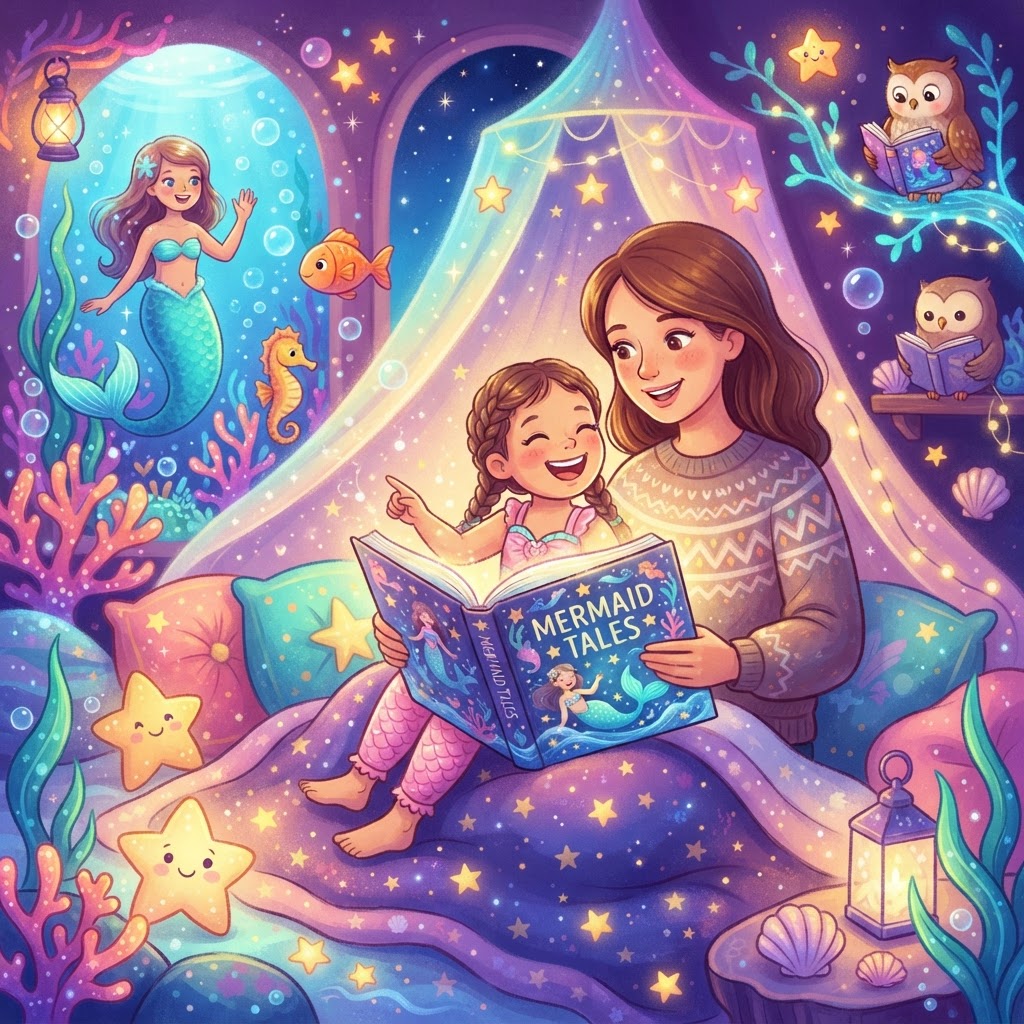
If your child lights up at the thought of shimmering tails, secret lagoons, and talking sea creatures, mermaids stories for kids can be a wonderful bedtime choice. These stories blend magic with emotion, giving children adventure, comfort, and plenty to imagine. They also work beautifully for personalized reading, because mermaid worlds can easily include your child’s name, favorite animals, and real-life feelings.
Why do kids love mermaids stories?
Children love mermaid stories because they combine fantasy with feelings kids already understand, like curiosity, friendship, bravery, and belonging. The ocean setting also gives these stories rich images, sounds, and possibilities, which helps children picture the story and stay engaged.
From a child development perspective, imaginative stories are more than fun. The American Academy of Pediatrics has long emphasized that shared reading supports language growth, bonding, and emotional security. When adults read stories about mermaids aloud, children hear new vocabulary, ask questions, and practice making sense of a story world.
Mermaids are especially appealing because they feel magical without always being too scary. For many children, they sit in a “just right” middle space between real and imaginary.
Kids often enjoy mermaid tales because they offer:
- Wonder without heavy danger
- Adventure in a colorful, sensory-rich setting
- Strong emotions children can recognize
- Flexible themes for ages 1-10, from soothing bedtime tales to bigger quests
If your child also loves other magical creatures, they may enjoy fairy adventures or playful talking-animal stories too.
What makes mermaids bedtime stories calming and memorable?
The best mermaids bedtime stories feel gentle, safe, and emotionally satisfying. They may include a small problem or mystery, but they end with comfort, connection, and a clear sense that all is well.
For bedtime, pacing matters as much as plot. A calm rhythm, repeated phrases, and soft imagery can help children settle. Research from the Harvard Center on the Developing Child highlights how warm, responsive interactions support self-regulation, and bedtime reading is one of the easiest ways to create that soothing back-and-forth.
A strong bedtime mermaid story often includes:
- A peaceful opening, like moonlight on the water or a quiet reef
- One simple challenge, not too many twists
- A kind helper, such as a dolphin, crab, or older mermaid
- Sensory language children can picture
- A reassuring ending with rest, homecoming, or friendship
For younger children, keep the story linear and repetitive. For older children, you can add treasure maps, underwater schools, magical pearls, or a mystery hidden in the coral.
Which mermaids stories for kids spark imagination and gentle life lessons?
The best mermaids tales children remember usually mix fun with a simple emotional lesson. A mermaid story can teach courage, patience, kindness, or problem-solving without feeling preachy.
Here are six strong story ideas you can use at home, in class, or while creating a custom bedtime tale.
The Mermaid Who Lost Her Song
A young mermaid wakes up and finds that her singing voice is gone. As she searches the reef, she learns that her voice returns when she stops comparing herself to others and sings in her own way.
Lesson: Confidence and self-acceptance.
The Moon Pearl Rescue
A glowing pearl that lights the underwater village drifts into a dark cave. A nervous but determined mermaid teams up with a sleepy octopus to bring it back before bedtime.
Lesson: Bravery grows through action, not perfection.
The Coral Garden Helpers
A mermaid notices that part of the reef looks dull and tired. She gathers friends to clean, replant, and care for the coral garden, and the whole ocean shines again.
Lesson: Responsibility, teamwork, and caring for nature.
The Mermaid and the Sea Turtle Map
A patient old sea turtle gives a child mermaid half of a map and tells her the other half must be earned through kind choices. Along the journey, she helps others and discovers that kindness was the real treasure.
Lesson: Character matters more than prizes.
The Mermaid Afraid of the Deep Blue
A mermaid loves shallow water but fears the darker sea below. With support from her family, she takes small, safe steps into new places and discovers glowing fish, quiet caves, and beauty she never expected.
Lesson: Facing fears gradually.
Two Shores, One Friendship
A mermaid meets a child on the beach, and together they solve a mystery involving missing shells and mixed-up tides. Even though they live in different worlds, they learn how to listen, trust, and work together.
Lesson: Friendship across differences.
These story starters are also easy to personalize. You can turn them into a one-of-a-kind adventure when you create your own personalized bedtime story with details your child already loves.
How can you build mermaid characters children truly care about?
Strong mermaid characters feel real, even in magical settings. Children connect most with characters who want something clear, make mistakes, and grow by the end.
This is where many stories about mermaids become more meaningful. Instead of making the mermaid “perfect,” give her a hope, a challenge, and one small change she needs to make. Organizations like CASEL emphasize the importance of social-emotional learning skills such as self-awareness, empathy, and responsible decision-making, and stories are a natural way to practice them.
Use these simple character-building tips:
-
Give the mermaid one clear goal.
Maybe she wants to find a pearl, help a friend, or join the tide festival. -
Add one relatable struggle.
She might be shy, impatient, jealous, or afraid of the dark water. -
Balance strengths and weaknesses.
A brave mermaid can still get frustrated. A clever mermaid can still need help. -
Include supportive relationships.
Grandparents, siblings, sea creatures, and human friends help children see healthy connection. -
Let choices shape the ending.
Children learn more when the character solves the problem through kindness, honesty, or persistence.
For younger children, keep the growth simple: “She was scared, then she tried.” For older children, add emotional nuance: “She wanted to win, but learned that helping a friend mattered more.”
How can InstaTales help you create personalized mermaid adventures?
InstaTales makes it easy to turn a general mermaid idea into a story that feels made just for your child. Personalized stories often hold attention longer because the child feels seen inside the story world.
A custom mermaid story can include:
- Your child’s name
- Their age or reading level
- A favorite sea creature, color, or hobby
- A bedtime theme, like calmness, confidence, or friendship
- Familiar places, such as a beach holiday, a bathtub ocean, or a dream reef
If you want a fast start, begin with a simple prompt like:
“Create a gentle mermaid bedtime story for Maya, age 5, who loves turtles and needs help feeling brave at night.”
You can also save favorites in your story library so children can revisit beloved characters again and again. That repeat reading matters: familiar stories help many children build confidence, memory, and expressive language.
For adults who want structure, prebuilt prompts and formats can make story creation easier. A good formula is:
- Main character
- Ocean setting
- Small challenge
- Kind helper
- Calm ending
Teachers can adapt the same approach for writing centers, SEL lessons, or themed literacy units with InstaTales for teachers.
How can parents and teachers make mermaid stories more meaningful?
You can make mermaid stories more meaningful by turning reading into a conversation, not just a performance. A few thoughtful questions before, during, and after the story help children build language, empathy, and comprehension.
Try prompts like:
- “How do you think the mermaid feels right now?”
- “What would you do in that cave?”
- “Why was helping the turtle important?”
- “What changed by the end?”
You can also extend the story off the page:
- Draw the mermaid’s underwater home
- Act out the story with stuffed animals
- Make a “kindness pearl” jar for good choices
- Invite children to create a new sea creature friend
For mixed-theme readers, pairing mermaids with other favorites can keep interest fresh. Some children like mermaid-meets-space plots, while others prefer magical creature blends, robots, or giants. Exploring themes through the InstaTales blog can help you discover what captures your child’s imagination next.
Frequently Asked Questions
Are mermaids stories good for bedtime?
Yes, mermaid stories can be excellent bedtime reading when they use gentle pacing, soft imagery, and reassuring endings. Choose stories with light tension and a calm resolution rather than high-stakes danger.
What age are mermaids stories best for?
Mermaid stories work well for ages 1-10 when the complexity matches the child. Toddlers often enjoy simple, repetitive mermaids bedtime stories, while older children may prefer quests, mysteries, and character growth.
How can I make mermaid stories less scary for sensitive children?
Keep the setting bright and safe, avoid villains that feel overwhelming, and include helpful companions. A clear bedtime ending, such as returning home or falling asleep under the sea, also helps children feel secure.
Can personalized mermaid stories help reading development?
Yes, personalized stories can increase attention, motivation, and comprehension because children feel connected to the plot. When a story includes familiar names, feelings, and interests, it often becomes easier to retell and remember.
What details should I include in a custom mermaid story?
Start with your child’s name, age, favorite ocean animal, and the kind of feeling or lesson you want the story to support. Adding a preferred setting, such as a coral reef, beach, or underwater school, makes the story feel even more special.
What lesson themes work best in stories about mermaids?
Friendship, bravery, kindness, patience, and caring for nature are especially strong themes. They fit naturally into underwater adventures and are easy for children to understand and apply in real life.
Ready to Create a Personalized Bedtime Story?
Use our free AI bedtime story generator to create a personalized illustrated story for your child in 30 seconds — no credit card needed.
Popular story types:
Maya Rodriguez
Lead Content Editor & Early Literacy Specialist
Maya is a former early childhood educator and literacy specialist with over a decade of experience helping children develop a love of reading. She leads content at InstaTales, where she writes about the science of storytelling, child development, and how families can use personalized AI stories to build literacy and emotional resilience.
instatales.ai