Oceans Stories for Curious Kids Who Love Science
Feed your child's curiosity with these oceans stories that combine imagination with real science and discovery.
✦ Key Takeaways
- •Oceans stories are powerful because they connect emotion, imagination, and real-world knowledge.
- •Narrative makes science easier to remember because stories give facts a sequence, a purpose, and an emotional hook.
- •The best oceans stories for curious kids pair one strong plot with one or two accurate science ideas.
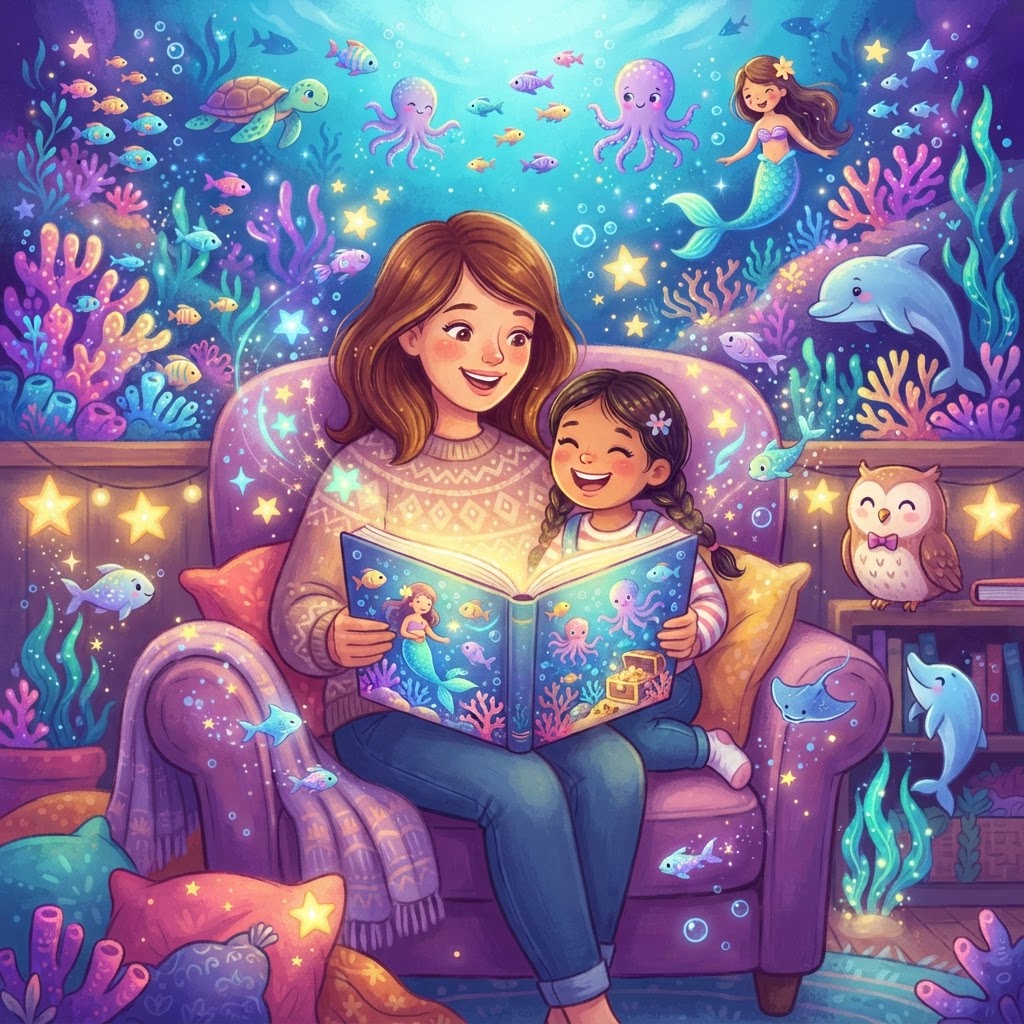
If your child is fascinated by waves, whales, or glowing sea creatures, oceans stories can turn that curiosity into lasting learning. The best stories about oceans for kids do more than entertain—they help children remember real facts, ask better questions, and imagine themselves as explorers of a living planet.
For young children, science sticks when it feels personal. A story about a tiny turtle crossing the sea or a child meeting a bioluminescent jellyfish gives abstract facts a shape, a feeling, and a reason to matter. That is why ocean storytelling works so well for families, homeschoolers, and educators who want to nurture wonder without losing scientific accuracy.
Why are oceans stories so powerful for curious kids?
Oceans stories are powerful because they connect emotion, imagination, and real-world knowledge. When children care about a character, they are more likely to remember the facts woven into that character’s adventure.
This matters because the ocean is huge and complex. Concepts like tides, habitats, food chains, or coral reefs can feel hard for younger children to picture. But in a story, those ideas become concrete: a clownfish protecting its reef, a seal pup riding a current, or a scientist listening for whale songs.
Child development research supports this approach. The American Academy of Pediatrics has long emphasized the value of shared reading and conversation for language growth and comprehension. The Center on the Developing Child at Harvard University also highlights how responsive, back-and-forth interactions help children build understanding. When you pause during a story to answer, “Why is the water dark down there?” you are doing exactly the kind of rich learning that helps science click.
For curious kids, oceans offer especially strong story material because they combine:
- mystery
- movement
- animals children already love
- big questions about Earth and life
That makes ocean adventures for children a natural bridge between bedtime reading and early science education.
How does narrative make ocean science easier to remember?
Narrative makes science easier to remember because stories give facts a sequence, a purpose, and an emotional hook. Children often forget isolated information, but they remember what happened first, what problem appeared, and how it was solved.
This is sometimes called “narrative transportation” in literacy and psychology research: when listeners become absorbed in a story, they process information more deeply. For children, that means a fact like “octopuses can camouflage” becomes much more memorable when an octopus uses camouflage to hide from a predator.
Stories also support comprehension in a few practical ways:
- Cause and effect: “The tide went out, so the crab had to hide.”
- Vocabulary in context: Words like current, habitat, and reef make sense inside action.
- Repetition: Key ideas can repeat naturally across scenes.
- Emotional meaning: A child remembers the baby sea turtle’s struggle more than a textbook sentence.
If your child enjoys other science themes, this same pattern works beautifully with animal science stories, weather stories for curious kids, and even solar system adventures. Story first, fact second is often how learning becomes durable.
What are five oceans stories that mix wonder with real facts?
The best oceans stories for curious kids pair one strong plot with one or two accurate science ideas. That keeps the story engaging while making the learning clear and age-appropriate.
1. The sea turtle’s moonlight journey
A newly hatched sea turtle follows moonlight across the beach and begins a long swim into the open ocean.
Real facts to include:
- Many baby sea turtles hatch on beaches at night.
- They often move toward the brightest horizon.
- Only a small number survive to adulthood.
This story works well for ages 4-8 because it introduces life cycles, animal instincts, and ocean migration.
2. The reef that buzzed like a city
A child shrinks to the size of a fish and explores a coral reef filled with clownfish, sea stars, and hiding eels.
Real facts to include:
- Coral reefs are built by tiny animals called coral polyps.
- Reefs provide shelter for many species.
- Healthy reefs need balanced water conditions.
For accurate reef basics, the NOAA Ocean Service offers child-friendly explanations you can trust.
3. The whale who sang across the sea
A young whale learns that its calls can travel far underwater and help it connect with others.
Real facts to include:
- Sound travels very efficiently in water.
- Whales use sound for communication.
- Different whales make different kinds of calls.
This kind of story is excellent for children who love both animals and sound. It can also lead to hands-on learning, like making “whale songs” with kitchen objects or humming low and high notes.
4. The glowing secret of the midnight ocean
A curious submarine visits the deep sea and discovers fish, squid, and jellies that glow in the dark.
Real facts to include:
- Some ocean animals produce light through bioluminescence.
- Sunlight does not reach the deep ocean.
- Deep-sea creatures often have unusual shapes and survival tools.
The Smithsonian Ocean explains bioluminescence clearly and beautifully for families who want to explore more after the story.
5. The little droplet and the giant current
A playful droplet travels through warm and cold currents, meeting animals in different ocean regions.
Real facts to include:
- Ocean currents move water around the globe.
- Water temperature affects marine habitats.
- Oceans help regulate Earth’s climate.
This is a strong choice for slightly older children because it links marine life to weather and the wider planet. It also pairs nicely with human body stories if you want to compare circulation in the body with movement in the oceans.
How can parents and teachers prompt InstaTales for science-rich ocean stories?
The best prompts are specific, age-matched, and grounded in one clear science idea. If you want stronger results, ask for both the story style and the facts you want included.
A good prompt tells the AI:
- the child’s age
- the main character
- the setting
- the science concept
- the tone
- the length or reading level
Here are a few prompt examples you can use when you create your own personalized bedtime story:
- “Write a gentle bedtime story for a 4-year-old about a baby sea turtle crossing the beach. Include real facts about hatching at night and following moonlight.”
- “Create an ocean adventure for a 7-year-old who loves sharks. Make it exciting but not scary, and include accurate facts about shark senses and ocean habitats.”
- “Write a classroom-ready story for ages 6-8 about coral reefs. Include three real facts and end with two discussion questions.”
To make stories even more useful, try adding:
- “Use simple language and define any tricky science words.”
- “Repeat the key fact three times in different ways.”
- “Include a short parent note with real science takeaways.”
If you want a faster start, browse the story templates for structure ideas, then save favorites in your story library so children can revisit them. Re-reading is not just comforting—it strengthens recall.
For classroom use, InstaTales for teachers can help turn oceans adventures children love into reading, writing, and science discussion activities.
How can you keep ocean stories accurate, age-appropriate, and fun?
You do not need to choose between imagination and accuracy; you just need to keep the science simple and true. Young children can enjoy talking turtles and glowing submarines as long as the core facts stay correct.
A few practical guidelines help:
- Focus on 1-2 real science ideas per story.
- Avoid overwhelming children with too many species or terms.
- Check surprising facts with a trusted source.
- Match the emotional tone to the child’s age and sensitivity.
For example, if a child is 3 or 4, a story about waves, shells, and friendly dolphins may be enough. If a child is 8 or 9, they may enjoy ocean zones, deep-sea pressure, food webs, or conservation themes.
One especially helpful source for ocean basics is the Monterey Bay Aquarium, which offers reliable animal information in a very accessible format. And if your child starts asking bigger Earth-science questions, the broader collection on the InstaTales blog can help you build connected curiosity across plants, weather, space, and life science.
The goal is not to turn every bedtime story into a lesson. The goal is to help children feel that science is full of wonder, patterns, and discoverable truths.
Frequently Asked Questions
What age are ocean stories best for?
Ocean stories can work from toddlerhood through age 10, as long as the language and facts match the child’s stage. Younger children do best with simple animal adventures, while older children can handle habitats, currents, and deep-sea science.
How many science facts should I include in one story?
One or two key facts is usually enough for younger children. For ages 7-10, you can often include three facts if they are repeated naturally in the story.
Can fictional stories still teach real ocean science?
Yes. A fictional plot can teach real science very effectively when the setting, animals, and core facts are accurate. The story creates engagement, while the facts build understanding.
How do I know if an ocean fact is accurate?
Check trusted sources such as NOAA, Smithsonian Ocean, or the Monterey Bay Aquarium. These sources explain marine science clearly and are suitable for parents and educators.
Are AI-generated ocean stories good for classrooms?
They can be very useful when teachers guide the prompt and review the final text. Many educators use them to differentiate reading levels, spark science discussions, or connect literacy with inquiry.
What if my child wants more science topics after ocean stories?
Follow their curiosity into related themes like animals, weather, plants, or space. The same story-based approach works across subjects and helps children see science as one connected adventure.
Get a new bedtime story every week
Free, personalized, and delivered to your inbox. No spam, ever.
Ready to Create a Personalized Bedtime Story?
Use our free AI bedtime story generator to create a personalized illustrated story for your child in 30 seconds — no credit card needed.
Popular story types:
Maya Rodriguez
Lead Content Editor & Early Literacy Specialist
Maya is a former early childhood educator and literacy specialist with over a decade of experience helping children develop a love of reading. She leads content at InstaTales, where she writes about the science of storytelling, child development, and how families can use personalized AI stories to build literacy and emotional resilience.
instatales.ai