Owls stories for kids: tales and fun facts
Delightful owls stories for kids — plus real fun facts woven into each tale. Perfect for young animal lovers who love a good story.
✦ Key Takeaways
- •Owl stories work well for young readers because they combine calm nighttime imagery with real wonder.
- •The best owl story ideas mix one simple plot with one or two accurate animal facts.
- •You can create personalized owl adventures with InstaTales by starting with a simple prompt, then tailoring the story to your child’s age, interests, and bedtime needs.
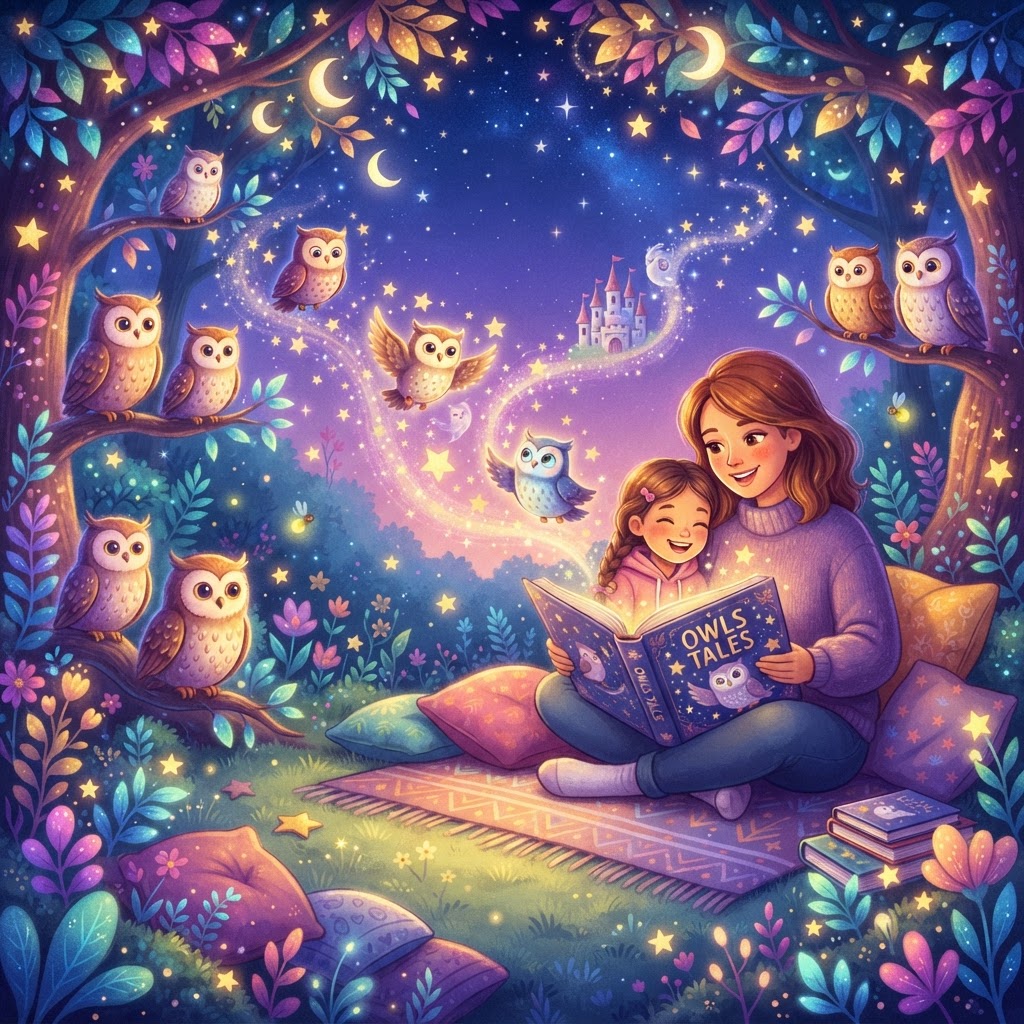
Soft wings, moonlit forests, and wide, watchful eyes make owl tales feel magical from the very first sentence. If you are looking for owls stories for kids that feel cozy, educational, and easy to personalize, owl-themed adventures are a wonderful choice. They naturally blend gentle suspense with real science, which is why owls bedtime stories, stories about owls, and other owls tales children enjoy so much can support both calm bedtime routines and early learning.
Why do owl stories work so well for young readers?
Owl stories work well for young readers because they combine calm nighttime imagery with real wonder. Children are often fascinated by animals that are active when they are getting ready for bed, and owls feel mysterious without needing to be scary.
From a child development perspective, that mix matters. The American Academy of Pediatrics and Reach Out and Read both emphasize that shared reading supports language, bonding, and early brain development. In practice, I find that animal stories are especially effective when they include repeating phrases, clear feelings, and one or two memorable facts children can retell the next day.
Owls are perfect for this. They invite questions like “How can they fly so quietly?” and “Why are their eyes so big?” Those questions turn simple stories about owls into rich conversations about nature, empathy, and observation.
Which owl story ideas can turn real facts into magical adventures?
The best owl story ideas mix one simple plot with one or two accurate animal facts. That helps children enjoy the fantasy while still learning something true about the world.
Below are six story concepts you can use for read-alouds, writing practice, or personalized AI story time.
The Barn Owl and the Moonlit Map
A young barn owl finds a glowing map in an old hayloft and must help a lost field mouse get home before sunrise. Along the way, the owl learns that listening carefully can be just as important as being brave.
- Real owl facts to weave in: Barn owls have heart-shaped faces that help funnel sound, and their flight is famously quiet because of the structure of their feathers, as explained by the Cornell Lab of Ornithology.
- AI prompt: “Write a gentle bedtime story for a 5-year-old about a barn owl who uses quiet wings and excellent hearing to help a lost mouse follow a moonlit map home.”
The Burrowing Owl Who Loved Sunrises
Instead of sleeping late, a curious burrowing owl wakes before dawn to greet every desert animal by name. One morning, she discovers that a missing seed trail leads to a new friend living just beyond the cactus hill.
- Real owl facts to weave in: Burrowing owls live on the ground in burrows rather than in trees, and they are often active during the day, according to the San Diego Zoo Wildlife Alliance.
- AI prompt: “Create a cheerful story about a burrowing owl who lives underground, loves sunrises, and helps desert animals solve a small mystery.”
The Snowy Owl’s Summer Patrol
A snowy owl chick wants to prove she can guard the tundra during the bright Arctic day. She soon learns that patience, sharp eyes, and teamwork matter more than trying to look grown-up.
- Real owl facts to weave in: Snowy owls live in Arctic regions and are often active during daylight during the northern summer, notes Audubon.
- AI prompt: “Write an adventurous but calming story about a young snowy owl patrolling the Arctic in daylight and learning responsibility.”
The Great Horned Owl’s Listening Lesson
A great horned owl thinks being the strongest bird in the forest means always acting first. After missing an important clue, he discovers that good listening helps him protect the forest far better than rushing.
- Real owl facts to weave in: Great horned owls have feather tufts that look like horns, but they are not real ears. Owls also rely heavily on hearing to locate prey, especially at night.
- AI prompt: “Tell a story about a great horned owl who learns that listening carefully is a superpower, not a weakness.”
The Little Owl and the Pellet Puzzle
A curious young owl finds a strange gray bundle beneath her favorite branch and worries someone dropped forest trash there. Her parent gently explains that owls swallow much of their food whole and later cough up pellets with bones and fur they cannot digest.
- Real owl facts to weave in: Many owls regurgitate pellets, which can teach children about diet and digestion. This can become a science-friendly mystery rather than anything gross.
- AI prompt: “Write an educational owl story for children about a young owl discovering a pellet and learning how owl bodies work.”
The Hollow Tree Library
In a hollow oak tree, an old owl keeps a library of stories collected from the wind, the river, and the stars. Because owl eyes face forward and help them focus well ahead, he becomes the perfect keeper of tiny details others miss.
- Real owl facts to weave in: Owls have forward-facing eyes that support depth perception, and they cannot move their eyes around the way humans do, so they turn their heads instead. Many species can rotate the neck up to about 270 degrees.
- AI prompt: “Create a magical story about a wise owl librarian who notices tiny details, turns his head to study the world, and helps a child find courage.”
If your child enjoys animal-themed storytelling, you can also explore other nature-inspired favorites like penguin story ideas or cozy gentle bear stories.
How can you create personalized owl adventures with InstaTales?
You can create personalized owl adventures with InstaTales by starting with a simple prompt, then tailoring the story to your child’s age, interests, and bedtime needs. This is one of the easiest ways to turn general owls bedtime stories into something that feels made just for your child.
A good process looks like this:
- Start with a clear goal: sleepy bedtime, classroom learning, or imaginative play.
- Choose one owl species or one forest setting.
- Add one emotional theme, such as bravery, patience, kindness, or curiosity.
- Include 1-2 real owl facts so the story teaches naturally.
- Keep the ending gentle and reassuring for bedtime.
You can create your own personalized bedtime story in just a few lines, or use ready-made story templates if you want a faster starting point. If your child loves returning to favorite tales, save them in your story library for easy rereading.
A strong prompt might be: “Write a calm bedtime story for a 6-year-old about a barn owl named Olive who helps a shy child find courage. Include real facts about silent flight and excellent hearing. End with a peaceful moonrise.”
That kind of prompt gives the AI enough structure to produce warm, age-appropriate stories about owls without feeling generic.
How can parents and teachers use owl stories to build language and curiosity?
Parents and teachers can use owl stories to build language and curiosity by pairing each tale with a small conversation, drawing task, or fact check. This turns entertainment into meaningful learning without making it feel like a lesson.
For home reading, try asking:
- “What fact did we learn about owls?”
- “How did the owl solve the problem?”
- “Would you rather be a snowy owl, barn owl, or burrowing owl?”
For classrooms, owl stories work well with:
- Sequencing activities
- Vocabulary cards for words like nocturnal, burrow, and tundra
- Nature journaling
- Compare-and-contrast writing with other animal tales
This approach aligns with research on dialogic reading, which shows children learn more when adults ask simple, open-ended questions during story time. It also makes owls tales children love feel interactive, memorable, and easier to connect with real-world science.
Frequently Asked Questions
What age are owl stories best for?
Owl stories can work well for ages 1-10 when the tone matches the child. Toddlers often like repetitive, soothing owl tales, while older children enjoy mystery, facts, and bigger adventures.
Are owl stories good for bedtime?
Yes, owl stories are often excellent for bedtime because owls already belong to the nighttime world. Calm plots, soft forest settings, and gentle endings help children wind down more easily.
How long should owls bedtime stories be?
For most children, 3-7 minutes is ideal for bedtime reading. Younger children usually do best with shorter stories, while older readers can enjoy longer tales with a few more facts and details.
How can I make owl facts feel natural in a story?
Choose only one or two facts and build the plot around them. For example, silent flight can help an owl sneak through a forest, while strong hearing can help the owl solve a problem.
Can owl stories be used in school?
Absolutely. Owl stories are useful for literacy, science, vocabulary, and creative writing, especially in early elementary classrooms. They also work well for cross-curricular units on habitats, nocturnal animals, and observation skills.
What should I include in an AI prompt for an owl story?
Include the child’s age, preferred tone, owl species, setting, and one or two real facts. You will usually get the best results when you also ask for a clear emotional theme and a calm ending.
Get a new bedtime story every week
Free, personalized, and delivered to your inbox. No spam, ever.
Ready to Create a Personalized Bedtime Story?
Use our free AI bedtime story generator to create a personalized illustrated story for your child in 30 seconds — no credit card needed.
Popular story types:
Maya Rodriguez
Lead Content Editor & Early Literacy Specialist
Maya is a former early childhood educator and literacy specialist with over a decade of experience helping children develop a love of reading. She leads content at InstaTales, where she writes about the science of storytelling, child development, and how families can use personalized AI stories to build literacy and emotional resilience.
instatales.ai