Penguins stories for kids: tales and fun facts
Delightful penguins stories for kids — plus real fun facts woven into each tale. Perfect for young animal lovers who love a good story.
✦ Key Takeaways
- •Penguins make wonderful story characters because they are easy for children to relate to: they huddle with family, care for their babies, and move in funny, memorable ways.
- •You can create playful, soothing, and fact-filled penguin adventures in just a few minutes.
- •You can use InstaTales to turn real animal facts into stories that feel personal, calm, and just right for your child’s age.
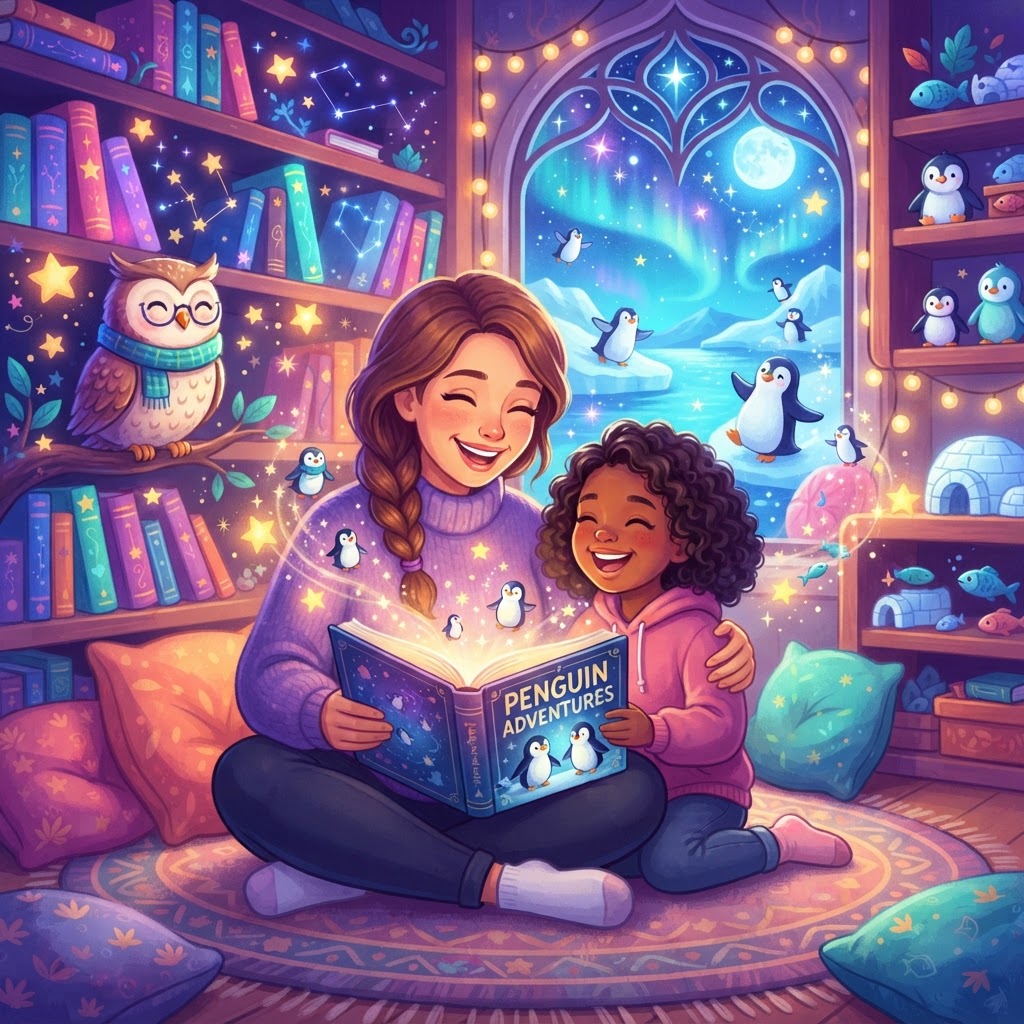
If your child loves snowy adventures, waddly heroes, and gentle bedtime magic, penguins stories for kids are a lovely place to begin. The best penguins bedtime stories mix comfort, curiosity, and a few true animal facts, so children fall asleep feeling both calm and amazed by the real world.
Why do penguins make such wonderful story characters?
Penguins make wonderful story characters because they are easy for children to relate to: they huddle with family, care for their babies, and move in funny, memorable ways. For ages 1-10, that mix of warmth and humor makes stories about penguins especially engaging at bedtime.
Shared reading also supports healthy development. The American Academy of Pediatrics encourages reading aloud from infancy, and the Harvard Center on the Developing Child highlights how back-and-forth conversation builds language and thinking skills. When you pause during a story to ask, “Why do you think the penguin stayed close to the group?”, you turn a simple tale into a rich learning moment.
Penguins also work well because they naturally invite repetition. Children enjoy hearing about waddling, sliding, and snuggling, and those repeated images help younger listeners remember new words and ideas. If your child enjoys animal-themed storytelling, they may also like our bear stories for kids or elephant tales and fun facts.
Which penguins stories for kids can you create tonight?
You can create playful, soothing, and fact-filled penguin adventures in just a few minutes. The key is to choose one simple story problem, add 1-2 real facts, and keep the emotional tone cozy and reassuring.
The little emperor penguin and the winter promise
- Story concept: A tiny emperor penguin egg is almost ready to hatch, and a brave father keeps it warm through a long, windy night while the colony huddles together.
- Real penguin facts: Emperor penguin fathers balance the egg on their feet and cover it with a warm brood pouch. They also huddle in groups to stay warm in Antarctica, as explained by NOAA Fisheries.
- AI prompt: “Write a calm bedtime story about an emperor penguin dad protecting his egg during a snowy night, with gentle friendship, teamwork, and a happy hatching ending.”
The pebble gift on the shore
- Story concept: A young penguin wants to build the nicest nest in the colony and searches for the smoothest pebble to help a friend.
- Real penguin facts: Many penguin species, including Adélie and gentoo penguins, use pebbles to build nests. Pebbles help keep eggs raised off wet ground.
- AI prompt: “Create a sweet story about a penguin collecting special pebbles for a nest and learning that kindness matters more than having the biggest pile.”
The noisy colony where every voice matters
- Story concept: In a busy penguin colony, one fluffy chick worries it will never find its parent among all the sounds, until it learns to listen for a familiar call.
- Real penguin facts: Parent penguins and chicks can recognize one another by voice, even in large, noisy colonies. The San Diego Zoo Wildlife Alliance notes how important vocal recognition is for penguins living in groups.
- AI prompt: “Tell a comforting story about a penguin chick in a loud colony who finds home by recognizing its parent’s special call.”
The penguin who discovered warm sunshine
- Story concept: A curious penguin dreams that all penguins live on ice, then visits cousins who live by rocky beaches and warm ocean water.
- Real penguin facts: Not all penguins live in icy places. African penguins live along the coasts of southern Africa, and they have pink patches above their eyes that help with cooling, according to the Monterey Bay Aquarium.
- AI prompt: “Write a playful story about a penguin learning that some penguins live in sunny places, with waves, shells, and a cheerful surprise.”
The feather-flipper race under the sea
- Story concept: A young penguin wants to learn why it cannot fly in the sky like other birds, then discovers it can ‘fly’ underwater better than almost anyone.
- Real penguin facts: Penguins are birds, but their wings act like flippers for swimming instead of flying through the air. Their streamlined bodies help them move quickly and gracefully underwater.
- AI prompt: “Create an adventurous but bedtime-friendly story about a penguin who feels sad about not flying, then discovers its gift for underwater speed.”
The belly-slide rescue
- Story concept: After a snowstorm, a penguin and its friends slide across the ice on their bellies to deliver a missing scarf back to the colony.
- Real penguin facts: Penguins often travel over ice by sliding on their bellies, a movement called tobogganing. This helps them save energy and move efficiently across snow and ice.
- AI prompt: “Write a funny, gentle story about three penguin friends tobogganing across the ice to help someone before bedtime.”
How can you use InstaTales to turn penguin facts into personalized bedtime adventures?
You can use InstaTales to turn real animal facts into stories that feel personal, calm, and just right for your child’s age. Start with one penguin fact, one emotion, and one small adventure, then let the story grow from there.
A simple formula works well:
- Pick your child’s role: helper, explorer, sibling, or sleepy listener
- Add a penguin species or setting: Antarctica, rocky beach, noisy colony
- Include 1-2 true facts
- Choose the bedtime tone: cozy, silly, brave, or soothing
For example, you might ask InstaTales to include your child’s name, favorite color, and a penguin chick who needs help finding a smooth pebble. From there, you can create your own personalized bedtime story in seconds, or use ready-made story templates if you want a faster starting point.
Once you find a story your child asks for again and again, save it in your story library so it is easy to revisit on busy evenings. That rereading matters: literacy research consistently shows that repeated story exposure helps children build vocabulary, comprehension, and confidence.
What makes penguins bedtime stories especially effective for different ages?
The most effective penguins bedtime stories match a child’s stage of development. Toddlers need rhythm and reassurance, while older children usually enjoy a stronger plot and richer facts.
Here is a practical age guide:
- Ages 1-3: Use simple repetition, soft sounds, and one clear idea. Think: “Baby penguin stays warm with Daddy.”
- Ages 4-6: Add a gentle problem and solution. Think: “The chick gets lost in the colony, then finds home by listening.”
- Ages 7-10: Include more factual detail and emotional growth. Think: “A young penguin learns that not all penguins live in the cold.”
As an educator, I recommend treating facts like seasoning, not the whole meal. The story should come first, and the science should quietly support wonder. That balance is what makes penguins tales children want to hear again.
How can parents keep stories about penguins both accurate and magical?
Parents can keep stories accurate and magical by using a “true core, imaginative wrap” approach. In other words, keep the animal facts real, but let the emotional journey be playful and imaginative.
A good rule of thumb is:
- Keep biology true: where penguins live, how they move, how they care for chicks
- Keep emotions relatable: shy, proud, curious, sleepy, brave
- Avoid scary or confusing details right before bed
- End with safety, belonging, or rest
This approach helps children build trust in what they hear. It also prepares them for later nonfiction reading, because they begin to understand that stories can be creative and truthful at the same time.
Frequently Asked Questions
Are penguin stories good for bedtime?
Yes. Penguins are ideal for bedtime because their world naturally includes huddling, nesting, family care, and rhythmic movement, which all create a calming mood. With a gentle plot, they work especially well for winding down.
What real facts should I include in stories about penguins?
Choose just one or two facts per story. Great options include penguins huddling for warmth, using pebbles for nests, recognizing family calls, or swimming with flipper-like wings.
Can penguin stories help children learn science?
Yes, especially when facts are woven into a clear, memorable plot. Children often remember information better when it is attached to characters, emotions, and repeated story patterns.
How do I make penguins bedtime stories less overstimulating?
Keep the story short, avoid danger-heavy scenes, and end with warmth, reunion, or sleep. Soft repetition and predictable language also help younger children settle.
Can I save favorite penguin stories to read again?
Absolutely. Re-reading favorite stories supports language growth and gives children a comforting sense of mastery. Saving the best ones in your story library makes bedtime easier on future nights.
Ready to Create a Personalized Bedtime Story?
Use our free AI bedtime story generator to create a personalized illustrated story for your child in 30 seconds — no credit card needed.
Popular story types:
Maya Rodriguez
Lead Content Editor & Early Literacy Specialist
Maya is a former early childhood educator and literacy specialist with over a decade of experience helping children develop a love of reading. She leads content at InstaTales, where she writes about the science of storytelling, child development, and how families can use personalized AI stories to build literacy and emotional resilience.
instatales.ai