Bath Time Stories: 5 Quick Ideas for Easy Baths
Make bath time fun with stories! These quick stories are perfect for the bath time routine.
✦ Key Takeaways
- •Bath time stories work because they combine play, language, and predictability in one small moment.
- •Use stories as a guide for the routine, not as an extra activity.
- •The best quick bath stories are simple, visual, and easy to adapt to your child’s age.
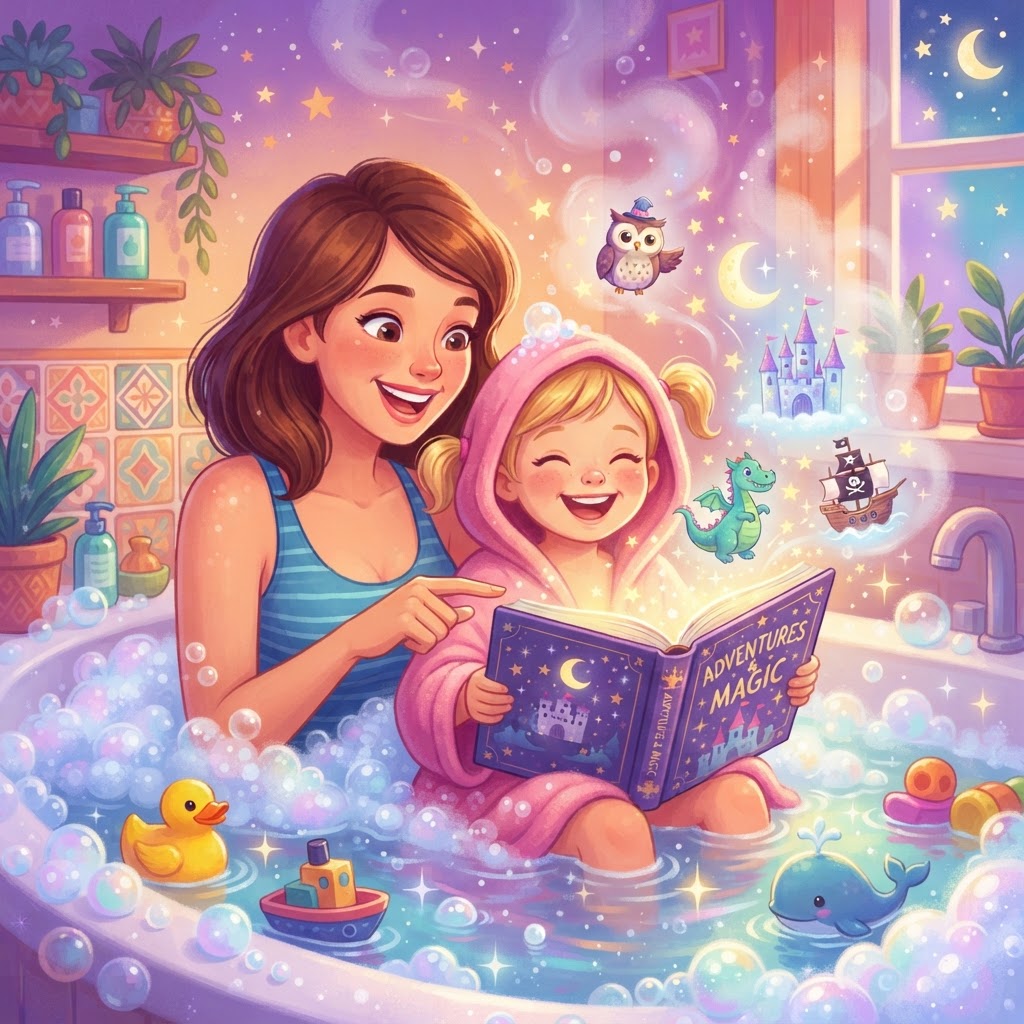
Bath time can feel rushed, wiggly, and loud, especially when young children are tired. Bath time stories help by turning a daily task into a playful routine, giving children something familiar to listen to while you wash, rinse, and transition to pajamas. For many families, a two-minute story is enough to reduce resistance and add more connection to the evening.
Short storytelling during care routines is more than a cute trick. The American Academy of Pediatrics recommends reading and language-rich interaction from infancy because it supports bonding, vocabulary, and early literacy. Predictable back-and-forth moments also build security, which the Center on the Developing Child at Harvard University highlights as a key part of healthy development.
Why do bath time stories work so well during the evening routine?
Bath time stories work because they combine play, language, and predictability in one small moment. Children are already engaged in a sensory experience, so adding a short story helps focus attention and makes transitions easier.
Baths are full of natural story material: bubbles, cups, boats, washcloths, ducks, and splashes. When you turn those objects into characters, children become more cooperative because they feel included in the activity instead of managed by it.
Stories also support emotional regulation. A familiar opening line like “Once upon a bubbly bath...” signals what comes next. That kind of routine helps children settle, much like a song or a favorite bedtime book. Organizations such as ZERO TO THREE note that simple, repeated language during everyday routines strengthens both learning and connection.
For parents, the biggest benefit is practicality. Quick bath stories do not require extra prep, extra toys, or extra time. They simply turn the time you already have into something calmer and more enjoyable.
How can you use stories during a bath routine without making bath time longer?
Use stories as a guide for the routine, not as an extra activity. The easiest approach is to match one tiny story beat to each bath step.
A simple structure works well:
- Start the bath: Introduce the character. “Captain Duck is getting ready for Bubble Bay.”
- During washing: Give the character a mission. “He must scrub his flippers before the tide comes in.”
- During hair rinse: Use a countdown or problem to solve. “Can the bubble crown stay on until three?”
- Getting out: End with a cozy finish. “The hero wraps up in a warm towel cape.”
This method keeps the story moving while helping your child predict what comes next. If your child responds well to short, rhythmic routines, you may also like these 5-minute morning stories, which use the same quick-start approach.
A few educator-approved tips make stories for bath routine more effective:
- Keep them under 3 minutes for toddlers and preschoolers.
- Use repetition so children can join in.
- Make the child the helper, hero, or problem-solver.
- Match the tone to the moment: silly for washing, calm for rinsing, cozy for getting out.
For babies and younger toddlers, narration is enough: “The little boat is floating to your toes.” For older children, add a mini plot with a challenge and a happy ending.
Which quick bath stories can you tell tonight?
The best quick bath stories are simple, visual, and easy to adapt to your child’s age. Below are five bath-themed ideas you can use right away, whether your child is 2 or 9.
1. The Bubble Rescue
A tiny bubble family floats too close to the drain, and your child must guide them to the safe side of the tub. Each scoop of water, gentle splash, or wipe with the washcloth helps the bubbles reach Bubble Island.
This story works especially well for toddlers because it turns washing into helping. Repeat a line like, “Save the bubbles, one-two-three!”
2. Detective Duck and the Missing Squeak
A rubber duck has lost its squeak, and Detective Duck searches the bath for clues. The clues are hidden behind knees, under foam, and near the shampoo bottle.
This is a great option for preschoolers because it invites observation and language. You can ask, “Where should Detective Duck look next?” to build participation.
3. Captain Washcloth and the Splashy Sea
Captain Washcloth sails across the tub on a mission to clean the ship before bedtime. Every arm, leg, and tummy becomes a different island that needs a quick scrub.
This is one of the easiest bath time stories for children who resist washing. The washcloth becomes the helper, not the “bad guy.”
4. The Shampoo Waterfall Quest
A brave explorer must stand under a warm waterfall for three seconds to find a shiny moon gem. The gem appears only after the waterfall flows gently over the explorer’s hair.
Hair washing is often the hardest part of the bath, so this story gives it a purpose. Count together slowly, and let your child “discover” the gem in the towel afterward.
5. The Pajama Parade After Bubble Mountain
After the bath, the bubble hero climbs down Bubble Mountain, wraps up in a towel cape, and joins the Great Pajama Parade. Clean feet march to the bedroom, where a final cheer leads to books and cuddles.
This story is especially useful because it carries the narrative beyond the tub. If your child enjoys connected routines, you can extend the same character into bedtime and even save the story in your story library for later.
How can you make bath time stories feel personalized for your child?
Personalized stories are more engaging because children listen longer when they hear their own name, favorite toy, or familiar fear turned into a gentle adventure. You do not need a long plot; one custom detail can make a big difference.
Try personalizing with:
- Your child’s name
- A favorite bath toy
- A real challenge, such as hair rinsing
- A favorite theme, like mermaids, trucks, dinosaurs, or space
- A comforting ending, such as “then Daddy wrapped Maya in the warm star towel”
This is also where AI can be genuinely helpful. Instead of inventing a new story from scratch every night, you can create your own personalized bedtime story based on your child’s age, interests, and mood. For families who like a quick starting point, ready-made story templates make it easy to generate quick bath stories that still feel special.
Personalization is not about making things elaborate. It is about making the child feel seen. In my experience working with young readers and families, even reluctant listeners usually respond when the story clearly belongs to them.
How can InstaTales help with bath time entertainment in a safe, low-stress way?
InstaTales can make bath time easier by giving you short, personalized story ideas before the bath begins. The key is to use the story as a tool for connection, not as extra screen time near water.
A practical bath-time approach looks like this:
- Generate a story before filling the tub.
- Choose a prompt based on the moment: bubbles, bravery, washing hair, or winding down.
- Read the story aloud from memory or keep your device safely away from the water.
- Reuse successful stories so your child knows what to expect.
For example, you might create a two-minute story about “Leo the Bubble Explorer who learns to rinse his hair like a waterfall hero.” That kind of targeted storytelling can be more effective than a generic bath book because it matches the exact challenge of the evening.
If your child enjoys short stories in other tricky moments too, these quick stories for car rides and waiting room story ideas can help you build the same calm, playful pattern throughout the day.
What makes stories for bath routine calming instead of overstimulating?
Calming bath stories use a gentle pace, simple language, and a reassuring ending. If the story is too exciting, children may get more energetic right when you want them winding down.
To keep the mood balanced:
- Use one small problem, not a huge adventure
- Keep voices playful but not too loud
- Choose warm images like bubbles, clouds, moonlight, and cozy towels
- End with rest, snuggles, pajamas, or sleep
A good rule is this: bath stories should rise a little, then settle. Save the dragons, epic quests, and long cliffhangers for weekend reading or longer family story time. Bath time is usually best served by short, comforting storytelling that helps children move smoothly toward bed.
Frequently Asked Questions
How long should bath time stories be?
Most bath time stories work best at 1-3 minutes. That is usually long enough to guide the routine without overstimulating your child or extending bedtime.
Are quick bath stories good for toddlers?
Yes, toddlers often respond very well to short, repetitive stories. Simple phrases, predictable actions, and familiar bath objects help them understand and participate.
Can bath time stories help with hair washing?
Yes, they can make hair washing feel more manageable by giving it a playful purpose. A countdown, brave character, or “waterfall mission” often reduces resistance.
Is it okay to use AI-generated stories during bath time?
Yes, as long as you use them thoughtfully and keep devices safely away from water. Generate the story before bath time, then tell it aloud in a warm, responsive way.
What if my child wants the same bath story every night?
That is completely normal and often beneficial. Repetition supports language learning, emotional security, and routine, especially for younger children.
Should bath stories always be calming?
Usually, yes, especially in the evening. A little silliness is fine, but the ending should help your child transition from bath to pajamas to bedtime.
Explore More Stories
Ready for more? - free AI bedtime story generator
Get a new bedtime story every week
Free, personalized, and delivered to your inbox. No spam, ever.
Ready to Create a Personalized Bedtime Story?
Use our free AI bedtime story generator to create a personalized illustrated story for your child in 30 seconds — no credit card needed.
Popular story types:
Maya Rodriguez
Lead Content Editor & Early Literacy Specialist
Maya is a former early childhood educator and literacy specialist with over a decade of experience helping children develop a love of reading. She leads content at InstaTales, where she writes about the science of storytelling, child development, and how families can use personalized AI stories to build literacy and emotional resilience.
instatales.ai