30 Minute Stories for Epic Family Reading
Want a truly epic story experience? These 30-minute stories are perfect for special family reading nights.
✦ Key Takeaways
- •30 minute stories feel “big” to children, but they are still manageable for adults.
- •Choose epic bedtime stories when you want reading to be the main event, not just the bedtime routine.
- •Longer read-aloud stories can support language, attention, and emotional understanding when they are shared in warm, responsive ways.
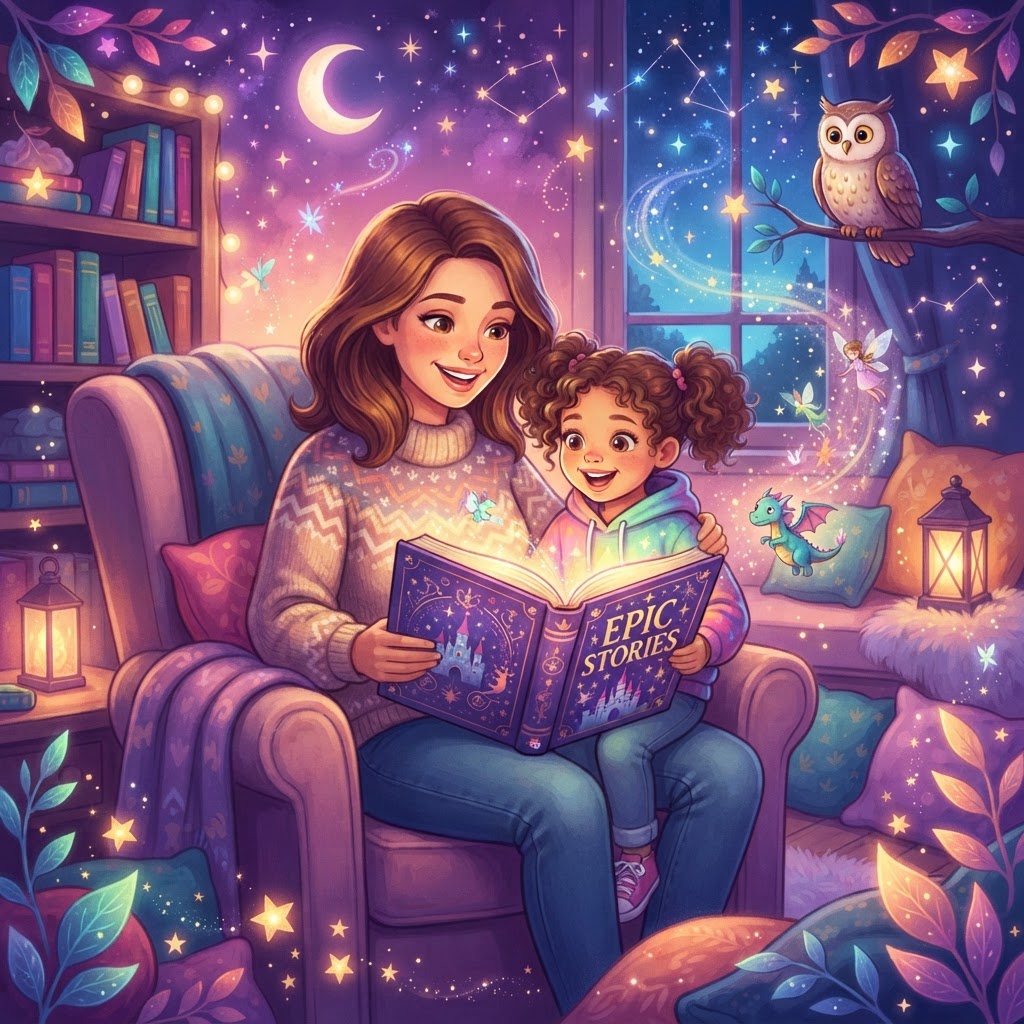
Some nights call for more than a quick bedtime book. 30 minute stories give families space to settle in, laugh together, wonder together, and follow a bigger adventure from beginning to end. If you want epic bedtime stories that feel special without being overwhelming, a half-hour read-aloud can be the sweet spot for weekends, holidays, and cozy family reading nights.
What makes 30 minute stories special for family reading nights?
30 minute stories feel “big” to children, but they are still manageable for adults. They are long enough to build suspense, deeper character arcs, and memorable family moments, yet short enough to finish in one sitting or split across two nights.
That matters because children often enjoy stories that let them linger in a world a little longer. A short story can calm bedtime beautifully, but long family stories create a fuller experience. There is more room for problem-solving, emotional growth, and the kind of “what do you think happens next?” conversations that turn reading into connection.
They also work well as a step up from shorter formats. If your child already loves quick 5-minute bedtime stories or is ready to move beyond 15-minute reads for older kids, a 30-minute read can feel like a natural next stage.
When should parents choose epic bedtime stories instead of shorter reads?
Choose epic bedtime stories when you want reading to be the main event, not just the bedtime routine. They are best for evenings when you have time to slow down and your child has the energy to follow a longer plot.
A 30-minute story is especially useful for:
- Friday or Saturday family reading nights
- Vacation evenings or holiday traditions
- Rainy afternoons when you want a calm shared activity
- Sibling read-alouds with mixed ages
- Children who love cliffhangers, quests, and chapter-book energy
They are not the best fit for every child every night. Toddlers and overtired preschoolers may do better with 3-minute toddler stories or other very short reads. In practice, many families do well by matching story length to the moment rather than forcing one format to work all the time.
A simple rule helps: if your child is restless, go shorter; if your child is curious, chatty, and asking for “one more chapter,” go longer.
How can long family stories support child development?
Longer read-aloud stories can support language, attention, and emotional understanding when they are shared in warm, responsive ways. The benefit comes not just from the story itself, but from the back-and-forth conversation around it.
The American Academy of Pediatrics has long emphasized that shared reading supports early literacy and parent-child bonding. Research and classroom practice also show that children build vocabulary and comprehension when adults pause to explain words, predict events, and connect stories to real life.
Longer stories add a few extra strengths:
- Sustained attention: children practice staying with a plot over time
- Narrative memory: they remember characters, settings, and earlier clues
- Emotional insight: they see how characters handle setbacks and recover
- Conversation skills: they ask questions, infer meaning, and retell events
This fits with the “serve and return” model described by the Harvard Center on the Developing Child. When a child reacts to a story and an adult responds, that back-and-forth supports healthy development. Read-aloud guidance from Reading Rockets also highlights how expressive reading and discussion strengthen comprehension.
How should you break a 30-minute story into chapters?
The best 30-minute stories are built in small chapters or clear story beats. Breaking an epic story into sections helps children follow the plot and gives parents easy stopping points.
A simple structure works well:
-
Chapter 1: The setup
Introduce the child hero, the setting, and the ordinary world. -
Chapter 2: The problem
Something changes: a map appears, a storm arrives, a friend goes missing. -
Chapter 3: The challenge
The hero faces two or three obstacles and needs help, courage, or clever thinking. -
Chapter 4: The turning point
A new idea, secret, or discovery changes everything. -
Chapter 5: The ending
The hero solves the problem, returns home, and reflects on what was learned.
For younger children, each chapter can be 3-5 minutes. For older children, 5-7 minutes usually works well. If you are reading at bedtime, end each chapter with a one-sentence recap: “So far, Luna has found the key, crossed the river, and is still searching for the moon garden.”
That recap is not just helpful. It supports comprehension and makes multi-night reading much easier.
What are five epic story ideas families can try?
The most successful epic stories combine a clear goal, repeating patterns, and a satisfying emotional payoff. Here are five story ideas that work beautifully as 30 minute stories.
Could a lost star adventure become a magical family favorite?
A child notices that one star is missing from the sky and sets off to return it. Along the way, they meet talking animals, solve sky-themed riddles, and learn that small acts of kindness can light the way home.
What happens when siblings sail to the edge of the map?
Two siblings find a secret boat that only appears at twilight. Their mission is to deliver a glowing shell before sunrise, with each island teaching a different lesson about teamwork, patience, or courage.
Why do children love castle mysteries with hidden rooms?
A friendly old castle starts whispering clues at bedtime. The child hero explores room by room, uncovering a forgotten family story and helping the castle remember its happiest celebration.
How can a dragon rescue story feel exciting without being too scary?
A baby dragon has lost its fire and believes it can never fly with confidence again. The hero travels through snowy peaks, a singing forest, and a warm cave village to help the dragon discover that bravery grows slowly.
Could a time-travel pajama quest make bedtime more fun?
A pair of magical pajamas sends a child to different moments in history or future worlds. Each stop includes one challenge and one discovery, making the story feel grand while staying playful and age-appropriate.
If you want to customize ideas like these around your child’s interests, you can create your own personalized bedtime story and tailor the hero, setting, and adventure style.
How can you use InstaTales' epic story length setting to make longer stories easier?
The easiest way to create epic bedtime stories is to plan the length before you generate them. InstaTales works best when you choose a longer format on purpose and give the story a strong structure.
Here is a simple approach:
- Choose your child’s age and reading style
- Select the epic or longer story length setting
- Add one clear goal, such as “find the moon crystal” or “save the festival”
- Ask for 4-5 chapters with a recap between sections
- Include one comforting ending, even if the adventure is big
You can also guide the tone. For bedtime, ask for “exciting but gentle,” “no scary villains,” or “cozy ending.” That keeps the story immersive without making it too activating before sleep.
For busy families, it helps to save longer reads in your story library so you can return to them over several nights. That is especially useful if one child wants the same story again, which is very common and developmentally normal.
Frequently Asked Questions
Are 30 minute stories too long for bedtime?
Not always. They work best on calm evenings when bedtime is not rushed, or when you split the story into two chapters one night and three the next.
What age group enjoys epic bedtime stories most?
Many children ages 5-10 enjoy them most, especially if they can follow a longer plot. Younger children can enjoy them too when the story includes repetition, clear chapter breaks, and plenty of pictures in their mind.
Should I finish a long story in one sitting?
No, and you do not need to. Many long family stories are even better when read over two or three nights with a quick recap at the start.
How do I keep siblings with different ages engaged?
Use a simple main plot, repeated phrases, and one or two roles each child can listen for. You can also mix formats, using shorter reads on some nights and longer chapter adventures on others.
What makes a 30-minute story feel “epic” to a child?
Scale, emotion, and discovery. A story feels epic when the child hero has a meaningful goal, faces several steps along the way, and reaches an ending that feels earned and memorable.
Ready to Create a Personalized Bedtime Story?
Use our free AI bedtime story generator to create a personalized illustrated story for your child in 30 seconds — no credit card needed.
Popular story types:
Maya Rodriguez
Lead Content Editor & Early Literacy Specialist
Maya is a former early childhood educator and literacy specialist with over a decade of experience helping children develop a love of reading. She leads content at InstaTales, where she writes about the science of storytelling, child development, and how families can use personalized AI stories to build literacy and emotional resilience.
instatales.ai