Waiting Room Stories for Kids: 5 Quick Ideas
Stuck in a waiting room? These short stories will keep your child entertained and calm.
✦ Key Takeaways
- •Short stories help because they give children structure, connection, and a predictable ending.
- •The best waiting-time stories are calm, short, and interactive.
- •The most useful short stories for waiting are simple, repeatable, and easy to personalize.
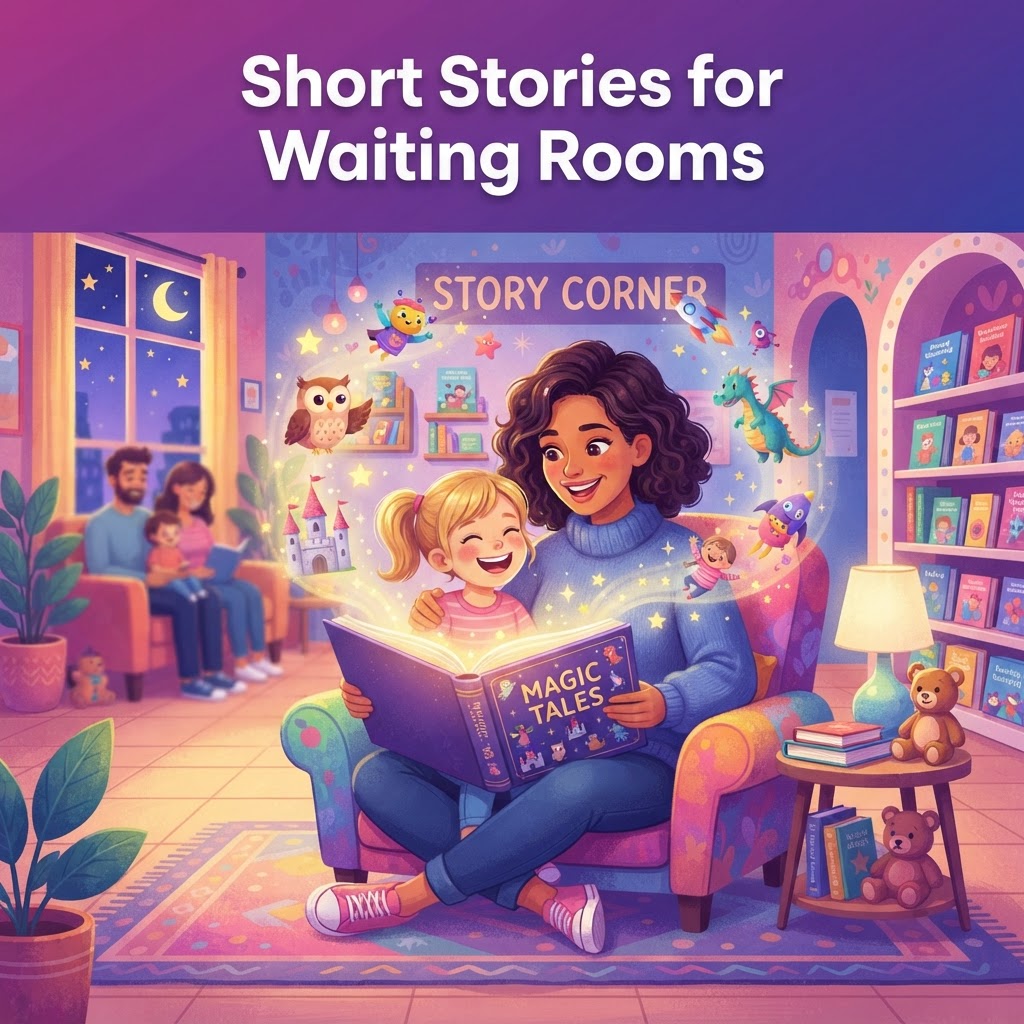
Waiting with a child can feel much longer than the clock says. The good news is that waiting room stories for kids can turn stressful, fidgety minutes into a calmer, more connected moment—whether you are at the doctor, in a school office, or stuck in a long line.
Stories work especially well because they are portable, screen-free, and easy to tailor to your child’s mood. In this guide, you’ll learn how to use quick stories for waiting, five easy story ideas you can tell anywhere, and how InstaTales can help when you need an on-demand story fast.
Why are waiting room stories for kids so effective?
Short stories help because they give children structure, connection, and a predictable ending. When a child is unsure how long they must wait, a simple story creates a small sense of order and safety.
This matters more than many parents realize. Shared reading and storytelling support language, attention, and emotional connection, and the American Academy of Pediatrics has long recommended reading together as part of healthy development. Research from the Harvard Center on the Developing Child also shows that warm, responsive interactions help buffer stress.
In practical terms, a short story can help a child:
- focus on one clear idea instead of the noise around them
- feel close to you through your voice and attention
- practice patience in a way that feels active, not forced
- move from worry or boredom into imagination
That is why short stories for queues are often more effective than simply saying, “Be patient.” A story gives patience a shape.
How can you use quick stories for waiting without overstimulating your child?
The best waiting-time stories are calm, short, and interactive. Aim for one to three minutes, use a gentle voice, and keep the plot simple enough to follow in a busy environment.
A practical method is to think of waiting stories as “micro-stories.” They need only three parts:
- a familiar character
- a tiny problem
- a comforting ending
For example: “A little penguin lost his blue scarf, asked two friends for help, and found it in his own pocket.” That is enough.
A few educator-tested tips make these stories work even better:
- Match the setting. In a doctor’s office, choose reassuring plots, not wild chase scenes.
- Use your child’s name. Personalized stories hold attention longer.
- Invite small participation. Ask, “Should the rabbit open the red door or the green door?”
- Keep movement tiny. Finger motions, whispering, or counting are better than jumping or acting out.
- End with regulation. Finish with a yawn, a stretch, or three slow “dragon breaths.”
If your child is very young, picture-free oral stories often work beautifully. If you want more age-specific inspiration later at home, these 3-minute stories for toddlers are a helpful starting point.
What are five short story ideas for queues and waiting rooms?
The most useful short stories for waiting are simple, repeatable, and easy to personalize. These five ideas are designed to be told aloud in under three minutes.
1. The Tiny Turtle Who Collected Smiles
A tiny turtle feels shy in a big waiting room, so he quietly collects one smile from each person he passes. By the end, his shell glows warm and golden from all the kindness he found.
Why it works: it encourages observation, calm social awareness, and a gentle emotional shift.
2. The Elevator That Only Moved for Kind Words
A child and a toy bear step into a magical elevator, but it will only move when someone says kind words like “please,” “thank you,” or “you can go first.” Each floor opens to a silly surprise: balloon cats, dancing socks, or sleepy clouds.
Why it works: it turns waiting into a language game and gives children a sense of progress.
3. The Brave Bandage on a Big Adventure
A small bandage is nervous about doing its job, but it learns that helping someone feel better is a brave thing. It rides in a nurse’s pocket, meets a stethoscope, and ends up proudly helping a child after a tiny scrape.
Why it works: this is especially good in medical settings because it makes care items feel friendly instead of scary.
4. The Queue of Sleepy Robots
Five robots are waiting in line to recharge, but each one powers down in a funny way—one hums, one wiggles, one whispers, one yawns, and one takes three deep breaths. Your child can copy each robot softly.
Why it works: it builds co-regulation through quiet imitation, which child development specialists often use to support self-control.
5. The Pencil That Drew a Shortcut to Home
A pencil in your bag can draw tiny doors anywhere: on a shoe, a sleeve, or a receipt. Behind each little door is a familiar, comforting place—home, grandma’s kitchen, the park, or bedtime.
Why it works: it uses imagination to reconnect a child with safe, known routines.
For older children, you can add a twist ending or a choice point. If your child likes slightly longer plots once you are back home, try these 15-minute stories for older kids.
How should waiting room stories change by age?
Yes, age matters because attention span, language level, and emotional needs change quickly from ages 1 to 10. A story that soothes a toddler may feel too simple for an eight-year-old.
Here is a quick guide:
- Ages 1-3: Use repetition, animal sounds, and one clear emotion. Think: “Bunny waited, breathed, and found Mama.”
- Ages 4-6: Add a tiny problem and a playful solution. This age loves predictable patterns and gentle humor.
- Ages 7-10: Give them choices, mystery, or a mission. Older children often enjoy helping shape the story.
The CDC developmental milestones are a helpful reminder that children’s communication and self-regulation skills grow in stages. When in doubt, make the story shorter and slower, not longer and louder.
A useful rule from literacy programs such as Reach Out and Read is to keep shared reading and storytelling warm and responsive. If your child interrupts, changes the plot, or asks the same question three times, that is not a problem—it is participation.
How can InstaTales help when you need an on-demand story fast?
InstaTales can make waiting easier by giving you a personalized story in the moment, based on your child’s age, interests, and mood. That is especially helpful when you have already told your usual rabbit, truck, and unicorn stories ten times.
Instead of searching for random videos or trying to invent a plot under pressure, you can create your own personalized bedtime story in seconds. A child who loves dinosaurs, feelings charts, or space kittens can get a story that feels made just for them.
A practical way to use InstaTales for quick stories for waiting is:
- choose a familiar character or favorite theme
- set a short length
- ask for a calm tone and a reassuring ending
- save the winners in your story library for future appointments
If you want a faster starting point, use the ready-made story templates. They are especially helpful when your child needs something specific, like “a brave story for a check-up” or “a gentle story for a long queue.”
What should you remember in medical or high-stress waiting situations?
In stressful settings, the goal is not entertainment first—it is regulation first. A story should help your child feel safe, not just busy.
That means choosing themes like comfort, helpers, courage, and routine. Avoid stories with getting lost, injury, loud conflict, or long suspense if your child is already anxious.
Try this simple sequence:
- name what is happening: “We are waiting our turn”
- offer a choice: “Do you want a bunny story or a robot story?”
- keep your body calm and close
- end with a soothing action like breathing, squeezing hands, or counting toes
If your child does not want a story, that is okay too. Sometimes the most effective version is not a full narrative at all, but a repeated line: “The little fox waits, wiggles once, and rests.”
Frequently Asked Questions
How long should a waiting room story be?
Most waiting stories work best at one to three minutes. If your child is calm and engaged, you can tell several short stories instead of one long one.
Are stories better than screens while waiting?
Often, yes—especially for co-regulation and connection. Stories let children use imagination, hear your voice, and stay calmer without the fast pace many screens bring.
What if my child is too upset to listen to a story?
Start smaller. Use one repeated sentence, a rhythmic rhyme, or a breathing game before trying a full story.
What makes a good story for a doctor’s office?
A good medical waiting story is gentle, predictable, and reassuring. Friendly helpers, brave characters, and calm endings usually work better than action-heavy plots.
Can personalized AI stories really help with waiting?
Yes, they can be very useful when matched to your child’s age and emotional state. Personalized stories feel familiar faster, which can help hold attention and reduce stress in the moment.
Should I reuse the same story again and again?
Absolutely. Repetition helps children feel secure and often improves comprehension, memory, and emotional comfort—especially in uncertain places like waiting rooms.
Ready to Create a Personalized Bedtime Story?
Use our free AI bedtime story generator to create a personalized illustrated story for your child in 30 seconds — no credit card needed.
Popular story types:
Maya Rodriguez
Lead Content Editor & Early Literacy Specialist
Maya is a former early childhood educator and literacy specialist with over a decade of experience helping children develop a love of reading. She leads content at InstaTales, where she writes about the science of storytelling, child development, and how families can use personalized AI stories to build literacy and emotional resilience.
instatales.ai