Brushing Teeth Stories for Kids
Make teeth brushing fun with stories! These short stories are perfect for the dental care routine.
✦ Key Takeaways
- •Stories work because they shift brushing from a demand to a shared experience.
- •The easiest way is to match the story to the brushing steps.
- •The best tooth-brushing story ideas are short, visual, and easy to repeat.
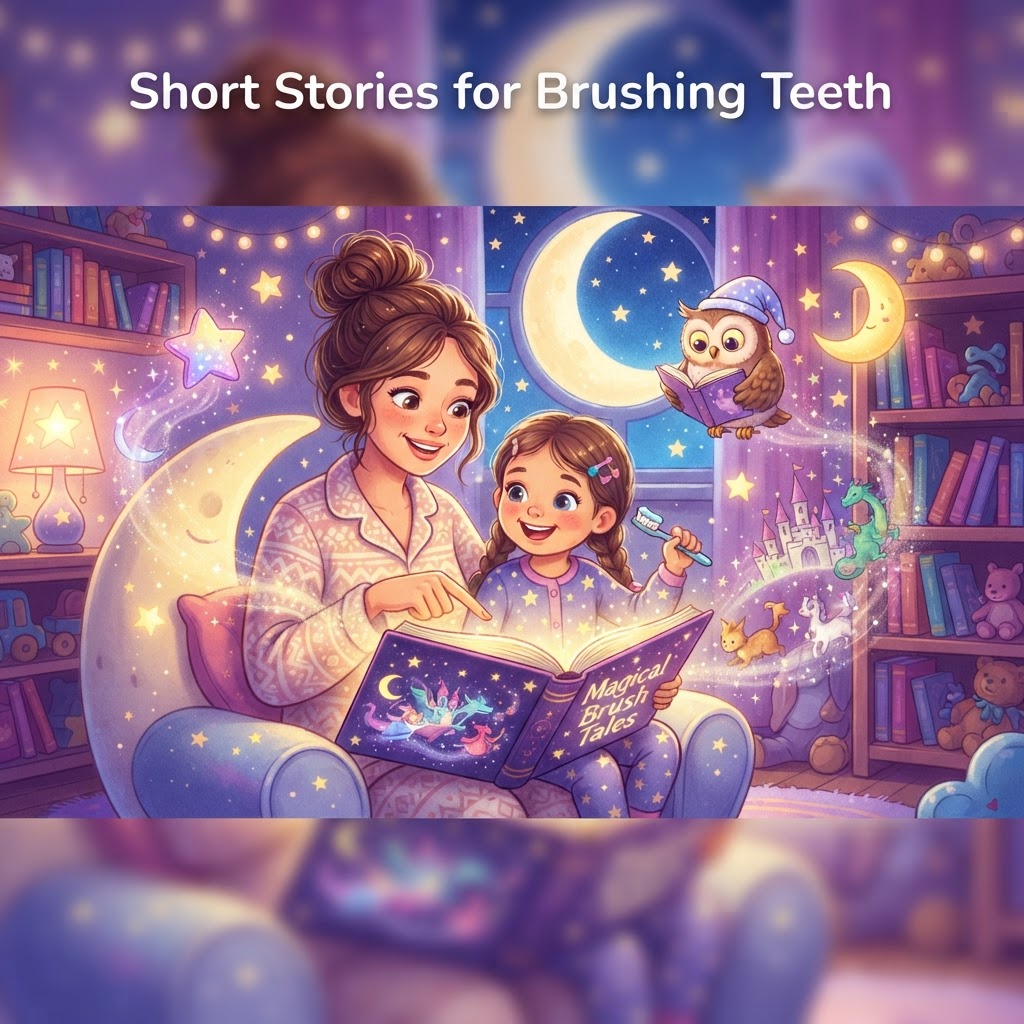
If teeth brushing feels like a nightly negotiation, stories can help. Brushing teeth stories turn a routine into a game, a mini adventure, or a comforting ritual children can predict and enjoy.
That matters because dental care is not optional. Good brushing habits protect children’s teeth, support speech and eating, and reduce the risk of cavities. For many families, tooth brushing stories for kids are one of the simplest ways to add fun without adding more screen time, more rewards charts, or more stress.
Why do brushing teeth stories work so well for kids?
Stories work because they shift brushing from a demand to a shared experience. Instead of “Stand still and open your mouth,” the child hears, “The toothbrush is rescuing the tiny castle from sugar bugs,” and suddenly the task feels playful and possible.
Child development research supports this. The American Academy of Pediatrics notes that predictable routines help children feel secure, and language-rich interactions help them learn. You can read more about how routines support children on HealthyChildren.org. Developmental researchers such as Jerome Bruner and Katherine Nelson also showed that young children learn through repeated routines, shared language, and narrative structure.
Stories help with brushing because they:
- give children a clear beginning, middle, and end
- reduce resistance by adding imagination
- support language development and listening skills
- make the full two minutes feel shorter
- build positive associations with dental care
They also create space to talk about real dental health in simple terms. You can explain that brushing helps remove food and plaque, and that brushing twice a day with fluoride toothpaste protects growing teeth. For basic prevention guidance, the CDC’s oral health prevention page is a strong place to start.
How can you use a story during the two-minute brushing routine?
The easiest way is to match the story to the brushing steps. Give each part of brushing a role in the plot, and keep the pace lively enough to last about two minutes.
Here is a simple structure that works for toddlers through early elementary ages:
- Start before the toothbrush touches teeth. Begin with one line: “Tonight, Captain Brush has a mission.”
- Give the mouth a setting. It might be a jungle, castle, spaceship, or underwater cave.
- Assign each mouth area a task. Front teeth wave hello, back teeth hide crunchy crumbs, molars guard the treasure gate.
- Narrate while brushing. “Now we sweep the sugar bugs from the top cliffs.”
- End with a calm closing line. “The teeth are shining, and now they can rest.”
A few practical tips make dental stories children actually want to hear:
Keep the story age-matched
- Ages 1-3: Use repetition, sound effects, and one main character.
- Ages 4-6: Add a simple problem and solution.
- Ages 7-10: Let the child invent the villain, mission, or ending.
Let the child participate
Ask quick questions while brushing:
- “Which tooth needs help next?”
- “Should the dragon brush in circles or swishes?”
- “Did we save the sleepy molars yet?”
Pair the story with routine cues
Children often respond best when the whole bedtime sequence feels familiar. If stories already help with bath-time routines or tricky transitions, tooth brushing can become the next predictable storytelling moment.
What are five short tooth-brushing story ideas you can try tonight?
The best tooth-brushing story ideas are short, visual, and easy to repeat. You do not need a long plot. You just need enough imagination to carry your child through the brushing routine.
1. The Sugar Bug Sweep
Tiny sugar bugs threw a crumb party on the teeth while your child was eating. Super Brush arrives with foamy soap clouds and sweeps every tooth clean before bedtime.
This one works well for younger children because the villain is easy to understand and the action is repetitive: sweep, swish, spit, smile.
2. The Tooth Castle Night Patrol
Each tooth is a tower in a shining castle. At night, the toothbrush knight checks every tower, especially the hidden back ones, to make sure no sticky goo sneaks inside.
Use this story if your child forgets the back teeth. The “night patrol” naturally reminds them that every tooth needs a turn.
3. Dino Dentist and the Roaring Molars
A friendly dinosaur dentist hears that the molars are roaring because crunchy food got stuck in their cave. With a tiny brush and bubbly mint waterfall, Dino Dentist scrubs the cave until the molars purr instead of roar.
This story is ideal for children who like animals, big sounds, and silly voices.
4. Rocket Brush to Planet Sparkle
Your child is the captain of a toothbrush rocket. The mission is to visit Top Teeth, Bottom Teeth, Left Side, and Right Side before the moon timer runs out.
This is a smart choice for children who rush. The story gives structure to the full mouth and makes the two-minute timer feel like part of the adventure.
5. The Sleepy Teeth Pajama Story
All the teeth are getting ready for bed. They need a warm bubble bath, a gentle scrub, and a shiny rinse so they can put on their “pajamas” and sleep peacefully.
This story is soothing, not exciting, so it fits well into bedtime. It also pairs nicely with other calming routines, like quiet-time stories or bedtime reading.
How can InstaTales help you create personalized dental routine stories?
InstaTales makes it easier to create stories that feel made for your child, not copied from a script. Personalization matters because children listen longer when the hero sounds like them, loves what they love, and faces a familiar challenge.
With InstaTales, you can create your own personalized bedtime story based on:
- your child’s name and age
- favorite characters or themes
- specific brushing struggles, like hating foam or refusing back teeth
- the exact tone you want: silly, calming, brave, magical
A useful prompt might be:
“Write a 2-minute brushing story for a 5-year-old named Eli who loves trucks and resists brushing his back teeth. Make it cheerful and reassuring, and include why brushing helps keep teeth strong.”
If you want a quicker start, browse ready-made story templates. When you find versions your child loves, save them in your story library so you can reuse favorites without starting over. That repeatability is powerful; children often cooperate more when the same story returns night after night with small variations.
In classrooms or early years settings, personalized hygiene stories can also support health units and routine learning. For group use, InstaTales for teachers can help educators create age-appropriate routine stories tied to literacy and self-care themes.
What else supports healthy brushing habits at home?
Stories help, but they work best when paired with sound dental habits and realistic expectations. Think of stories as the bridge that makes healthy behavior easier to practice consistently.
A few essentials matter most:
- Brush twice a day with fluoride toothpaste.
- Use a soft-bristled toothbrush sized for your child.
- For toothpaste amounts and age-specific advice, follow guidance from the American Academy of Pediatric Dentistry.
- Young children usually still need adult help or close supervision, especially for thorough brushing.
- Keep the routine in the same order each night: toilet, bath, pajamas, brushing, story, bed.
It can also help to connect brushing with other successful routines. If your child already responds well to story-based structure for getting dressed in the morning or mealtime, the same approach can make dental care feel normal rather than dramatic.
Most of all, stay calm. Children build habits through repetition, not perfection. A cheerful two-minute routine repeated hundreds of times teaches far more than one perfect night followed by a week of struggles.
Frequently Asked Questions
What age are tooth brushing stories for kids best for?
They work especially well from ages 2 to 8, when imagination and routine are both powerful motivators. Older children can still enjoy them if they help create the plot themselves.
How long should a brushing teeth story be?
Aim for about two minutes so the story matches the brushing time. Short, simple stories usually work better than long ones with lots of details.
Can stories really help children brush better?
Yes, stories often improve cooperation because they reduce stress and make the routine more engaging. They do not replace proper brushing technique, but they make it easier for parents to guide that technique.
Should brushing stories mention cavities or dentists?
They can, but keep the tone reassuring rather than scary. Gentle language about “keeping teeth strong” or “washing away sugar bugs” is usually more effective than fear-based messaging.
How can I make dental stories children want to hear again?
Use repetition, favorite characters, and familiar catchphrases. Children love stories they can predict, especially during everyday routines.
Can I use InstaTales for routines beyond tooth brushing?
Absolutely. Many families use personalized stories for bath time, transitions, quiet time, and bedtime. A consistent storytelling approach can support multiple parts of the day.
Ready to Create a Personalized Bedtime Story?
Use our free AI bedtime story generator to create a personalized illustrated story for your child in 30 seconds — no credit card needed.
Popular story types:
Maya Rodriguez
Lead Content Editor & Early Literacy Specialist
Maya is a former early childhood educator and literacy specialist with over a decade of experience helping children develop a love of reading. She leads content at InstaTales, where she writes about the science of storytelling, child development, and how families can use personalized AI stories to build literacy and emotional resilience.
instatales.ai