Stories from Brazil for Curious Kids
Travel to Brazil through these enchanting stories for children — tales of adventure, wisdom, and wonder from around the world.
✦ Key Takeaways
- •Stories from Brazil are a strong choice for children because they blend vivid settings, memorable folklore, and big-hearted values like courage, community, and respect for nature.
- •Brazil storytelling is shaped by Indigenous, African, and Portuguese influences, all woven together through oral tradition, music, and community celebrations.
- •The best Brazil-inspired story ideas combine real cultural context with child-friendly wonder.
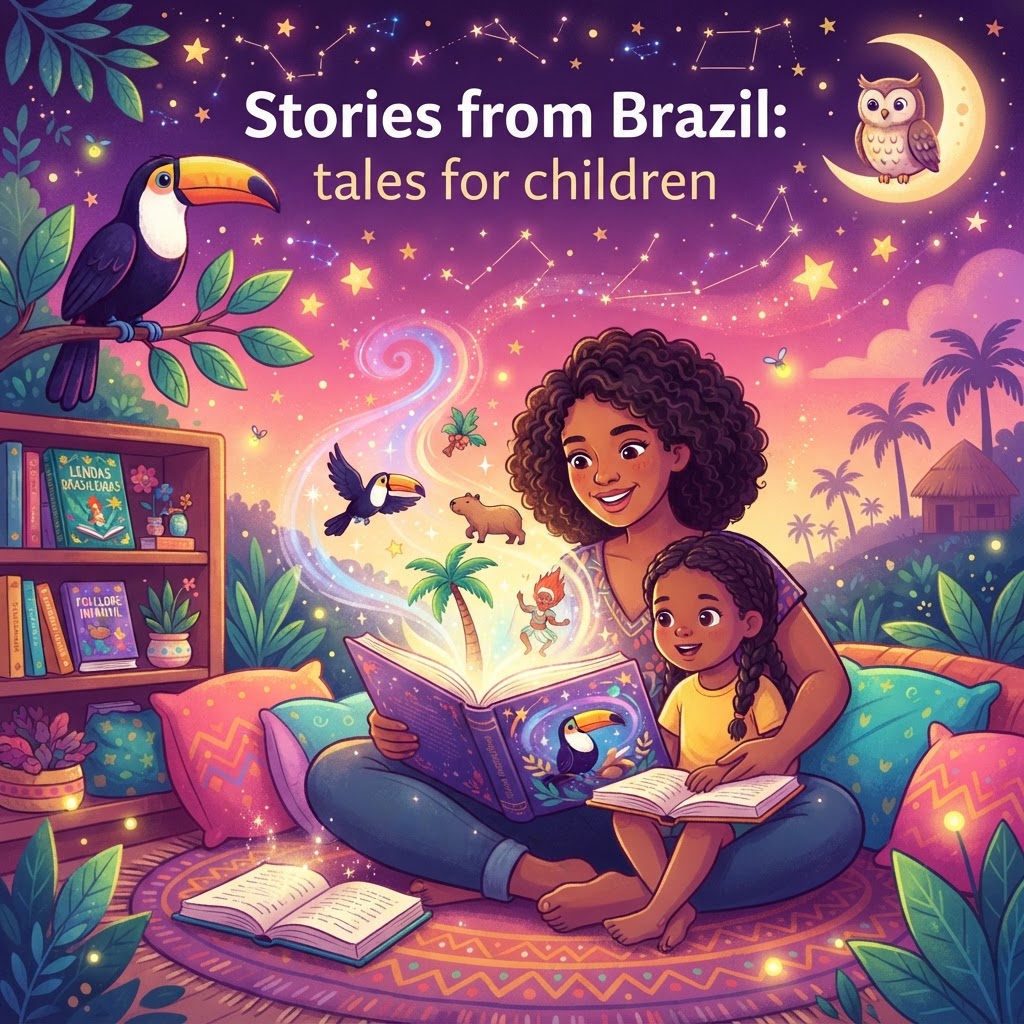
Brazil is a wonderful place to explore through story. Stories from Brazil invite children into rainforests, beaches, busy cities, river villages, music-filled festivals, and folktales where nature feels alive.
For families, these tales do more than entertain. Good Brazil children stories build cultural curiosity, grow vocabulary, and help kids imagine life beyond their own neighborhood in a way that feels warm, playful, and age-appropriate.
Why are stories from Brazil such a strong choice for children?
Stories from Brazil are a strong choice for children because they blend vivid settings, memorable folklore, and big-hearted values like courage, community, and respect for nature. They give young readers adventure while also introducing real cultural and geographic diversity.
Brazil is home to the Amazon rainforest, the Pantanal wetlands, Atlantic coast beaches, and cities such as Rio de Janeiro and Salvador. That variety gives parents and teachers many ways to choose the right tone for a child: animal stories for preschoolers, friendship adventures for early readers, or folklore-inspired quests for older children.
These stories also work beautifully at bedtime. Repetition, rhythm, and sensory detail help children stay engaged, and shared reading supports language and connection, as the American Academy of Pediatrics has emphasized in its literacy guidance for families.
Which storytelling traditions shape Brazil children stories?
Brazil storytelling is shaped by Indigenous, African, and Portuguese influences, all woven together through oral tradition, music, and community celebrations. That mix is what makes Brazil tales for kids feel so rich and distinctive.
Many traditional stories from Brazil come from oral storytelling. Elders, parents, and community members pass on tales about rivers, forest guardians, clever animals, and children who learn by listening closely to the land. In these stories, nature is not just a backdrop. It is a teacher.
A few important influences include:
- Indigenous traditions that center rivers, animals, spirits, and care for the forest
- Afro-Brazilian traditions that bring rhythm, resilience, and community into story and song
- Portuguese influences seen in festival customs, saints’ days, and poetic storytelling forms
- Cordel literature, especially in northeastern Brazil, where short printed booklets share folktales and adventures in lively, accessible language
For children, this matters because stories become a bridge to empathy. Back-and-forth storytelling also supports what the Center on the Developing Child at Harvard University calls “serve and return” interaction, where responsive conversation helps build language and thinking skills.
If your child loves regional nature stories, they may also enjoy these stories from the Amazon, which pair especially well with Brazil-themed reading.
What are five Brazil tales for kids inspired by culture and geography?
The best Brazil-inspired story ideas combine real cultural context with child-friendly wonder. Here are five stories from Brazil you can adapt for ages 1-10, each rooted in a meaningful part of Brazilian life.
1. The child who followed the Curupira’s backward footprints
A curious child wanders too far into the forest and meets the Curupira, a famous Brazilian folktale figure known for protecting the woods and leaving backward footprints. Instead of punishment, the child receives a challenge: help lost animals find water and learn how to leave the forest unharmed.
Cultural context: The Curupira appears in Brazilian folklore as a guardian of the forest. In child-friendly versions, this figure can teach respect for animals, trees, and the idea that nature deserves care, not control.
2. The pink dolphin who borrowed a song
A child living by the river hears that a boto, or pink river dolphin, has taken a grandmother’s old song downriver. The child sets off by canoe, meeting birds, fish, and floating lanterns before discovering that the song was never stolen at all; it was being carried to the next village for a celebration.
Cultural context: The boto is part of Amazonian folklore and is often linked with mystery and transformation. For younger children, focus on river life, family memory, and music rather than the more complex adult themes found in some traditional versions.
3. The lanterns of Festa Junina
During Festa Junina, a child helps decorate a neighborhood with paper flags, lanterns, and bright costumes. When a sudden rainstorm scatters the decorations, the child works with friends to rebuild the celebration before the dancing starts.
Cultural context: Festa Junina is a beloved June festival in Brazil with rural roots, traditional foods, dancing, and community spirit. It gives children a joyful way to learn about seasonal celebration, cooperation, and local custom.
4. The shy capoeira player in Salvador
A child wants to join a capoeira circle but feels nervous stepping into the center. With guidance from an older cousin and the beat of the berimbau, the child learns that capoeira is not about winning a fight. It is about rhythm, balance, listening, and confidence.
Cultural context: Capoeira is an Afro-Brazilian art form with deep historical roots in resistance, movement, and music. UNESCO recognizes the capoeira circle as Intangible Cultural Heritage, making it a meaningful setting for stories about identity and perseverance.
5. The jaguar who waited for the rain
In the Pantanal, a child notices that the dry season has made life harder for animals. When the first rains finally come, the child helps guide a lost jaguar cub back to its mother while learning how wetlands change through the year.
Cultural context: The Pantanal is one of the world’s great wetland regions and a powerful setting for Brazil children stories about wildlife, seasons, and interdependence. This kind of story helps children see Brazil as more than one landscape.
For families exploring world folktales, pairing these with stories from Mexico can spark great conversations about how different cultures use animals, festivals, and heroes in similar ways.
How can parents and teachers make Brazil storytelling meaningful for kids?
Parents and teachers make Brazil storytelling meaningful by connecting each tale to one clear cultural detail and one simple conversation prompt. Children do not need a lecture. They need a story, a question, and a chance to wonder.
Try this simple approach:
- Show Brazil on a map before reading
- Introduce one key word such as Amazon, berimbau, or Festa Junina
- Ask one open question: “Why do you think the forest mattered in this story?”
- Repeat a favorite phrase so younger children can join in
- Compare the story with the child’s own life, family, or celebrations
In classrooms, this works especially well for geography, social studies, and read-aloud units. Teachers creating global literature sets can also use InstaTales for teachers to build age-appropriate assignments around storytelling and culture.
How can you create personalized stories set in Brazil with InstaTales?
You can create personalized Brazil storytelling experiences by combining a child’s interests with a specific Brazilian setting, tradition, or folktale element. Personalization helps children connect more deeply because the story feels made for them.
When you create your own personalized bedtime story, start with four details:
- Your child’s name and age
- A Brazil-inspired setting, like the Amazon, Salvador, Rio, or the Pantanal
- A gentle theme, such as bravery, sharing, or caring for nature
- One cultural touchpoint, like a festival, river boat, rainforest animal, or capoeira rhythm
Here are a few prompt ideas:
- “Create a bedtime story about Maya, age 5, who visits Brazil and befriends a pink river dolphin in the Amazon.”
- “Write a gentle story for Leo, age 7, about learning confidence during a Festa Junina dance.”
- “Make a Brazil adventure for Ana, age 8, where she helps the Curupira protect the forest.”
Afterward, save favorites in your story library so children can revisit beloved characters and settings. Re-reading matters: familiar stories support comprehension, confidence, and emotional security.
If you want more global inspiration, the InstaTales blog is a helpful place to keep building a family story collection around different countries and traditions.
Frequently Asked Questions
What age are stories from Brazil best for?
Stories from Brazil can work for ages 1-10 when the language and plot are adjusted. Younger children do best with animal adventures and repetition, while older children can enjoy folklore, festivals, and more layered cultural context.
Are Brazil tales for kids based on real traditions?
Many are inspired by real Brazilian folklore, celebrations, and landscapes, but child-friendly retellings often simplify details. It is best to present them as stories inspired by Brazilian culture rather than exact versions of every traditional tale.
How can I talk about Brazilian culture respectfully with children?
Focus on curiosity, accuracy, and specificity. Name real places, avoid stereotypes, and explain that Brazil includes many communities, languages, traditions, and environments.
Can personalized AI stories help children learn about other cultures?
Yes, when used thoughtfully, personalized stories can make new places feel more relatable and memorable. The key is to pair imagination with real cultural details and supportive adult conversation.
What themes work especially well in Brazil children stories?
Nature, music, family, celebration, friendship, and courage all work beautifully. These themes fit both traditional folklore and modern bedtime stories set in Brazil.
How can teachers use Brazil storytelling in class?
Teachers can use Brazil-themed stories for geography, literacy, art, and cultural comparison activities. A single story can lead to map work, rhythm exploration, vocabulary practice, or a discussion about protecting nature.
Get a new bedtime story every week
Free, personalized, and delivered to your inbox. No spam, ever.
Ready to Create a Personalized Bedtime Story?
Use our free AI bedtime story generator to create a personalized illustrated story for your child in 30 seconds — no credit card needed.
Popular story types:
Maya Rodriguez
Lead Content Editor & Early Literacy Specialist
Maya is a former early childhood educator and literacy specialist with over a decade of experience helping children develop a love of reading. She leads content at InstaTales, where she writes about the science of storytelling, child development, and how families can use personalized AI stories to build literacy and emotional resilience.
instatales.ai