Stories from China for Children: 5 Magical Tales
Travel to China through these enchanting stories for children — tales of adventure, wisdom, and wonder from around the world.
✦ Key Takeaways
- •Stories from China captivate children because they combine wonder with wisdom.
- •China storytelling helps children build language, empathy, memory, and cultural understanding.
- •China children stories are shaped by a long tradition of oral storytelling, folklore, festivals, family values, and regional diversity.
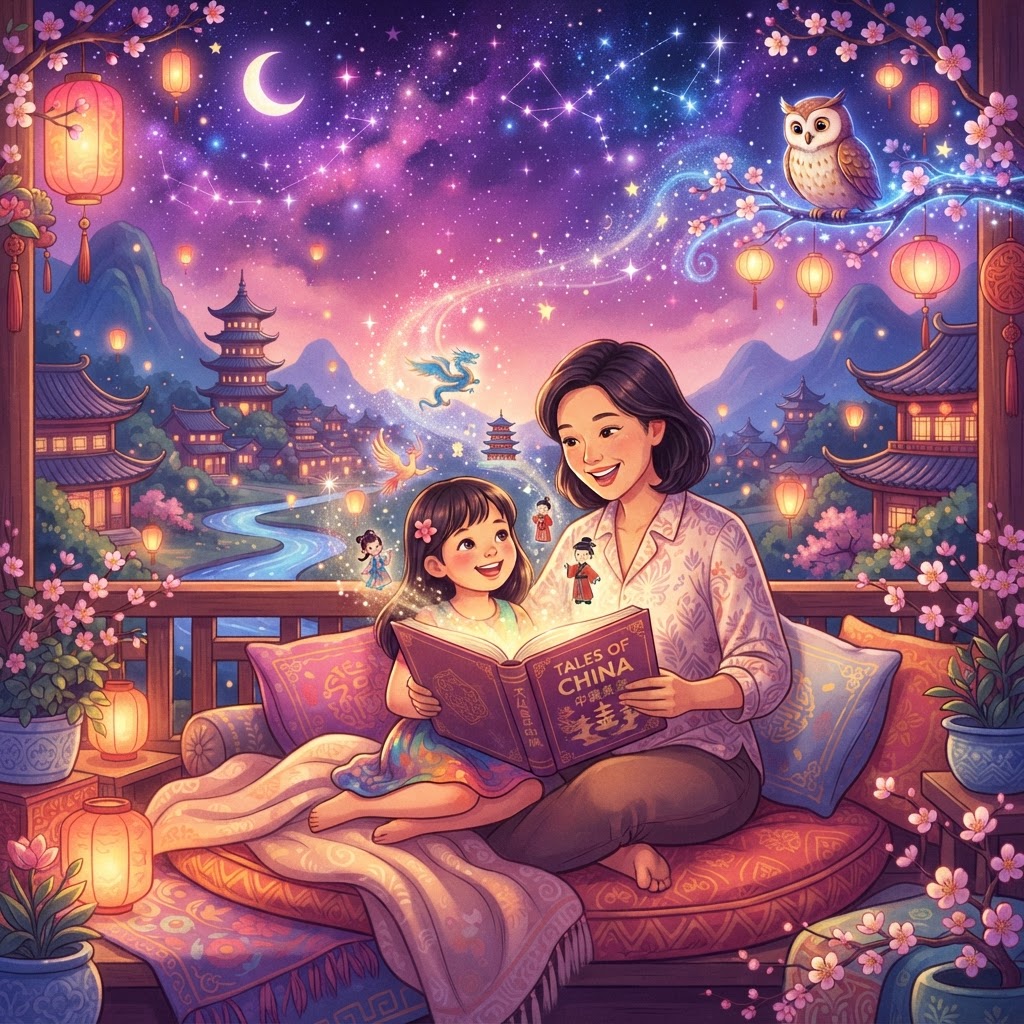
From misty mountains and bamboo forests to bright festivals and ancient rivers, stories from China can help children travel through imagination while learning about a rich culture. These tales often blend adventure, kindness, clever thinking, and respect for family and nature. In this guide, you’ll find a simple introduction to China storytelling, five original story ideas inspired by Chinese culture and geography, and practical ways to create your own personalized bedtime tales with InstaTales.
If you’d like more traditional tale inspiration too, our guide to Chinese folktales for kids is a great place to start.
Why do stories from China captivate children?
Stories from China captivate children because they combine wonder with wisdom. They often include memorable settings, brave young heroes, talking animals, magical objects, and gentle life lessons that children can understand.
Many China children stories use patterns children love: a journey, a problem to solve, and a lesson learned through courage or kindness. A child might meet a moon rabbit, cross a mountain path, help a lost crane, or learn patience from an elder. These story shapes are easy for young listeners to follow.
They also feel big and vivid. China’s landscapes include deserts, rice fields, snowy regions, forests, megacities, and famous rivers, so there is plenty for children to picture. That variety makes China tales for kids especially strong for bedtime, classroom read-alouds, and imaginative play.
How does China storytelling help children learn?
China storytelling helps children build language, empathy, memory, and cultural understanding. When adults read or tell stories aloud, children practice listening, predicting, and connecting new ideas to what they already know.
Research supports this. The American Academy of Pediatrics recommends shared reading from an early age because it supports language and relationships. Early childhood experts at NAEYC also note that reading aloud strengthens vocabulary, comprehension, and emotional connection.
There is strong evidence for interactive reading too. Studies by Grover Whitehurst and colleagues on dialogic reading found that when adults ask simple questions during a story, children’s expressive language grows. That works beautifully with stories from China because you can pause and ask:
- “What do you think is behind the mountain?”
- “Why did the child help the old woman?”
- “What would you do with a lantern of your own?”
These small conversations turn a bedtime story into meaningful learning.
What storytelling traditions shape China children stories?
China children stories are shaped by a long tradition of oral storytelling, folklore, festivals, family values, and regional diversity. In other words, there is no single “Chinese story style.” Instead, many traditions come together.
Traditional Chinese tales often include:
- Folktales and fables with moral lessons
- Animal stories connected to cleverness, loyalty, or balance
- Festival stories linked to Lunar New Year, the Lantern Festival, and Mid-Autumn Festival
- Legends and epics featuring heroes, immortals, dragons, or famous journeys
- Chengyu-inspired tales, based on short idioms with deeper meanings
A key part of China storytelling is the way stories connect everyday life with larger values. Respect for elders, perseverance, harmony, learning, and community often appear naturally in the plot rather than as a lecture.
Regional culture matters too. A story set in Sichuan will feel different from one set near Beijing, on the Silk Road, or by the Li River. For families comparing traditions across Asia, our stories from Japan can also help show how neighboring cultures use different symbols, landscapes, and story rhythms.
For broader cultural learning, Asia Society offers helpful educational resources on China and Asian cultures.
Which China tales for kids work especially well at bedtime?
The best China tales for kids at bedtime combine a calm setting, one clear problem, and a reassuring ending. Here are five original story ideas inspired by Chinese culture and geography, each with simple cultural context you can share with children.
The Panda Who Saved the Bamboo Bridge
A child visiting grandparents in Sichuan discovers that a rainstorm has damaged a small bridge near the bamboo forest. With the help of a curious panda, the child gathers villagers to rebuild it before sunrise.
Cultural context: Sichuan is famous for its bamboo forests and giant pandas. This setting lets children explore themes of cooperation, family, and caring for animals without turning the story into a lesson-heavy script.
The Little Lantern Maker of Suzhou
In a canal town, a young lantern maker worries that her lantern is too plain for the festival. Along the water, she meets neighbors who each add one small piece, and by evening her lantern glows with the whole town’s kindness.
Cultural context: Lanterns are important in Chinese celebrations, especially the Lantern Festival. Water towns such as Suzhou are known for bridges, canals, and classical beauty, making them perfect for gentle nighttime stories.
The Mooncake Message
During Mid-Autumn Festival, two siblings try to deliver a special mooncake to their grandmother before the moon reaches its highest point. Along the way, they follow a rabbit-shaped shadow and learn that being together matters more than arriving perfectly on time.
Cultural context: Mid-Autumn Festival is associated with the full moon, family reunion, mooncakes, and the well-known image of the moon rabbit. This is one of the warmest China children stories themes for bedtime because it centers on belonging.
The Desert Star Map of Dunhuang
A young traveler crossing the edge of the desert finds an old map that only becomes visible under starlight. Guided by a camel and a storyteller, the child learns that the map does not lead to treasure, but to a library of stories waiting to be shared.
Cultural context: Dunhuang was an important Silk Road site, where trade, art, religion, and ideas met. This setting introduces children to China’s western geography and the idea that stories can travel across cultures just like people and goods.
The Fisher Child and the Jade River
On the Li River, a child notices that the fish have vanished from a favorite quiet inlet. By listening to birds, reeds, and elders, the child discovers that the river needs rest and helps the village create a new way to fish more gently.
Cultural context: Southern China is known for dramatic karst mountains and river landscapes, especially around Guilin. This story offers a soft introduction to stewardship, local knowledge, and respect for nature.
How can you create personalized stories set in China with InstaTales?
You can create personalized stories set in China by combining one child-centered detail with one culturally grounded setting. The best results come from choosing a real place, a simple goal, and a warm emotional arc.
Start by using InstaTales to create your own personalized bedtime story. Add details that make the story feel personal, such as your child’s name, age, favorite animal, bedtime worry, or favorite color.
Then shape the setting with a few specific prompts:
- A bamboo forest in Sichuan
- A lantern festival in a canal town
- A moonlit family celebration
- A Silk Road desert adventure
- A boat ride on the Li River
To make the story feel respectful and rich, include real cultural elements without overloading the plot. One festival, one food, one landscape feature, and one value is usually enough. If you want a shortcut, browse the built-in story templates and adapt them with Chinese-inspired settings.
After you make a few favorites, save them in your story library so children can re-read the same tale again and again. Repetition is not a problem; it is how young children build confidence, memory, and language.
You can also explore more destination-inspired ideas on the InstaTales blog, especially if your family enjoys collecting stories from many parts of the world.
Frequently Asked Questions
What age are stories from China good for?
Stories from China can work well for children from toddlers to age 10. Younger children usually enjoy simple animal tales and festival stories, while older children can follow longer adventures with history and geography.
Are traditional Chinese stories too complex for young children?
Some traditional tales are complex, but they are easy to adapt. Keep one main character, one problem, and one clear ending, and explain unfamiliar words like lantern, mooncake, or bamboo as you go.
How can I make China storytelling respectful for children?
Use real places, real cultural practices, and a gentle tone instead of stereotypes. It also helps to focus on everyday life, family, festivals, and landscapes rather than making every story mystical or exotic.
Can teachers use China children stories in the classroom?
Yes. These stories work well for geography units, festival studies, literacy lessons, and compare-and-contrast activities. Teachers can pair them with maps, art, music, or simple discussion prompts about kindness, problem-solving, and community.
What details should I include in a personalized story set in China?
Choose a specific location, a child-friendly goal, and one or two cultural details. For example, you might include a lantern festival in Suzhou, a panda in Sichuan, or a mooncake celebration with grandparents.
Why do children like hearing the same bedtime story again?
Repetition helps children feel secure and notice new details. It also supports memory, vocabulary, and comprehension, which is one reason familiar China tales for kids often become lasting favorites.
Ready to Create a Personalized Bedtime Story?
Use our free AI bedtime story generator to create a personalized illustrated story for your child in 30 seconds — no credit card needed.
Popular story types:
Maya Rodriguez
Lead Content Editor & Early Literacy Specialist
Maya is a former early childhood educator and literacy specialist with over a decade of experience helping children develop a love of reading. She leads content at InstaTales, where she writes about the science of storytelling, child development, and how families can use personalized AI stories to build literacy and emotional resilience.
instatales.ai